
The 30-year fixed mortgage remains the cornerstone of homeownership for millions, offering a predictable path to property acquisition. Understanding its rates, however, goes beyond merely checking a daily quoted figure. It involves comprehending the economic forces, lender dynamics, and personal financial health that collectively sculpt the interest rate you’ll ultimately pay. For most homebuyers, securing the most favorable rate on a 30-year fixed mortgage is paramount, as even a small percentage difference can translate into tens of thousands of dollars over the loan’s lifetime. This deep dive will explore the intricacies of these rates, guiding you through the factors that influence them and how to navigate the market effectively.

Understanding the 30-Year Fixed Mortgage
At its core, a 30-year fixed mortgage is a loan repaid over three decades, with a consistent interest rate for the entire term. This stability is its most attractive feature, providing homeowners with predictable monthly principal and interest payments.
The Stability of Fixed Rates
Unlike adjustable-rate mortgages (ARMs) where interest rates can fluctuate after an initial fixed period, a 30-year fixed mortgage locks in your interest rate from day one until the loan is fully repaid. This provides immense financial security, as your primary housing cost remains immune to market volatility or sudden economic shifts. For families budgeting on a fixed income or those planning long-term financial strategies, this predictability is invaluable. It removes the uncertainty of future payment hikes, allowing for more stable financial planning over a significant portion of one’s adult life. The fixed rate allows borrowers to confidently forecast their housing expenses, making it easier to save, invest, and manage other financial obligations without the specter of an escalating mortgage payment.
Principal and Interest: The Core Components
Each monthly payment on a 30-year fixed mortgage is primarily composed of two elements: principal and interest. The principal portion reduces the outstanding loan balance, while the interest portion is the cost of borrowing the money. Early in the loan’s term, a significant portion of your payment goes toward interest. As the loan matures, and the principal balance decreases, a greater share of your payment begins to chip away at the principal. This dynamic is a fundamental aspect of how mortgage loans are structured and paid off, influencing how quickly you build equity in your home. Understanding this distribution helps homeowners realize that while payments are stable, their financial impact on the loan balance evolves over time.
Amortization Schedule Overview
An amortization schedule provides a detailed breakdown of every single payment you will make over the 30-year life of your mortgage. It illustrates how much of each payment is applied to interest and how much to principal. As mentioned, early payments are heavily skewed towards interest, slowly shifting to a greater principal contribution over time. This front-loading of interest means that if you sell your home or refinance within the first few years, a substantial portion of your payments would have gone towards the cost of borrowing rather than reducing the loan balance. Conversely, by the end of the 30 years, nearly all of your payment will be directed towards the principal, culminating in full ownership of the property. Reviewing an amortization schedule can be an enlightening exercise for prospective homeowners, offering a clear visual of their loan’s repayment journey.
Key Factors Influencing Mortgage Rates
Mortgage rates are not static; they are a fluid reflection of a complex interplay of economic indicators, financial market movements, and individual borrower characteristics. Understanding these influences is crucial for comprehending why rates change and how they might affect your borrowing power.
Economic Indicators
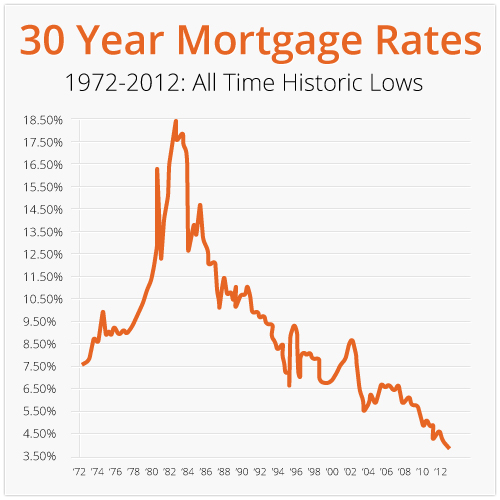
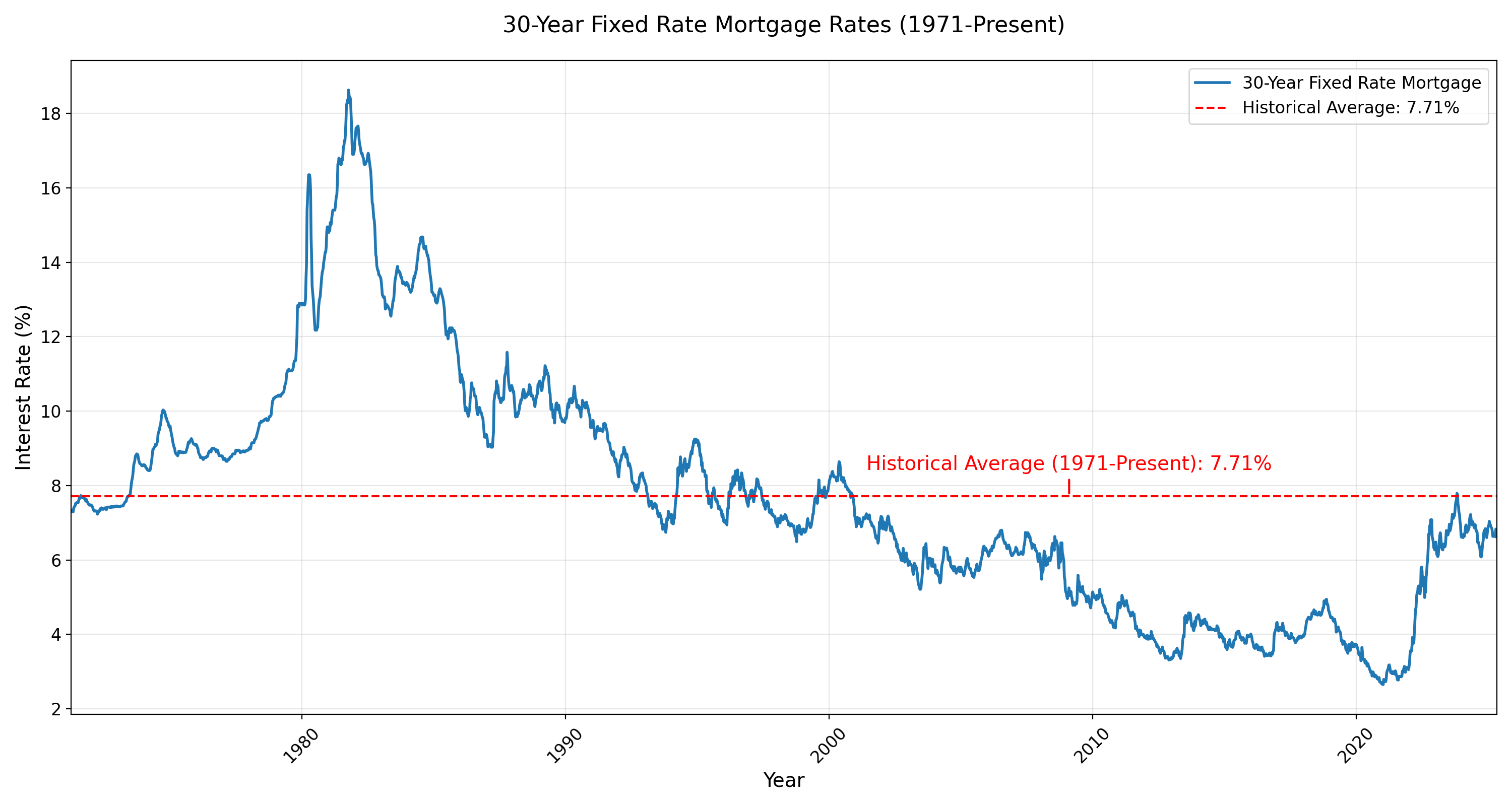
Broader economic conditions play a pivotal role in shaping mortgage rates. Inflation, for instance, is a primary driver; when inflation expectations rise, bond investors demand higher yields to compensate for the erosion of purchasing power, which in turn pushes mortgage rates higher. The Federal Reserve’s monetary policy, particularly its decisions regarding the federal funds rate, indirectly influences mortgage rates. While the federal funds rate doesn’t directly dictate mortgage rates, it sets the tone for borrowing costs throughout the economy. Strong economic growth, often measured by GDP and employment figures, can also contribute to higher rates as it indicates a robust economy capable of absorbing higher borrowing costs. Conversely, signs of economic slowdown or recession typically lead to lower rates as investors seek safer, fixed-income investments like mortgage-backed securities.
The Bond Market Connection
Mortgage rates are intrinsically linked to the bond market, specifically to the yields of U.S. Treasury bonds and Mortgage-Backed Securities (MBS). MBS are essentially bundles of mortgages sold to investors, and their performance is closely tied to the housing market and overall economic health. When demand for MBS increases, their yields (which move inversely to price) fall, leading to lower mortgage rates. Conversely, a decrease in demand for MBS results in higher yields and thus higher mortgage rates. The 10-year Treasury note yield is often seen as a benchmark for 30-year fixed mortgage rates, as it reflects the market’s long-term interest rate expectations. Fluctuations in these bond markets, driven by global events, investor sentiment, and economic news, translate almost directly into changes in mortgage rates.
Lender-Specific Considerations
While economic factors provide the overarching framework, individual lenders also play a role in setting their specific rates. Banks, credit unions, and other mortgage providers factor in their operating costs, desired profit margins, and competitive landscape. A lender with lower overhead or a strategic goal to capture more market share might offer slightly lower rates than a competitor. Furthermore, lenders assess the risk associated with each loan. They consider their own portfolio risk management strategies, the current regulatory environment, and their capacity to originate and service loans. This means that even on the same day, different lenders can quote slightly varied rates, emphasizing the importance of shopping around.
Borrower Profile
Your personal financial health significantly impacts the mortgage rate you qualify for. Lenders evaluate several key aspects of your borrower profile to determine your perceived risk. Your credit score is perhaps the most critical; a higher score (typically 740 or above) signals responsible financial behavior and a lower likelihood of default, usually qualifying you for the best rates. Your debt-to-income (DTI) ratio, which compares your monthly debt payments to your gross monthly income, is another vital metric. A lower DTI indicates that you have ample income to manage new mortgage payments. The size of your down payment also matters; a larger down payment (e.g., 20% or more) reduces the lender’s risk, often leading to better rates and potentially avoiding private mortgage insurance (PMI). The loan-to-value (LTV) ratio, which compares the loan amount to the home’s appraised value, is directly tied to the down payment and also influences rate offers.
How Mortgage Rates are Quoted and What to Expect
Navigating the mortgage market requires understanding the terminology and nuances of how rates are presented. Beyond the headline interest rate, several factors contribute to the true cost of your loan.
The APR vs. Interest Rate Distinction
It’s crucial to differentiate between the interest rate and the Annual Percentage Rate (APR). The interest rate is simply the cost of borrowing the principal loan amount, expressed as a percentage. The APR, however, represents the total cost of the loan over its life, expressed as an annual percentage. It includes not only the interest rate but also other costs like lender fees, discount points, mortgage insurance, and closing costs. Therefore, the APR is typically higher than the interest rate and provides a more comprehensive measure of the loan’s true cost. When comparing loan offers, the APR is often a more accurate metric for side-by-side comparison, as it encapsulates more of the associated expenses beyond just the interest.
Points and Closing Costs
When reviewing mortgage offers, you’ll encounter “points” and “closing costs.” Mortgage points, also known as discount points, are essentially prepaid interest. One point equals 1% of the loan amount. Borrowers can choose to pay points upfront to “buy down” their interest rate, meaning they pay more initially to secure a lower rate over the loan’s term. This strategy can be beneficial if you plan to stay in the home for many years, as the long-term savings from a lower interest rate can outweigh the upfront cost. Closing costs are various fees charged by lenders and third parties (like appraisers, title companies, and attorneys) to process and close your loan. These can include origination fees, appraisal fees, title insurance, and recording fees, typically ranging from 2% to 5% of the loan amount. Both points and closing costs significantly impact the overall expense of your mortgage.
Daily Rate Fluctuations
Mortgage rates are dynamic, often changing multiple times within a single day. These fluctuations are primarily driven by real-time economic news, bond market performance, and investor sentiment. A significant economic report, a Federal Reserve announcement, or even geopolitical events can cause rates to shift. Lenders adjust their rates throughout the day to reflect these market movements and manage their risk. This daily volatility underscores the importance of staying informed and being prepared to act when you see a favorable rate. It also means that the rate you see quoted online or by a lender one morning may not be available by the afternoon.
The Role of Mortgage Rate Lock-Ins
Given the daily fluctuations, a mortgage rate lock-in becomes a critical tool for homebuyers. A rate lock guarantees that the lender will honor a specific interest rate for a set period, typically 30 to 60 days, regardless of market changes. This protects you from rising rates while your loan is being processed. If rates fall significantly after you’ve locked, some lenders may offer a “float-down” option, allowing you to take advantage of the lower rate for a fee or under specific conditions. However, once locked, you are generally committed to that rate unless market conditions trigger a renegotiation. Carefully timing your rate lock can be a strategic decision, balancing the risk of rates rising against the potential for them to fall further.
Navigating the Mortgage Market for the Best Rates
Securing the best possible 30-year fixed mortgage rate requires a proactive and informed approach. It involves meticulous preparation, strategic shopping, and diligent comparison.
Improving Your Financial Standing
Before you even start house hunting, optimize your financial profile. The single most impactful step is to improve your credit score. Pay bills on time, reduce outstanding debt, and avoid opening new lines of credit. A higher credit score signals lower risk to lenders, directly translating into more favorable interest rates. Simultaneously, work on reducing your debt-to-income (DTI) ratio by paying down existing loans, particularly high-interest consumer debt. A lower DTI demonstrates your capacity to manage additional mortgage payments. Finally, saving for a larger down payment is paramount. A substantial down payment (ideally 20% or more) not only reduces your loan amount but also lowers the loan-to-value (LTV) ratio, which lenders view favorably, often resulting in lower rates and the avoidance of private mortgage insurance (PMI).
Shopping Around for Lenders
One of the most significant mistakes homebuyers make is only checking with one or two lenders. Mortgage rates can vary significantly between financial institutions, even for the same borrower on the same day. Cast a wide net: explore offerings from traditional banks, credit unions, online lenders, and mortgage brokers. Each type of lender has its own operational costs, risk assessments, and product offerings, leading to different rate structures. Credit unions, for example, are member-owned and may offer slightly more competitive rates or lower fees. Online lenders often have lower overhead, which can translate into better rates. Mortgage brokers, while charging a fee, can shop multiple wholesale lenders on your behalf, potentially finding a deal you might miss on your own. Obtain official loan estimates from at least three to five different sources.
Understanding Loan Estimates
Once you apply for a mortgage, lenders are legally required to provide you with a standardized Loan Estimate (LE) within three business days. This document is a critical tool for comparing offers. It clearly outlines the interest rate, APR, monthly principal and interest payment, estimated closing costs, and other key loan terms. Pay close attention to Section A (Origination Charges), which details fees charged by the lender, and Section B (Services You Cannot Shop For), which includes appraisal and credit report fees. Compare the “Cash to Close” figure and the APR to get a comprehensive view of the total cost of each loan. Don’t hesitate to ask lenders to explain any discrepancies or unfamiliar charges. This meticulous comparison is essential to ensure you’re getting the most favorable terms, not just the lowest headline interest rate.
When to Refinance
For existing homeowners with a 30-year fixed mortgage, refinancing presents an opportunity to secure a lower interest rate, reduce monthly payments, or tap into home equity. The decision to refinance is primarily driven by current market rates. If prevailing rates are significantly lower than your current mortgage rate, refinancing can lead to substantial long-term savings. However, it’s crucial to weigh the savings against the closing costs associated with a new loan. A general rule of thumb suggests refinancing might be worthwhile if you can reduce your interest rate by at least 0.75% to 1.00%, assuming you plan to stay in the home long enough to recoup the refinancing costs. Tools like break-even analysis can help you determine how long it will take to recover the closing costs, informing your decision to pursue a refinance when rates are attractive.
The Long-Term Financial Impact of Your Mortgage Rate
The interest rate on your 30-year fixed mortgage extends its influence far beyond your monthly payment; it plays a pivotal role in your overall financial health and long-term wealth accumulation.
Total Cost Over 30 Years
The compounding effect of interest over three decades is profound. Even a seemingly small difference in your interest rate can translate into tens or even hundreds of thousands of dollars in additional costs over the life of the loan. For example, on a $300,000 mortgage, moving from a 6.0% interest rate to a 5.0% rate could save you over $60,000 in interest payments over 30 years, assuming all other factors remain constant. This stark difference underscores why securing the lowest possible rate is not just about monthly savings, but about minimizing the total expenditure on your home. Understanding this long-term impact empowers you to aggressively pursue the most competitive rates and consider strategies like making extra principal payments to further reduce total interest paid.
Budgeting and Financial Planning
Your mortgage payment is typically the largest fixed expense in your monthly budget. A predictable, fixed rate makes budgeting significantly easier and more stable. Knowing precisely what you owe each month for principal and interest allows for accurate financial planning, enabling you to allocate funds more effectively to other financial goals such as savings, investments, education funds, or retirement planning. This stability is a key advantage, especially in uncertain economic times, providing a solid foundation upon which to build your household finances without the anxiety of fluctuating housing costs.
Building Equity and Wealth
While interest payments are a cost, the principal portion of your mortgage payment directly contributes to building equity in your home. Equity is the portion of your home’s value that you own outright. As you pay down your loan over 30 years, your equity steadily increases. This equity is a vital component of personal wealth, serving as a significant asset that can be leveraged later in life through home equity loans, lines of credit, or as a substantial sum upon the sale of the property. A 30-year fixed mortgage, therefore, is not just a loan; it’s a long-term investment strategy that, when managed effectively, systematically builds a cornerstone of your financial security and generational wealth. The disciplined repayment structure, combined with potential home value appreciation, positions homeownership as a powerful wealth-building tool.
aViewFromTheCave is a participant in the Amazon Services LLC Associates Program, an affiliate advertising program designed to provide a means for sites to earn advertising fees by advertising and linking to Amazon.com. Amazon, the Amazon logo, AmazonSupply, and the AmazonSupply logo are trademarks of Amazon.com, Inc. or its affiliates. As an Amazon Associate we earn affiliate commissions from qualifying purchases.