
In the modern digital landscape, we are surrounded by an invisible infrastructure that powers everything from the smartphone in your pocket to the GPS satellites orbiting the Earth. This infrastructure is built upon radio frequencies (RF). While the term is often used in technical manuals and telecommunications jargon, its significance extends far beyond the lab. Radio frequencies are the fundamental medium through which the world communicates, navigates, and innovates.
At its core, a radio frequency is a rate of oscillation in the range of about 3 kHz to 300 GHz, corresponding to the frequency of alternating current electrical signals used to produce and detect radio waves. Because these waves can travel through the air and even the vacuum of space, they have become the primary vehicle for wireless technology. To understand the state of modern tech, one must first understand the spectrum that makes it possible.

Understanding the Electromagnetic Spectrum: The Science of Waves
To comprehend radio frequencies, we must look at the electromagnetic spectrum. This spectrum encompasses all types of electromagnetic radiation, ranging from incredibly long-lived radio waves to the high-energy gamma rays produced by nuclear reactions. Radio frequencies occupy the lower-energy end of this spectrum.
The Physics of Frequency and Wavelength
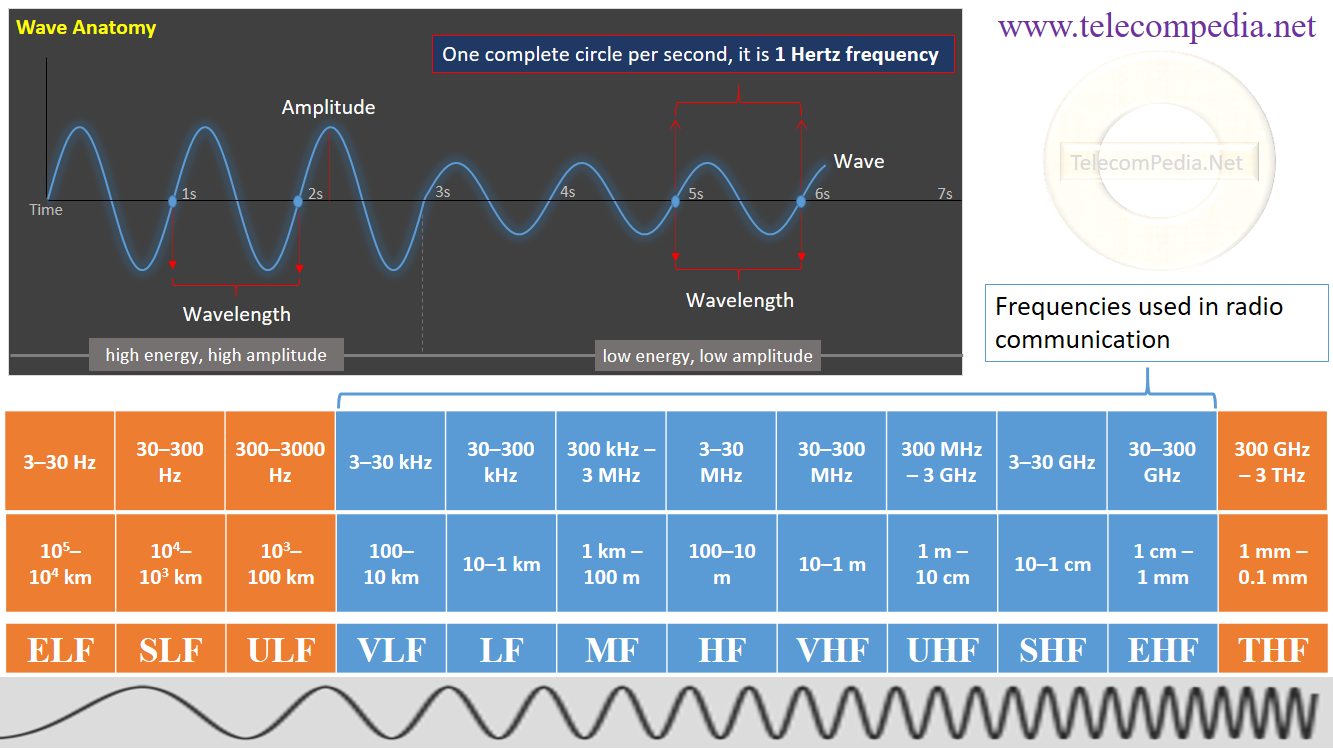
Frequency refers to the number of times a periodic wave repeats per unit of time, measured in Hertz (Hz). One Hertz is equal to one cycle per second. In the realm of technology, we deal with much higher denominations: Kilohertz (kHz), Megahertz (MHz), and Gigahertz (GHz).
There is an inverse relationship between frequency and wavelength. High-frequency waves have short wavelengths, while low-frequency waves have long wavelengths. This relationship is crucial for hardware developers and network engineers because it determines how a signal behaves. For instance, lower frequencies can travel long distances and penetrate solid objects like walls, whereas higher frequencies carry more data but are easily obstructed.
How RF Waves Carry Information
The “magic” of radio frequencies lies in modulation. A raw radio wave (the carrier wave) conveys no information on its own. To send a text message or stream a video, engineers use techniques like Amplitude Modulation (AM), Frequency Modulation (FM), or more advanced Digital Modulation (such as QAM). By subtly altering the properties of the wave, data is encoded at the source and decoded at the receiver, turning invisible oscillations into digital packets.
Categorizing the Spectrum: From Low-Band to Millimeter Waves
The radio frequency spectrum is a finite and highly regulated resource. To prevent interference—where two signals overlap and cancel each other out—the spectrum is divided into specific bands, each suited for different technological applications.
Low Frequency (LF) to High Frequency (HF)
These bands generally range from 30 kHz to 30 MHz. Historically, these were the pioneers of wireless communication.
-
LF/VLF: Used for maritime navigation and communication with submarines, as these long waves can penetrate seawater.
-
MF (Medium Frequency): The home of AM radio. These waves can “skip” off the ionosphere, allowing them to travel hundreds of miles, especially at night.
-
HF: Known as “shortwave,” these are used by amateur radio enthusiasts and international broadcasters.
Very High Frequency (VHF) and Ultra High Frequency (UHF)
This is where most consumer technology traditionally resides.
-
VHF (30 MHz to 300 MHz): Used for FM radio broadcasting, television stations, and two-way land mobile radio systems (like those used by emergency services).
-
UHF (300 MHz to 3 GHz): This is perhaps the most valuable “real estate” in the spectrum. It hosts GPS, Bluetooth, Wi-Fi (2.4 GHz band), and the majority of 4G LTE cellular networks. These frequencies offer a perfect balance between data capacity and the ability to pass through physical obstacles.
Super High Frequency (SHF) and Extremely High Frequency (EHF)
Ranging from 3 GHz to 300 GHz, these bands are the frontier of modern high-speed tech.
-
Wi-Fi 5 and 6: Utilize the 5 GHz and 6 GHz bands to provide faster speeds in crowded environments.
-
Millimeter Wave (mmWave): These occupy the 24 GHz to 100 GHz range. They are the backbone of high-performance 5G. While they offer fiber-like speeds wirelessly, their range is limited to a few hundred meters, and they can be blocked by something as simple as a tree leaf or a window.
The Role of RF in Modern Wireless Technology
Radio frequencies are the “air interface” for the digital world. Without the precise manipulation of these frequencies, the interconnected ecosystem of gadgets we rely on would cease to function.
Mobile Networks: From 4G to 5G and Beyond
The evolution of cellular technology is essentially a history of better spectrum utilization. 4G LTE primarily used lower frequency bands to ensure wide coverage. However, as the demand for mobile data exploded, the industry moved toward 5G.
5G is unique because it uses a “layered” spectrum approach. It utilizes low-band (for coverage), mid-band (for a balance of speed and range), and high-band/mmWave (for ultra-fast speeds in stadiums or urban centers). This sophisticated use of radio frequencies allows 5G to support up to a million devices per square kilometer, enabling the next generation of industrial automation and remote surgery.
The Internet of Things (IoT) and Smart Connectivity
The IoT revolution depends on low-power radio frequencies. Technologies like Zigbee, Z-Wave, and LoRaWAN operate on specific RF bands to allow smart meters, light bulbs, and industrial sensors to communicate over long periods without draining batteries. By using narrow-band frequencies, these devices can send small bursts of data reliably over long distances, creating a “mesh” of connectivity that defines the modern smart city.
Satellite Communication and Global Positioning
GPS (Global Positioning System) relies on microwave frequencies transmitted from satellites to receivers in our phones. These signals must be incredibly precise; even a microsecond of timing error can result in a location error of several kilometers. Similarly, satellite internet providers like Starlink use high-frequency Ku and Ka bands to beam high-speed internet to remote areas, bypassing the need for physical cables.
Challenges and Innovation in RF Management
As we plug more devices into the “invisible net,” the radio frequency spectrum is becoming increasingly crowded. This congestion presents significant technical challenges that require innovative engineering solutions.
Spectrum Scarcity and Interference
The spectrum is a limited natural resource. When too many devices try to use the same frequency in the same area, interference occurs, leading to dropped calls or slow internet. This is why regulatory bodies, like the FCC in the United States, auction off frequency blocks to telecom companies for billions of dollars.
To combat scarcity, engineers have developed “Cognitive Radio” and “Dynamic Spectrum Access.” These technologies allow devices to listen for an unused “gap” in the spectrum and switch frequencies on the fly, maximizing the efficiency of the available airwaves.
Software-Defined Radio (SDR)
In the past, radio hardware was hard-wired to specific frequencies. If you wanted to change the frequency, you had to change the physical components. Today, Software-Defined Radio (SDR) has revolutionized the field. By using powerful processors to handle the modulation and demodulation of signals in software, a single piece of hardware can be programmed to receive almost any frequency. This flexibility is vital for modern military communications, research, and the development of multi-band smartphones.
The Future: Terahertz and 6G
Research is already underway for 6G technology, which aims to tap into the Terahertz (THz) frequency range (above 300 GHz). These frequencies offer staggering data rates—potentially 100 times faster than 5G. However, working with THz waves is a massive tech challenge; these waves behave more like light than traditional radio waves, requiring new materials and “massive MIMO” (Multiple Input Multiple Output) antenna arrays to beam-steer the signal directly to the user.
Conclusion: The Invisible Infrastructure
Radio frequencies are the silent conductors of the digital age. From the simple pulses of a garage door opener to the complex, multi-gigabit streams of a 5G network, RF technology is the bridge between the physical and digital worlds.
As we move toward a future defined by autonomous vehicles, ubiquitous AI, and the “metaverse,” our reliance on the radio spectrum will only grow. Understanding what radio frequencies are—and how we manage them—is not just a matter for engineers; it is essential for understanding the trajectory of human innovation. The air around us is no longer just empty space; it is a sophisticated, high-speed data highway, carrying the collective knowledge and communication of the planet on the back of invisible waves.
aViewFromTheCave is a participant in the Amazon Services LLC Associates Program, an affiliate advertising program designed to provide a means for sites to earn advertising fees by advertising and linking to Amazon.com. Amazon, the Amazon logo, AmazonSupply, and the AmazonSupply logo are trademarks of Amazon.com, Inc. or its affiliates. As an Amazon Associate we earn affiliate commissions from qualifying purchases.