
In the realm of modern technology, we often speak of “neural networks,” “deep learning,” and “artificial intelligence.” These terms are not merely poetic; they are direct tributes to the most sophisticated processing unit known to existence: the biological neuron. To understand how we are building the future of Silicon Valley, we must first deconstruct the “wetware” that inspired it. A nerve cell, or neuron, is the fundamental hardware of the human operating system. By examining its parts, we gain a blueprint for the next generation of computing, from high-speed data transmission to decentralized processing.
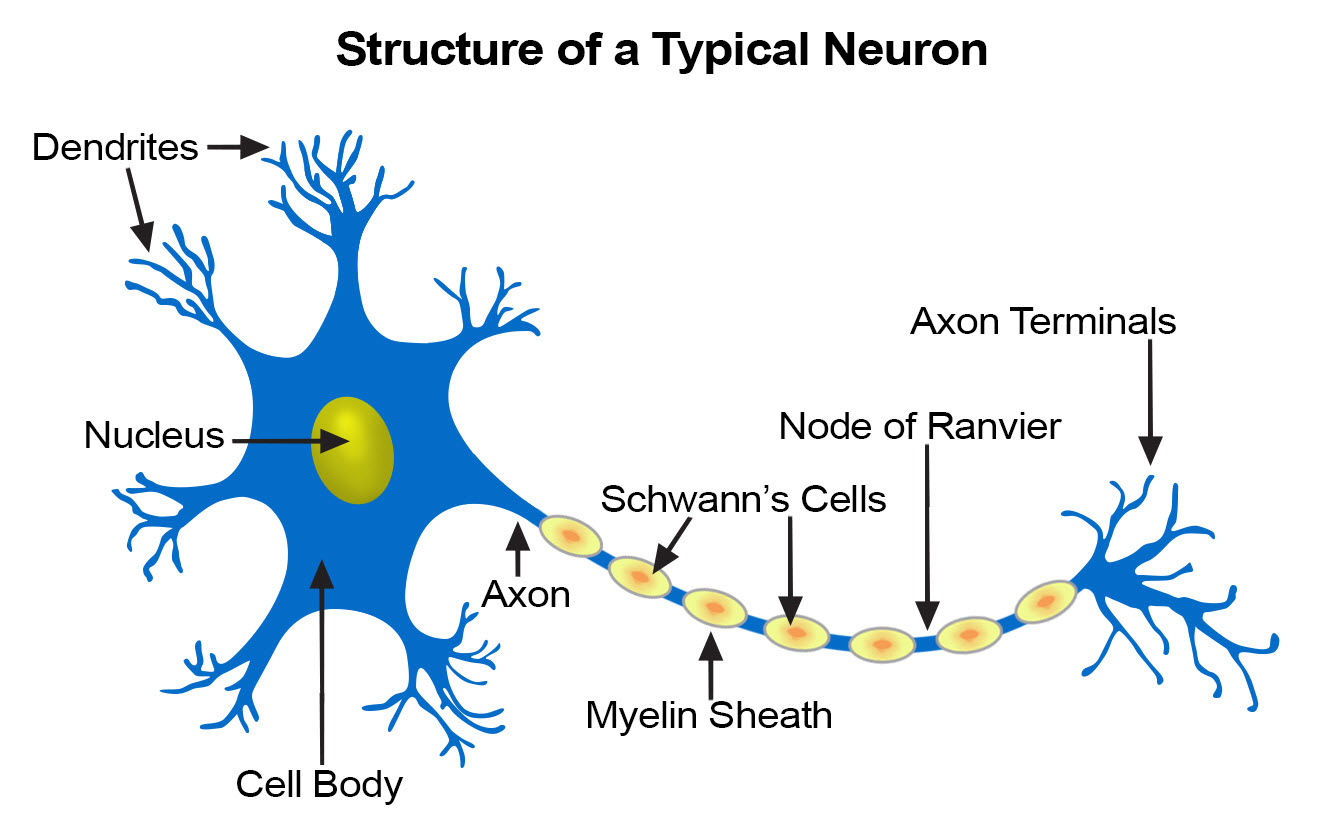
This article explores the structural components of the nerve cell, treating the biological organism as a masterclass in technological engineering.
1. The Central Processing Unit: The Soma and Nucleus
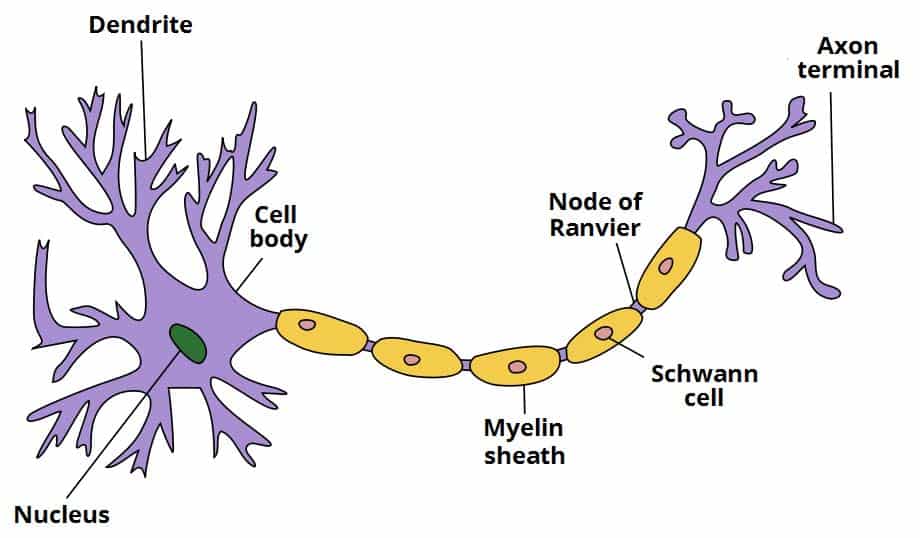
At the heart of every neuron lies the Soma, or cell body. In the world of hardware, if the brain is the data center, the soma is the individual server blade. It is the administrative hub where all critical “system files” are stored and where the heavy lifting of metabolic maintenance occurs.
The Nucleus as the Master Controller
Just as a computer requires a BIOS and an Operating System to function, the neuron relies on the Nucleus. Contained within the soma, the nucleus holds the genetic code (DNA). In tech terms, this is the “source code” of the cell. It dictates which proteins are manufactured and how the cell responds to external stimuli. Without the nucleus, the neuron loses its ability to update its internal software, eventually leading to system failure. It manages the long-term storage of information necessary for the cell’s survival and its specific functional role within the network.
Protein Synthesis: The Manufacturing Hub
Surrounding the nucleus are organelles like the ribosomes and the endoplasmic reticulum. These function as the cell’s internal manufacturing plants. In a technological context, this is akin to a 3D printer integrated into a CPU that creates its own replacement parts on the fly. These organelles produce neurotransmitters and structural proteins that ensure the physical integrity of the “circuits” remains intact.
2. Input Interfaces: Dendrites and Signal Acquisition
No computer is useful without input devices. Whether it’s a keyboard, a camera, or an API call, data must enter the system to be processed. In the nerve cell, this role is played by the Dendrites.
Data Reception and Scaling
Dendrites are branch-like structures that extend from the soma. They act as the “input ports” of the neuron. A single neuron can have thousands of dendrites, allowing it to receive massive amounts of parallel data from other neurons. This is the biological equivalent of a high-bandwidth multi-channel receiver. The more complex the dendritic tree, the more “data points” the neuron can integrate. In Artificial Neural Networks (ANNs), we replicate this by assigning “weights” to different inputs, a direct digital mimicry of how dendrites prioritize certain biological signals over others.
Synaptic Plasticity: The Firmware Update
One of the most remarkable features of dendrites is their ability to grow or shrink based on usage—a phenomenon known as plasticity. In technology, we see this reflected in machine learning algorithms that “strengthen” certain pathways as they learn. When a dendritic spine grows in response to repeated stimulation, it is essentially a hardware upgrade triggered by software activity. It is the ultimate adaptive interface, ensuring the most important “data streams” have the strongest physical connection.
3. High-Speed Transmission: The Axon and the Myelin Sheath

Once the soma has processed incoming data and reached a “threshold,” it must send a signal to the next node in the network. This transmission is handled by the Axon, the long, cable-like projection of the neuron.
The Axon as Fiber-Optic Cabling
If the soma is the processor, the axon is the fiber-optic cable. Axons can be incredibly long—some stretching from the base of the spine to the tip of the toe. To maintain signal integrity over these distances, the neuron employs an electrochemical pulse called an “action potential.” This is a binary system: the neuron either fires or it doesn’t, mirroring the 1s and 0s of digital computing.
Myelin Sheath: The Bandwidth Booster
In tech, signal degradation (attenuation) is a major hurdle. To solve this, engineers use insulation. The biological version is the Myelin Sheath, a fatty layer that wraps around the axon. Myelin functions exactly like the rubber insulation on a copper wire or the cladding on a fiber-optic strand. It prevents the electrical signal from leaking out and significantly increases the speed of transmission.
Nodes of Ranvier: Biological Signal Repeaters
Even with insulation, a signal can weaken over long distances. To combat this, the myelin sheath has gaps called Nodes of Ranvier. At these gaps, the signal is essentially “re-boosted” or recharged. This is identical to the function of a network repeater or an amplifier in a long-haul telecommunications line, ensuring that the data packet reaches its destination without loss of information.
4. The Output Gateway: Axon Terminals and Synapses
Every data transmission must eventually reach a destination or a “terminal.” For the neuron, this happens at the Axon Terminals, the branching ends of the axon that interface with the next cell in the sequence.
Neurotransmitters as Data Packets
When the electrical signal reaches the axon terminal, it must cross a physical gap to reach the next neuron. Since electricity cannot easily jump this gap, the cell converts the electrical signal into a chemical one. This involves the release of Neurotransmitters. Think of these as “data packets” sent over a wireless protocol (like Wi-Fi or Bluetooth) to a nearby device. These chemicals carry specific instructions—some are “excitatory” (telling the next cell to fire), while others are “inhibitory” (telling the next cell to stay quiet).
The Synaptic Gap: The Universal API
The space between two neurons is called the Synapse. In the software world, a synapse functions like an Application Programming Interface (API). It is the standardized point of contact where two different systems communicate. The efficiency of this “handshake” determines how quickly information moves through the brain’s network. In modern tech reviews of AI chips, “synaptic throughput” is often the benchmark used to measure how effectively a piece of hardware can simulate these biological handshakes.
5. From Wetware to Software: The Tech Impact of Neuronal Study
Understanding the parts of a nerve cell is not just a pursuit for biologists; it is the cornerstone of the next era of information technology. The transition from classical computing to Neuromorphic Computing is the direct result of studying neuronal architecture.
Mimicking Neuronal Structure in AI
Current AI tools, such as Large Language Models (LLMs), utilize “Artificial Neurons.” While these are currently software-based, the industry is moving toward “Brain-on-a-Chip” hardware. By mimicking the dendrite-soma-axon structure, tech companies like Intel and IBM are creating processors that are thousands of times more energy-efficient than traditional CPUs. These chips don’t process data in a linear, “Von Neumann” fashion; instead, they process information in parallel, just as the biological soma does.
The Future: Biological and Digital Integration
As we master the “parts list” of the nerve cell, the line between technology and biology begins to blur. Neural-interface technologies, such as those being developed for medical prosthetics and direct brain-computer interfaces (BCIs), rely on the ability to “plug into” the axon or receive signals from the dendrites. By treating the parts of the nerve cell as discrete technological components, we are learning how to bridge the gap between human thought and digital execution.
In conclusion, the nerve cell is the most efficient, durable, and adaptive piece of technology in existence. From the soma’s central processing power to the axon’s high-speed data transmission and the synapse’s complex API, every part of the neuron has a direct counterpart in our digital world. As we continue to refine our own gadgets and software, we do so by looking back at the original design—the biological neuron—proving that the best way to build the future is to understand the hardware we were born with.
aViewFromTheCave is a participant in the Amazon Services LLC Associates Program, an affiliate advertising program designed to provide a means for sites to earn advertising fees by advertising and linking to Amazon.com. Amazon, the Amazon logo, AmazonSupply, and the AmazonSupply logo are trademarks of Amazon.com, Inc. or its affiliates. As an Amazon Associate we earn affiliate commissions from qualifying purchases.