
In the world of high-finance and asset management, the term “hard asset” typically refers to a tangible resource with intrinsic value. However, for the astute investor, the literal hardness of a mineral—its physical resistance to scratching and abrasion—is often a primary driver of its economic worth. From the industrial floor to the vaults of Geneva, the hardest minerals on Earth represent a unique intersection of geological rarity and massive capital potential.
While most people associate mineral hardness with the brilliance of a diamond engagement ring, the financial implications stretch far deeper into global trade, manufacturing, and wealth preservation. Understanding the “hardest” minerals is not just a lesson in geology; it is a lesson in identifying durable stores of value and high-demand industrial commodities.
The Economics of Mineral Hardness: Why Durability Equals Value
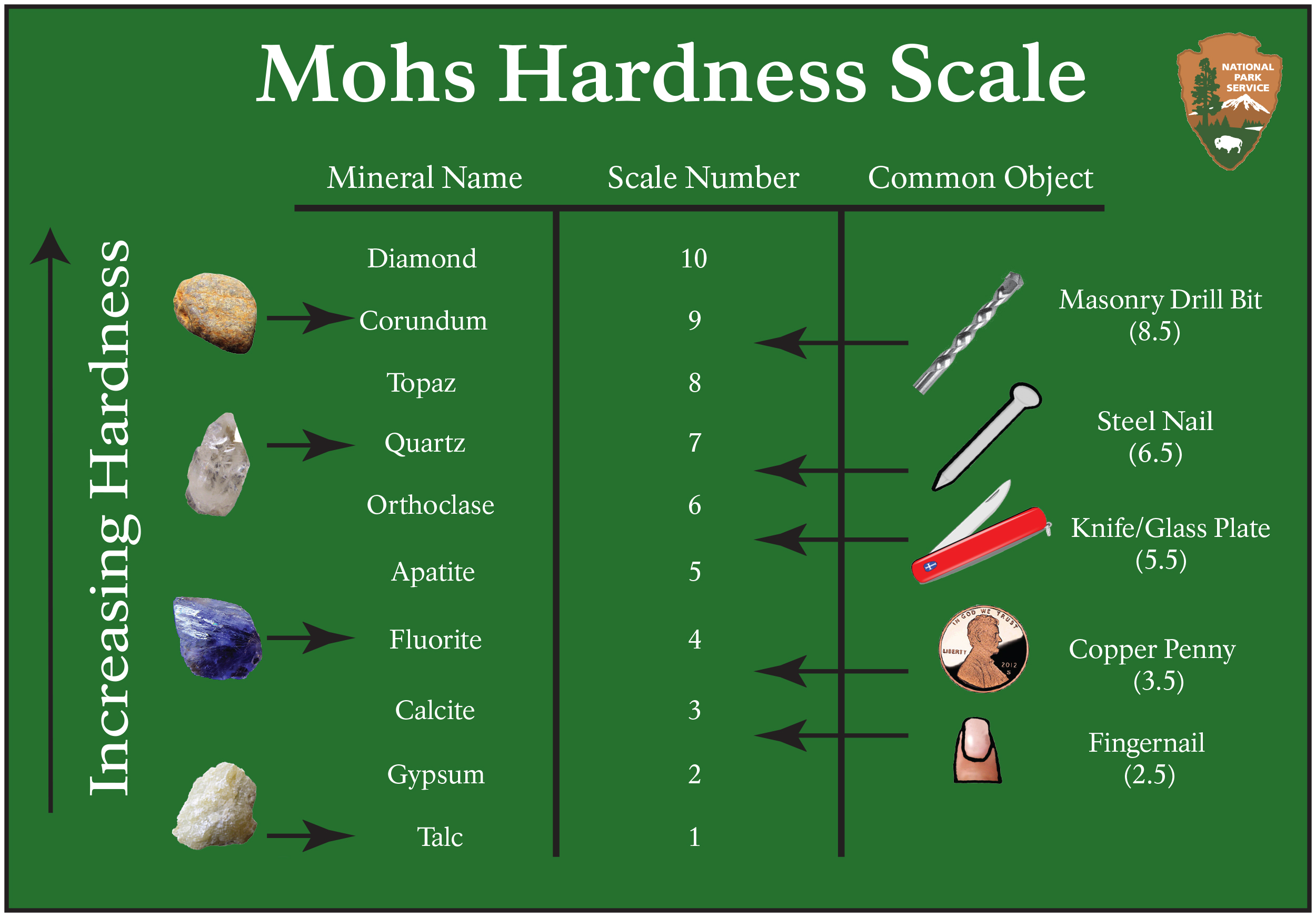
In finance, risk is often associated with degradation. An asset that loses its physical integrity also loses its liquidity and market price. This is why the Mohs Scale of Mineral Hardness—a scale from 1 to 10 used by geologists—is an underrated tool for the commodities investor.
The Mohs Scale as a Proxy for Market Liquidity
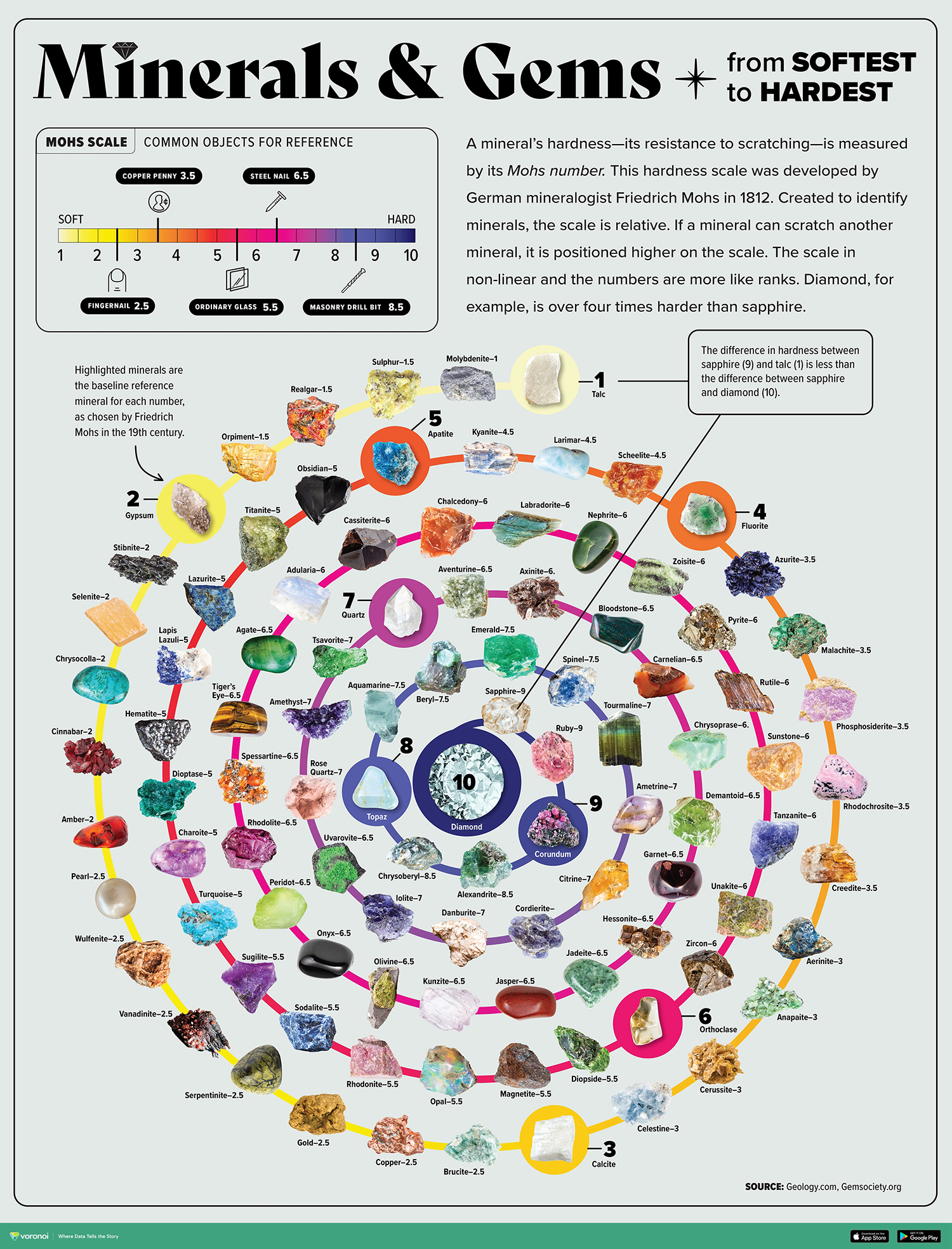
The Mohs scale ranks minerals from talc (1) to diamond (10). From an investment perspective, the higher a mineral sits on this scale, the more “durable” its value becomes. Harder minerals do not oxidize, they do not scratch easily, and they maintain their aesthetic or functional utility over centuries. This physical permanence translates to “liquidity” in the secondary market. A diamond purchased fifty years ago remains physically identical today, whereas softer materials may have weathered or eroded, requiring costly restoration that eats into the investor’s margin.
Scarcity vs. Utility: What Drives the Price?
The hardest minerals are generally the most valuable because they are difficult to find and even more difficult to process. The energy costs required to mine, cut, and polish a mineral with a Mohs rating of 9 or 10 are significantly higher than those for softer stones. This creates a high barrier to entry for producers, which limits supply and sustains high price points. When utility (the industrial need for ultra-hard abrasives) meets scarcity (the rarity of high-grade deposits), the result is a resilient asset class that often outperforms traditional equities during periods of market volatility.
Diamond: The Sovereign of the Hard Asset Class
Sitting at the top of the hierarchy with a Mohs rating of 10, the diamond is the hardest naturally occurring mineral known to man. For over a century, it has served as the ultimate portable wealth vehicle. However, the financial landscape of the diamond market is currently undergoing a radical transformation that every personal finance enthusiast should monitor.
The De Beers Legacy and Modern Market Dynamics
Historically, the value of diamonds was maintained through a controlled supply chain, most famously managed by the De Beers cartel. By limiting the amount of “hardness” available on the market, they created an artificial scarcity that drove prices upward. In the modern era, the market has decentralized. Today, diamonds are viewed as a “safe haven” asset, much like gold, but with the added benefit of being a critical industrial component for cutting-edge technology and precision tools.
Lab-Grown vs. Natural: An Investor’s Dilemma
The biggest disruption in the “hard mineral” investment space is the rise of lab-grown diamonds. Chemically and physically identical to mined diamonds, they possess the same Mohs 10 hardness but trade at a 60-80% discount. For the industrial investor, this is a win—it lowers the cost of precision manufacturing. However, for the personal finance investor, it creates a “bifurcation” of the market. Natural diamonds are now being branded as “legacy assets” or “collectors’ items,” while lab-grown stones are treated as high-utility commodities. Choosing where to allocate capital depends on whether you are seeking long-term value retention or immediate industrial application.
Beyond Diamonds: Investing in Corundum and Abrasives

While diamonds capture the headlines, the minerals sitting just below them on the hardness scale—specifically the Corundum family—represent a massive segment of the global commodities market. With a Mohs rating of 9, Corundum includes some of the most sought-after precious stones and industrial materials in existence.
The Strategic Importance of Rubies and Sapphires
Rubies and sapphires are both varieties of Corundum. Their hardness makes them nearly indestructible, which is why they are the preferred choice for high-end watch crystals (sapphire glass) and precision instruments. From a “Money” perspective, high-quality unheated rubies have historically appreciated at rates that rival the S&P 500. Because they are harder than almost every other gemstone, they are incredibly “low maintenance” assets, requiring no special storage conditions to maintain their grade and value.
Tungsten and Boron: The Backbone of Global Infrastructure
Moving away from gemstones, minerals like Tungsten (though a metal, it is often discussed alongside hard minerals) and Boron Carbides are the “workhorses” of the hard-mineral world. Tungsten is nearly as hard as diamond and has the highest melting point of all elements. Investing in companies that mine or process these ultra-hard minerals is a play on global infrastructure. As developing nations build cities and high-speed rails, the demand for “hard” cutting tools and drill bits skyrockets. This makes the mining sector for hard minerals a strategic hedge against domestic economic slowdowns.
Precious Minerals as Inflation Hedges and Portfolio Diversifiers
In an era of “paper wealth” and digital currencies, many high-net-worth individuals are returning to physical commodities. Hard minerals provide a tangible hedge against the devaluation of fiat currency. Unlike a company’s stock, which can go to zero if the business fails, a hard mineral possesses inherent physical utility that ensures it will never be worthless.
Portfolio Diversification through Physical Commodities
Financial advisors often recommend a 5-10% allocation to “alternative assets.” Hard minerals—specifically investment-grade gemstones and industrial-grade rare earths—provide a non-correlated asset class. When the stock market crashes, the demand for industrial abrasives or the desire for “portable wealth” in the form of diamonds often remains steady or increases. This lack of correlation is the “holy grail” of modern portfolio theory, allowing investors to reduce overall volatility while maintaining growth potential.
Storage, Insurance, and Liquidation Risks
Investing in the world’s hardest minerals is not without its challenges. While the minerals themselves are indestructible, the “paperwork” surrounding them is not. To treat minerals as a financial instrument, an investor must account for:
- Certification: Without a GIA or similar lab report, a hard mineral’s value is speculative.
- Storage: While they don’t scratch, they can be stolen. High-security vaulting is a necessary carrying cost.
- The Spread: Unlike stocks, where the “bid-ask spread” is pennies, the spread on hard minerals can be 10-20%. This means you are “down” on your investment the moment you buy it, requiring a long-term horizon (5-10 years) to see a profit.
Future Trends: The Geopolitics and Tech-Intersection of Hard Minerals
The future of “hard mineral” investing lies at the intersection of green technology and geopolitical maneuvering. As we move toward a more digital and electrified economy, the minerals that can withstand the highest heat and pressure are becoming “strategic reserves.”
Geopolitics of Mineral Extraction
Many of the world’s hardest and most valuable minerals are concentrated in geopolitically sensitive regions. For example, a large percentage of industrial diamonds and rare hard minerals come from Russia and parts of Africa. For the investor, this means that the price of “hardness” is often dictated by international sanctions and trade agreements. Keeping an eye on global trade policy is just as important as understanding the Mohs scale when it comes to timing your entry into these markets.
The Rise of Sustainable Mining Investment
Environmental, Social, and Governance (ESG) criteria are now a major factor in mineral pricing. “Blood diamonds” or minerals mined through ecologically devastating methods are being traded at a “shame discount.” Conversely, minerals with “ethical provenance” or those produced via sustainable lab methods are commanding a premium. For the modern investor, the goal is no longer just to find the hardest mineral, but to find the “cleanest” one. Ethical sourcing has become a value-driver that can significantly impact the resale price of the asset.
In conclusion, the hardest minerals on Earth—Diamond, Corundum, and their industrial cousins—are more than just geological curiosities. They are the bedrock of a sophisticated investment strategy. By prioritizing physical durability, scarcity, and industrial utility, an investor can build a “hard” portfolio capable of weathering any financial storm. Whether through physical ownership, mining ETFs, or specialized commodity funds, the market for hardness remains one of the most resilient and profitable sectors in the global economy.
aViewFromTheCave is a participant in the Amazon Services LLC Associates Program, an affiliate advertising program designed to provide a means for sites to earn advertising fees by advertising and linking to Amazon.com. Amazon, the Amazon logo, AmazonSupply, and the AmazonSupply logo are trademarks of Amazon.com, Inc. or its affiliates. As an Amazon Associate we earn affiliate commissions from qualifying purchases.