
Understanding the current landscape of mortgage rates is paramount for anyone considering purchasing a home or refinancing an existing loan. For many prospective homeowners, the 30-year fixed-rate mortgage stands as the gold standard, offering stability and predictable monthly payments over a significant period. However, these rates are not static; they fluctuate daily, influenced by a complex interplay of economic indicators, central bank policies, and global market sentiments. Navigating this dynamic environment requires a keen understanding of what drives these changes, where to find reliable information, and how to position oneself to secure the most favorable terms. This article delves into the current state of 30-year fixed mortgage rates, offering insights, strategies, and a forward-looking perspective to empower your financial decisions.
Understanding the Dynamics of 30-Year Fixed Mortgage Rates
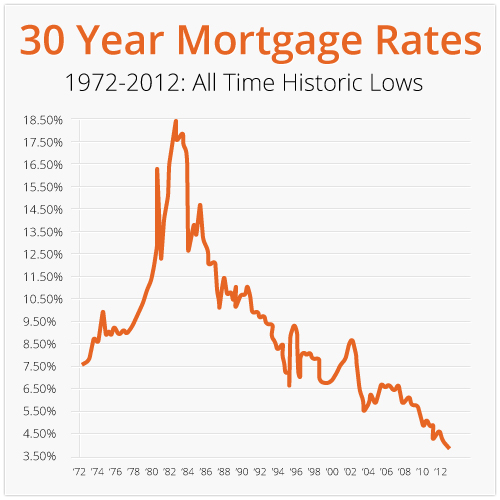
The 30-year fixed-rate mortgage is a cornerstone of the housing market, providing a stable financial foundation for millions of homeowners. Its popularity stems from its predictable nature, but its rates are a moving target, influenced by forces far beyond the housing market itself.
The Allure of Stability: Why 30-Year Fixed?
The primary appeal of a 30-year fixed-rate mortgage lies in its unwavering stability. Once you lock in your rate, your principal and interest payments remain constant for the entire three-decade term. This predictability is a significant advantage, especially for first-time homebuyers or those on a fixed income, as it simplifies budgeting and protects against potential interest rate hikes in the future. Unlike adjustable-rate mortgages (ARMs) where rates can reset periodically, a fixed rate offers peace of mind, allowing homeowners to build equity and plan their finances without the anxiety of fluctuating monthly payments. This long-term consistency also makes it easier to project total interest paid over the life of the loan, aiding in comprehensive financial planning. The extended repayment period also typically results in lower monthly payments compared to shorter-term options like 15-year fixed mortgages, making homeownership more accessible for many.
Key Economic Indicators Influencing Rates
Mortgage rates are highly sensitive to broader economic conditions. Several key indicators play a crucial role in shaping their trajectory. Inflation, perhaps the most significant, directly impacts the value of money over time. When inflation rises, lenders typically demand higher interest rates to compensate for the eroding purchasing power of future repayments. The bond market, particularly the yield on the 10-year Treasury note, is another critical benchmark. Mortgage rates tend to track these yields closely because mortgage-backed securities (MBS) compete with Treasuries for investor attention. A higher 10-year Treasury yield generally pushes mortgage rates upward. Additionally, employment data, such as job growth and unemployment rates, provides insights into the overall health of the economy. A strong job market often signals economic expansion, which can lead to inflationary pressures and, consequently, higher interest rates. Conversely, a weakening job market might suggest an economic slowdown, potentially leading to lower rates as the Federal Reserve might ease monetary policy. Consumer confidence and GDP growth are also watched closely, painting a broader picture of economic vitality that indirectly influences interest rate trends.
The Federal Reserve’s Role and Market Sentiment
While the Federal Reserve does not directly set mortgage rates, its monetary policy decisions exert a powerful indirect influence. The Fed’s actions, particularly adjustments to the federal funds rate, impact the cost of borrowing for banks. When the Fed raises its benchmark rate, it becomes more expensive for banks to lend money, a cost that is often passed on to consumers in the form of higher interest rates on various loans, including mortgages. Conversely, when the Fed lowers rates, borrowing becomes cheaper, potentially leading to lower mortgage rates. Beyond direct rate adjustments, the Fed’s public statements and forward guidance on economic outlook and future policy intentions significantly shape market sentiment. If the market anticipates future rate hikes, lenders may pre-emptively adjust their rates upward. Geopolitical events, global economic instability, and even domestic political developments can also foster uncertainty, influencing investor confidence and bond yields, thereby indirectly impacting mortgage rates. Understanding the Fed’s commentary and market reactions is crucial for anticipating rate movements.
Navigating the Current Mortgage Rate Landscape
In today’s fast-paced financial world, knowing where to find accurate rate information and understanding the nuances of different offerings is essential for making informed decisions about your 30-year fixed mortgage.
Where to Find Real-Time Rate Information
Accessing real-time, accurate mortgage rate information is the first step in your home financing journey. Numerous online platforms provide daily updates, but it’s crucial to consult multiple sources to get a comprehensive view. Reputable financial news websites, mortgage lender aggregators, and even individual bank and credit union websites often publish their prevailing rates. Websites like Zillow, Bankrate, LendingTree, and NerdWallet frequently update their average rates, often broken down by credit score ranges and loan-to-value (LTV) ratios, giving you a general benchmark. However, these published rates are often “best-case scenarios” for highly qualified borrowers. For a truly personalized quote, direct engagement with a mortgage lender or broker is indispensable. They can provide a rate specific to your financial profile and the current market conditions. It’s also wise to check with local lenders, as they may offer competitive rates or specialized programs not available nationally.
Understanding APR vs. Interest Rate
When comparing mortgage offers, you’ll encounter two critical figures: the interest rate and the Annual Percentage Rate (APR). While often used interchangeably, they represent distinct aspects of your loan’s cost. The interest rate is simply the percentage charged by the lender for borrowing the principal amount; it determines your monthly principal and interest payment. The APR, however, provides a more comprehensive measure of the total cost of borrowing, expressed as an annual percentage. It includes not only the interest rate but also most of the other costs associated with the loan, such as origination fees, discount points, mortgage insurance premiums, and other closing costs. Because the APR incorporates these additional fees, it will almost always be higher than the interest rate. Comparing APRs across different loan offers is a more effective way to assess the true cost of each loan and make an apples-to-apples comparison, as it gives you a clearer picture of which loan is genuinely cheaper over its term.
Factors Affecting Your Personalized Rate
While national averages provide a general idea, the actual 30-year fixed mortgage rate you qualify for will be highly personalized. Several factors unique to your financial situation come into play. Your credit score is paramount; lenders use it to assess your creditworthiness and risk. Borrowers with excellent credit scores (typically 740 and above) generally qualify for the lowest rates, as they are deemed less risky. Conversely, lower scores often result in higher rates or even loan denial. Your debt-to-income (DTI) ratio, which compares your total monthly debt payments to your gross monthly income, is another critical determinant. A lower DTI indicates that you have more disposable income to cover mortgage payments, making you a more attractive borrower. The loan-to-value (LTV) ratio, calculated by dividing the loan amount by the home’s appraised value, also significantly impacts your rate. A larger down payment results in a lower LTV, reducing the lender’s risk and potentially earning you a better rate. Loan size, property type, and even the loan’s term (e.g., 30-year vs. 15-year) also influence the final rate offered.
Strategies for Securing Favorable 30-Year Fixed Rates
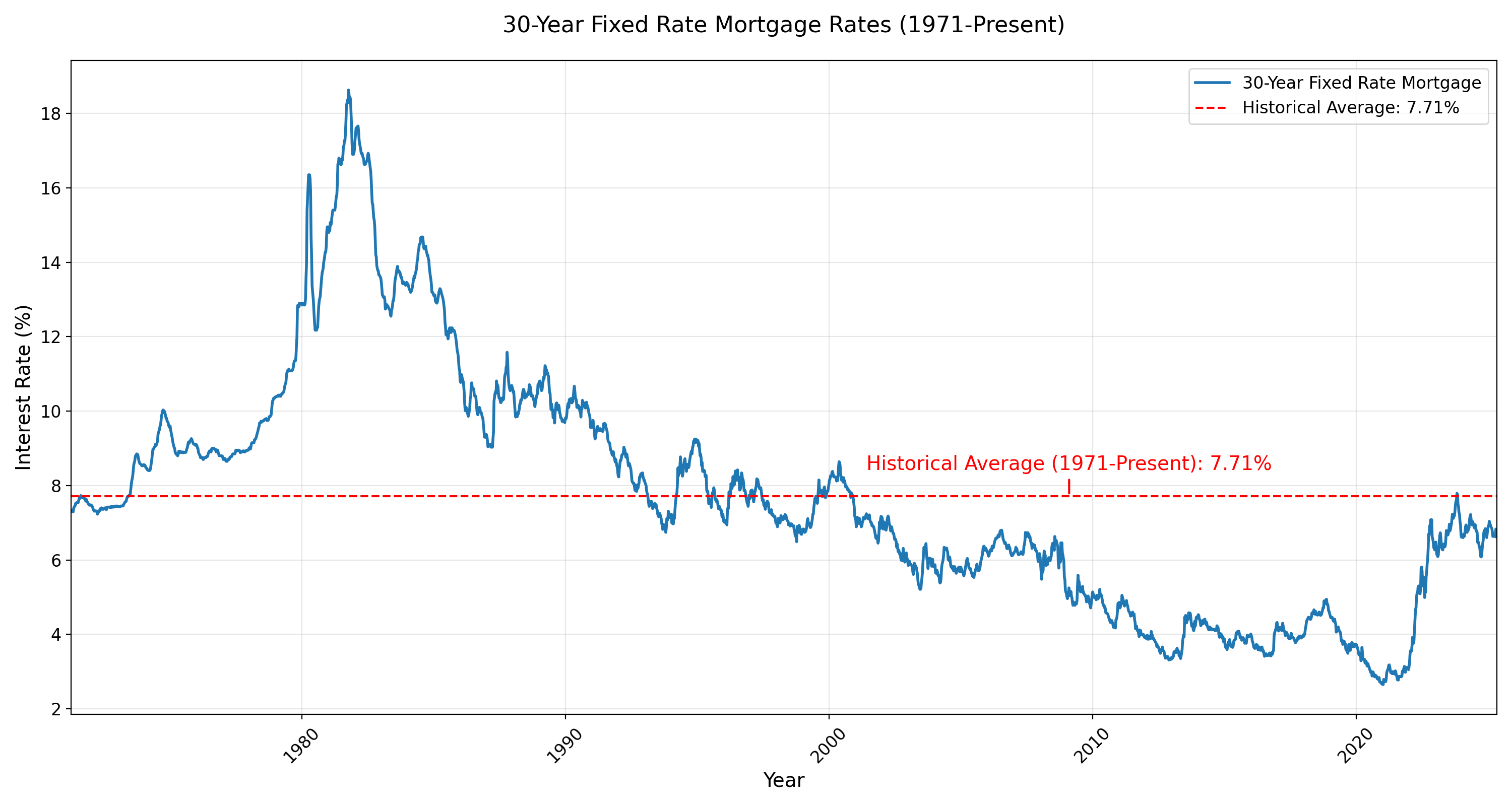
Even when market rates are trending upward, strategic financial planning can significantly improve your chances of securing a competitive 30-year fixed mortgage rate. Proactive steps can make a substantial difference in your long-term financial commitment.
Boosting Your Creditworthiness
Your credit score is arguably the most influential factor in determining your mortgage rate. Lenders rely heavily on this three-digit number to assess your risk profile. To secure the best rates, aim for a credit score of 740 or higher. Strategies to improve your creditworthiness include paying all your bills on time, as payment history is the most significant component of your score. Reducing outstanding debt, especially credit card balances, can lower your credit utilization ratio, which positively impacts your score. Avoid opening new credit accounts or making large purchases that require new credit lines in the months leading up to your mortgage application, as this can temporarily lower your score. Regularly check your credit report for errors and dispute any inaccuracies promptly. A strong credit score signals to lenders that you are a responsible borrower, making them more willing to offer you lower, more attractive interest rates.
Optimizing Your Down Payment and Loan-to-Value (LTV)
The size of your down payment directly affects your loan-to-value (LTV) ratio, which is another crucial factor for lenders. A larger down payment means you’re borrowing less relative to the home’s value, reducing the lender’s risk. Typically, a down payment of 20% or more (resulting in an LTV of 80% or less) can unlock lower interest rates and often allows you to avoid private mortgage insurance (PMI), which adds to your monthly housing costs. Even if you can’t reach the 20% threshold, putting down as much as you comfortably can will reduce your LTV and likely result in a better rate than a minimal down payment. Lenders view borrowers with substantial equity from the outset as more financially stable and less likely to default, rewarding them with more favorable terms.
The Power of Comparison Shopping for Lenders
One of the most effective strategies for securing a competitive rate is to shop around and compare offers from multiple lenders. Don’t settle for the first quote you receive. Approach several banks, credit unions, and mortgage brokers to obtain pre-approval letters and detailed loan estimates. Each lender has its own pricing structure, overhead costs, and risk assessment models, meaning rates can vary significantly from one institution to another for the exact same borrower. Requesting quotes within a short period (typically 14-45 days) will allow credit bureaus to group these inquiries as a single event, minimizing the impact on your credit score. Pay close attention to both the interest rate and the APR, as discussed earlier, to compare the true cost of each loan. A difference of even a quarter of a percentage point can translate to tens of thousands of dollars saved over the 30-year term.
Considering Discount Points and Closing Costs
When evaluating mortgage offers, understand how discount points and closing costs play into the total expense. Discount points are essentially prepaid interest that you pay upfront at closing in exchange for a lower interest rate over the life of the loan. One discount point typically costs 1% of the loan amount and can reduce your interest rate by a fraction of a percentage point. While paying points can lower your monthly payments, you need to calculate the “break-even point” – how long it will take for the savings from the lower interest rate to offset the upfront cost of the points. This strategy is most beneficial if you plan to stay in your home for many years. Additionally, be mindful of all closing costs, which include various fees charged by the lender, title company, and other parties involved in the transaction. These can significantly add to the upfront cost of your mortgage. Negotiating closing costs or seeking lender credits can also help reduce your total out-of-pocket expenses.
Future Outlook and Market Predictions
Forecasting mortgage rates is an inexact science, heavily dependent on global economic shifts and unpredictable events. However, understanding expert predictions and preparing for potential fluctuations can help homeowners and buyers make more resilient financial plans.
Expert Projections for Mortgage Rates
Mortgage rate projections are continually updated by leading financial institutions, economists, and housing market analysts. These forecasts are typically based on assessments of inflation trends, Federal Reserve policy, GDP growth, and employment figures. While predictions can vary, many experts offer insights into the likely trajectory of 30-year fixed rates over the coming months and years. Generally, if inflation remains elevated or if the economy continues to show robust growth, the consensus might lean towards steady or moderately rising rates. Conversely, signs of economic slowdown or a significant decrease in inflation could lead to predictions of stable or slightly falling rates. It’s crucial to consult a range of reputable sources for these projections, understanding that they are not guarantees but educated guesses based on current data and anticipated future conditions. Staying abreast of these expert opinions can provide a valuable context for your home financing decisions.
How to Prepare for Potential Rate Shifts
Given the inherent unpredictability of mortgage rates, having a strategy in place to prepare for potential shifts is wise. For prospective homebuyers, this might mean getting pre-approved for a mortgage to lock in an interest rate for a certain period, protecting you from rate increases while you search for a home. If rates are volatile, consider whether a rate lock is available and for how long. For current homeowners contemplating a refinance, continuously monitor rates and be ready to act quickly if a favorable window opens up. Maintaining a strong credit score and a healthy emergency fund are always good financial practices, as they provide flexibility and resilience regardless of market conditions. If rates decline significantly after you’ve secured your mortgage, remember that refinancing is always an option, though it involves new closing costs. Being financially prepared and informed allows you to pivot and take advantage of opportunities or mitigate risks as rates evolve.

The Long-Term Perspective for Homeowners
While daily rate fluctuations can seem daunting, adopting a long-term perspective is vital for homeowners, especially those with a 30-year fixed mortgage. The primary benefit of a fixed rate is its protection against future rate increases, ensuring your principal and interest payments remain stable regardless of market volatility. Over three decades, the housing market, economic conditions, and interest rates will inevitably experience numerous cycles. Having a fixed rate allows you to ride out these fluctuations with predictable housing costs. Focus on building equity, paying down your principal, and leveraging your home as a long-term asset. While refinancing opportunities may arise, the initial stability provided by a 30-year fixed mortgage often outweighs the desire to constantly chase the absolute lowest rate. Your home is not just an investment; it’s a place to live, and the financial stability offered by a fixed-rate loan contributes significantly to overall financial well-being and peace of mind.
In conclusion, understanding what current 30-year fixed mortgage rates entail goes beyond simply looking up a number. It involves grasping the economic forces at play, knowing how to interpret various financial metrics, and strategically positioning yourself to secure the most advantageous terms. By boosting your creditworthiness, optimizing your down payment, and diligently comparison shopping, you can significantly influence the rate you receive. While the future of mortgage rates remains fluid, staying informed and adopting a long-term financial perspective will empower you to make sound decisions for your home and your financial future.
aViewFromTheCave is a participant in the Amazon Services LLC Associates Program, an affiliate advertising program designed to provide a means for sites to earn advertising fees by advertising and linking to Amazon.com. Amazon, the Amazon logo, AmazonSupply, and the AmazonSupply logo are trademarks of Amazon.com, Inc. or its affiliates. As an Amazon Associate we earn affiliate commissions from qualifying purchases.