
In the fast-paced world of global finance, the ability to anticipate market movements before the opening bell rings on Wall Street is an invaluable asset for investors, day traders, and institutional fund managers alike. When people ask, “What are the current Dow futures?” they are generally looking for a pulse check on the Dow Jones Industrial Average (DJIA) before the New York Stock Exchange officially opens for business. These futures serve as a leading indicator, providing a continuous narrative of market sentiment that bridges the gap between trading sessions. Understanding the mechanics, the drivers, and the strategic implications of Dow futures is essential for anyone looking to navigate the complexities of modern equity markets.
The Mechanics of Dow Futures Contracts
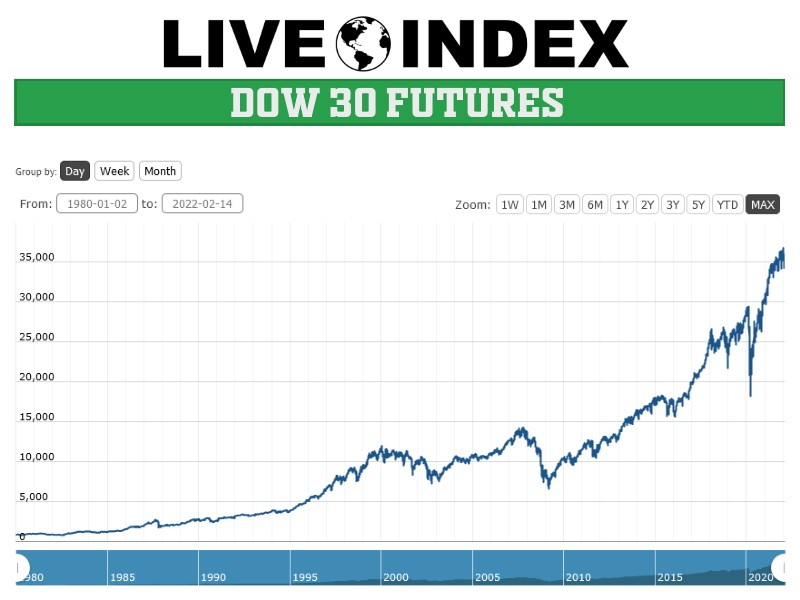
To understand what current Dow futures are, one must first understand the underlying structure of a futures contract. A futures contract is a legal agreement to buy or sell a particular asset—in this case, an index representing the Dow Jones Industrial Average—at a predetermined price at a specified time in the future. These contracts are traded on the Chicago Board of Trade (CBOT), which is part of the CME Group.
Unlike the DJIA itself, which is a price-weighted index of 30 prominent blue-chip companies, Dow futures are derivative products. This means their value is derived from the expected future value of the index. Because futures trade nearly 24 hours a day, five days a week, they capture global economic events and geopolitical shifts that occur while the traditional U.S. stock market is closed.
E-mini and Micro E-mini Dow Futures
For the modern investor, the most common way to interact with Dow futures is through the E-mini (ticker symbol: YM) and the Micro E-mini (ticker symbol: MYM) contracts. The E-mini Dow contract has a value of $5 times the Dow Jones Industrial Average. For example, if the Dow is trading at 38,000, the total value of one E-mini contract is $190,000.
The Micro E-mini Dow futures were introduced to provide a more accessible entry point for retail investors. These contracts are one-tenth the size of the standard E-mini, with a multiplier of $0.50 per point. This smaller contract size allows for more precise risk management and lower capital requirements, making the “current Dow futures” a relevant data point for individual portfolios as well as massive hedge funds.
The Role of the Dow Divisor
While the futures track the index, the underlying index calculation is unique. The DJIA is price-weighted, meaning stocks with higher share prices have a greater influence on the index’s movement than those with lower share prices. To maintain continuity despite stock splits and changes in the index components, the “Dow Divisor” is utilized. When traders monitor current Dow futures, they are essentially betting on how these 30 specific companies—and the mathematical divisor that binds them—will be valued by the market at the next expiration date.
Why Dow Futures Matter to the Modern Investor
Dow futures are more than just a betting mechanism; they are a critical tool for price discovery. Because they trade around the clock, they are the first to react to overnight news from Asia and Europe. If a major economic report is released in London or a central bank makes an unexpected announcement in Tokyo, the Dow futures will reflect that sentiment long before the 9:30 AM EST opening in New York.
Sentiment and Pre-Market Direction
For the average investor, checking current Dow futures is a morning ritual. If the futures are “green” (trading higher), it suggests that the cash market will likely open with a positive “gap up.” Conversely, if futures are “red” (trading lower), investors prepare for a potential “gap down.” This pre-market direction helps traders set their bias for the day and adjust their stop-loss orders or entry points accordingly.
Hedging Against Downside Risk
Institutional investors use Dow futures as a sophisticated hedging tool. If a fund manager holds a large basket of blue-chip stocks and anticipates a short-term market downturn due to an upcoming Federal Reserve meeting, they can sell Dow futures contracts. If the market drops, the gains on the short futures position can offset the losses in the physical stock portfolio. This ability to protect capital without liquidating core positions is why the liquidity of the futures market is so vital to financial stability.
Global Market Correlation
The Dow is often viewed as a proxy for the health of the American industrial and corporate landscape. Therefore, current Dow futures act as a beacon for global markets. International traders look to these futures to gauge the “risk-on” or “risk-off” appetite of the world’s largest economy. When Dow futures show significant volatility, it often triggers a domino effect across European and Asian indices, highlighting the interconnectedness of the 21st-century financial ecosystem.
Navigating Volatility: Key Drivers of Price Fluctuations
The “current” state of Dow futures is never static. It is a shifting mosaic influenced by a myriad of data points. To interpret why futures are moving in a particular direction, one must look at the primary catalysts that drive volatility in the blue-chip sector.

Macroeconomic Indicators and the Federal Reserve
The most significant mover of Dow futures is the Federal Reserve’s monetary policy. Interest rate decisions, FOMC minutes, and speeches by Fed governors can cause hundreds of points of movement in seconds. Since the 30 companies in the Dow are large, established corporations, they are often sensitive to borrowing costs and the strength of the U.S. dollar.
Beyond interest rates, monthly reports such as the Consumer Price Index (CPI), the Producer Price Index (PPI), and non-farm payroll (NFP) data are “high-impact” events. If inflation data comes in hotter than expected, Dow futures typically sell off as traders price in a more aggressive Fed.
Corporate Earnings and the Blue-Chip Influence
Since the Dow consists of only 30 stocks, the earnings reports of individual components can significantly move the futures. For example, if a high-priced component like UnitedHealth Group or Goldman Sachs reports disappointing quarterly results or lowers guidance, it can drag the entire Dow futures contract lower, even if the other 29 stocks are performing moderately well. This concentration of power makes the Dow a unique instrument compared to the more diversified S&P 500.
Geopolitical Stability and External Shocks
Geopolitical events—such as elections, trade negotiations, or international conflicts—are frequently priced into Dow futures during the overnight session. Because these events often happen outside of U.S. trading hours, the futures market serves as the primary arena for absorbing these shocks. Traders watch the “basis”—the difference between the futures price and the actual index price—to determine how much “fear” or “greed” is currently baked into the market.
Strategic Implementation: Trading vs. Tracking
Understanding what Dow futures are is the first step; knowing how to use that information for financial gain is the second. There are two primary ways to interact with this data: as a passive tracker or an active trader.
For the Active Trader: Leverage and Timing
Trading Dow futures involves the use of leverage. This means a trader can control a large contract value with a relatively small amount of “margin” or collateral. While leverage can amplify gains, it equally amplifies losses. Active traders use technical analysis—studying chart patterns, moving averages, and Relative Strength Index (RSI) levels—to scalp profits from the intraday fluctuations of Dow futures. The liquidity of the YM and MYM contracts ensures that traders can enter and exit positions with minimal slippage.
For the Long-Term Investor: Contextual Awareness
For those focused on long-term wealth accumulation, Dow futures provide context rather than a daily trading signal. An investor might look at futures to determine the best time to deploy “dry powder” (cash reserves) into the market. If futures are significantly down on a temporary geopolitical scare, it might provide a more favorable entry point for buying shares of high-quality Dow components at a discount.
Risk Management and the “Stop-Loss”
The 24-hour nature of the futures market means that price movements can occur while a trader is asleep. This necessitates the use of robust risk management strategies. Protective stop-loss orders are essential to prevent catastrophic losses in the event of an overnight market crash. Furthermore, understanding “circuit breakers”—regulatory pauses in trading triggered by extreme percentage drops—is crucial for anyone participating in the futures market.
The Relationship Between Futures and the Cash Market
A common point of confusion is why the current Dow futures price is rarely the exact same as the “cash” Dow Jones Industrial Average price. This discrepancy is known as the “premium” or “discount.”
Fair Value Calculation
The “fair value” of a futures contract is a theoretical calculation that accounts for the difference between the interest lost on the money used to buy the stocks and the dividends received from those stocks over a certain period. If the actual futures price is significantly higher than the fair value, it suggests bullishness; if it is lower, it suggests bearishness.
As the expiration date of the futures contract approaches (which happens quarterly in March, June, September, and December), the futures price and the cash index price converge. This process is part of the natural arbitration that keeps the financial markets efficient.

Arbitrage and Market Efficiency
High-frequency trading (HFT) firms use sophisticated algorithms to exploit tiny differences between the price of Dow futures and the underlying 30 stocks. This arbitrage ensures that the “current Dow futures” remain a reliable reflection of the actual value of the Dow Jones Industrial Average. When you see the futures moving, you are witnessing the collective intelligence of thousands of participants and algorithms processing information in real-time.
In conclusion, current Dow futures are the financial world’s early warning system and its most prominent forward-looking tool. By providing a continuous, 24-hour stream of data, they allow investors to gauge the market’s temperature, hedge against systemic risks, and capitalize on global economic shifts. Whether you are a retail investor checking the pre-market quotes on your phone or a professional trader managing a complex derivatives book, Dow futures remain an indispensable pillar of the modern financial landscape, offering a window into the future of the American industrial economy.
aViewFromTheCave is a participant in the Amazon Services LLC Associates Program, an affiliate advertising program designed to provide a means for sites to earn advertising fees by advertising and linking to Amazon.com. Amazon, the Amazon logo, AmazonSupply, and the AmazonSupply logo are trademarks of Amazon.com, Inc. or its affiliates. As an Amazon Associate we earn affiliate commissions from qualifying purchases.