
The simple query “what are the closest movie theaters to me” represents one of the most common applications of hyper-local search technology in the modern era. While it takes only a fraction of a second for a smartphone or desktop to return a list of nearby screening rooms, showtimes, and ticket prices, the underlying technological stack involved is a complex orchestration of geospatial data, real-time API integrations, and sophisticated search algorithms. This digital ecosystem has transformed the way consumers interact with physical entertainment spaces, moving the industry from physical marquees and newspaper listings to a seamless, data-driven experience.

The Evolution of Hyper-Local Search Algorithms
To understand how a device identifies the nearest cinema, one must look at the evolution of geolocation technology. In the early days of the internet, location was determined primarily through IP addresses, which offered only a broad approximation of a user’s city or region. Today, the process is significantly more granular and precise.
Geolocation and GPS Integration
Modern mobile devices utilize a combination of Global Positioning System (GPS), GLONASS, and other Global Navigation Satellite Systems (GNSS). When a user asks a search engine or a dedicated app for theater locations, the device’s hardware connects with multiple satellites to determine its exact latitude and longitude coordinates. This coordinate pair is the foundational data point for any local search.
However, GPS is not always available, particularly in dense urban environments where “urban canyons” (tall buildings) can block satellite signals. To compensate, tech providers use Assisted GPS (A-GPS), which leverages cellular network data to speed up the time-to-first-fix. This ensures that even when you are deep inside a shopping mall, your device can still pinpoint which theater is just two floors above you.
The Role of Wi-Fi Triangulation and Geofencing
In addition to satellite data, tech companies employ Wi-Fi triangulation and Bluetooth beacon technology to refine location accuracy. By scanning for nearby Wi-Fi access points and cross-referencing them against a massive database of known locations, a device can determine its position within a few meters.
This level of precision enables “geofencing”—the creation of a virtual perimeter around a specific location. Cinema chains use this to trigger push notifications or local ads when a potential customer enters a certain radius. From a search perspective, these signals allow the search engine to prioritize “hyper-local” results, ensuring that the theater three blocks away appears before the one five miles away, even if both are technically in the same neighborhood.
Mapping APIs: The Engine Powering Discovery
When you search for movie theaters, you aren’t just seeing a list of names; you are interacting with a sophisticated visualization layer provided by Mapping Application Programming Interfaces (APIs). These APIs are the connective tissue between a user’s query and the massive databases maintained by tech giants and cinema conglomerates.
Google Maps Platform and Places API
The Google Maps Platform is perhaps the most ubiquitous tool in this space. Its “Places API” is specifically designed to handle queries related to points of interest. When the “near me” query is executed, the API performs a “Nearby Search” request. This request involves a complex set of parameters: the user’s location, the radius of the search, and the “type” of business (in this case, “movie_theater”).
The API doesn’t just return a name; it delivers a structured JSON (JavaScript Object Notation) payload containing the theater’s address, rating, operational status, and even current traffic levels. This allows the software to calculate not just the physical distance, but the “time-to-destination,” which is often a more relevant metric for a user trying to catch a film starting in fifteen minutes.
Real-Time Data Synchronization and Aggregation
Finding a theater is only half the battle; the technology must also provide accurate showtimes. This requires real-time data synchronization between the cinema’s internal Point of Sale (POS) systems and third-party aggregators.
Large-scale aggregators use specialized scrapers and direct API pipelines to pull schedule data from theaters every few minutes. This ensures that if a screening is sold out or a late-night show is canceled, the information is updated across search engines almost instantaneously. The integration of “Live Busyness” data further enhances this, showing users how crowded a theater is at any given moment by analyzing aggregated and anonymized location history data.
The Impact of AI and Personalization on Search Results
The transition from “search” to “discovery” has been driven largely by Artificial Intelligence (AI) and Machine Learning (ML). In the past, a search for theaters would yield a static list based solely on distance. Today, AI models curate these results based on a multitude of personalized factors.
Predictive Analytics and User Behavior
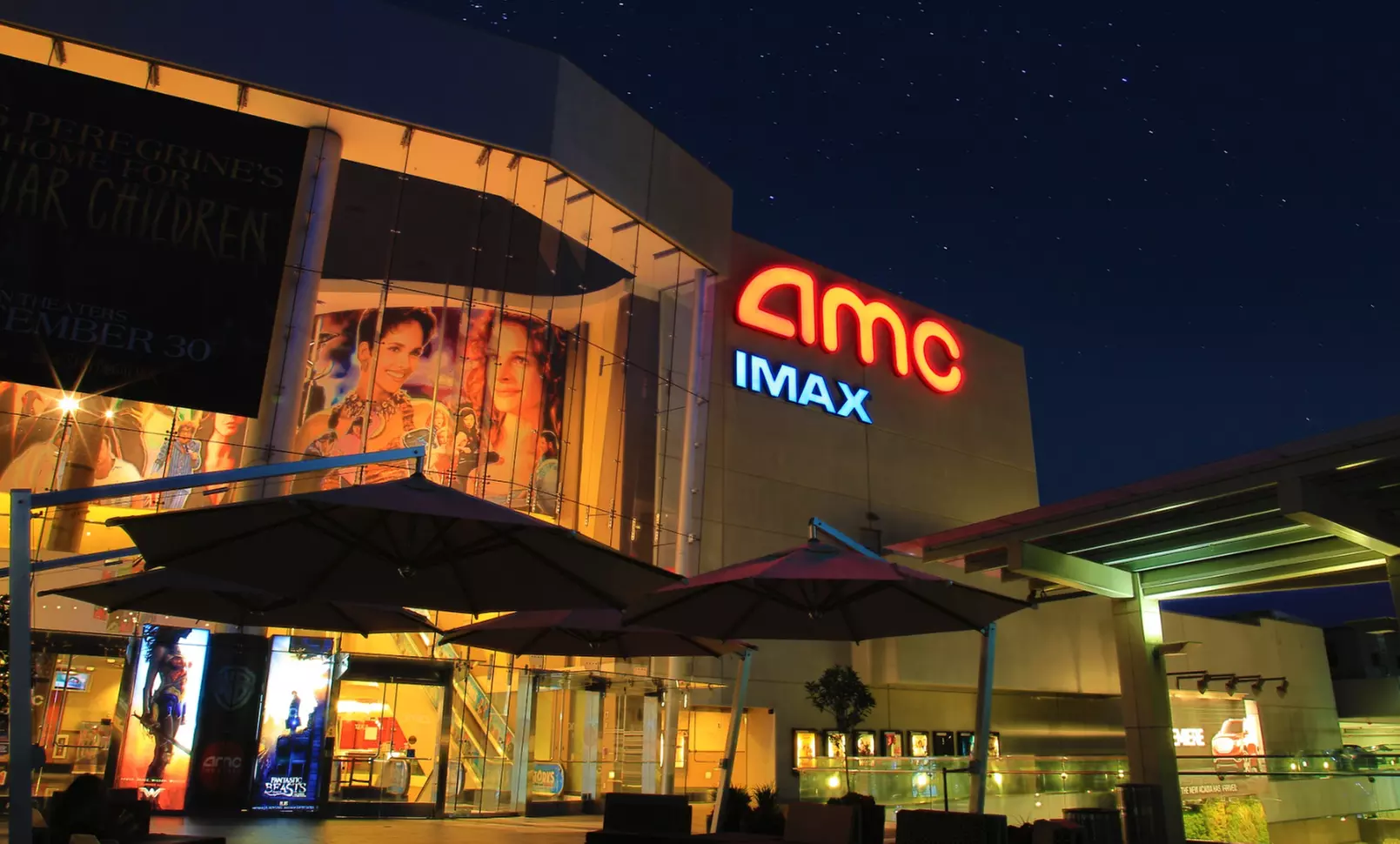
Modern search engines utilize predictive analytics to determine what a user actually wants when they search for “movie theaters near me.” If a user has a history of visiting independent arthouse cinemas, the AI may prioritize a small local theater over a major multiplex, even if the multiplex is physically closer.
Machine learning models analyze historical click-through rates (CTR), dwell time on specific theater pages, and past ticket purchases to build a profile of user preference. This personalization ensures that the “closest” theater is also the most “relevant” theater. This involves processing high-dimensional data in real-time, matching user intent with available inventory and local geographic constraints.
Natural Language Processing (NLP) in Voice Search
With the rise of smart speakers and virtual assistants like Siri, Alexa, and Google Assistant, the way users query for theaters has shifted toward natural language. Voice search relies on Natural Language Processing (NLP) to parse the intent behind a phrase.
When a user asks, “What’s playing nearby tonight?” the AI must identify three key components: the intent (movie listings), the location (nearby), and the temporal constraint (tonight). NLP models, specifically transformer-based architectures, allow these assistants to understand context and nuance, providing a conversational response that feels intuitive rather than mechanical.
Mobile Apps and the Digital Transformation of the Theater Experience
The quest to find the closest theater usually ends with a mobile application. The tech stack of a modern cinema app—whether it’s AMC, Fandango, or Atom Tickets—is designed to convert a search query into a frictionless transaction.
Progressive Web Apps (PWAs) vs. Native Applications
Many users no longer wish to download a dedicated app for every service. This has led to the rise of Progressive Web Apps (PWAs). These are web-based applications that look and feel like native apps but run directly in a browser. They utilize “Service Workers” to cache data and provide a fast, responsive interface even on slow mobile networks.
For the user searching for a theater, a PWA allows them to browse trailers, select seats, and pay using digital wallets (like Apple Pay or Google Wallet) without ever leaving their search results. The integration of “WebAuthn” and biometric authentication further streamlines the process, allowing for secure, one-touch ticket purchasing.
Beacon Technology and In-Theater Connectivity
The technology doesn’t stop once the user arrives at the theater. Many modern cinemas utilize Bluetooth Low Energy (BLE) beacons. When a user who has searched for a theater and bought a ticket enters the building, the beacon detects their phone and can automatically surface their digital ticket on the lock screen.
Furthermore, theater chains are increasingly using “Indoor Positioning Systems” (IPS) to help users navigate large multiplexes. Using the same principles as GPS but applied to indoor environments through Wi-Fi and sensor fusion, these systems can guide a user directly to their specific auditorium, the concession stand, or the nearest restroom.
Security and Privacy in Location-Based Services
As location-based technology becomes more pervasive, the focus on digital security and data privacy has intensified. The query “what are the closest movie theaters to me” requires the user to share highly sensitive geospatial data, which necessitates robust protection layers.
Data Encryption and Anonymization
To protect user privacy, tech companies employ techniques such as “Differential Privacy.” This adds mathematical “noise” to the dataset, allowing companies to analyze trends and improve search results without being able to pinpoint the exact identity or movements of an individual user. When location data is sent from a device to a server, it is typically protected by Transport Layer Security (TLS) encryption, ensuring that the data cannot be intercepted by malicious third parties.

Permission-Based Access and User Control
Modern mobile operating systems (iOS and Android) have moved toward a “permission-based” model for location data. Users can now choose to share their location “Only While Using the App” or even provide an “Approximate Location” instead of an exact one.
For developers of theater-finding tools, this means they must build “privacy-first” architectures. If a user denies precise location access, the software must be capable of falling back to zip code entry or IP-based estimation. This balance between utility and privacy is a cornerstone of modern software engineering in the local search space.
The simple act of finding a movie theater nearby is a testament to how far technology has integrated into the fabric of daily life. It is a symphony of satellite navigation, cloud computing, real-time data streaming, and artificial intelligence, all working together to bridge the gap between the digital search and the physical cinematic experience. As these technologies continue to advance—moving toward augmented reality (AR) overlays and even more predictive AI—the “closest” theater will become not just a place on a map, but a perfectly timed, personalized entertainment destination.
aViewFromTheCave is a participant in the Amazon Services LLC Associates Program, an affiliate advertising program designed to provide a means for sites to earn advertising fees by advertising and linking to Amazon.com. Amazon, the Amazon logo, AmazonSupply, and the AmazonSupply logo are trademarks of Amazon.com, Inc. or its affiliates. As an Amazon Associate we earn affiliate commissions from qualifying purchases.