
The tapestry of the Jewish Bible, known as the Tanakh, is a foundational text for Judaism and has profoundly influenced Western civilization. Far from being a monolithic entity, the Tanakh is a meticulously organized collection of sacred writings, comprising 24 distinct books. These books are not merely historical records or theological treatises; they are living documents that encapsulate the covenant between God and the Jewish people, the unfolding of divine law, the narratives of prophets, and the wisdom of ancient sages. Understanding the structure and content of the Tanakh is essential for grasping the depth and breadth of Jewish tradition, its ethical imperatives, and its enduring spiritual legacy.
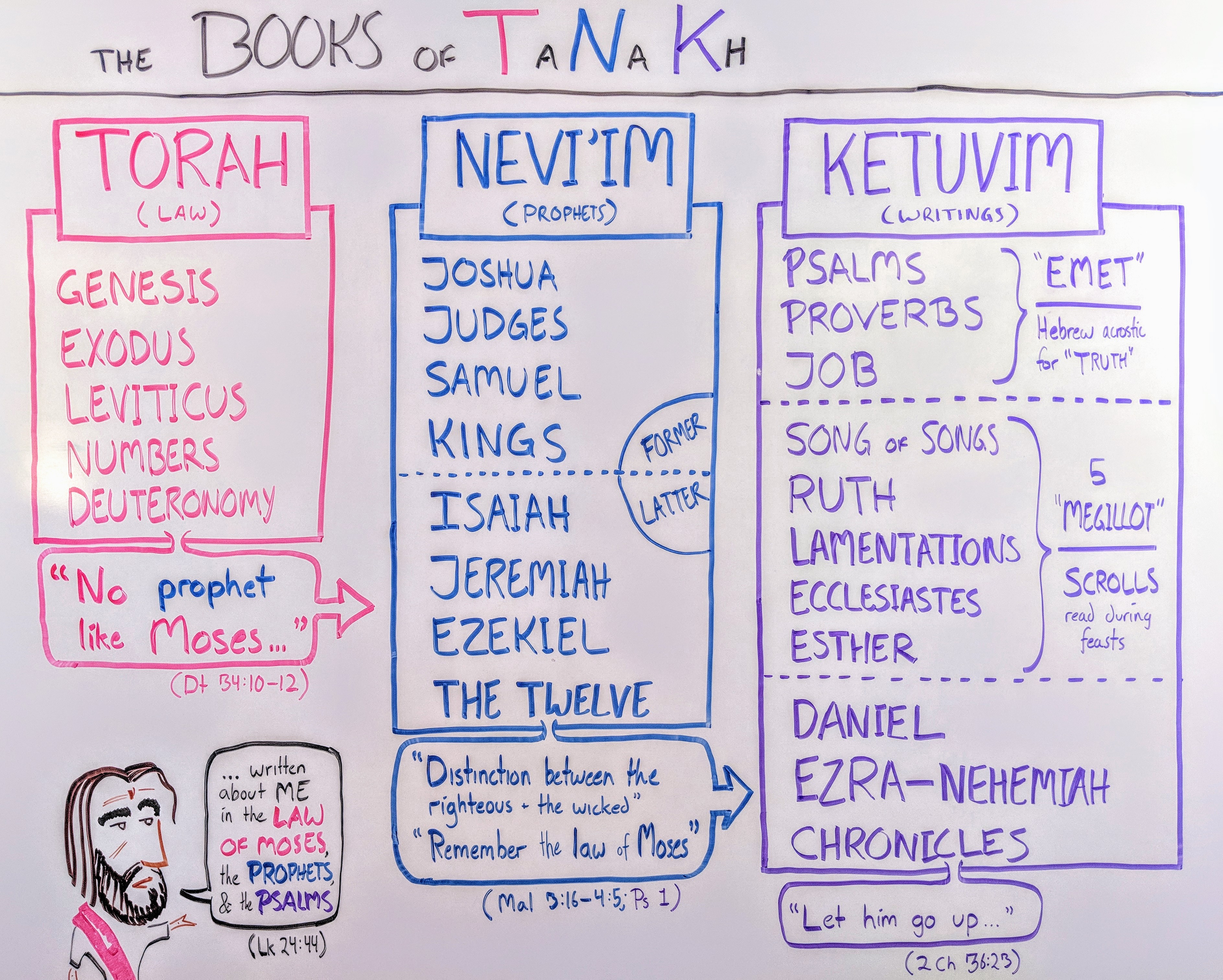
The organization of the Tanakh reflects a tripartite division: the Torah (Teaching), the Nevi’im (Prophets), and the Ketuvim (Writings). Each section possesses a unique character, purpose, and theological weight, yet they all converge to present a cohesive and divinely inspired message. Delving into each of these divisions reveals the rich literary, historical, and spiritual dimensions of the Jewish Bible.
The Torah: The Foundation of Jewish Law and Narrative
The Torah, often translated as “Teaching” or “Instruction,” constitutes the first and most sacred division of the Tanakh. It is traditionally attributed to Moses and comprises the first five books, known collectively as the Pentateuch or the Five Books of Moses. These books are considered the bedrock of Jewish belief and practice, laying out the fundamental principles of faith, the covenant between God and Israel, and the laws that govern Jewish life.
Genesis (Bereishit): The Book of Beginnings
Genesis, or Bereishit in Hebrew, meaning “in the beginning,” chronicles the creation of the universe, the origins of humanity, and the early history of the patriarchs and matriarchs of the Jewish people. It begins with the majestic account of God’s creation of the cosmos, followed by the stories of Adam and Eve, their expulsion from the Garden of Eden, and the subsequent development of humankind.
Crucially, Genesis introduces the concept of the covenant, first with Noah and then most significantly with Abraham. The narratives of Abraham, Isaac, Jacob, and Joseph form the central pillar of this book, detailing God’s promises to Abraham, the establishment of his lineage, and their journey to Egypt. These foundational stories explore themes of faith, doubt, divine providence, human frailty, and the unfolding of God’s redemptive plan. The ethical lessons derived from these early narratives, such as the importance of hospitality, righteousness, and perseverance, continue to resonate deeply within Jewish thought.
Exodus (Shemot): Liberation and Law
Exodus, or Shemot in Hebrew, meaning “names,” recounts the Israelites’ enslavement in Egypt, their miraculous liberation under the leadership of Moses, and their subsequent journey through the wilderness. This book is pivotal for understanding the formation of the Jewish nation. It culminates in the giving of the Ten Commandments at Mount Sinai and the establishment of the covenant between God and the entire Israelite nation.
Exodus details the construction of the Tabernacle, the portable sanctuary that served as the center of Israelite worship in the desert, and the elaborate laws and rituals associated with its service. The book emphasizes themes of divine intervention, freedom from oppression, and the responsibility that comes with receiving divine law. The Passover narrative, a central observance in Judaism, finds its origins in this book, commemorating the Exodus from Egypt.
Leviticus (Vayikra): Holiness and Purity
Leviticus, or Vayikra in Hebrew, meaning “and He called,” is primarily a book of laws and ordinances concerning ritual purity, sacrifices, and the conduct of priests in the Tabernacle. While it might appear to be a collection of technical regulations, Leviticus is fundamentally about holiness – the pursuit of sanctity in all aspects of life.
The book elaborates on the sacrificial system, outlining different types of offerings and their purposes, which were central to atonement and communal worship. It also contains extensive laws regarding dietary restrictions (kashrut), sexual morality, and the observance of various festivals. The concept of “kadosh” (holy) pervades Leviticus, emphasizing the separation required to be in relationship with a holy God. It lays the groundwork for understanding the ethical dimensions of religious observance and the importance of communal responsibility.
Numbers (Bamidbar): Wilderness and Wandering
Numbers, or Bamidbar in Hebrew, meaning “in the wilderness,” describes the Israelites’ forty years of wandering in the Sinai Desert after the Exodus. This book is characterized by its census-taking (hence the English title) and its accounts of the challenges, rebellions, and divine judgments faced by the Israelites during their nomadic journey.
Numbers details the organization of the tribes, the responsibilities of the Levites, and the frequent complaints and murmurings of the people against Moses and God. It also recounts significant events such as the defeat of the Midianites, the incident of Balaam and his donkey, and the appointment of Joshua as Moses’ successor. The book highlights themes of faith, obedience, divine patience, and the consequences of disobedience. It underscores the importance of leadership and the ongoing need for divine guidance.
Deuteronomy (Devarim): The Second Law and Farewell Address
Deuteronomy, or Devarim in Hebrew, meaning “words,” is Moses’ farewell address to the Israelites on the plains of Moab, just before they are to enter the Promised Land. It largely reiterates and expands upon the laws previously given in Exodus, Leviticus, and Numbers, often referred to as the “second law” or a restatement of the covenant.
Moses delivers three lengthy speeches, recounting the history of their journey, urging the people to remain faithful to God and to observe His commandments, and warning them of the blessings of obedience and the curses of disobedience. This book places a strong emphasis on love for God and for one’s neighbor, and on the importance of remembering God’s acts and teachings. Deuteronomy serves as a crucial theological summation and a powerful exhortation to faithfulness as the Israelites stand on the threshold of a new era.
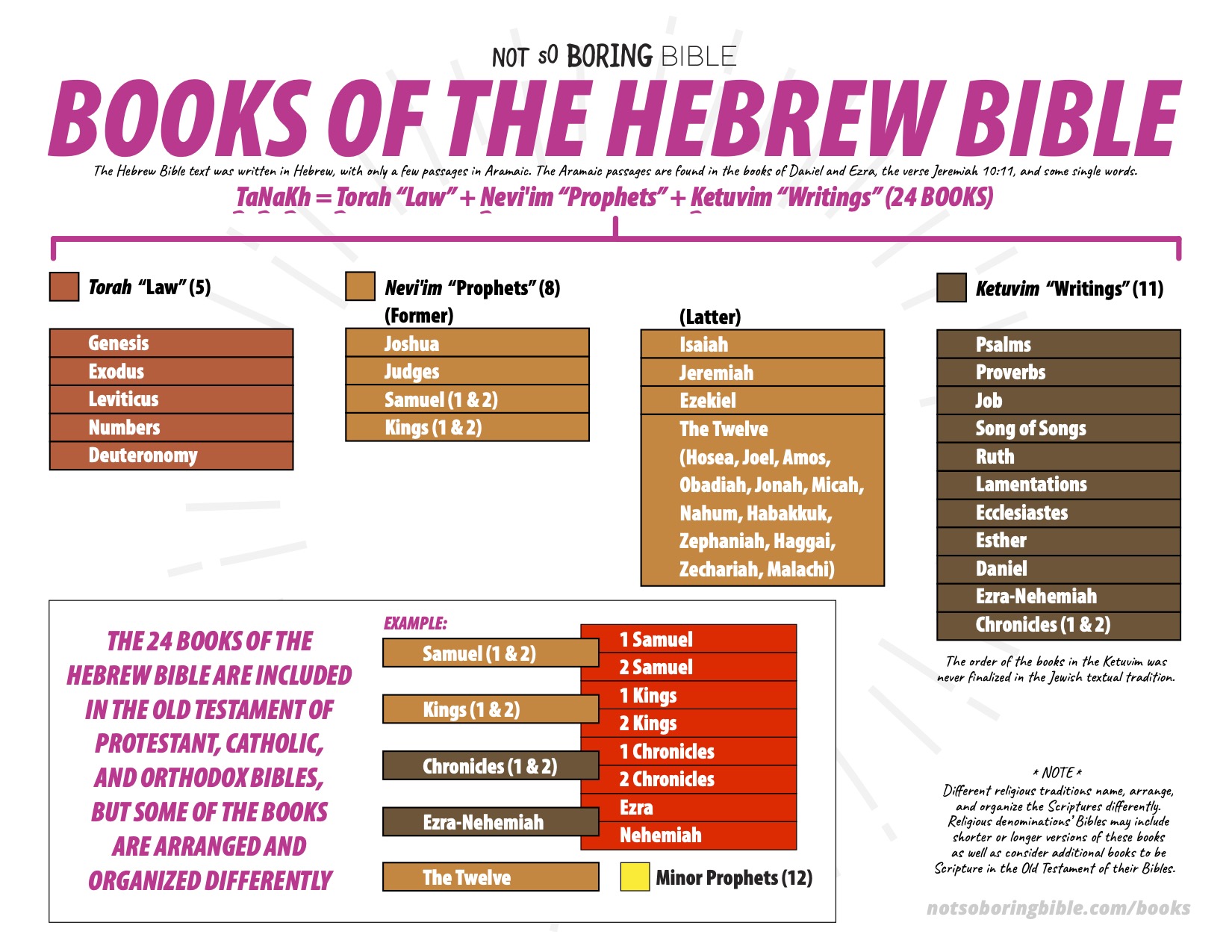
The Nevi’im: The Prophets and Their Messages
The Nevi’im, or Prophets, form the second major division of the Tanakh. This section comprises historical narratives and the prophetic pronouncements of individuals who served as God’s spokespersons. The Prophets were not merely fortune-tellers; they were moral and spiritual leaders who challenged the people and their rulers to live according to God’s will, offering both stern warnings and messages of hope and future redemption. The Nevi’im are further divided into the Former Prophets and the Latter Prophets.
The Former Prophets: Historical Narratives with Prophetic Insight
The Former Prophets include Joshua, Judges, Samuel, and Kings. These books are historical in nature, recounting the period from the Israelite conquest of Canaan to the Babylonian exile. However, they are written with a distinct theological perspective, interpreting historical events through the lens of covenant faithfulness.
- Joshua: Details the conquest and division of the land of Canaan among the twelve tribes of Israel under the leadership of Joshua, Moses’ successor. It emphasizes God’s faithfulness in fulfilling His promises and the importance of obedience in possessing the land.
- Judges: Chronicles the period after Joshua’s death, a time marked by cycles of apostasy, oppression by surrounding nations, and the rise of charismatic leaders called “judges” who delivered Israel. It highlights the recurring theme of the consequences of abandoning God.
- Samuel (1 & 2): Covers the transition from the era of the Judges to the establishment of the monarchy. It narrates the stories of Samuel, the last judge and first prophet of the united monarchy, as well as the reigns of King Saul and King David, laying the foundation for the Davidic dynasty.
- Kings (1 & 2): Continues the history of the Israelite monarchy, detailing the reign of Solomon, the division of the kingdom into Israel and Judah, and the subsequent histories of both kingdoms, marked by periods of both righteousness and idolatry, culminating in their respective exiles.
The Latter Prophets: Prophetic Oracles and Visions
The Latter Prophets are further subdivided into the Major Prophets and the Minor Prophets, distinguished by the length of their books, not by their importance. These prophets delivered divine messages of judgment and comfort, calling the people to repentance and offering visions of future restoration and messianic hope.
Major Prophets:
- Isaiah: Known for its profound theological insights, Isaiah offers powerful pronouncements of judgment against Israel and surrounding nations, but also contains rich prophecies of hope, redemption, and the coming of a suffering servant and a messianic king.
- Jeremiah: A prophet of doom, Jeremiah prophesied during the tumultuous period leading up to the destruction of Jerusalem. His messages often focused on the impending judgment due to the people’s persistent sin and urged them to submit to Babylonian rule. He also offered messages of eventual restoration and a new covenant.
- Ezekiel: A priest exiled to Babylon, Ezekiel received visions of God’s glory, divine judgment, and the future restoration of Israel. His prophecies are characterized by vivid imagery and symbolic actions.
Minor Prophets:
- Hosea: Uses the metaphor of his own troubled marriage to illustrate God’s unwavering love for an unfaithful Israel.
- Joel: Focuses on a devastating locust plague as a precursor to God’s day of judgment, calling for repentance and promising future outpouring of God’s spirit.
- Amos: A shepherd from Judah, Amos delivered strong social justice messages, condemning the oppression of the poor and the corruption of the wealthy in the Northern Kingdom of Israel.
- Obadiah: A short prophecy of judgment against Edom for its actions against Judah.
- Jonah: The famous story of a prophet’s reluctant mission to Nineveh, highlighting God’s mercy extended even to Israel’s enemies.
- Micah: Addresses both judgment and hope, calling for justice and righteousness while promising future peace and a ruler from Bethlehem.
- Nahum: A prophecy of judgment against Nineveh, the capital of Assyria.
- Habakkuk: A dialogue between the prophet and God, questioning God’s justice in allowing wickedness and the rise of Babylon, culminating in faith in God’s ultimate sovereignty.
- Zephaniah: Warns of God’s impending judgment on Judah and surrounding nations, but also offers a message of hope for a purified remnant.
- Haggai: Encourages the returned exiles to rebuild the Temple in Jerusalem.
- Zechariah: Also a prophet of the post-exilic period, Zechariah’s prophecies include visions for rebuilding the Temple and messages of future messianic hope.
- Malachi: The final book of the Nevi’im, Malachi addresses the spiritual complacency of the post-exilic community and heralds the coming of a messenger of God.
The Ketuvim: The Writings and Their Diverse Expressions
The Ketuvim, or Writings, represent the most diverse section of the Tanakh. This collection includes a variety of literary genres, such as poetry, wisdom literature, historical accounts, and liturgical compositions. While the Ketuvim are considered less authoritative than the Torah, they are nonetheless sacred and vital to Jewish tradition, offering profound insights into human experience, faith, and the nature of God.
Poetic and Wisdom Literature: Psalms, Proverbs, and Job
- Psalms (Tehillim): A collection of 150 poetic prayers, hymns, and songs, David is traditionally credited with composing many of them. The Psalms express the full range of human emotion – joy, sorrow, praise, lament, confession, and thanksgiving – offering a profound devotional resource.
- Proverbs (Mishlei): Attributed primarily to Solomon, this book offers practical wisdom and ethical instruction for daily living. It emphasizes the fear of the Lord as the beginning of wisdom and provides guidance on a wide array of topics, from diligence and speech to relationships and wealth.
- Job (Iyov): A profound exploration of suffering, justice, and the relationship between humanity and God. It recounts the story of Job, a righteous man who endures immense personal tragedy, grappling with the question of why the innocent suffer. The book challenges simplistic explanations of divine retribution and ultimately affirms God’s inscrutable wisdom.
Scrolls (Megillot): Five Distinct Literary Works
Five books within the Ketuvim are known as the Megillot, or Scrolls, and are traditionally read during specific Jewish festivals.
- Song of Songs (Shir HaShirim): A beautiful and erotic love poem, often interpreted allegorically as a representation of God’s love for Israel or Christ’s love for the Church in Christian tradition. In Jewish tradition, it is celebrated for its depiction of passionate devotion.
- Ruth: A short historical narrative set during the time of the Judges, focusing on the loyalty and devotion of a Moabite woman named Ruth to her Israelite mother-in-law, Naomi. It highlights themes of kindness, redemption, and the inclusion of non-Israelites within God’s plan.
- Lamentations (Eikhah): A series of five poetic laments mourning the destruction of Jerusalem and the First Temple. It is recited on Tisha B’Av, the traditional day of mourning.
- Ecclesiastes (Kohelet): A philosophical exploration of the meaning and purpose of life, attributed to Solomon. The author, “Kohelet” (the Preacher), grapples with the vanity of worldly pursuits and concludes that true fulfillment lies in fearing God and keeping His commandments.
- Esther: The story of a Jewish queen in Persia who saves her people from annihilation. It is read during the festival of Purim and emphasizes themes of divine providence and Jewish survival.
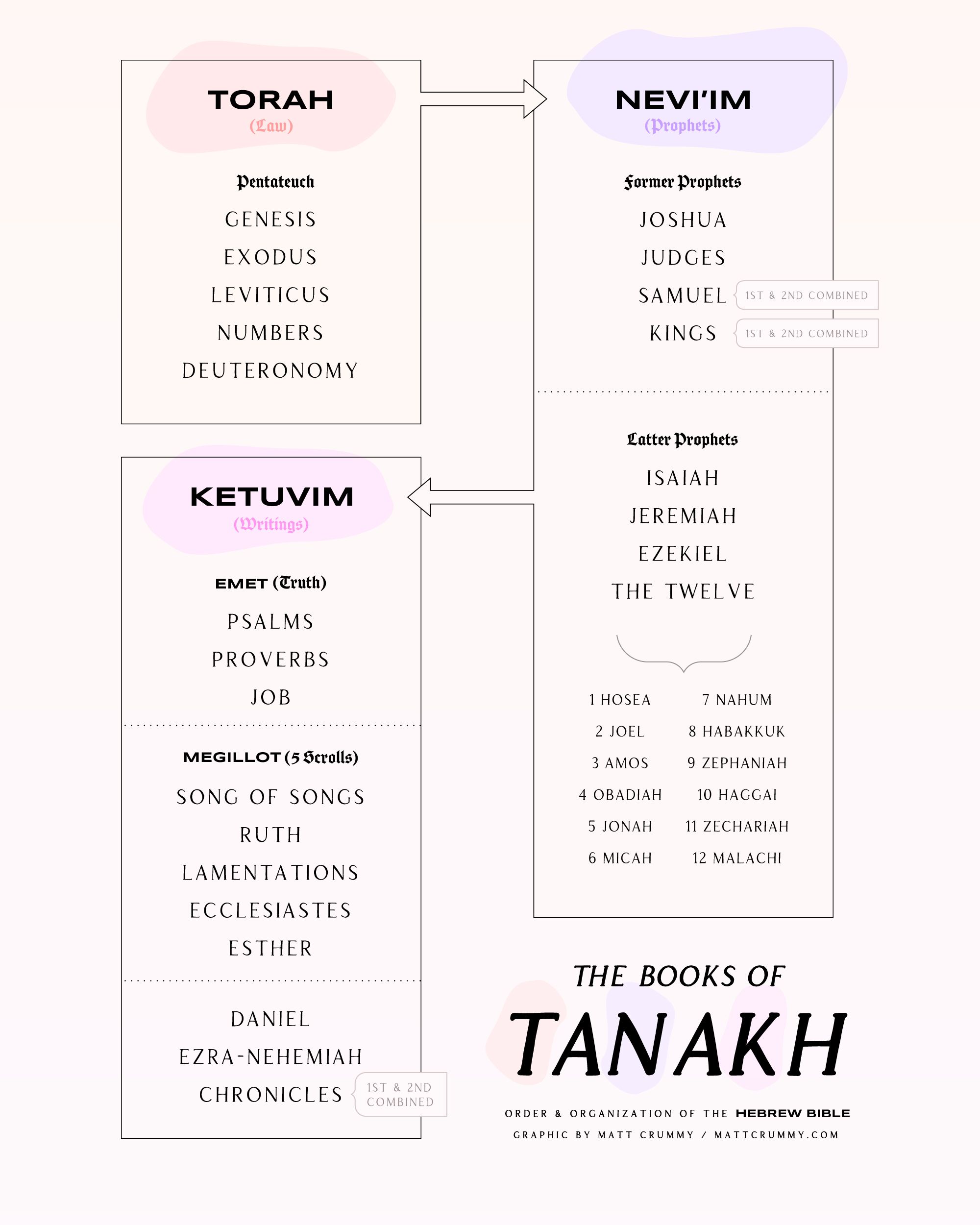
Historical and Apocalyptic Texts: Daniel and Ezra-Nehemiah
- Daniel: A collection of narratives and apocalyptic visions set during the Babylonian exile. The book recounts Daniel’s faithfulness to God in the face of persecution and offers prophetic insights into future empires and the ultimate triumph of God’s kingdom.
- Ezra and Nehemiah: These books are often treated as a single work and chronicle the return of the Jewish exiles from Babylon and their efforts to rebuild the Temple and the walls of Jerusalem, as well as their spiritual and social reforms.
In conclusion, the Jewish Bible, or Tanakh, is a multifaceted treasury of divine revelation, historical memory, ethical instruction, and enduring wisdom. Its tripartite structure – Torah, Nevi’im, and Ketuvim – provides a framework for understanding its vast content, from the foundational laws and narratives of creation and redemption to the profound pronouncements of prophets and the diverse expressions of faith found in the Writings. Each book, within its unique genre and historical context, contributes to the overarching narrative of God’s relationship with humanity and the unfolding of His divine purposes. Studying the books of the Jewish Bible offers an unparalleled opportunity to engage with ancient wisdom that continues to shape spiritual, ethical, and cultural landscapes today.
aViewFromTheCave is a participant in the Amazon Services LLC Associates Program, an affiliate advertising program designed to provide a means for sites to earn advertising fees by advertising and linking to Amazon.com. Amazon, the Amazon logo, AmazonSupply, and the AmazonSupply logo are trademarks of Amazon.com, Inc. or its affiliates. As an Amazon Associate we earn affiliate commissions from qualifying purchases.