
The world of finance is a labyrinth of instruments, strategies, and terminologies, each designed to serve a specific purpose within the intricate dance of capital. Among these, futures contracts stand out as powerful tools for both seasoned investors and institutional players. Specifically, S&P futures represent a cornerstone of modern financial markets, offering a unique avenue for hedging, speculation, and portfolio management tied directly to the performance of the broader U.S. stock market. Understanding S&P futures is crucial for anyone seeking to deepen their knowledge of financial derivatives, grasp the mechanics of market risk management, or explore advanced trading strategies.
At its core, an S&P future is a financial derivative that allows market participants to bet on or hedge against the future price movement of the S&P 500 index. This isn’t an investment in the individual stocks that comprise the index, nor is it a direct ownership stake in the index itself. Instead, it’s a contractual agreement to buy or sell the value of the S&P 500 index at a predetermined price on a specific future date. Its significance stems from the S&P 500’s status as a barometer for the U.S. economy, making its futures contracts incredibly liquid and influential.
Understanding the S&P 500 Index
Before delving into the specifics of S&P futures, it’s essential to first grasp the underlying asset: the S&P 500 index. This index is far more than just a list of companies; it’s a dynamic representation of the health and direction of the U.S. stock market and, by extension, the broader economy.
What is the S&P 500?
The S&P 500, or Standard & Poor’s 500, is a stock market index that tracks the performance of 500 of the largest publicly traded companies in the United States. These companies are selected by a committee at S&P Dow Jones Indices based on criteria such as market size, liquidity, and sector representation. Unlike other indices that might use a simple average, the S&P 500 is a market-capitalization-weighted index. This means that companies with larger market values have a greater impact on the index’s overall movement. For instance, a small percentage change in Apple or Microsoft’s stock price will affect the index more significantly than the same percentage change in a smaller constituent company.
The S&P 500 is considered a bellwether for the U.S. economy for several reasons. Its constituents span all major sectors—technology, healthcare, finance, consumer discretionary, industrials, and more—providing a diversified snapshot of corporate America. Its broad coverage and market-cap weighting mean that it accurately reflects the performance of the most influential companies, which collectively drive a substantial portion of the nation’s economic activity.
Why is it significant?
The significance of the S&P 500 extends beyond its mere composition. It serves as a benchmark against which the performance of mutual funds, exchange-traded funds (ETFs), and individual investment portfolios is often measured. Professional money managers frequently strive to “beat the S&P 500,” making its performance a constant point of comparison in the investment world. For investors, it offers a quick and reliable gauge of how the overall stock market is performing. A rising S&P 500 generally signals economic confidence and growth, while a declining index can indicate turbulence or recessionary fears. Its robust liquidity and transparency also make it an ideal underlying asset for derivatives like futures, allowing for efficient price discovery and risk transfer.
Demystifying Futures Contracts
S&P futures are a specific type of futures contract. To truly understand their mechanics, it’s important to first establish a foundational understanding of what futures contracts are in general.
The Basics of Futures
A futures contract is a legally binding agreement between two parties to buy or sell a particular asset at a predetermined price on a specified date in the future. The asset can be a commodity (like oil, gold, or corn), a currency, an interest rate, or a stock index, such as the S&P 500. What distinguishes futures from other agreements is their standardization and their trading on organized exchanges. These exchanges facilitate transparency, provide a marketplace for buyers and sellers, and act as clearinghouses to guarantee the performance of the contract, effectively mitigating counterparty risk.
When you enter a futures contract, you’re not actually buying or selling the asset today. Instead, you’re agreeing to a future transaction. If you “go long” a futures contract, you agree to buy the asset at the specified price on the future date, hoping its price will rise. If you “go short,” you agree to sell the asset at that price, expecting its price to fall. The key is that both parties are obligated to fulfill their end of the bargain, regardless of the spot price of the asset on the expiration date. However, most futures contracts are closed out before expiration, with traders offsetting their positions to realize gains or losses.
Key Characteristics: Standardization, Leverage, Expiration
Futures contracts come with several defining characteristics that make them unique financial instruments:
-
Standardization: Every futures contract for a given asset is identical in terms of quality, quantity, delivery location (if applicable), and expiration date. This standardization is critical for liquidity and efficient trading, as it means traders don’t have to negotiate individual terms for each contract. For S&P futures, standardization means that one E-mini S&P 500 contract always represents the same multiplier of the index.
-
Leverage: Futures trading involves significant leverage. A trader needs to deposit only a small percentage of the total contract value, known as initial margin, to control a much larger underlying asset value. While this leverage can amplify returns dramatically, it also magnifies losses just as quickly. A small adverse price movement can result in a substantial percentage loss on the initial margin.
-
Expiration: All futures contracts have a finite life and expire on a specific date. On or before this date, the contract must either be settled or offset. S&P futures are cash-settled, meaning that upon expiration, no physical delivery of stocks occurs. Instead, the difference between the contract price and the index’s value at expiration is exchanged in cash. This is a crucial distinction from commodity futures, which often involve physical delivery.
S&P Futures: The Mechanics
With an understanding of both the S&P 500 and general futures contracts, we can now zero in on the specific mechanics of S&P futures. These derivatives are among the most actively traded contracts globally, reflecting the constant demand for tools to manage exposure to the U.S. equity market.
What S&P Futures Represent
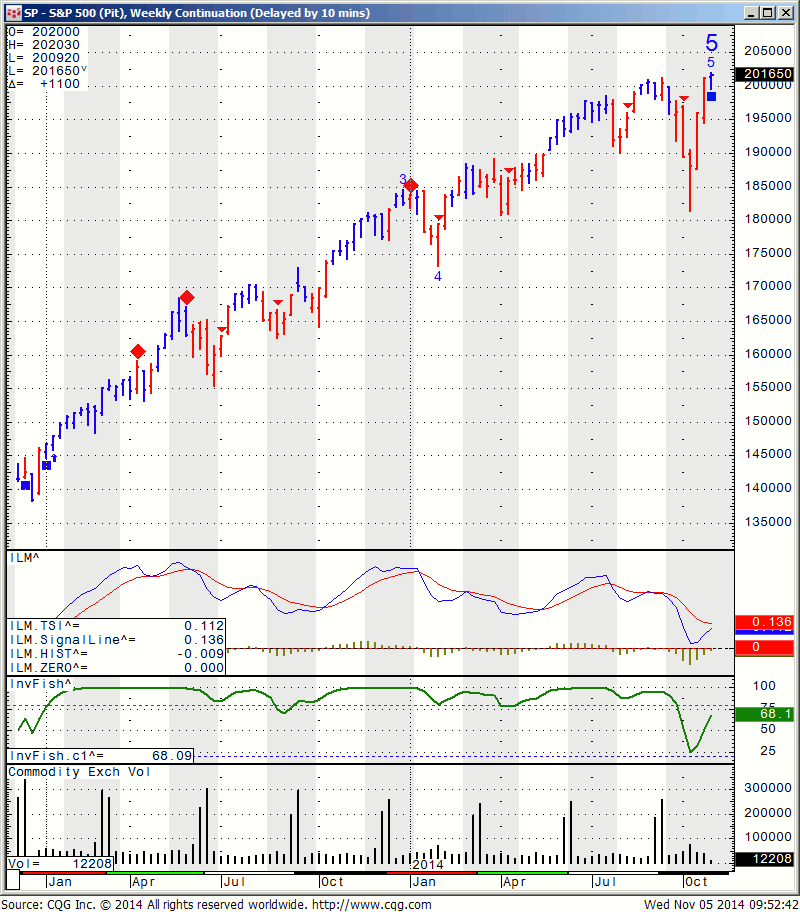
S&P futures represent the expectation of the S&P 500 index’s value at a future point in time. Unlike investing directly in a basket of S&P 500 stocks or an S&P 500 ETF, S&P futures contracts are purely financial bets on the index’s direction. Each contract has a defined monetary value per index point, known as a multiplier. For the most popular S&P futures contracts, this multiplier allows traders to control a significant notional value of the index with a single contract.
When you buy an S&P future, you are essentially agreeing to purchase the index at a set price on a future date. If the S&P 500 rises above that price, your contract becomes more valuable. Conversely, if the S&P 500 falls below that price, your contract loses value. The profit or loss is determined by the change in the index’s value multiplied by the contract’s multiplier.
Common Contracts: E-mini S&P 500 Futures (ES) and Micro E-mini S&P 500 Futures (MES)
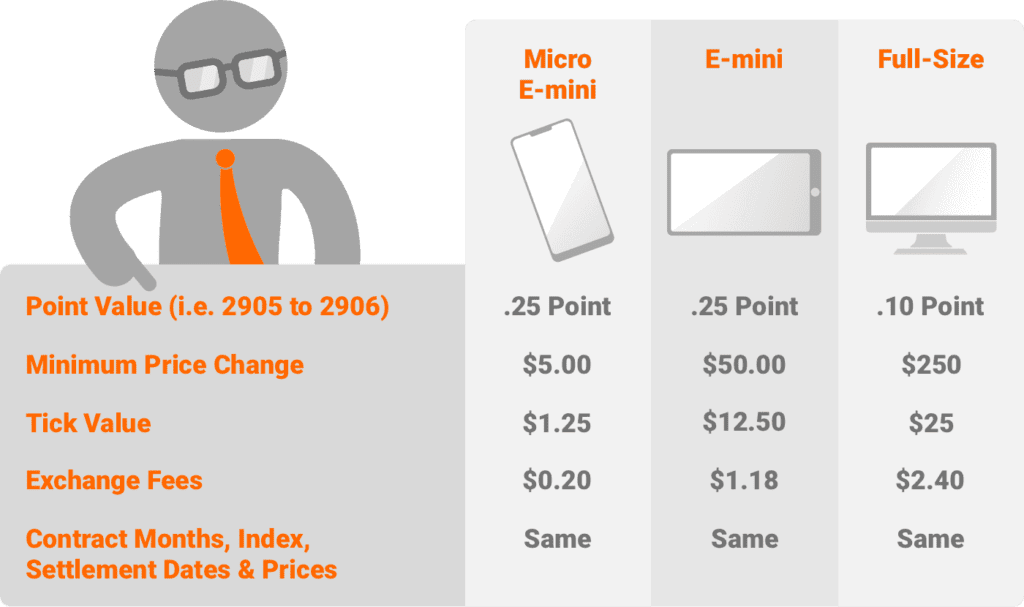
The most widely traded S&P futures contract is the E-mini S&P 500 Futures (ES). Introduced in 1997, the E-mini contract was designed to be a smaller, more accessible version of the original “Standard” S&P 500 futures contract. The ES contract has a multiplier of $50 per index point. This means that if the S&P 500 index moves by 1 point, the value of one ES contract changes by $50. With the S&P 500 often trading in the thousands of points, a single ES contract represents a substantial notional value, typically hundreds of thousands of dollars. The E-mini’s smaller size (compared to the full-size contract) made futures trading more accessible to individual traders and smaller institutions.
More recently, the Micro E-mini S&P 500 Futures (MES) were introduced in 2019 to further democratize access to S&P futures. The MES contract has a multiplier of $5 per index point, which is one-tenth the size of the E-mini. This significantly reduces the capital requirement and potential risk per contract, making it an even more viable option for individual traders with smaller accounts or those wishing to manage their risk with greater precision. Both ES and MES contracts are highly liquid, trade nearly 24 hours a day during weekdays, and have quarterly expiration cycles (March, June, September, December).
How They Are Traded
S&P futures are traded electronically on futures exchanges, primarily the Chicago Mercantile Exchange (CME) Group, through its Globex electronic trading platform. Traders use brokerage accounts specifically designed for futures trading. These accounts require an initial margin deposit, which is a good-faith deposit to ensure the trader can cover potential losses. This is not a down payment but rather collateral.
Throughout the trading day, as the S&P 500 index fluctuates, the value of the futures contract changes. Profits or losses are marked-to-market daily (and often intra-day), meaning that gains are added to the account balance, and losses are deducted. If losses cause the account balance to fall below a certain maintenance margin level, the trader receives a “margin call,” requiring them to deposit additional funds to bring their account back up to the initial margin level. Failure to meet a margin call can lead to the forced liquidation of positions.
The Role and Benefits of S&P Futures
S&P futures are not merely speculative tools; they play vital roles in the broader financial ecosystem, serving diverse needs for various market participants.
Hedging Against Market Risk
One of the primary uses of S&P futures is hedging. Large institutional investors, such as pension funds, mutual funds, and insurance companies, often hold vast portfolios of S&P 500 stocks. If these institutions anticipate a short-term market downturn but do not wish to sell their underlying stock holdings (perhaps due to tax implications or transaction costs), they can “short” S&P futures contracts.
By shorting futures, they essentially lock in a selling price for the index. If the market does indeed fall, the losses in their stock portfolio would be offset, at least partially, by gains in their short futures positions. Conversely, if they anticipate a rise and wish to gain exposure without fully deploying capital, they can “go long” on S&P futures. This strategy allows them to mitigate risk and manage exposure efficiently without disrupting their core equity holdings. For example, a portfolio manager expecting a market decline could sell S&P 500 futures, thereby creating a synthetic short position that protects the portfolio’s value from a broad market decline.
Speculation and Price Discovery
S&P futures are also incredibly popular among speculators—traders who aim to profit from anticipated price movements. Given their high liquidity and leverage, futures allow traders to take significant positions with relatively less capital. Speculators can go long if they believe the S&P 500 will rise or go short if they expect a decline. The ability to easily go short without borrowing actual stocks is a significant advantage for bearish speculators.
Beyond individual profit motives, this speculative activity contributes to price discovery. The continuous buying and selling pressure in the futures market, driven by millions of participants with varying expectations, helps to determine the current consensus on the future value of the S&P 500. This often leads the futures market to react to news and economic data before the underlying cash market, providing valuable insights into market sentiment.
Portfolio Management and Diversification
For portfolio managers, S&P futures offer flexibility in managing their overall market exposure. They can quickly adjust their portfolio’s beta (sensitivity to market movements) by buying or selling futures, rather than rebalancing a large, complex portfolio of individual stocks. This is particularly useful for tactical asset allocation strategies, where managers want to swiftly increase or decrease their exposure to the broad market.
Furthermore, S&P futures can be used as a component of diversification strategies. While they are correlated with the stock market, their distinct risk/reward profile and operational mechanics can complement other assets within a diversified portfolio, especially for those managing global or multi-asset class portfolios. They can also be a capital-efficient way to maintain market exposure while keeping a larger portion of one’s capital in less volatile assets.
Risks and Considerations
Despite their utility, S&P futures, like all leveraged derivatives, come with significant risks that must be thoroughly understood before engaging in trading.
Leverage Amplification
The primary risk associated with S&P futures is the amplification of both gains and losses due to leverage. While a small initial margin allows control over a large notional value, it also means that a small adverse price movement can quickly wipe out a significant portion, or even all, of the initial capital. Traders can lose more than their initial margin, as they are obligated to cover losses that exceed their deposited funds. This makes sound risk management and position sizing paramount.
Volatility and Margin Calls
The S&P 500 index, and by extension its futures, can experience significant volatility, especially during periods of economic uncertainty or major news events. Rapid price swings can lead to quick and substantial losses. This volatility also increases the likelihood of receiving a margin call. If market movements against a trader’s position reduce their account equity below the maintenance margin level, they will be required to deposit additional funds immediately. Failure to meet a margin call can result in the automatic liquidation of positions, often at unfavorable prices, leading to realized losses.
Regulatory Oversight and Market Participants
S&P futures are traded on regulated exchanges, primarily under the oversight of the Commodity Futures Trading Commission (CFTC) in the U.S. This regulatory framework aims to ensure market integrity, transparency, and fairness. However, the complexity of futures contracts still requires a sophisticated understanding of market dynamics, economic indicators, and technical analysis.
Market participants range from large institutional hedgers and proprietary trading firms to individual retail traders. While Micro E-mini futures have made these markets more accessible, they are not suitable for every investor. Prospective traders should have a solid financial education, understand the risks involved, and ideally, practice with simulated trading accounts before committing real capital. Brokerage firms often have strict suitability requirements for opening futures trading accounts, reflecting the inherent risks.
In conclusion, S&P futures are powerful and versatile financial instruments that offer a gateway to the performance of the U.S. equity market. They provide essential tools for hedging against market downturns, speculating on future price movements, and efficiently managing portfolio exposure. However, their leveraged nature demands respect and a thorough understanding of the associated risks. For those who grasp their mechanics and apply disciplined risk management, S&P futures can be an invaluable component of a sophisticated financial strategy within the complex world of modern finance.
aViewFromTheCave is a participant in the Amazon Services LLC Associates Program, an affiliate advertising program designed to provide a means for sites to earn advertising fees by advertising and linking to Amazon.com. Amazon, the Amazon logo, AmazonSupply, and the AmazonSupply logo are trademarks of Amazon.com, Inc. or its affiliates. As an Amazon Associate we earn affiliate commissions from qualifying purchases.