
Social Security remains the most significant foundation of retirement planning for millions of Americans. Often viewed as a complex bureaucratic maze, the system is actually governed by a specific set of mathematical formulas and eligibility criteria designed to reward long-term participation in the workforce. Understanding exactly what your benefits are based on is not merely an academic exercise; it is a vital component of personal finance that dictates when you can afford to retire and what kind of lifestyle you can maintain.
Unlike a private savings account, Social Security is a “defined benefit” system. The amount you receive isn’t just based on how much you “put in,” but rather on a calculated average of your career earnings, the age at which you choose to stop working, and your relationship to other earners. To maximize this asset, one must look closely at the underlying mechanics of the Social Security Administration (SSA) calculations.
The Foundation of Eligibility: The Social Security Credit System
Before calculating how much you will receive, the SSA first determines if you are eligible to receive anything at all. This eligibility is built upon a system of “credits” earned through active participation in the workforce.
How You Earn Credits
Credits are based on your total annual wages or self-employment income. For every set amount of money you earn, you receive one credit. In 2024, for example, you earn one credit for every $1,730 of earnings. You can earn a maximum of four credits per year. This dollar amount usually increases annually to keep pace with average wage growth across the national economy.
The 40-Credit Requirement
For the vast majority of workers, the “magic number” for retirement benefits is 40. By earning the maximum of four credits per year for 10 years, you become “fully insured” under the Social Security system. It is important to note that these years do not need to be consecutive. A worker can move in and out of the workforce over several decades, and as long as the cumulative total reaches 40 credits, they have secured their seat at the table for retirement benefits.
Calculating the Primary Insurance Amount (PIA)
Once eligibility is established, the SSA moves to the most critical part of the process: determining your monthly check. This is known as your Primary Insurance Amount (PIA). This calculation is not based on your entire working history, but rather on a specific “snapshot” of your highest-earning years.
The 35-Year Rule
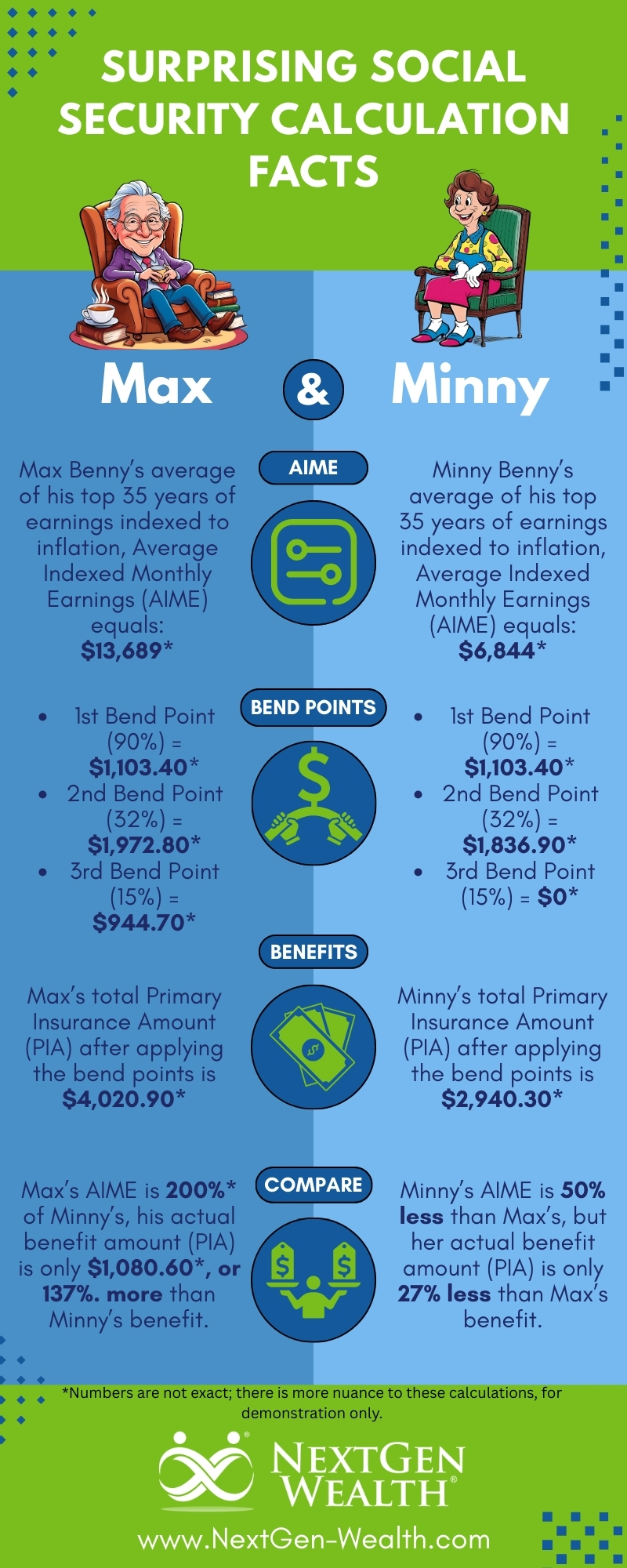
The SSA looks at your entire work history and identifies the 35 years in which you earned the most money. These earnings are “indexed” to account for changes in average wages over time, ensuring that $20,000 earned in 1985 is weighted fairly against $60,000 earned in 2023. These 35 years are then averaged and divided by 12 to find your Average Indexed Monthly Earnings (AIME).
If you have worked for fewer than 35 years, the SSA does not simply average the years you worked. Instead, they fill in the remaining years with “zeros.” For instance, if you worked for 30 years, five years of zeros will be factored into your average, significantly dragging down your monthly benefit. This makes the 35-year mark a critical threshold for anyone looking to optimize their personal finance strategy.
The Benefit Formula and “Bend Points”
Social Security is designed to be progressive, meaning it replaces a higher percentage of income for lower-wage earners than for higher-wage earners. To do this, the SSA applies a formula to your AIME using “bend points.”
For a person reaching age 62 in 2024, the formula takes:
- 90% of the first $1,174 of AIME.
- 32% of AIME between $1,174 and $7,078.
- 15% of AIME over $7,078.
The resulting total is your PIA—the amount you would receive if you retired exactly at your Full Retirement Age (FRA).
The Timing Factor: How Age Impacts Your Payout

While your earnings history sets the baseline for your benefits, the age at which you choose to claim those benefits acts as a massive multiplier—either positive or negative.
Defining Full Retirement Age (FRA)
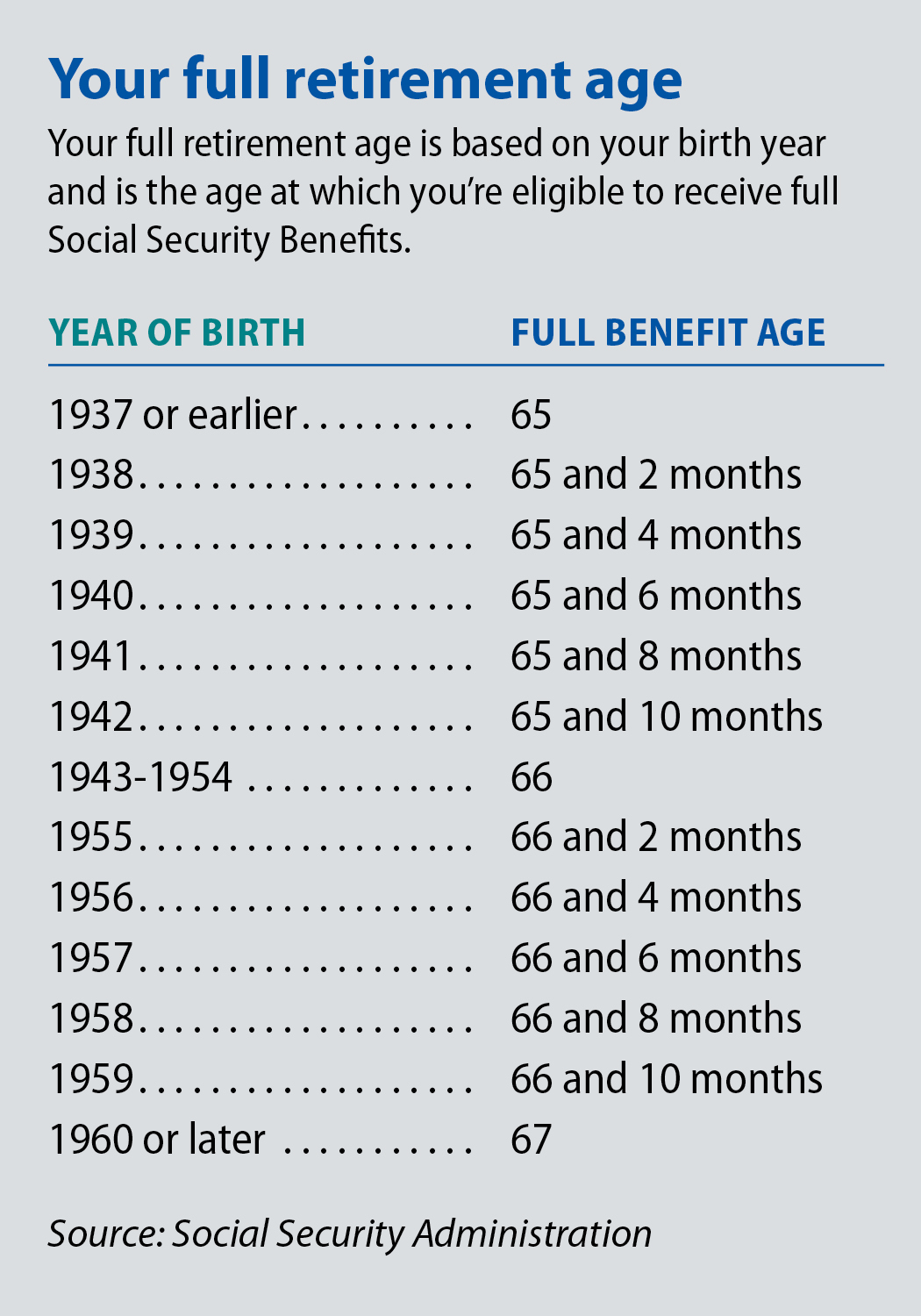
Your Full Retirement Age is the age at which you are entitled to 100% of your calculated PIA. For anyone born in 1960 or later, the FRA is 67. For those born earlier, it may be 66 and a few months. Understanding your specific FRA is the cornerstone of timing your retirement.
The Cost of Early Filing
You can begin claiming Social Security as early as age 62, but doing so comes with a permanent “haircut” to your monthly check. If your FRA is 67 and you claim at 62, your benefit is reduced by about 30%. This reduction is calculated month-by-month; the earlier you claim, the steeper the penalty. This is a critical consideration for personal finance: while you get checks sooner, the “break-even” point—where the total lifetime value of waiting surpasses the value of claiming early—usually occurs in your late 70s.
The Reward for Delayed Retirement
Conversely, the system rewards those who wait. For every year you delay claiming benefits beyond your FRA (up until age 70), your benefit increases by approximately 8% per year through “delayed retirement credits.” There is no financial incentive to wait past age 70, as the credits stop accumulating. However, waiting from age 67 to 70 can result in a monthly check that is 24% higher for the rest of your life, providing a powerful hedge against inflation and longevity risk.
Beyond Personal Earnings: Spousal and Survivor Benefits
Social Security benefits are not always based solely on your own work record. The system includes provisions for spouses, ex-spouses, and survivors, ensuring that the household’s financial health is protected even if one partner was not the primary earner.
Spousal Benefit Calculations
A spouse is generally eligible for up to 50% of the primary earner’s PIA. If a wife’s own work record entitles her to $1,000 a month, but her husband’s record entitles her to a spousal benefit of $1,500, the SSA will pay the higher amount. To qualify, the primary earner must already be claiming their own benefit. This allows couples to strategize: one partner might claim early to provide immediate cash flow, while the higher earner waits until age 70 to lock in the highest possible base for a future survivor benefit.
Survivor Benefits and Financial Protection
In the event of a worker’s death, the surviving spouse can often inherit 100% of the deceased worker’s benefit amount. This is where the “delayed retirement” strategy pays off twice; if the high-earner waits until 70 to maximize their check, they are also maximizing the “insurance policy” for their surviving spouse.
External Influences: Taxes and the Earnings Test
Even after your benefit is calculated and your age is factored in, your “take-home” Social Security amount may be influenced by your other income sources.
The Social Security Earnings Test
If you claim benefits before your FRA and continue to work, you may be subject to the “Earnings Test.” If your earned income exceeds a certain threshold ($22,320 in 2024), the SSA will temporarily withhold $1 for every $2 you earn above that limit. Once you reach your FRA, this test disappears, and the SSA recalculates your benefit to “give back” the withheld amounts over time. However, for immediate cash flow purposes, this is a vital factor for those considering a “semi-retirement” approach.
Taxation of Benefits
Social Security is not always tax-free. Depending on your “combined income” (adjusted gross income + tax-exempt interest + half of your Social Security benefits), you may owe federal income tax on up to 85% of your benefits.
- Individuals: If combined income is between $25,000 and $34,000, you may pay tax on 50% of benefits. Above $34,000, up to 85%.
- Couples: If combined income is between $32,000 and $44,000, you may pay tax on 50% of benefits. Above $44,000, up to 85%.
Strategizing for Maximum Payouts
Understanding what Social Security benefits are based on allows you to move from a passive recipient to an active strategist. To maximize your benefits, consider the following money-management steps:
- Audit Your Earnings Record: Log into your “my Social Security” account annually to ensure the SSA has recorded your income correctly. An error in your 35-year history can cost you thousands over a lifetime.
- Fill the “Zero” Years: If you are nearing retirement but have several years of low or zero earnings in your 35-year history, working even a few more years can replace those zeros with higher numbers, bumping up your AIME.
- Coordinate with Your Spouse: Don’t view Social Security in a vacuum. Analyze both partners’ records to determine who should file early and who should wait.
- Factor in Healthcare: Remember that Medicare Part B premiums are often deducted directly from Social Security checks. When calculating your net income, always account for these rising costs.
By treating Social Security as a calculated financial asset rather than a mysterious government check, you gain the clarity needed to build a robust, sustainable retirement plan. Your benefits are based on your work, your age, and your strategy—knowing how these variables interact is the first step toward financial security in your later years.
aViewFromTheCave is a participant in the Amazon Services LLC Associates Program, an affiliate advertising program designed to provide a means for sites to earn advertising fees by advertising and linking to Amazon.com. Amazon, the Amazon logo, AmazonSupply, and the AmazonSupply logo are trademarks of Amazon.com, Inc. or its affiliates. As an Amazon Associate we earn affiliate commissions from qualifying purchases.