
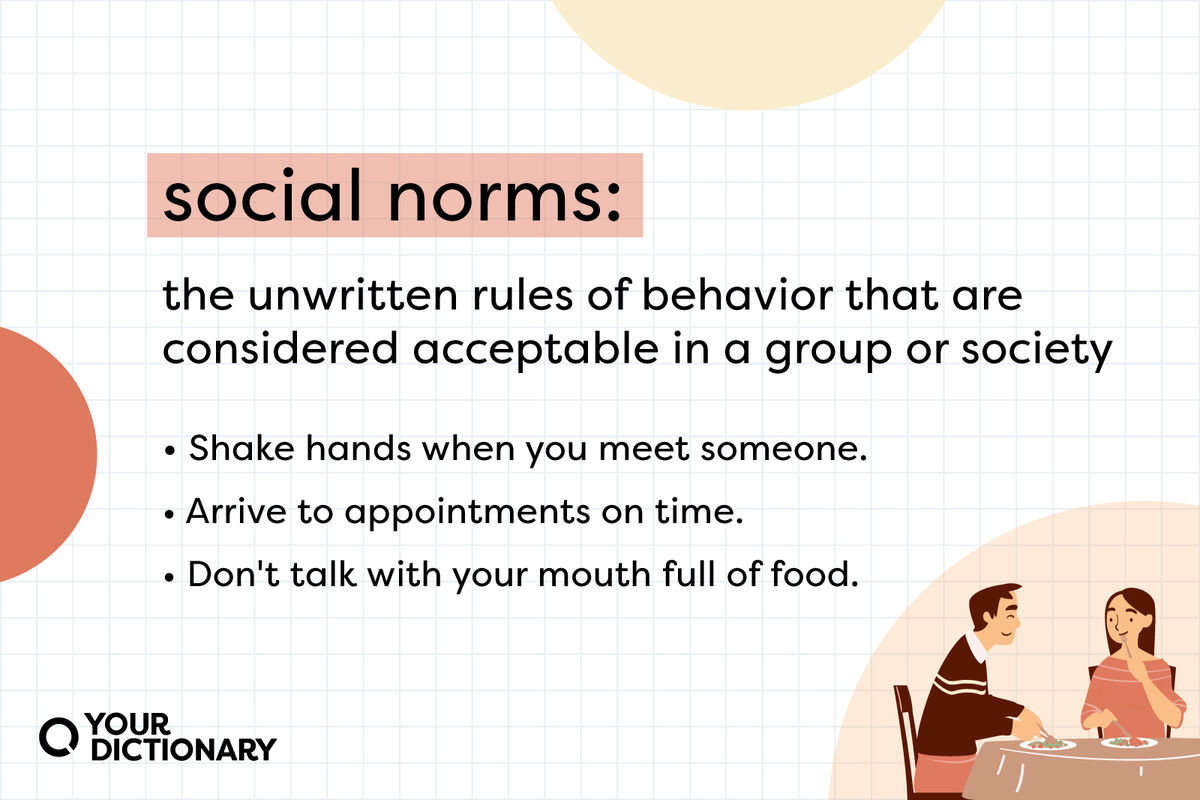
Social conventions are the unwritten rules, customs, and practices that govern human behavior within a society or group. They are the agreed-upon norms that dictate how people interact, communicate, and conduct themselves in various situations, often without explicit instruction or formal enforcement. From the way we greet each other to the expectations around personal space, these conventions provide a framework for predictable and orderly social interactions, reducing ambiguity and fostering a sense of shared understanding and community. While they may seem trivial at times, their absence would lead to chaos, miscommunication, and a breakdown of social cohesion.

Unlike laws, which are codified and enforced by legal systems, social conventions are maintained through social pressure, shared expectations, and the desire to fit in or avoid social disapproval. They are learned through observation, socialization, and cultural immersion, evolving over time in response to changing societal values, technological advancements, and economic shifts. Understanding these conventions is crucial not only for navigating daily life but also for success in areas ranging from professional branding and marketing to managing personal finances and adapting to the rapid pace of technological innovation.
The Foundation of Society: Defining Social Conventions
At their core, social conventions are the invisible threads that weave the fabric of human society. They are the bedrock upon which civilizations are built, providing a shared understanding that allows individuals to coexist and cooperate effectively. While their manifestations vary widely across cultures and contexts, their fundamental purpose remains constant: to facilitate social interaction and maintain order.
Unspoken Rules, Shared Understanding
Imagine a world without common greetings, queuing etiquette, or even basic table manners. Such a world would be confusing, unpredictable, and fraught with misunderstandings. Social conventions simplify these interactions by establishing default behaviors and expectations. When you shake someone’s hand upon meeting them, refrain from interrupting during a conversation, or dress appropriately for a job interview, you are adhering to social conventions. These actions, though often performed unconsciously, signal respect, understanding, and a willingness to engage within established societal parameters.
These “unspoken rules” are powerful precisely because they are widely understood and largely internalized. They operate on a collective assumption that others will also abide by them, creating a reliable framework for communication and conduct. This shared understanding allows for efficient social navigation, minimizing friction and fostering trust among individuals who may otherwise be strangers. Without these common grounds, every interaction would require explicit negotiation of terms, leading to inefficiency and potential conflict.
Evolution and Purpose
Social conventions are not static; they are dynamic entities that evolve alongside human societies. Historical examples abound, from changing courtship rituals to shifts in professional attire. What was considered polite or acceptable in one era might be anachronistic or even offensive in another. This evolution is driven by a multitude of factors, including technological advancements, economic shifts, cultural exchange, and changing moral values.
The primary purpose of social conventions is multifaceted. Firstly, they reduce uncertainty in social situations, allowing individuals to anticipate responses and tailor their behavior accordingly. Secondly, they reinforce group identity and cohesion, distinguishing one group from another and strengthening bonds among members who share the same norms. Thirdly, they maintain social order by discouraging disruptive behaviors and promoting respectful coexistence. Finally, they often reflect underlying values and morals of a society, acting as a barometer for what is considered right, wrong, polite, or rude. Understanding this evolutionary aspect is vital, especially in our rapidly changing world, where new conventions emerge and old ones transform with unprecedented speed.
Technology as a Catalyst and Creator of New Conventions
The advent and rapid proliferation of technology have fundamentally reshaped countless aspects of human life, and social conventions are no exception. Technology acts as both a catalyst, accelerating the evolution or demise of existing norms, and a creator, giving birth to entirely new sets of behaviors and expectations. From digital communication to artificial intelligence, the tech landscape constantly redefines how we interact, maintain privacy, and even perceive productivity.
Digital Etiquette and Online Interactions
The internet and mobile devices have introduced a vast new arena for social interaction, giving rise to a complex web of digital etiquette, or “netiquette.” What constitutes polite and effective communication online is a rapidly evolving convention. For instance, the appropriate use of emojis, capitalization, and punctuation in emails, texts, or social media posts varies significantly across platforms and contexts. Sending a formal work email in all caps might be perceived as aggressive, while a brief, emoji-laden text to a friend is perfectly normal.
Conventions around response times have also shifted dramatically. The expectation of immediate replies in messaging apps contrasts sharply with the more leisurely pace of traditional letter writing. Similarly, “unfriending” or “unfollowing” someone on social media has become a recognized, albeit sometimes passive-aggressive, social maneuver, carrying its own set of implications and perceived slights. These conventions are crucial for navigating our increasingly interconnected digital lives, ensuring that online interactions remain productive and respectful rather than devolving into chaos or offense. Companies, for example, must adhere to certain customer service conventions on social media, responding promptly and professionally, to maintain a positive brand image.
Privacy, Security, and Trust in the Digital Age
One of the most profound areas where technology has forged new social conventions is around privacy and digital security. The concept of personal space has extended into the digital realm, with evolving norms about sharing personal information, photos, and even location data online. What might have once been considered private is now often publicly accessible, blurring the lines between personal and public life.
New conventions have emerged regarding data sharing, permissions for apps, and the expectation of digital security measures. Users are now generally expected to employ strong passwords, be wary of phishing scams, and understand the basics of online safety – behaviors that were irrelevant just a few decades ago. Failing to protect one’s digital identity can have significant consequences, not just for the individual but potentially for their social network or employer. These conventions are foundational to building trust in digital platforms and services. Businesses, especially those dealing with sensitive data, must demonstrate adherence to robust digital security protocols not just as a legal requirement, but as a critical social convention to earn and maintain customer trust. AI tools and digital security software play a vital role in enforcing these conventions, both by protecting users and by setting new standards for what constitutes an acceptable level of digital safety.
AI, Automation, and Shifting Human-Machine Conventions
The rise of Artificial Intelligence (AI) and automation is poised to introduce even more transformative social conventions. As we increasingly interact with AI-powered chatbots, virtual assistants, and autonomous systems, new norms are emerging regarding how we address them, what we expect from them, and how we attribute agency or responsibility. Is it polite to say “please” and “thank you” to an AI? What are the ethical conventions governing the design and deployment of AI in decision-making processes, especially when it impacts human lives (e.g., self-driving cars, diagnostic tools)?
These questions are at the forefront of contemporary discussions about technology and society. The conventions around AI are still very much in flux, but they will undoubtedly shape our future interactions with machines and with each other. For instance, companies deploying AI tools are grappling with social conventions around transparency and accountability, understanding that user trust depends on clear explanations of how AI works and what its limitations are. Productivity tools that leverage AI are also changing workplace conventions, influencing how teams collaborate, manage tasks, and even the skills considered essential for the modern workforce.
Brand, Identity, and the Power of Conventional Wisdom
In the interconnected world of business and personal development, understanding and leveraging social conventions are paramount for building strong brands, cultivating personal identity, and effectively marketing products or services. Both corporate and personal branding strategies are deeply intertwined with how they navigate existing social norms, either by aligning with them to build trust or by deliberately challenging them to create a disruptive, memorable presence.
Corporate Branding: Navigating Societal Expectations
A successful corporate brand doesn’t just sell products; it embodies a set of values, a persona that resonates with its target audience. This resonance is often achieved by skillfully navigating societal expectations and social conventions. A brand’s corporate identity – its logo, messaging, customer service, and overall public image – must align with the prevailing social conventions of its operating environment. For example, a brand aiming for a luxury market will adopt conventions of exclusivity, high quality, and bespoke service, from its advertising design to its in-store experience. Conversely, a budget-friendly brand will adhere to conventions of accessibility, value, and practicality.

Beyond aesthetics and pricing, brands must also be acutely aware of social conventions surrounding corporate social responsibility and ethical conduct. In an era where consumers are increasingly conscious of a company’s environmental impact, labor practices, and contribution to society, adhering to conventions of sustainability, transparency, and fairness is no longer optional; it’s a critical component of reputation management. Brands that violate these evolving social norms risk severe backlash, boycotts, and damage to their reputation, as seen in numerous case studies where companies faced public outcry over perceived ethical lapses. Conversely, brands that champion emerging social conventions (e.g., diversity and inclusion, eco-friendliness) can build powerful connections with consumers who share those values.
Personal Branding: Crafting Your Digital Persona
Just as corporations cultivate their image, individuals today are increasingly focused on personal branding, especially in the digital age. Your personal brand is how you present yourself to the world – professionally and, to an extent, personally – and it heavily relies on understanding and deploying social conventions. Whether it’s your LinkedIn profile, your professional networking etiquette, or your presence on other social media platforms, every interaction contributes to your perceived identity.
Conventions around professional communication, online self-presentation, and even the types of content one shares are crucial for building a strong personal brand. For instance, sharing politically charged opinions on a professional networking site might violate conventions of neutrality expected in many industries, potentially harming one’s career prospects. Conversely, demonstrating expertise through thoughtful posts, engaging respectfully in discussions, and adhering to conventions of intellectual honesty can significantly enhance one’s professional reputation. Mastering these digital social conventions is key to effective personal branding, helping individuals convey competence, trustworthiness, and approachability in a competitive landscape.
Marketing and Design: Leveraging or Subverting Norms
Marketing and design are fundamentally about communication, and effective communication relies on understanding the audience’s existing social conventions. Marketers constantly analyze consumer behavior, which is itself largely driven by social norms, to craft compelling campaigns. Advertising often taps into conventional aspirations (e.g., success, family, beauty) or subverts them to create memorable, attention-grabbing content. For example, an ad that shows a non-traditional family structure might challenge older social conventions, aiming to resonate with a more progressive audience and differentiate the brand.
Similarly, product design is heavily influenced by social conventions regarding usability, aesthetics, and cultural appropriateness. A user interface (UI) for an app, for instance, must adhere to conventions of intuitive navigation and familiar iconography to be successful. Deviating too much from these established design conventions can lead to user frustration and product failure. The most successful marketing and design strategies either brilliantly leverage existing social conventions to make their message immediately relatable or strategically break them in ways that are perceived as innovative and relevant, rather than merely offensive or confusing. Case studies in design often highlight how understanding cultural social norms around color, symbolism, and imagery can make or break a product’s reception in different markets.
Money, Finance, and the Conventional Paths to Prosperity
The realm of money and finance is deeply saturated with social conventions, dictating everything from how we earn and spend to how we save and invest. These norms are not just about legality but about accepted practices, expectations, and often unspoken rules that shape our economic behaviors and influence our financial well-being. From personal finance to online income strategies, understanding these conventions is crucial for navigating the economic landscape.
Financial Etiquette and Economic Interactions
Financial interactions are governed by a dense web of social conventions. Tipping culture, for instance, varies significantly across different societies, but within a given culture, there are strong expectations about when and how much to tip. Similarly, gift-giving, while seemingly personal, often follows established conventions regarding appropriateness, value, and reciprocity. In a business context, conventions around salary negotiations, payment terms, and even the formality of financial documents play a critical role in professional relationships.
These conventions extend to more subtle aspects, such as the social stigma or prestige associated with certain types of spending or saving. “Keeping up with the Joneses” is a classic example of a social convention driving consumption patterns, often leading individuals to spend beyond their means to conform to perceived societal standards of success. Conversely, frugal living, once a widespread convention, might now be seen as an outlier in some consumer-driven societies. Understanding these financial etiquette rules and underlying social pressures is essential for both individuals managing their personal finances and businesses interacting with clients, partners, and employees. Financial tools and budgeting apps, for example, often help users manage their money more effectively by enabling them to adhere to conventional wisdom around saving and spending.
Online Income, Gig Economy, and Evolving Financial Norms
The rise of the internet has given birth to entirely new avenues for generating income, fundamentally shifting traditional employment conventions and creating new financial norms. The gig economy, online freelancing, and digital entrepreneurship have introduced conventions around flexible work arrangements, project-based compensation, and the importance of online reputation for securing future work. No longer are fixed salaries and long-term employment the sole conventional path to financial stability.
New conventions regarding financial autonomy, work-life balance, and self-management have emerged. Side hustles, once a fringe activity, are now a mainstream convention for supplementing income or exploring entrepreneurial ventures. Platforms facilitating online income have developed their own micro-conventions for payment processing, dispute resolution, and performance ratings. Individuals seeking to thrive in this new economic paradigm must understand these evolving norms, from how to market their skills online to how to manage irregular income streams effectively. Business finance for small online ventures also demands an understanding of these new conventions, from digital payment systems to global client relationships.
Investing, Saving, and the Social Constructs of Wealth
Investing and saving behaviors are also deeply embedded in social conventions. The conventional wisdom around retirement planning, for example, often dictates saving a certain percentage of income or aiming for specific investment milestones. Peer influence and societal benchmarks often play a significant role in individuals’ financial decisions, whether it’s choosing to invest in real estate, stocks, or new asset classes like cryptocurrencies.
The very concept of “wealth” and “financial security” is, to a large extent, a social construct shaped by conventions. What one society deems wealthy, another might consider modest. The conventions around debt, for instance, vary widely; in some cultures, taking on debt for education or housing is an accepted norm, while in others, it carries significant social stigma. Financial tools and investment platforms play a role in reinforcing or challenging these conventions by making certain investment strategies more accessible or by presenting data in ways that influence user behavior. Understanding these social constructs and conventions is crucial for both personal investing strategies and for financial institutions designing products and services that resonate with their target demographics.
Adapting and Thriving in a World of Dynamic Conventions
The contemporary world is characterized by an accelerating pace of change, driven significantly by technological innovation and global interconnectedness. This dynamism means that social conventions, far from being static, are in a constant state of flux. To thrive, individuals, brands, and economic systems must possess the agility to adapt to these evolving norms, discerning which conventions to uphold, which to challenge, and which new ones to embrace.
The Interplay of Old and New
One of the most fascinating aspects of modern social conventions is the interplay between established traditions and emerging norms. Old conventions don’t simply vanish overnight; they often coexist with, or are subtly reshaped by, new ones. For example, while the convention of formal business attire might persist in some corporate settings, the rise of remote work and tech culture has introduced new conventions of more casual, flexible dress codes, even within professional contexts. Navigating this interplay requires cultural intelligence and an acute awareness of context.
For brands, this means understanding how to remain relevant by honoring traditional values while also embracing modern sensibilities. For individuals, it entails being versatile in their social interactions, knowing when to adhere to formal etiquette and when to adopt a more relaxed approach. This balance is particularly evident in the digital realm, where formal written communication often blends with informal emojis and memes, creating a hybrid form of expression governed by its own set of dynamic, often unwritten, rules.
Embracing Change and Ethical Considerations
The rapid evolution of social conventions, particularly those influenced by technology and global communication, presents both opportunities and challenges. Embracing change requires an openness to new ways of thinking and interacting, rather than rigidly clinging to outdated norms. This adaptability is vital for personal growth, brand innovation, and economic prosperity.
However, embracing change also comes with ethical considerations. As new conventions emerge around AI interaction, data privacy, or online financial transactions, societies must collectively deliberate on what constitutes ethical behavior and responsible innovation. Should AI systems be designed to adhere to human social conventions of politeness, even if it’s purely performative? What are the social conventions around consent in an era of ubiquitous data collection? These questions highlight that while technology can drive the formation of new conventions, human values and ethical frameworks must guide their development. Digital security measures and ethical guidelines in AI development are not just technical requirements; they are reflections of evolving social conventions around safety, trust, and fairness in a digital world.
In conclusion, social conventions are far more than mere pleasantries; they are the invisible architecture of human interaction, providing structure, predictability, and meaning to our collective existence. From the subtle nuances of digital etiquette to the grand expectations placed upon global brands and financial systems, these norms shape our individual lives and collective futures. In a world increasingly defined by technology, complex branding strategies, and diverse economic models, understanding, adapting to, and thoughtfully influencing social conventions is not just beneficial, but essential for navigating an ever-evolving social landscape.
aViewFromTheCave is a participant in the Amazon Services LLC Associates Program, an affiliate advertising program designed to provide a means for sites to earn advertising fees by advertising and linking to Amazon.com. Amazon, the Amazon logo, AmazonSupply, and the AmazonSupply logo are trademarks of Amazon.com, Inc. or its affiliates. As an Amazon Associate we earn affiliate commissions from qualifying purchases.