
In the landscape of global commerce, small businesses are frequently described as the backbone of the economy. While the towering skyscrapers of multinational corporations often dominate the news cycle, it is the millions of smaller enterprises that drive innovation, provide the majority of private-sector employment, and sustain the vitality of local communities. Understanding what constitutes a small business requires looking beyond simple employee counts; it involves an analysis of financial structures, legal frameworks, and the unique role these entities play in the movement of capital.
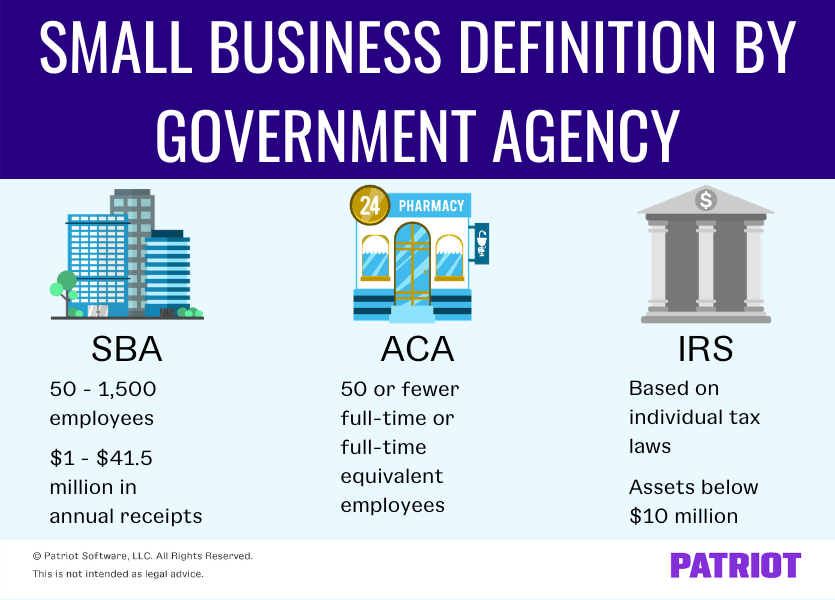
A small business is generally defined as a privately owned corporation, partnership, or sole proprietorship that has fewer employees and less annual revenue than a regular-sized business or corporation. However, the specific metrics used to define “small” vary significantly by country, industry, and the regulatory body governing them. In the financial sector, these definitions are critical because they determine eligibility for government contracts, tax incentives, and specialized business loans.
Defining the Small Business: Financial Thresholds and Legal Structures
The definition of a small business is not a monolith. In the United States, the Small Business Administration (SBA) establishes “size standards” that determine whether an entity qualifies for federal support. These standards are typically based on two primary metrics: the number of employees or the average annual receipts.
Revenue and Headcount Metrics
For many service-based industries, the SBA defines a small business by its annual revenue, which can range from $1 million to over $40 million depending on the specific sector. In manufacturing, the definition is usually tied to headcount, often capping at 500 employees. Conversely, the European Union utilizes a more tiered approach, categorizing businesses into “micro” (fewer than 10 employees), “small” (fewer than 50 employees), and “medium” (fewer than 250 employees).
From a financial perspective, these distinctions are vital. Investors and lenders look at these classifications to assess risk profiles. A micro-business with high profit margins might be a more attractive candidate for a specialized line of credit than a medium-sized enterprise with bloated overhead and stagnant growth.
Legal and Tax Foundations
How a small business is structured legally has a profound impact on its financial health and the personal liability of its owners.
-
Sole Proprietorship: The simplest form, where the business and the owner are one and the same for tax and legal purposes. While easy to set up, it offers no protection for personal assets against business debts.
-
Limited Liability Company (LLC): A popular choice for modern entrepreneurs, the LLC protects personal assets from business liabilities while allowing for “pass-through” taxation, where profits are reported on the owners’ individual tax returns.
-
S-Corporations and C-Corporations: These structures are often used as a small business grows. An S-Corp provides tax advantages regarding self-employment taxes, while a C-Corp allows for an unlimited number of shareholders, making it a vehicle for significant capital raising and eventual public offerings.
The Economic Impact of Small-Scale Enterprises
The financial significance of small businesses cannot be overstated. They are responsible for a disproportionate amount of job creation. In many developed economies, small businesses account for over 60% of new jobs created annually. This makes them a primary driver of consumer spending; as more people are employed by local firms, the velocity of money within those communities increases.
Local Wealth Generation
Unlike large corporations that often repatriate profits to offshore accounts or distribute them to global shareholders, small businesses tend to keep money circulating locally. They purchase from local suppliers, utilize local professional services like accounting and legal firms, and support local civic initiatives. This “multiplier effect” means that every dollar spent at a small business has a much higher probability of being reinvested into the local economy than a dollar spent at a big-box retailer.
Innovation and Market Agility
Small businesses are often the laboratories of the financial world. Because they lack the bureaucratic layers of large conglomerates, they can pivot quickly to meet emerging market demands or exploit niches that are too small for major players to notice. This agility fosters a competitive environment that keeps prices down and quality high across the broader market. Many of today’s tech giants and financial institutions began as small businesses in garages or shared workspaces, proving that small-scale enterprises are the seedbeds for future industrial leaders.
Funding and Financial Management for Small Business Owners
One of the defining characteristics of a small business is its approach to capital. Unlike public companies that can issue stock or bonds to raise funds, small businesses rely on a diverse and often creative mix of financial resources.
Bootstrapping vs. External Capital
Many small businesses start through “bootstrapping”—a process where the founder uses personal savings and initial revenue to fund growth. This allows for total control and zero debt, but it can limit the speed at which a company scales.
When internal cash flow is insufficient, owners turn to:
-
Small Business Loans: Often backed by government guarantees, these loans provide the necessary liquidity for equipment, inventory, or real estate.
-
Angel Investors and Venture Capital: While more common in the tech sector, some small businesses seek equity partners who provide capital in exchange for a percentage of ownership.
-
Crowdfunding: A modern financial tool that allows businesses to raise small amounts of money from a large number of people, often used to validate a product market before a full-scale launch.
Managing Cash Flow and Profitability
The primary reason small businesses fail is not a lack of profit, but a lack of liquidity. Cash flow management is the heartbeat of small business finance. An enterprise may be profitable on paper, but if its capital is tied up in unpaid invoices or slow-moving inventory, it cannot meet its immediate obligations like payroll or rent. Sophisticated small business owners prioritize “Cash is King” strategies, utilizing rolling forecasts and tight credit terms to ensure the business remains solvent during market fluctuations.
The Digital Shift: Side Hustles and the Solopreneur Movement
The definition of small business has expanded in the 21st century to include the “solopreneur” and the professional side hustle. Enabled by digital platforms and global connectivity, individuals are now operating micro-enterprises that generate significant revenue with virtually no traditional overhead.
Scalability in the Digital Age
An online consultancy or an e-commerce storefront can qualify as a small business even if it is operated by a single person from a home office. These businesses often boast incredibly high profit margins because they bypass the costs associated with physical storefronts and large staff counts. From a financial planning perspective, these entities represent a new frontier of “lean” business, where technology is leveraged to perform tasks that previously required a department of employees.
Lowering Barriers to Entry
The financial barrier to starting a business has never been lower. In the past, starting a retail business required a physical lease and thousands of dollars in inventory. Today, a “drop-shipping” model or a digital service business can be launched with a few hundred dollars. This democratization of entrepreneurship has allowed a more diverse demographic to enter the market, creating new pathways for personal wealth building and financial independence.
Challenges and Sustainability in the Modern Market
Despite their importance, small businesses face unique financial pressures. They are more vulnerable to interest rate hikes, inflationary pressures on raw materials, and changes in consumer confidence than their larger counterparts.
Navigating Economic Volatility
When a recession hits, small businesses are often the first to feel the pinch. They typically have smaller cash reserves and less access to the capital markets that large firms use to weather storms. For a small business to be sustainable, it must engage in rigorous financial planning, including the maintenance of emergency funds and the diversification of its customer base to avoid “concentration risk”—relying too heavily on one or two major clients.
The Path to Longevity
Sustainability in the small business sector is often a matter of balancing growth with stability. While the urge to scale rapidly is strong, many successful small businesses find their “sweet spot” by maintaining a manageable size that allows for high-quality service and healthy margins without the complexity of a massive corporate structure. This “lifestyle business” model is a perfectly valid and often highly lucrative financial path, providing the owner with a steady income and the community with a reliable service for decades.
In conclusion, small businesses are far more than just “minor” versions of large corporations. They are distinct financial entities with their own sets of rules, challenges, and opportunities. By driving local economies, fostering innovation, and providing a pathway to personal financial freedom, they remain the most vital component of a healthy, functioning market. Whether it is a traditional brick-and-mortar shop or a cutting-edge digital startup, the small business represents the foundational unit of economic progress.
aViewFromTheCave is a participant in the Amazon Services LLC Associates Program, an affiliate advertising program designed to provide a means for sites to earn advertising fees by advertising and linking to Amazon.com. Amazon, the Amazon logo, AmazonSupply, and the AmazonSupply logo are trademarks of Amazon.com, Inc. or its affiliates. As an Amazon Associate we earn affiliate commissions from qualifying purchases.