
In the rapidly evolving landscape of Educational Technology (EdTech), the digitizing of literacy instruction has moved far beyond simple digital flashcards. One of the most significant challenges for developers in the fields of Natural Language Processing (NLP) and Speech Recognition is the complexity of English phonetics—specifically, the phenomenon known as r-controlled vowels. To the uninitiated, these are simply vowels followed by the letter “r” that change their sound, but to the software engineer and the AI researcher, they represent a critical hurdle in the development of accurate speech-to-text and adaptive learning algorithms.

Understanding what r-controlled vowels are is the first step in building sophisticated linguistic software. Often referred to in pedagogical circles as “Bossy R,” this phonetic occurrence happens when the letter “r” follows a vowel, causing the vowel to lose its short or long sound and adopt a unique, combined sound. In the world of technology, this necessitates a shift from simple grapheme-to-phoneme (G2P) mapping to more complex, context-aware machine learning models.
The Engineering Challenge: Mapping the “Bossy R” in NLP Models
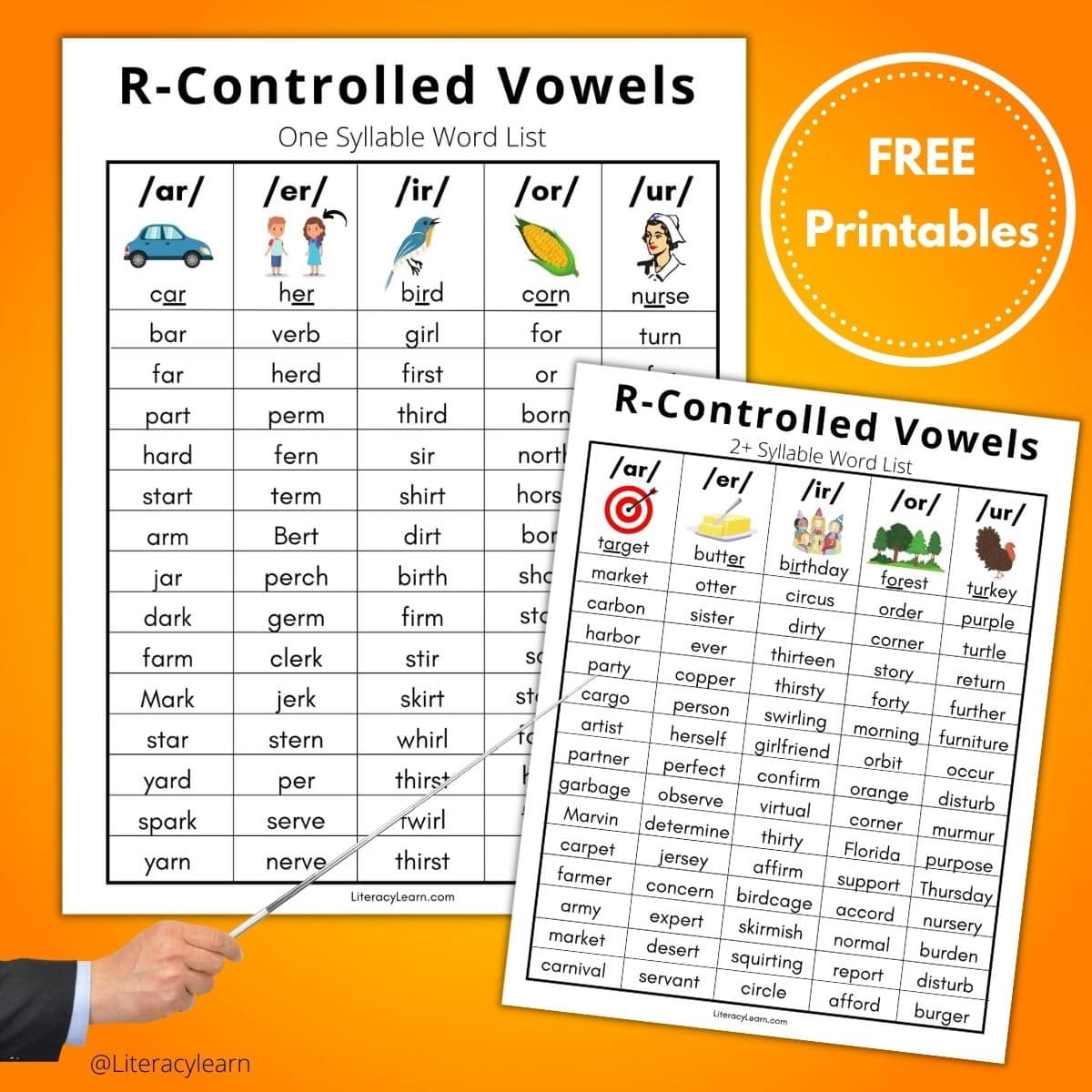
At the core of digital literacy software is the ability to break down words into their constituent parts. For standard vowels, a software engine might assign a predictable value. However, r-controlled vowels—ar, er, ir, or, and ur—defy standard categorization. In words like “car,” “her,” “bird,” “corn,” and “surf,” the “r” effectively modifies the spectral characteristics of the preceding vowel.
Phonemic Awareness and Algorithmic Precision
For an AI-driven reading tutor, the algorithm must distinguish between the “a” in “cat” (a short vowel) and the “a” in “car” (an r-controlled vowel). This requires a sophisticated level of phonemic awareness built into the software’s architecture. Modern EdTech tools utilize Deep Neural Networks (DNNs) to process these nuances. When a student speaks into a microphone, the software uses acoustic modeling to compare the input against a database of known phonemes. If the system fails to recognize the r-controlled modification, it may incorrectly flag a student’s correct pronunciation as an error, leading to a breakdown in the user experience.
Grapheme-to-Phoneme (G2P) Conversion
Developers working on text-to-speech (TTS) applications face the inverse problem. The software must know that “ir” in “bird” is a single phonetic unit (/ɜːr/) rather than two distinct sounds. This is handled through G2P conversion tables and, increasingly, Transformer-based models that look at the entire word or sentence context to determine the correct pronunciation. The “r” is not just a letter; it is a phonetic modifier that acts as a gatekeeper for correct speech synthesis.
EdTech Innovation: AI Tools for Literacy and Phonological Processing
The market for AI-driven literacy tools is expanding, with companies like Duolingo, Khan Academy, and specialized startups focusing on foundational reading skills. These tools leverage the science of reading—a multi-disciplinary body of research—to create curricula that teach r-controlled vowels through digital interfaces.
Adaptive Learning and Data-Driven Personalization
One of the primary advantages of modern educational apps is adaptive learning. When a user interacts with a lesson on r-controlled vowels, the software tracks their performance in real-time. If the data shows a high frequency of errors in distinguishing “er” from “ur” sounds, the algorithm pivots. It employs a “spaced repetition” system, surfacing more “Bossy R” content until the user achieves mastery. This level of personalization is only possible through the integration of sophisticated back-end logic that understands the hierarchy of phonetic difficulty.

Speech Recognition for Early Learners
Speech recognition technology has historically struggled with children’s voices due to their higher pitch and irregular speech patterns. Companies specializing in “Voice AI” for education are now building datasets specifically tailored to pediatric speech. These datasets prioritize the articulation of complex sounds, including r-controlled vowels. By training models on thousands of hours of children reading “Bossy R” words, these tools can provide instant, corrective feedback, essentially acting as a 1:1 digital tutor that can scale across global populations.
The Business of Literacy: Scalable Solutions for Linguistic Complexity
From a product development perspective, r-controlled vowels represent a significant “edge case” that determines the quality of a digital product. If a reading app cannot accurately teach or assess these sounds, it loses credibility in the competitive K-12 market.
Integrating the Science of Reading into Digital Security and UI
While it may seem disconnected, the way we handle phonetic data has implications for digital security and user interface design. For instance, voice biometrics—using your voice as a password—must be sensitive enough to differentiate the subtle variations in vowel control. If an authentication system cannot distinguish between a user saying “pert” and “part,” the security threshold is lowered.
Furthermore, in UI/UX design for educational software, the visual representation of r-controlled vowels is vital. Digital designers often use “coding” techniques—such as underlining the vowel and the “r” together—to help the brain recognize them as a single unit. This intersection of visual design and linguistic science is a cornerstone of effective EdTech product strategy.
The Role of LLMs in Phonics Instruction
Large Language Models (LLMs) like GPT-4 have revolutionized the way we generate educational content. Teachers and developers now use these models to create targeted reading passages that focus exclusively on r-controlled vowels. By prompting an AI to “generate a story using only ‘ar’ and ‘or’ r-controlled vowels,” developers can produce massive amounts of specialized content in seconds. This capability allows for the creation of hyper-niche instructional materials that were previously too time-consuming to develop manually.
Future Trends: Neural Networks and the Mastery of Sound
As we look toward the future of technology in education, the focus is shifting toward “multimodal” AI—systems that can simultaneously process text, audio, and visual input. This will have a profound impact on how r-controlled vowels are taught and understood.
Real-Time Phonetic Visualization
Imagine an app that uses augmented reality (AR) to show a student the shape of their mouth while they pronounce the “or” in “storm.” By using computer vision to track lip and tongue movement, the software can provide visual cues that supplement auditory feedback. This “haptic” or visual approach to phonetics represents the next frontier in sensory-integrated tech.
Global Localization and Dialect Mapping
R-controlled vowels are notoriously varied across different English dialects. A “rhotic” accent (like General American) pronounces the “r,” while a “non-rhotic” accent (like Received Pronunciation in the UK) often softens or drops it. Future AI tools must be sophisticated enough to recognize these regional variations. For a developer, this means building “dialect-aware” models that can toggle their phonetic expectations based on the user’s geographic location. This level of localization is essential for the global scaling of software products.
Conclusion: The Technical Foundation of Digital Literacy
The question “what are r-controlled vowels” may begin in a first-grade classroom, but it ends in the laboratories of Silicon Valley and the servers of global EdTech giants. These linguistic building blocks are the testing grounds for the next generation of AI. By mastering the Bossy R, developers are not just teaching a child to read; they are refining the algorithms that allow machines to understand the complexities of human communication. As NLP continues to mature, the precision with which we handle these phonetic nuances will be the benchmark of truly intelligent, human-centric technology.
aViewFromTheCave is a participant in the Amazon Services LLC Associates Program, an affiliate advertising program designed to provide a means for sites to earn advertising fees by advertising and linking to Amazon.com. Amazon, the Amazon logo, AmazonSupply, and the AmazonSupply logo are trademarks of Amazon.com, Inc. or its affiliates. As an Amazon Associate we earn affiliate commissions from qualifying purchases.