
In the traditional sense, protein synthesis is a fundamental biological process. However, in the modern landscape of high-performance computing, artificial intelligence, and synthetic biology, we no longer view this process merely through the lens of a microscope. Instead, we view it as the ultimate “software of life.” Protein synthesis is the mechanism by which genetic code—the biological equivalent of binary—is translated into functional, physical hardware.
As we stand at the intersection of technology and biology, understanding protein synthesis is no longer just the domain of doctors and chemists; it has become a central focus for software engineers, data scientists, and tech innovators. By treating DNA as data and ribosomes as biological 3D printers, the tech industry is revolutionizing medicine, manufacturing, and even data storage.

The Computational Blueprint: DNA as the Ultimate Operating System
To understand protein synthesis from a technological perspective, we must first recognize that every living cell operates on a sophisticated information processing system. If the cell is a computer, then the DNA is the hard drive, and protein synthesis is the execution of code.
Genomic Data: The Original Big Data
The human genome contains approximately 3 billion base pairs. For decades, this was “dark data”—information we could see but couldn’t decode. However, the rise of Next-Generation Sequencing (NGS) has turned genomics into a Big Data challenge. Today, tech companies are utilizing massive cloud computing clusters to sequence and analyze these biological instructions at speeds that were unthinkable twenty years ago. We are no longer just observing protein synthesis; we are debugging the code.
Transcription and Translation as Algorithmic Processes
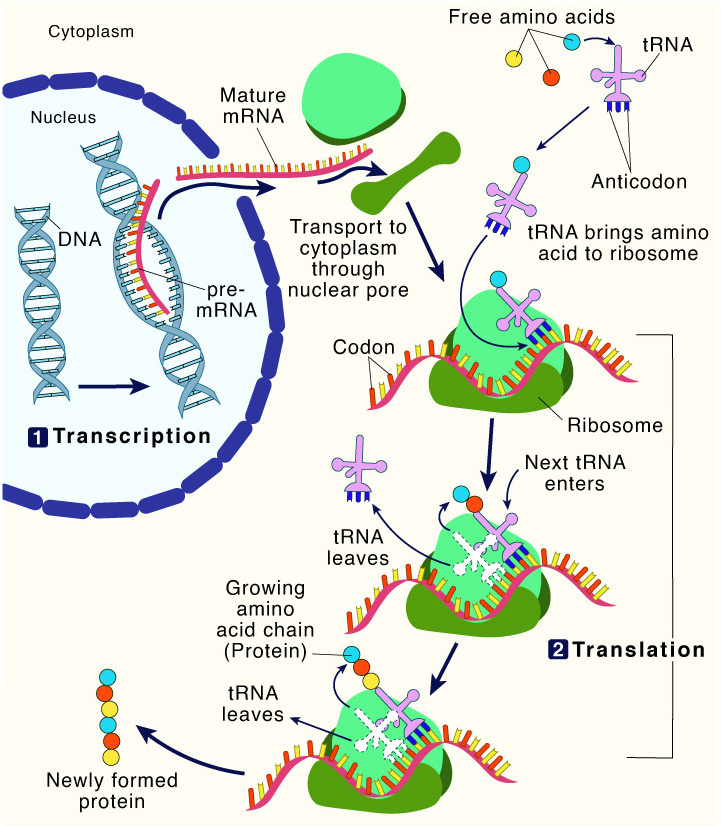
In the tech world, we understand “transcription” as the process of converting information from one format to another—much like converting a high-level programming language into machine code. In the cell, RNA polymerase “transcribes” DNA into mRNA. This mRNA serves as a “read-only” instruction set that travels to the ribosome.
The “translation” phase is where the actual “build” happens. The ribosome reads the mRNA sequence in sets of three (codons), much like a computer reads bytes. Each codon specifies an amino acid. The technological brilliance of this system lies in its error-correction protocols and high-fidelity execution, which have inspired new approaches in fault-tolerant computing and error-correcting codes in digital communications.
AI and the Protein Folding Revolution: Solving the 3D Mystery
The most significant technological breakthrough in the study of protein synthesis has been the integration of Artificial Intelligence. While we have known the “code” for proteins for decades, we struggled to understand the “output.” A protein’s function is determined by its 3D shape, and predicting that shape from a linear sequence of amino acids was considered one of biology’s “Grand Challenges.”
AlphaFold and the Solution to a 50-Year Mystery
Google’s DeepMind changed the world of biotechnology with the release of AlphaFold. By applying deep learning to the problem of protein folding, AlphaFold can predict the 3D structure of a protein with atomic accuracy. From a tech standpoint, this represented a shift from trial-and-error laboratory experimentation to predictive modeling.
Before AI, determining the structure of a single protein could take a Ph.D. student five years of physical lab work. Now, AI can predict it in minutes. This is a massive leap in “Tech-Bio,” allowing researchers to virtually “simulate” protein synthesis to see how a protein will look and behave before it is ever synthesized in a lab.
Predictive Modeling in Synthetic Biology
The tech industry is now moving beyond just predicting existing proteins to “de novo” protein design. Using Generative AI—the same tech behind ChatGPT—scientists are now “writing” new protein sequences that have never existed in nature. These synthetic proteins are designed to perform specific tasks, such as breaking down plastic in the ocean or acting as high-efficiency sensors in industrial hardware. We are essentially writing custom software to create new biological tools.
The Rise of Biocomputing and Nano-Engineering
As our mastery over protein synthesis grows, the line between biological organisms and technological devices begins to blur. We are entering an era of biocomputing, where the mechanisms of protein synthesis are being harnessed to perform computational tasks.
DNA as Storage: The Ultimate Hard Drive
One of the most exciting trends in the tech sector is DNA data storage. Because protein synthesis is so efficient at handling information, tech giants are exploring the use of synthetic DNA to store digital data. DNA is incredibly dense; a single gram can theoretically store 215 petabytes of data.
In this model, binary data (0s and 1s) is converted into DNA bases (A, C, G, T). To “read” the data, we use sequencing; to “write” the data, we use synthetic protein synthesis processes. This technology promises a storage medium that can last for thousands of years without the degradation seen in silicon-based hard drives.
Custom-Built Proteins: The New Software Updates
In the world of pharmaceuticals, mRNA technology—most famously used in recent vaccines—represents a shift toward “software-defined medicine.” Instead of delivering a finished drug to the body, we deliver the code (mRNA) and use the body’s own protein synthesis machinery to manufacture the “drug” (the protein) on-site.
This is analogous to pushing a software update to a remote device. Instead of shipping a physical hardware component, you send the code that allows the existing hardware to upgrade itself. This programmable approach to medicine is the foundation of the burgeoning “Bio-IT” sector.
Digital Security in the Age of Biological Engineering
As protein synthesis becomes increasingly digital—with sequences being stored in the cloud and shared across global networks—the issue of digital security becomes a matter of biological safety. If the code for a protein can be hacked, the consequences are far more dire than a leaked credit card number.
Protecting Genetic Intellectual Property
As biotech firms design proprietary proteins—new enzymes for green energy or specialized antibodies for cancer—the “source code” of these proteins becomes their most valuable asset. Cybersecurity in the biotech niche is now focusing on protecting these genetic sequences from corporate espionage. We are seeing the rise of “Bio-Encryption,” where DNA sequences are obfuscated to prevent unauthorized “reverse engineering” of synthetic proteins.
Ethics and Cybersecurity in Lab Environments
The “digitization of biology” means that lab equipment (like DNA synthesizers) is now connected to the internet. This creates a new attack surface for hackers. A malicious actor could theoretically intercept a legitimate protein sequence and replace it with a harmful one.
Tech firms are now developing “Bio-Firewalls”—AI-driven monitoring systems that screen every sequence being sent to a synthesizer to ensure it doesn’t match known pathogens or toxins. The security of protein synthesis is no longer just a biological concern; it is a critical frontier of global cybersecurity.

Conclusion: The Convergence of Silicon and Carbon
The story of protein synthesis is no longer just a chapter in a biology textbook; it is a roadmap for the future of technology. By viewing the ribosome as a manufacturing hub and DNA as a programming language, we have unlocked the ability to treat the physical world with the same flexibility and speed that we treat the digital world.
From AI-driven protein folding to the use of DNA as a global data archive, the technology surrounding protein synthesis is rapidly maturing. As we continue to refine these tools, we are moving toward a future where “coding” applies to cells as much as it does to computers. In this new era, the most powerful computer in the world isn’t made of silicon—it is the one already running inside every living cell, and we are finally learning how to program it.
aViewFromTheCave is a participant in the Amazon Services LLC Associates Program, an affiliate advertising program designed to provide a means for sites to earn advertising fees by advertising and linking to Amazon.com. Amazon, the Amazon logo, AmazonSupply, and the AmazonSupply logo are trademarks of Amazon.com, Inc. or its affiliates. As an Amazon Associate we earn affiliate commissions from qualifying purchases.