
In the modern technological landscape, data is the currency that drives innovation. Whether it is the micro-sensors in your smartphone, the heavy-duty actuators in a robotic manufacturing plant, or the cooling systems in a hyperscale data center, the ability to measure and interpret physical force is paramount. At the heart of this data lies the concept of pressure. But what are pressure units, and why do they matter in the high-stakes world of technology and engineering?
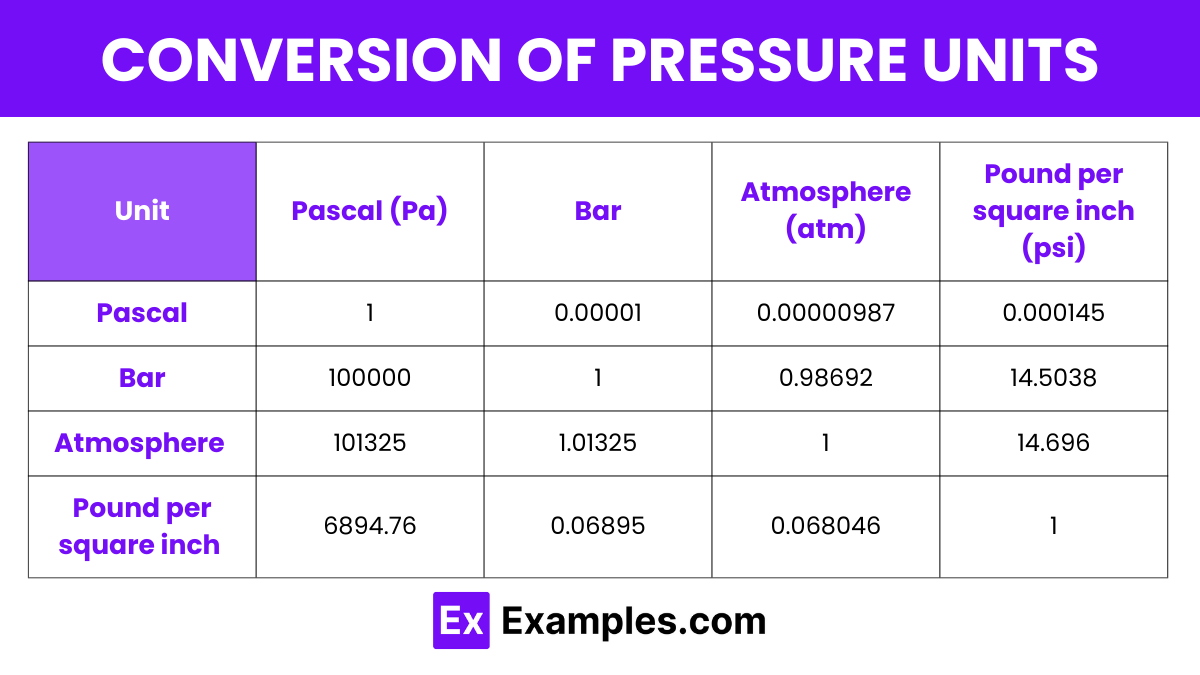
Pressure is defined as the physical force exerted on an object per unit area. While the concept sounds simple, the digital conversion of this physical phenomenon into actionable data requires a sophisticated understanding of various units and their applications. From Pascal (Pa) to Pounds per Square Inch (PSI), these units are the “language” that sensors speak to communicate with software. Understanding these units is essential for anyone involved in hardware development, software engineering for IoT, or industrial automation.

1. The Digital Foundation: Standardizing Pressure Units for Modern Hardware
In the tech industry, precision is not just a preference—it is a requirement. To achieve this, engineers rely on a standardized set of pressure units to ensure that components manufactured in different parts of the world can work together seamlessly.
The Pascal (Pa) and the SI Framework
The Pascal is the International System of Units (SI) derived unit of pressure. Defined as one newton per square meter, it is the fundamental unit used in scientific research and digital simulations. In the realm of technology, particularly in semiconductor manufacturing and cleanroom monitoring, pressure is often measured in Pascals. Because a single Pascal is a very small amount of pressure, tech specifications often use the kilopascal (kPa) or megapascal (MPa). For developers working on environmental monitoring software, the Pascal provides a linear, mathematically consistent base for algorithmic calculations.
PSI and the Legacy of Mechanical Engineering
While the Pascal dominates the scientific tech space, Pounds per Square Inch (PSI) remains the standard in many industrial and consumer applications, particularly in North America. In the context of technology, PSI is frequently encountered in hardware specifications for hydraulic systems, pneumatic actuators, and server-room cooling infrastructures. When a tech reviewer discusses the “static pressure” of a high-performance PC cooling fan, they are often referencing measurements derived from or converted to PSI or its metric equivalents.
Bar and Atmosphere (atm)
The “Bar” is a metric unit of pressure, though not part of the SI system. It is approximately equal to the atmospheric pressure on Earth at sea level. In the tech world, the Bar is the go-to unit for high-pressure systems like those found in automotive tech (fuel injection systems) and scuba-diving computers. Understanding the conversion between Bar and Pascal is critical for software engineers developing cross-platform diagnostic tools that must serve global markets.
2. Integrating Pressure Measurement into IoT and Industrial Tech
The rise of the Internet of Things (IoT) has transformed pressure units from static numbers on a gauge into dynamic data streams. Modern “smart” infrastructure relies on constant pressure monitoring to maintain efficiency and safety.
MEMS Technology and Digital Sensing
Micro-Electro-Mechanical Systems (MEMS) are the backbone of digital pressure sensing. These are tiny mechanical elements integrated onto a silicon chip. When physical pressure is applied to a MEMS sensor, it changes the electrical resistance or capacitance of the circuit. This analog change is then converted into a digital signal expressed in specific units like hPa (hectopascals). For a tech professional, the challenge lies in the calibration—ensuring that the MEMS sensor accurately reflects the pressure units required by the end-user application, whether it’s a weather-tracking app or a drone’s altimeter.
Real-Time Data Analytics and Predictive Maintenance
In Industry 4.0, pressure units are the key variables in predictive maintenance algorithms. By monitoring pressure fluctuations in industrial piping or robotic joints, AI tools can predict a component failure before it happens. For instance, if a system expects a steady 50 PSI but detects “noise” or drops in the data stream, the software can trigger an automated shutdown. This intersection of mechanical pressure units and machine learning is a cornerstone of modern industrial technology.
Standardizing Units for Global Interoperability
One of the biggest hurdles in global tech deployment is unit interoperability. A sensor built in Germany might output data in Bar, while a control system designed in the US might expect PSI. Modern middleware and IoT gateways are now equipped with “unit-agnostic” translation layers. These software solutions automatically convert pressure units in real-time, ensuring that data integrity is maintained as information moves from the edge sensor to the cloud.
3. Pressure Units in Consumer Electronics and Wearables
We interact with pressure units every day through our gadgets, often without realizing it. The technology inside our pockets and on our wrists has become incredibly adept at measuring the subtle weight of the atmosphere.

Smartphones, Altimeters, and the Hectopascal
Most modern smartphones are equipped with a barometric pressure sensor. These sensors primarily measure pressure in hectopascals (hPa) or millibars. Why does your phone need to know the pressure? To calculate altitude. By tracking changes in atmospheric pressure units, your phone can determine if you are climbing stairs or hiking a mountain, which significantly improves the accuracy of GPS and fitness tracking. For app developers, accessing this barometric data via APIs allows for the creation of hyper-local weather apps and advanced navigation tools.
Wearable Health Tech: The mmHg Standard
In the burgeoning field of MedTech and wearables, pressure units take on a life-saving role. Smartwatches and portable blood pressure monitors measure “Millimeters of Mercury” (mmHg). Despite the move toward digital systems, mmHg remains the gold standard in the medical tech industry. Engineering a wearable that can accurately translate the physical pressure of a wrist strap into a precise mmHg reading involves complex signal processing and noise-reduction algorithms to account for the wearer’s movement.
Haptic Feedback and Force Touch
Pressure units also play a role in how we interact with screens. Technologies like “Force Touch” or haptic engines measure the pressure of a user’s finger. While these are often expressed as a percentage of “maximum force” in the UI, the underlying hardware calculates the actual pressure units applied to the glass. This allows software to distinguish between a light tap and a deep press, enabling a three-dimensional interface experience.
4. The Role of Pressure Units in Computing and Infrastructure
Beyond mobile devices, the physical infrastructure of the internet itself—the data center—is heavily dependent on the management of pressure units.
Server Cooling and Static Pressure
As processors become more powerful, they generate immense heat. Effective cooling requires fans that can push air through dense arrays of server blades. This is measured in “Static Pressure,” often expressed in mmH2O (millimeters of water) or inches of water. Tech enthusiasts and data center architects look for “high static pressure” fans to overcome the resistance of heat sinks and filters. If the pressure units aren’t balanced, “hot spots” can develop, leading to hardware throttling or catastrophic failure.
Vacuum Technology in Semiconductor Fabrication
At the opposite end of the spectrum is the “negative pressure” or vacuum used in semiconductor fabrication. Microchips are manufactured in environments where pressure is measured in Torr or Millitorr (mTorr). These units represent near-total vacuums, essential for the deposition of microscopic layers of material on silicon wafers. For the tech industry, the precision of these vacuum pressure units determines the “node” size of the chips (e.g., 3nm or 5nm) that power our modern devices.
Liquid Cooling and Loop Integrity
High-end gaming PCs and modern enterprise servers are increasingly moving toward liquid cooling. In these systems, pressure units are used to monitor loop integrity. A drop in pressure, measured via digital flow-and-pressure sensors, can indicate a leak or a pump failure. Modern BIOS and system monitoring software are programmed to detect these specific unit changes and cut power to the CPU within milliseconds to prevent water damage.
5. Future Trends: Quantum Pressure Sensing and AI
As we look toward the future, the way we define and measure pressure units is evolving alongside cutting-edge technology.
Quantum-Based Standards
The tech world is moving toward a “Quantum SI” system. Instead of relying on physical artifacts or legacy gauges, researchers are developing quantum pressure sensors that measure pressure units based on the properties of light or the behavior of atoms. This will allow for a level of calibration precision previously thought impossible, benefiting industries from aerospace to nanotechnology.
AI-Enhanced Pressure Mapping
Future haptic devices and robotic “skins” will utilize AI to interpret pressure units across thousands of points simultaneously. This is known as pressure mapping. By processing these units through neural networks, robots can achieve a “sense of touch” that rivals human sensitivity, allowing them to handle delicate electronic components or perform robotic surgery with extreme precision.
Conclusion: The Language of Force in a Digital Age
“What are pressure units?” is a question that leads deep into the heart of modern technology. Whether it is the Pascal driving a scientific simulation, the PSI regulating an industrial robot, or the mmHg monitoring a heartbeat on a smartwatch, these units are the essential metrics that allow us to digitize the physical world.
For tech professionals, understanding these units is more than a physics exercise; it is about data accuracy, system safety, and hardware optimization. As we move further into the era of IoT, AI, and quantum computing, our ability to measure, convert, and analyze pressure units will continue to be a fundamental pillar of technological progress. In the end, the data provided by these units ensures that our digital world remains robust, responsive, and, most importantly, under control.
aViewFromTheCave is a participant in the Amazon Services LLC Associates Program, an affiliate advertising program designed to provide a means for sites to earn advertising fees by advertising and linking to Amazon.com. Amazon, the Amazon logo, AmazonSupply, and the AmazonSupply logo are trademarks of Amazon.com, Inc. or its affiliates. As an Amazon Associate we earn affiliate commissions from qualifying purchases.