
In the dynamic landscape of modern technology, where precision and stability are paramount, the concept of pH regulation stands as a critical enabler. From cutting-edge biotechnological applications to sophisticated industrial processes and environmental monitoring systems, controlling acidity and alkalinity is not merely a scientific curiosity but a fundamental engineering challenge. At the heart of this control mechanism lies the ingenious chemical system known as a pH buffer. Far from being a niche laboratory curiosity, pH buffers are foundational “tech tools” that ensure the reliability, efficiency, and safety of countless technological advancements, acting as silent guardians against unwanted chemical shifts that could otherwise derail complex operations.
The Fundamental Technology of pH Regulation
To appreciate the technological utility of pH buffers, one must first grasp the core concept of pH itself, not just as a scale, but as a critical metric for controlling chemical environments. pH, a measure of hydrogen ion concentration, dictates the chemical reactivity, stability, and even the structural integrity of biological molecules and industrial compounds. The ability to maintain a stable pH is, therefore, a design principle for robust technological systems.
Understanding pH: The Acidity and Alkalinity Scale
pH is quantified on a logarithmic scale from 0 to 14, where 7 is neutral. Values below 7 indicate increasing acidity, while values above 7 signify increasing alkalinity or basicity. This logarithmic nature means that even a small change in pH value represents a tenfold change in hydrogen ion concentration, highlighting the extreme sensitivity of many systems to pH fluctuations. In a technological context, this sensitivity translates into a need for highly responsive and stable control mechanisms. For instance, in the development of new drug compounds, the pH during synthesis can influence the yield, purity, and even the isomer distribution of the final product. Similarly, the performance of microelectronic components can be exquisitely sensitive to the pH of processing solutions.
The Chemical Mechanism of Buffer Action
A pH buffer is a solution that resists changes in pH upon the addition of small amounts of acid or base. This remarkable property stems from its composition: a weak acid and its conjugate base, or a weak base and its conjugate acid. These components exist in equilibrium within the solution. When a strong acid (H+) is introduced, the conjugate base component of the buffer reacts with it, neutralizing the added acid and preventing a sharp drop in pH. Conversely, when a strong base (OH-) is introduced, the weak acid component of the buffer donates a proton to neutralize the added base, thus resisting a sharp increase in pH.
This internal neutralizing capacity is what makes buffers indispensable. From an engineering perspective, a buffer system acts as an autonomous, self-regulating mechanism for pH. It’s a fundamental ‘chemical circuit’ designed to absorb stress (added acid/base) and maintain equilibrium, much like a voltage regulator stabilizes an electrical circuit. This chemical resilience is a key “design feature” exploited across diverse technological platforms.
Key Components of a Buffer System
Effective buffer systems are characterized by several parameters:
- Buffer Capacity: This refers to the amount of acid or base a buffer can neutralize before its pH changes significantly. A higher buffer capacity is often desired in industrial processes where larger fluctuations might occur.
- Buffer Range: Each buffer system is effective over a specific pH range, typically ±1 pH unit around its pKa (the negative logarithm of the acid dissociation constant of the weak acid component). Selecting the correct buffer with an appropriate pKa is a critical design choice for any technological application.
- Ionic Strength and Temperature: These factors can influence the pKa and effectiveness of a buffer. Advanced technological applications often require precise temperature control and consideration of ionic environments to ensure optimal buffer performance.
The careful selection and preparation of buffer solutions are, therefore, not trivial laboratory steps but crucial engineering considerations that directly impact the success and reproducibility of technological processes.
Essential Tools in Biotechnology and Life Sciences
Biotechnology is perhaps where pH buffers reveal their most profound impact. Life itself is exquisitely sensitive to pH, and mimicking or manipulating biological systems for technological gain absolutely demands stringent pH control. Buffers are the unseen heroes enabling everything from genetic engineering to pharmaceutical production.
Maintaining Cellular Environments
In cell culture, a cornerstone of modern biotechnology, maintaining a stable physiological pH (typically around 7.2-7.4) is non-negotiable for cell viability, growth, and function. Culture media are meticulously formulated with buffer systems, such as bicarbonate or HEPES, to counteract the metabolic byproducts (e.g., lactic acid) that cells naturally produce. Without these buffers, the pH of the medium would rapidly plummet, leading to cellular stress, death, or altered protein expression – effectively rendering any biotechnological experiment or production run useless. In bioreactors, which scale up cell culture for industrial production of biologics (e.g., antibodies, vaccines), automated pH control systems constantly monitor and adjust buffer concentrations to ensure optimal conditions for microbial or mammalian cell factories.
Enabling Enzyme Activity and Protein Stability
Enzymes, the biological catalysts that drive nearly all cellular processes, exhibit maximal activity only within narrow pH ranges. Deviations from this optimal pH can alter an enzyme’s three-dimensional structure, leading to denaturation and loss of function. Similarly, therapeutic proteins and other biomolecules are susceptible to pH-induced degradation or aggregation. Therefore, in the design of diagnostic assays, enzyme-catalyzed reactions for industrial synthesis, or the formulation of biopharmaceutical products, pH buffers are essential to stabilize proteins and optimize enzyme performance. From laundry detergents containing pH-sensitive enzymes to advanced CRISPR gene-editing technologies that rely on precisely controlled reaction environments, buffers are fundamental.
Precision in DNA/RNA Manipulation and Diagnostic Tech
Molecular biology techniques, such as PCR (Polymerase Chain Reaction) for DNA amplification, gel electrophoresis for separating nucleic acids, and various sequencing technologies, all depend on carefully buffered solutions. The stability of DNA and RNA, their ability to hybridize, and the activity of the enzymes involved (e.g., DNA polymerase, ligase) are highly pH-dependent. Diagnostic kits, from simple home tests to complex clinical analyzers, incorporate buffers to ensure the accuracy and reliability of results, often stabilizing critical reagents or optimizing reaction conditions for pathogen detection or biomarker quantification.
Critical Role in Industrial Processes and Manufacturing Tech
Beyond the biological realm, pH buffers play an equally vital, though often less visible, role in heavy industry, manufacturing, and environmental technology. Here, they are deployed as critical components in process control, quality assurance, and hazard mitigation.
Quality Control in Pharmaceutical Production
The synthesis of small-molecule drugs involves a multitude of chemical reactions, many of which are highly pH-sensitive. Buffers are used at various stages to control reaction rates, optimize yields, prevent unwanted side reactions, and ensure the stability and solubility of intermediate compounds and final active pharmaceutical ingredients (APIs). In the formulation of drug products (e.g., tablets, injectables), buffers maintain the stability of the active ingredient and excipients, ensure proper dissolution rates, and enhance patient comfort by adjusting the pH of injectables or ophthalmic solutions to physiological levels. This rigorous pH control is a cornerstone of GMP (Good Manufacturing Practice) in the pharmaceutical industry.
Optimizing Chemical Synthesis and Material Science
In the broader chemical industry, from petrochemicals to specialty chemicals and advanced materials, pH is a key operational parameter. Buffers are used to control polymerization reactions for plastics, ensure precise dye uptake in textiles, optimize etching processes in semiconductor manufacturing, and stabilize plating baths in electroplating. In material science, the pH during the synthesis of nanoparticles or advanced ceramics can significantly influence particle size, morphology, and surface properties, directly impacting the final material’s performance characteristics. This level of precise chemical control, enabled by buffers, is fundamental to reproducible and high-performance material engineering.
Environmental Monitoring and Remediation Technologies
Environmental protection technologies heavily rely on pH control. In wastewater treatment, buffers help maintain optimal pH for microbial activity in biological treatment tanks and for efficient flocculation and precipitation of contaminants. In industrial effluent treatment, specific buffer systems are used to neutralize highly acidic or alkaline waste streams before discharge, preventing ecological damage. Environmental monitoring equipment, often deployed in remote or harsh conditions, uses buffered calibration solutions to ensure the accuracy of pH sensors, which are critical for assessing water quality in rivers, lakes, and oceans, and for detecting pollution events.
Integrating Buffers with Modern Sensing and Control Systems
The true power of pH buffers is fully unleashed when integrated into sophisticated technological frameworks involving sensors, automation, and data analytics. Here, they transition from static chemical solutions to active elements within dynamic feedback control loops.
Calibration Standards for pH Meters and IoT Sensors
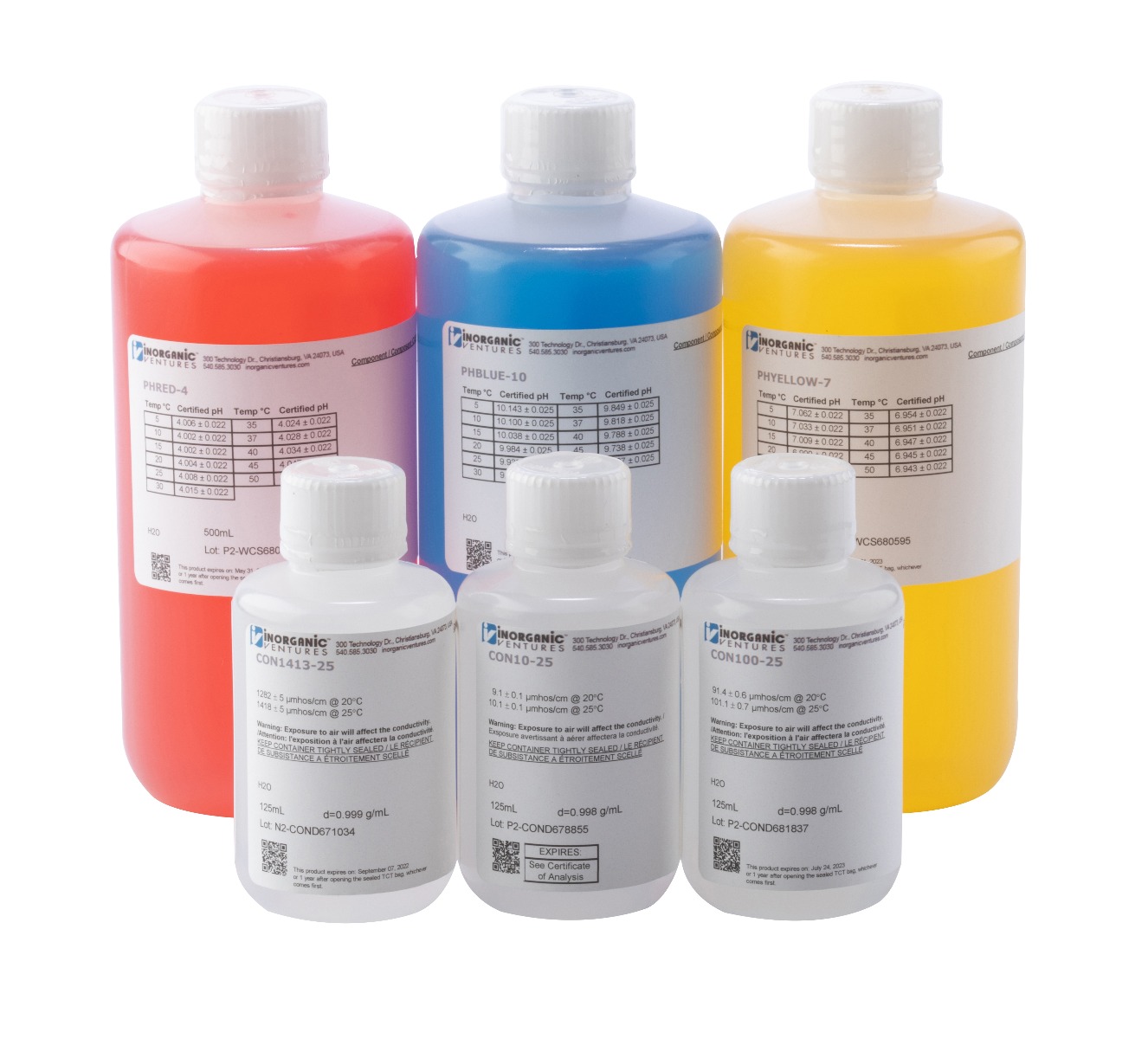
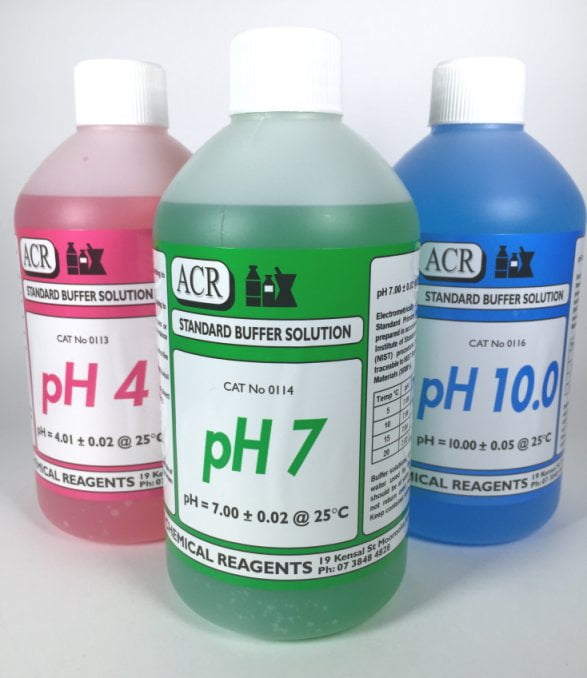
pH meters, whether handheld devices or embedded industrial sensors, are essential tools for measuring acidity or alkalinity. However, these instruments require frequent calibration to ensure accuracy. This is where standardized buffer solutions come into play. Certified pH buffer solutions of known pH (e.g., pH 4.01, 7.00, 10.00) are used to calibrate the sensor, establishing a reliable reference point. In the age of IoT and distributed sensing networks, automated calibration routines using microfluidic delivery of buffer solutions are becoming increasingly common, ensuring continuous accuracy in real-time monitoring applications across diverse environments, from smart farming to urban water infrastructure.
Automated pH Control in Bioreactors and Chemical Plants
In large-scale industrial operations, manual pH adjustment is impractical and inefficient. Modern bioreactors, fermenters, and chemical synthesis vessels are equipped with integrated pH sensors that continuously monitor the solution’s pH. This data feeds into a Programmable Logic Controller (PLC) or Distributed Control System (DCS). When the pH deviates from a set point, the control system automatically actuates pumps to add precise amounts of acid or base to the reaction vessel, often delivered through dedicated dosing lines. The inherent buffering capacity of the solution dampens the effect of these additions, allowing for smoother, more stable control. Without the buffer, each small addition of acid or base would cause a drastic, hard-to-control swing in pH, leading to instability and process failure. This elegant synergy between chemical buffering and electronic automation represents a pinnacle of process engineering.

Software and Data Analytics for pH Process Optimization
The data generated by continuous pH monitoring in buffered systems is a rich resource for optimization. Advanced software platforms now integrate pH data with other process parameters (temperature, dissolved oxygen, nutrient levels) to build predictive models and refine control algorithms. Machine learning techniques can analyze historical pH trends and buffer consumption rates to anticipate needs, detect anomalies, and even suggest optimal buffer formulations or addition strategies. This move towards data-driven pH management allows industries to minimize reagent consumption, reduce waste, improve product consistency, and enhance the overall efficiency and sustainability of their technological operations.
In essence, pH buffers are far more than just chemicals; they are fundamental components of technological infrastructure. Their ability to stabilize critical environments underpins precision in biotechnology, reliability in manufacturing, and accuracy in environmental monitoring. As technology continues to advance, the sophisticated application and integration of pH buffers will remain an indispensable part of solving complex engineering challenges and driving innovation across countless industries.
aViewFromTheCave is a participant in the Amazon Services LLC Associates Program, an affiliate advertising program designed to provide a means for sites to earn advertising fees by advertising and linking to Amazon.com. Amazon, the Amazon logo, AmazonSupply, and the AmazonSupply logo are trademarks of Amazon.com, Inc. or its affiliates. As an Amazon Associate we earn affiliate commissions from qualifying purchases.