
The NASDAQ (National Association of Securities Dealers Automated Quotations) exchange stands as a pivotal pillar in the global financial landscape, widely recognized as a primary marketplace for innovative and growth-oriented companies. Far from being merely a trading venue, NASDAQ represents a dynamic ecosystem where capital meets enterprise, fostering the growth of companies that often define the cutting edge of technology, biotechnology, and various other sectors. Understanding NASDAQ companies involves delving into the nature of the exchange itself, the characteristics of its listed firms, and the significant financial implications for investors and the broader economy.
The NASDAQ Exchange: A Digital Pioneer in Global Markets
Established in 1971, NASDAQ broke new ground as the world’s first electronic stock market. Its inception marked a significant departure from the traditional open-outcry trading floors, replacing them with a sophisticated computerized system that facilitated faster and more transparent transactions. This digital-first approach quickly attracted a new breed of companies: those driven by innovation, often in nascent industries, that valued efficiency and accessibility in capital markets. Over decades, NASDAQ evolved from a quotation system into a fully fledged stock exchange, challenging the dominance of older, established exchanges like the New York Stock Exchange (NYSE).
Today, NASDAQ operates as a global leader in securities trading, offering comprehensive services including listing, trading, information, and public company services. Its technological infrastructure supports hundreds of millions of trades daily, making it one of the most liquid and active exchanges worldwide. This pioneering spirit in market technology continues to shape its identity, attracting companies that align with its forward-thinking ethos. For investors, NASDAQ offers exposure to a diverse universe of companies, ranging from nascent startups to multinational giants, all operating within an advanced, electronically driven trading environment. Its commitment to technological innovation is not just internal but is reflected in the profile of the companies it lists, making it a powerful engine for economic development and wealth creation.
Defining Characteristics and Listing Tiers of NASDAQ Companies
Companies listed on NASDAQ typically share a few distinguishing characteristics that set them apart, particularly in their growth trajectory and sector focus. While often synonymous with technology, the exchange hosts a wide array of industries.
A Hub for Innovation and Growth
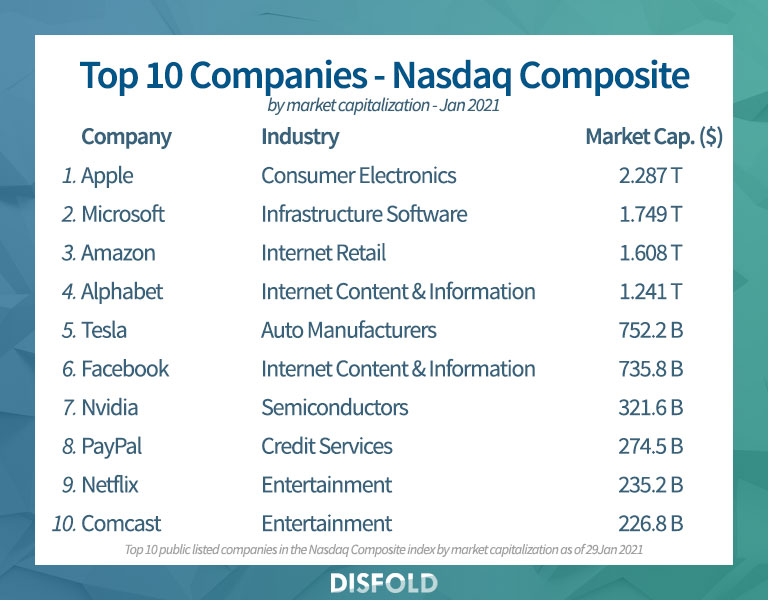
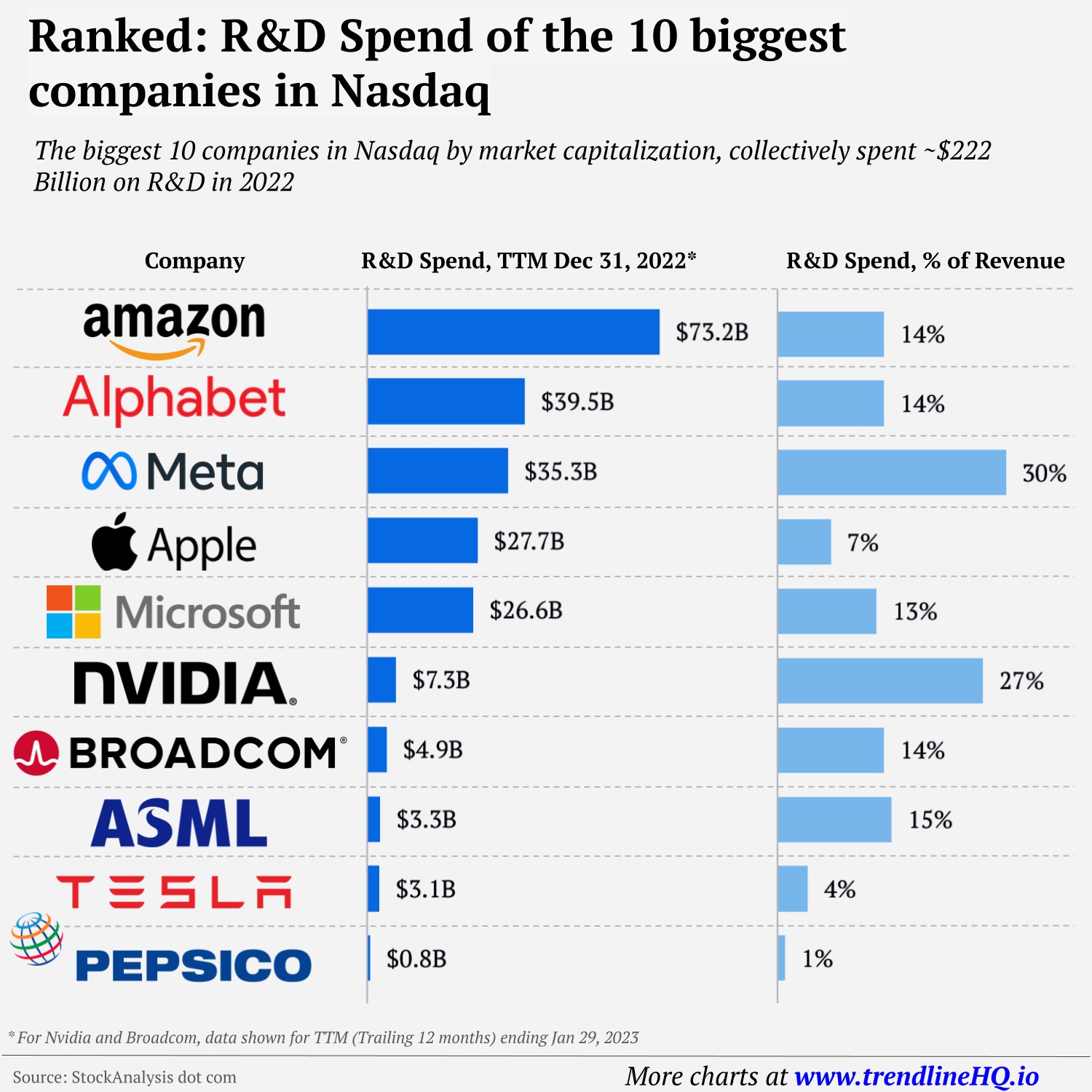
NASDAQ has cemented its reputation as the preferred exchange for companies deeply involved in innovation, research and development, and disruptive business models. While tech giants like Apple, Microsoft, Amazon, and Alphabet (Google) are prominent examples, NASDAQ also lists significant players in biotechnology, pharmaceuticals, telecommunications, retail, and various other sectors. These companies often exhibit high growth potential, characterized by aggressive expansion strategies, significant investment in R&D, and a focus on scalability. Investors are drawn to NASDAQ-listed firms for their potential to deliver substantial capital appreciation, often accepting higher volatility in pursuit of outsized returns. The exchange’s emphasis on transparency and its advanced trading infrastructure also appeal to these dynamic companies seeking efficient access to capital markets.
Navigating NASDAQ’s Listing Tiers
To accommodate companies of varying sizes and maturity levels, NASDAQ employs a tiered market structure, each with distinct listing requirements. These tiers reflect different levels of financial strength, liquidity, and corporate governance standards, providing a pathway for companies to grow and eventually meet the criteria for higher-tier listings.
-
NASDAQ Capital Market: This tier is designed for smaller, emerging growth companies. The listing requirements are less stringent, accommodating firms that may have lower market capitalization, fewer assets, and shorter operating histories. It serves as an entry point for promising companies seeking to access public capital for expansion and development. While offering vital access, these companies might present higher risk for investors due to their earlier stage of development.
-
NASDAQ Global Market: This mid-tier market lists a substantial number of companies that meet more rigorous financial and liquidity standards than those on the Capital Market. These are typically established companies with a track record of performance, strong financial health, and a larger market presence. The Global Market provides a robust platform for companies that have moved beyond the initial growth phase and are demonstrating sustained profitability and market relevance.
-
NASDAQ Global Select Market: This is NASDAQ’s premier tier, reserved for companies that meet the highest and most stringent corporate governance and financial listing standards in the world. Companies on the Global Select Market are typically well-established, highly liquid, and possess significant market capitalization. This tier is often compared to the NYSE in terms of the quality and stature of its listed companies, representing some of the largest and most influential corporations globally. Listing on the Global Select Market signifies a company’s robust financial health and adherence to best-in-class governance practices, offering investors a degree of confidence in their stability and transparency.
Each tier ensures that companies are listed on a market segment appropriate for their size and operational maturity, while also providing investors with a framework to understand the varying risk profiles associated with different NASDAQ-listed entities.
Investment Implications and Market Dynamics
For investors, understanding NASDAQ companies is crucial for crafting informed investment strategies, especially given the exchange’s unique market dynamics and sector concentrations. The allure of growth potential often comes hand-in-hand with specific risks and opportunities.
The Allure of Growth Stocks and Associated Volatility
NASDAQ-listed companies are frequently characterized as “growth stocks.” These are companies expected to grow at an above-average rate compared to the rest of the market. This growth potential often stems from innovative products, disruptive technologies, or rapid market expansion. For investors, the attraction lies in the prospect of substantial capital appreciation as the company’s value increases over time. However, this growth potential often comes with higher volatility. Growth stocks can be more sensitive to market sentiment, economic downturns, and changes in investor appetite for risk. Their valuations are often based on future earnings potential rather than current profits, making them susceptible to significant price swings if expectations are not met or if broader market conditions shift. Therefore, investing in NASDAQ companies typically requires a higher tolerance for risk and a long-term investment horizon.
Key NASDAQ Indices for Investors
Two primary indices serve as crucial benchmarks for investors tracking the performance of NASDAQ companies:
-
NASDAQ Composite Index: This broad-based index includes nearly all common stocks listed on the NASDAQ stock market, encompassing over 3,000 companies. It is a market-capitalization-weighted index, meaning companies with larger market values have a greater impact on the index’s performance. The NASDAQ Composite is widely regarded as a barometer for the technology sector and, by extension, the broader growth-oriented segment of the U.S. economy. Its performance provides a comprehensive snapshot of the trends affecting the full spectrum of NASDAQ-listed companies.
-
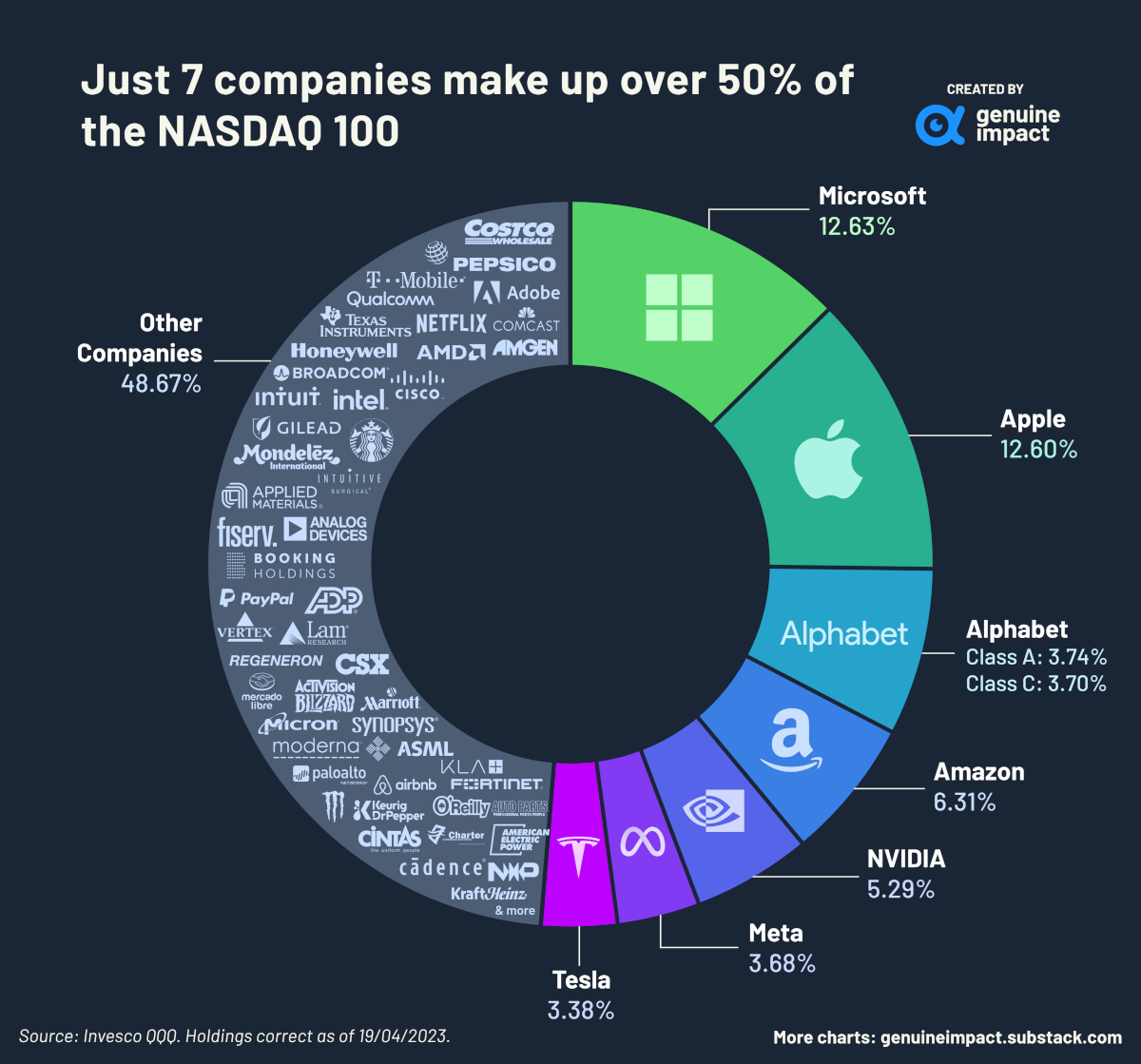
NASDAQ 100 Index: This index comprises the 100 largest non-financial companies listed on the NASDAQ Stock Market, also weighted by market capitalization. It excludes financial companies, providing a focused view of the performance of the largest and most influential technology and growth-oriented companies without the influence of banks or insurance firms. The NASDAQ 100 is particularly popular among investors seeking exposure to established tech giants and other prominent growth firms. Exchange-Traded Funds (ETFs) that track the NASDAQ 100, such as the Invesco QQQ Trust (QQQ), are widely used by investors looking to gain diversified exposure to this segment of the market.
These indices are indispensable tools for investors to gauge market sentiment, evaluate the performance of their portfolios, and identify broad economic trends driven by innovation.
Diversification and Portfolio Strategy
Incorporating NASDAQ companies into an investment portfolio can offer significant growth potential, but it also necessitates careful consideration of diversification. Due to the concentration of growth and technology stocks, a portfolio heavily weighted towards NASDAQ can be susceptible to sector-specific downturns. Financial advisors often recommend balancing high-growth NASDAQ holdings with investments in more stable, value-oriented companies from other exchanges, or across different sectors not heavily represented on NASDAQ. Diversification can also involve investing in international markets, fixed-income assets, or alternative investments to mitigate risk. For many investors, NASDAQ companies represent a vital component of a well-rounded portfolio, offering exposure to the cutting edge of global innovation and economic expansion, provided they are integrated thoughtfully within a broader, risk-managed investment strategy.
The Broader Economic Footprint of NASDAQ Companies
NASDAQ companies wield considerable influence beyond mere market capitalization, playing a critical role in shaping global economic trends, fostering innovation, and creating employment opportunities. Their collective impact reverberates across industries and national economies.
Driving Economic Innovation and Job Creation
The companies listed on NASDAQ are often at the forefront of technological advancement and scientific discovery. From developing groundbreaking software and artificial intelligence tools to pioneering new biotechnological treatments and sustainable energy solutions, these firms are central to the innovation economy. This relentless pursuit of innovation not only leads to new products and services but also fuels significant job creation, both directly within the companies themselves and indirectly across their supply chains and supporting industries. The entrepreneurial spirit inherent in many NASDAQ-listed companies contributes to a dynamic economic environment, driving productivity gains and enhancing global competitiveness. The capital raised through NASDAQ listings directly finances these R&D efforts and expansion plans, serving as a powerful engine for economic growth.
Global Market Influence and Benchmarking
The prominence of NASDAQ-listed companies, particularly the multinational tech giants, gives them immense global market influence. Their business models often transcend national borders, impacting international trade, consumer behavior, and technological adoption worldwide. Stock performance on NASDAQ is closely watched by investors, policymakers, and business leaders around the globe as a key indicator of economic health and technological progress. Major market movements on NASDAQ can trigger ripple effects across international financial markets, influencing investment decisions and shaping global economic sentiment. Furthermore, NASDAQ’s technological infrastructure and regulatory frameworks often serve as benchmarks for emerging stock exchanges and financial markets worldwide, fostering greater transparency and efficiency in capital formation on a global scale.
Challenges and Future Outlook
While the growth trajectory of many NASDAQ companies has been extraordinary, they are not immune to challenges. Regulatory scrutiny, intense market competition, and the constant pressure to innovate demand continuous adaptation. Furthermore, concerns about market concentration, particularly within the largest tech companies, and their societal impact are increasingly under discussion. Looking ahead, NASDAQ companies are poised to remain at the epicenter of global innovation. Their ability to adapt to evolving market demands, harness new technologies like quantum computing and advanced AI, and address societal challenges will determine their sustained growth and influence. For investors, this translates into a perpetually dynamic investment landscape, where diligent research and a forward-looking perspective remain paramount to capitalizing on the opportunities presented by this influential segment of the global economy.
aViewFromTheCave is a participant in the Amazon Services LLC Associates Program, an affiliate advertising program designed to provide a means for sites to earn advertising fees by advertising and linking to Amazon.com. Amazon, the Amazon logo, AmazonSupply, and the AmazonSupply logo are trademarks of Amazon.com, Inc. or its affiliates. As an Amazon Associate we earn affiliate commissions from qualifying purchases.