
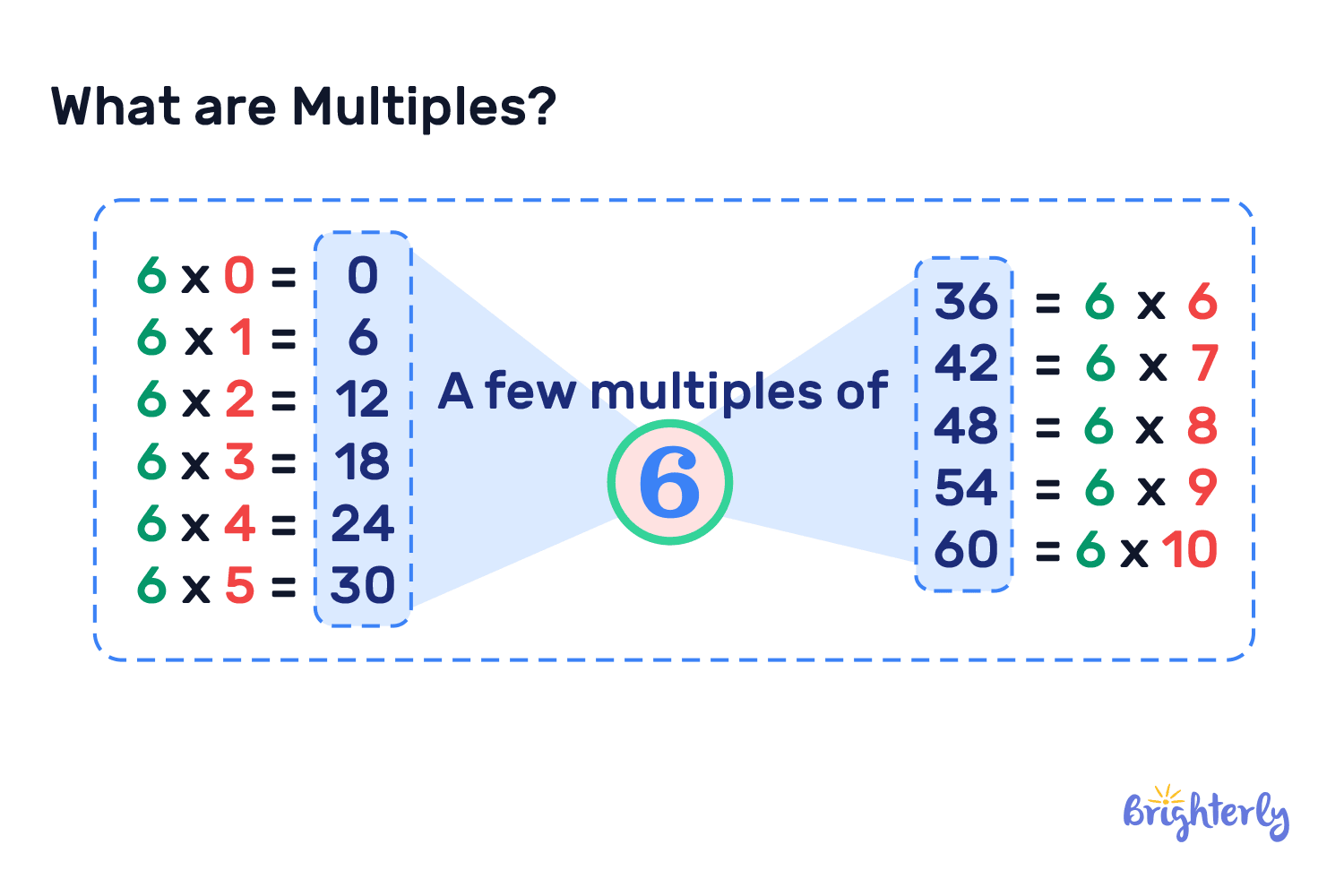
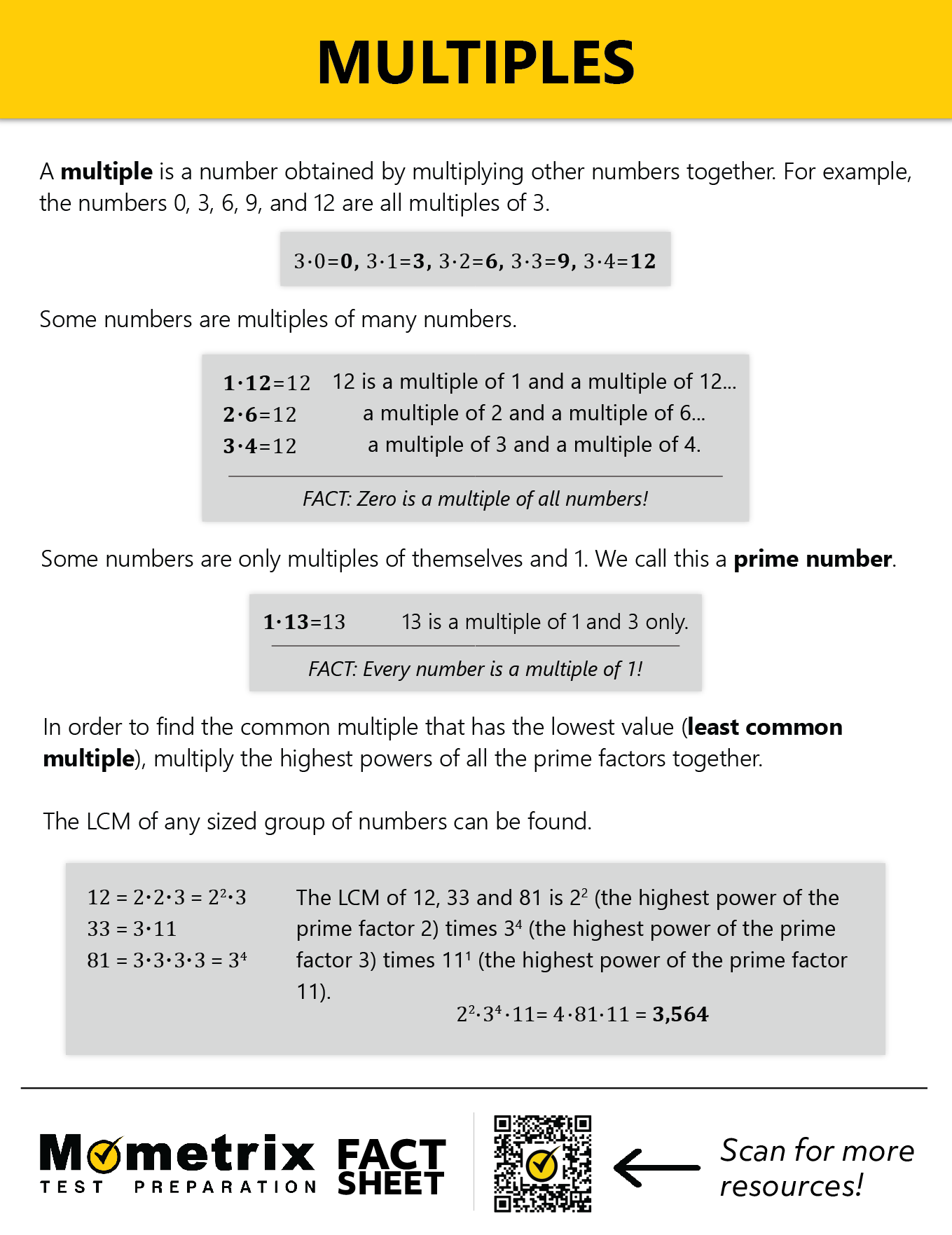
In the elementary classroom, the concept of a multiple is straightforward: it is the product of any given whole number and another whole number. For instance, the multiples of 5 are 5, 10, 15, and so on. However, when we transition from the classroom to the boardroom or the trading floor, the term “multiples” takes on a sophisticated and pivotal meaning. In the world of finance and investing, multiples are the mathematical shorthand used to determine the value of an asset, a company, or a potential investment.

Understanding what multiples are in math—specifically financial math—is essential for anyone looking to master personal finance, corporate valuation, or stock market investing. By translating raw financial data into ratios, multiples allow investors to compare “apples to apples” across different industries, sizes, and market conditions. This article explores the mathematical mechanics of financial multiples and how they serve as the bedrock of modern wealth creation.
The Mathematical Core: From Simple Products to Valuation Ratios
At its heart, a financial multiple is a ratio. While basic math defines a multiple as a result of multiplication, financial math views a multiple as a factor of a key performance indicator (KPI). If a business generates $1 million in profit and is valued at $10 million, it is trading at a “10x multiple” of its earnings.
Defining a Multiple in a Financial Context
In finance, a multiple is calculated by dividing one metric (usually price or value) by another metric (usually a fundamental financial driver like earnings, sales, or cash flow). The formula looks like this:
Value = Factor × Fundamental Metric
When an analyst asks, “What is the multiple?”, they are asking for the value of that factor. It represents how much an investor is willing to pay for every dollar of a specific financial output. This mathematical relationship simplifies complex financial statements into a single, digestible number that reflects market sentiment, growth expectations, and risk.
Why Math Matters in Wealth Management
For the individual investor, understanding these mathematical relationships is the difference between gambling and strategic allocation. Without multiples, a stock price of $500 might seem “expensive” compared to a stock price of $10. However, if the $500 stock has a multiple of 5x its earnings and the $10 stock has a multiple of 50x, the $500 stock is mathematically “cheaper.” Using multiples allows us to strip away the nominal price and look at the intrinsic value of the underlying cash flows.
Equity Multiples: Measuring Market Sentiment and Performance
Equity multiples are the most common tools used by retail investors and personal finance enthusiasts. these ratios focus on the value attributable to shareholders (the equity) rather than the entire business structure.
The Price-to-Earnings (P/E) Ratio
The P/E ratio is perhaps the most famous mathematical multiple in the world of money. It is calculated by dividing the current share price by the earnings per share (EPS).
- Trailing P/E: Uses the last 12 months of actual earnings.
- Forward P/E: Uses estimated earnings for the next year.
Mathematically, a high P/E ratio suggests that investors expect higher growth in the future, as they are willing to pay more for today’s earnings in anticipation of tomorrow’s windfall. Conversely, a low P/E might indicate that a company is undervalued or that its future prospects are dim. Understanding this multiple helps investors avoid “value traps”—companies that look cheap but are actually in decline.
Price-to-Book (P/B) and Price-to-Sales (P/S)
While earnings are a primary driver, they can be volatile. This is where other multiples come into play. The Price-to-Book ratio compares a company’s market value to its “book value” (total assets minus total liabilities). This is a favorite among value investors who want to know if they are paying more or less than the net value of the company’s physical assets.
The Price-to-Sales (P/S) ratio is equally critical, especially for high-growth tech startups that may not yet be profitable. By looking at a multiple of revenue, investors can gauge how the market values the company’s ability to capture market share, even if the “bottom line” hasn’t caught up to the “top line” yet.
Enterprise Value Multiples: A Deeper Look at Corporate Worth
For professional investors, private equity firms, and business owners, equity multiples are often insufficient because they ignore a company’s debt structure. This is where Enterprise Value (EV) multiples provide a more holistic mathematical picture.
EV/EBITDA: The Gold Standard for Acquisitions
EBITDA stands for Earnings Before Interest, Taxes, Depreciation, and Amortization. It is often used as a proxy for a company’s operational cash flow. The EV/EBITDA multiple is the primary tool used in mergers and acquisitions (M&A).
The math here is slightly more complex:
Enterprise Value = Market Cap + Total Debt – Cash
By using Enterprise Value as the numerator, the multiple accounts for the debt an acquirer would have to take on and the cash they would pocket. If a business has an EV/EBITDA of 8x, it means a buyer would pay eight times the company’s annual operating cash flow to own the entire entity. This allows for a neutral comparison between a company with high debt and a company with no debt.
Adjusting for Debt and Cash
In personal finance and small business ownership, understanding EV multiples is crucial when selling a side hustle or a local business. Most small businesses are valued on a multiple of “Seller’s Discretionary Earnings” (SDE). If you are building an online business, knowing that the industry standard multiple is 3x to 4x of your annual profit gives you a mathematical target to hit for an eventual exit.
Using Multiples for Strategic Investing and Personal Finance
Multiples are not just abstract concepts; they are functional tools for decision-making. Whether you are building a retirement portfolio or evaluating a rental property, the math remains consistent.
Comparative Analysis (Comps)
The most common application of multiples is “Comparable Company Analysis,” or “Comps.” This involves looking at the multiples of similar companies in the same industry to determine if a specific asset is fairly valued.
For example, if the average P/E for the software industry is 30x, and you find a software company trading at 20x, you have identified a potential opportunity. Mathematically, you are looking for an anomaly in the ratio that cannot be explained by fundamental weaknesses. This comparative logic is the same used by real estate agents when they provide a “comparable market analysis” for a home, using price-per-square-foot as the multiple.
The Pitfalls of Over-Reliance on Ratios
While multiples are powerful, they are not infallible. A multiple is a “snapshot” in time. One must be careful of the “denominator effect”—if earnings (the denominator) are temporarily inflated due to a one-time asset sale, the P/E multiple will look artificially low, making the stock look like a bargain when it isn’t.
Furthermore, different industries have different “normal” multiples. A utility company might naturally trade at a 10x multiple because of slow growth, while a biotech firm might trade at 100x because of a pending patent. Math requires context; without it, multiples can lead to skewed investment conclusions.
The Future of Valuation: Algorithmic Multiples and AI
As we move further into the digital age, the way we calculate and use multiples is evolving. Machine learning and AI tools are now capable of analyzing millions of data points to create “dynamic multiples.”
Real-Time Financial Modeling
In the past, calculating a multiple required a spreadsheet and manual data entry from quarterly reports. Today, fintech platforms provide real-time multiples that update with every tick of the stock market. This allows for high-frequency valuation, where investors can see how a breaking news story or a shift in interest rates immediately impacts the multiple of a specific sector.
Beyond the Traditional Metrics
We are also seeing the rise of non-traditional multiples. In the digital economy, “Price-per-User” or “EV-per-Subscriber” are becoming common math metrics for social media platforms and streaming services. While the “math” of what a multiple is doesn’t change, the “inputs” do.
For the modern investor, staying ahead means identifying which multiples are most relevant to the current economic landscape. Whether you are looking at the 4% rule in retirement planning (which is essentially a 25x multiple of your annual expenses) or evaluating a Fortune 500 stock, the math of multiples is the golden thread that connects price to value.
By mastering the concept of multiples in math, you gain a professional lens through which to view the world of money. You move beyond seeing numbers as mere figures on a screen and begin to see them as indicators of growth, risk, and opportunity. In the end, wealth is built not just by earning money, but by understanding the mathematical multiples that govern its movement and growth.
aViewFromTheCave is a participant in the Amazon Services LLC Associates Program, an affiliate advertising program designed to provide a means for sites to earn advertising fees by advertising and linking to Amazon.com. Amazon, the Amazon logo, AmazonSupply, and the AmazonSupply logo are trademarks of Amazon.com, Inc. or its affiliates. As an Amazon Associate we earn affiliate commissions from qualifying purchases.