
The concept of “money” in the business world often revolves around retail consumers or B2B (business-to-business) transactions. However, there is a massive, often overlooked financial ecosystem that moves trillions of dollars globally: government contracting. For entrepreneurs, small business owners, and large corporations alike, government contracts represent one of the most stable and lucrative revenue streams available.
At its core, a government contract is a legally binding agreement between a government agency—be it federal, state, or local—and a private provider. In this arrangement, the private entity agrees to provide goods or services in exchange for payment. While the bureaucracy involved can be complex, the financial rewards and the security of having a “sovereign” payer make this niche an essential pillar of modern business finance.
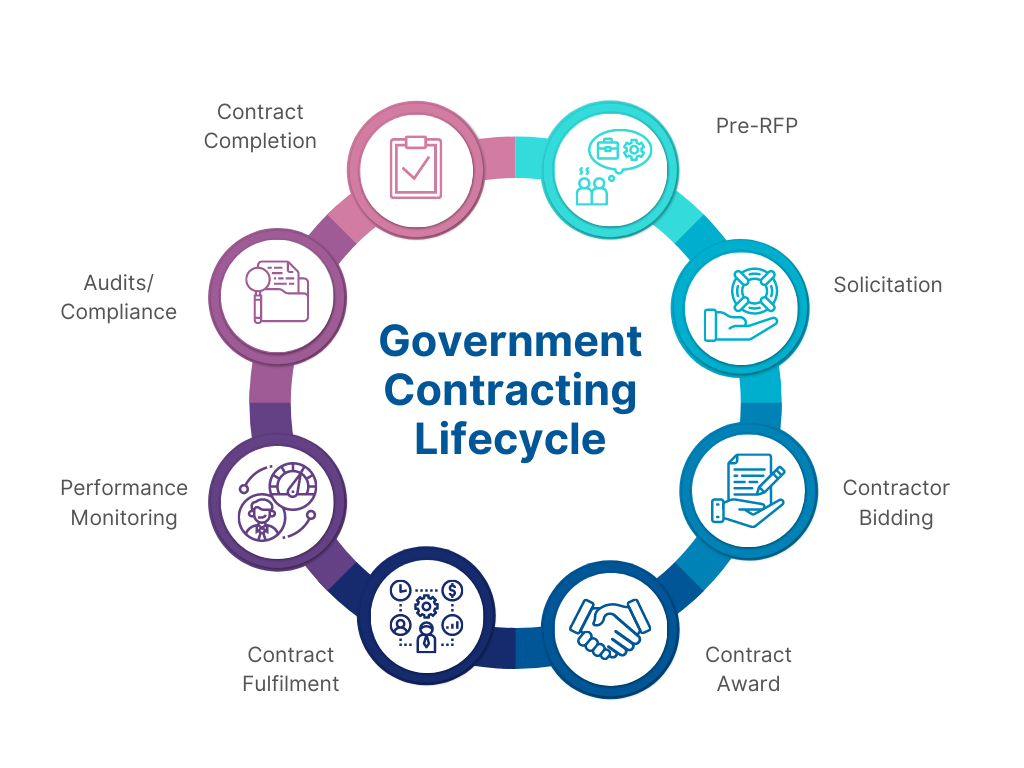
Understanding the Financial Mechanics of Government Contracting
To navigate the world of government contracts, one must first understand how the money is structured. Unlike private sector deals where terms can be informal or highly variable, government contracts are governed by strict regulatory frameworks, such as the Federal Acquisition Regulation (AR) in the United States. These regulations dictate how funds are allocated, how bids are evaluated, and how payments are disbursed.
Fixed-Price vs. Cost-Reimbursement Contracts
The financial risk of a contract is determined by its type. In a Firm-Fixed-Price (FFP) contract, the price is set at the outset and does not change regardless of the contractor’s costs. This is high-risk for the business but offers high reward if the project is managed efficiently. Conversely, Cost-Reimbursement contracts allow the contractor to be paid for all allowed expenses plus an additional fee for profit. These are often used for research or complex projects where costs cannot be easily estimated. Understanding these structures is vital for protecting your company’s bottom line.
The Federal Acquisition Regulation (FAR) and Financial Compliance
Entering the government marketplace requires a shift in financial accounting. The FAR sets the rules for what expenses a business can “charge back” to the government. This means your business finance department must maintain meticulous records. Compliance is not just a legal requirement; it is a financial strategy. Proper audits and adherence to these rules ensure that your business avoids heavy fines and remains eligible for future “pots” of government money.
The Lifecycle of a Government Budget
Government spending is cyclical, tied to the fiscal year (October 1 to September 30 in the U.S.). For a business focusing on this niche, understanding the “Use It or Lose It” phenomenon is key. Toward the end of the fiscal year, agencies often have remaining budgets that must be spent, leading to a surge in contract awards. Mapping your business’s cash flow projections to these cycles is a masterclass in strategic financial planning.
The Revenue Potential: Why Small and Large Businesses Compete
The primary allure of government contracts is the sheer volume of capital involved. The U.S. federal government alone spends over $600 billion annually on contracts. For a business, securing even a tiny fraction of this can result in multi-year financial stability that private sector clients rarely offer.
Diversifying Income Streams through the Public Sector
In a volatile economy, private sector demand can fluctuate wildly. Government demand, however, is often “recession-proof.” Governments still need infrastructure, healthcare supplies, IT services, and defense equipment regardless of the stock market’s performance. By adding government contracts to your portfolio, you create a financial hedge, ensuring that your business has a reliable source of income when other markets dry up.
Set-Aside Programs: Leveling the Financial Playing Field
One of the most powerful financial tools for small businesses is the “Set-Aside” program. The government is legally mandated to award a certain percentage of contracts to specific groups, including small businesses, woman-owned businesses, service-disabled veteran-owned businesses, and those in historically underutilized business zones (HUBZones). These set-asides act as a protected financial niche, allowing smaller players to compete for significant sums without going head-to-head with multi-billion-dollar conglomerates.
Predictable Cash Flow and Prompt Payment Acts
One of the greatest headaches in business finance is the “Net-90” or “Net-120” payment terms often forced by large private corporations. The government, however, is often bound by “Prompt Payment” laws. These regulations require agencies to pay their bills within a specific timeframe (usually 30 days) or pay interest on the late payments. For a growing business, this predictability in accounts receivable is an invaluable asset for maintaining healthy liquidity.

Navigating the Bidding Process: A Strategic Business Investment
Securing a government contract is not a matter of luck; it is a strategic financial investment. It requires time, research, and a clear understanding of procurement data. To win, a business must prove not only that it can do the work, but that it is “financially responsible.”
SAM.gov and the Digital Infrastructure of Federal Spending
The gateway to the money is the System for Award Management (SAM.gov). Every business wishing to do business with the federal government must register here. This platform is where your business receives its Unique Entity ID (UEI), which acts as your financial passport in the contracting world. Mastering this system allows you to track “Solicitations”—the government’s way of saying “we have money to spend; tell us why we should give it to you.”
Calculating Indirect Costs and Profit Margins
Bidding is a mathematical exercise. If you bid too high, you lose the contract to a competitor. If you bid too low, you win the work but lose money on the execution. Successful contractors use sophisticated financial modeling to account for “Indirect Costs”—overhead, fringe benefits, and general/administrative expenses. By accurately layering these costs over the direct labor and material costs, a business can ensure that every contract won contributes to the company’s net profit.
The Importance of Past Performance as Financial Capital
In the government niche, “Past Performance” is a form of currency. When an agency evaluates a bid, they look at your track record. Winning a small $50,000 contract and executing it perfectly builds the “credit” needed to bid on a $5 million contract later. In this sense, government contracting is a ladder; each successful project increases your business’s valuation and its ability to secure larger financial commitments in the future.
Scaling Your Business through Multi-Year Agreements
The ultimate goal for any business in this sector is to move away from “one-off” projects and toward long-term, recurring revenue. The government provides several vehicles to achieve this, allowing for exponential financial growth.
Indefinite Delivery/Indefinite Quantity (IDIQ) Contracts
An IDIQ contract is a goldmine for business finance. It provides for an indefinite quantity of supplies or services during a fixed period. Essentially, it places your business on a “shortlist” of approved vendors. When the government needs something, they place a “Task Order” against that contract. This provides a baseline of revenue that allows a business to hire staff, invest in equipment, and plan for the long term with high confidence.
GSA Schedules: The “Amazon” of Government Procurement
The General Services Administration (GSA) maintains “Schedules,” which are long-term, government-wide contracts. Being on a GSA Schedule is like having your products in a catalog that every government buyer can see. It simplifies the purchasing process, allowing agencies to buy directly from you at pre-negotiated prices. For a business, this drastically reduces the “cost of acquisition” for new sales, as you no longer have to bid from scratch for every single transaction.
Subcontracting Opportunities: Building a Financial Track Record
For many businesses, the “Big Money” is initially found through subcontracting. Large “Prime Contractors” (like Boeing or Lockheed Martin) are often required by their contracts to outsource a portion of the work to smaller businesses. Subcontracting allows you to learn the ropes, gain the necessary security clearances, and generate steady revenue without the administrative burden of managing the entire government relationship. It is a strategic financial stepping stone toward becoming a Prime Contractor yourself.

Conclusion: Government Contracts as a Wealth-Building Strategy
Government contracts are far more than just “work for the state.” They represent a sophisticated financial market that offers unparalleled stability, transparent payment terms, and massive scaling potential. By viewing government procurement through the lens of business finance, companies can transform their economic outlook.
Success in this field requires a shift in perspective. It is not just about what you provide; it is about how you manage the financial and regulatory requirements of the deal. Whether you are a solo consultant or a growing mid-sized firm, the public sector offers a path to financial resilience. By mastering the bidding process, understanding contract types, and leveraging small business set-asides, you can tap into the world’s most reliable source of income and build a business that stands the test of time.
aViewFromTheCave is a participant in the Amazon Services LLC Associates Program, an affiliate advertising program designed to provide a means for sites to earn advertising fees by advertising and linking to Amazon.com. Amazon, the Amazon logo, AmazonSupply, and the AmazonSupply logo are trademarks of Amazon.com, Inc. or its affiliates. As an Amazon Associate we earn affiliate commissions from qualifying purchases.