
In the contemporary era of high-definition screens and constant digital immersion, the way we perceive our visual health has shifted from a purely biological concern to a sophisticated intersection of physiology and technology. Many individuals, particularly those who spend significant time engaged with software development, digital design, or data analysis, have encountered “eye floaters”—those drifting, cobweb-like specks that appear to dance across their field of vision. While once dismissed as a minor nuisance of aging, understanding what floaters are, why they are increasingly noticed by tech professionals, and how cutting-edge technology is solving the problem is essential for maintaining peak performance in a digital-first world.

Understanding the Phenomenon: From Biological Specs to Digital Distortions
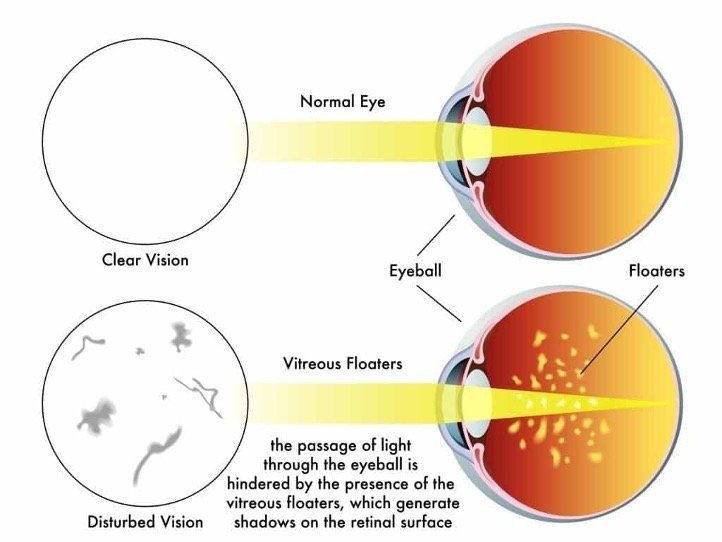
To address what floaters are, we must look at the eye through the lens of optical engineering. The human eye operates much like a high-end camera sensor, where light passes through a lens and is focused onto the retina. The space between the lens and the retina is filled with a jelly-like substance known as the vitreous humor. In a perfectly optimized “system,” this vitreous is transparent.
The Mechanics of the Vitreous Humor
As we age, or due to environmental stressors like prolonged digital eye strain, the vitreous humor begins to liquefy and shrink. During this process, the microscopic collagen fibers within the vitreous tend to clump together. These clumps are not actually on the surface of the eye; they are suspended within the internal fluid. What we perceive as “floaters” are actually the shadows cast by these clumps onto the retina.
From a technical standpoint, floaters are an internal interference in the optical path. When you look at a bright, uniform background—such as a white coding environment, a cloudless sky, or a blank Google Doc—these shadows become much more pronounced. This is known as the entoptic phenomenon, where the internal structures of the eye become visible to the observer under specific lighting conditions.
Why Tech Users Experience “Digital Floaters”
The rise in complaints regarding floaters is heavily correlated with the modern “tech stack” of daily life. High-brightness monitors and the prevalence of “Light Mode” interfaces provide the perfect high-contrast backdrop for floaters to become visible. Furthermore, the “staring reflex” common among software engineers and gamers—where the blink rate drops from 15 times per minute to nearly 5—leads to ocular surface dryness, which can exacerbate the perception of internal visual debris.
Furthermore, the shift toward higher-resolution displays, such as 4K and 5K Retina monitors, has made our vision more critical. As we train our eyes to detect minute pixel-level details in digital assets, we simultaneously become more tuned into the microscopic imperfections within our own biological hardware.
The Technological Revolution in Diagnostics and Monitoring
The diagnostic approach to floaters has transitioned from simple physical exams to sophisticated digital imaging. For tech-savvy patients, the ability to “see” their own internal ocular health through high-resolution data is a game-changer.
AI-Driven Retinal Imaging and Optical Coherence Tomography (OCT)
The gold standard for identifying the severity of floaters today is Optical Coherence Tomography (OCT). Think of OCT as the “Lidar” of the medical world. It uses light waves to take cross-section pictures of your retina, allowing specialists to see each individual layer. Recently, software developers have integrated Artificial Intelligence (AI) and machine learning algorithms into OCT platforms. These AI tools can scan thousands of images in seconds to differentiate between benign collagen clumps and high-risk conditions like retinal tears or detachments, which can sometimes present similarly to a sudden influx of floaters.
By utilizing neural networks trained on millions of retinal scans, these systems provide a level of diagnostic precision that far exceeds manual observation. For a professional whose livelihood depends on visual accuracy, this “predictive maintenance” for the eyes is a vital application of modern health-tech.
Telemedicine and Remote Eye Tracking
The evolution of mobile hardware has also introduced the possibility of remote monitoring. New apps and peripheral devices are being developed that utilize the high-resolution cameras on smartphones to perform basic “floater tracking.” While not a replacement for a clinical exam, these tools allow users to map the position and frequency of floaters over time. Using computer vision, these apps can alert a user if the “noise” in their visual field is changing in a pattern that suggests a structural issue, effectively acting as a digital early-warning system for ocular health.
Innovations in Treatment: Laser Vitreolysis and Beyond

For decades, the only “fix” for floaters was a vitrectomy—a highly invasive surgery where the vitreous humor is completely removed and replaced with a saline solution. However, the tech sector’s influence on medical hardware has paved the way for less invasive, tech-driven solutions.
YAG Laser Technology (Vitreolysis)
One of the most significant advancements is the use of the Nano-pulsed YAG (Yttrium-Aluminum-Garner) laser. This is a form of “cold” laser technology that allows ophthalmologists to perform what is essentially a wireless repair of the eye’s internal fluid.
The procedure, known as laser vitreolysis, involves using a highly focused laser beam to deliver energy to the floater. The goal isn’t just to break the floater apart but to vaporize it. The laser converts the collagen fibers into a gas, which is then absorbed by the eye. This is a masterpiece of precision engineering, requiring software-controlled aiming systems that ensure the laser energy is dissipated before it hits the delicate retina or the lens. For the patient, it is a non-invasive, “walk-in, walk-out” procedure that reflects the shift toward refined, hardware-based medical interventions.
Minimally Invasive Vitrectomy (MIVS)
In cases where laser treatment is insufficient, technology has refined the traditional surgery into Minimally Invasive Vitrectomy Surgery (MIVS). Modern MIVS utilizes 25- or 27-gauge instrumentation—needles so thin they are roughly the size of a human hair. The surgical suites used for these procedures are now equipped with 3D visualization systems, allowing surgeons to operate while looking at a massive 4K screen using polarized glasses, rather than hunched over a microscope. This digital integration allows for better depth perception and lower light levels, which protects the retina during the operation.
Preventing Vision Fatigue in the Era of High-Refresh Screens
While technology provides the cure, it also offers the tools for prevention. Managing the perception of floaters is often a matter of optimizing the user’s digital environment.
Blue Light, Flicker Rates, and Perceived Floaters
There is a growing body of research into how screen flicker (Pulse Width Modulation) and blue light emissions affect the vitreous. High-energy visible (HEV) blue light has a shorter wavelength and scatters more easily, which can create a “haze” that makes floaters more noticeable.
Hardware manufacturers are responding with “TÜV Rheinland” certified low-blue-light displays and “Flicker-Free” technology. By moving from PWM dimming to DC (Direct Current) dimming, monitor manufacturers reduce the micro-strobe effect that causes eye fatigue. For an individual with floaters, a stable, flicker-free light source reduces the cognitive load required to “filter out” the shadows in their vision.
Software Solutions for Visual Comfort
The tech community has also pioneered software-level mitigations. The widespread adoption of “Dark Mode” across macOS, Windows, and Linux is perhaps the most effective tool for those suffering from floaters. By flipping the UI from a bright white background to a dark gray or black one, the contrast is reduced, and the “shadows” cast by floaters become virtually invisible.
Furthermore, “Night Shift” and “f.lux” are software tools that adjust the color temperature of the screen based on the time of day. By shifting the white point toward the warmer end of the spectrum, these tools reduce the amount of light scattering within the eye, providing a smoother, more uniform visual experience for those with vitreous irregularities.
The Future of Vision: AR/VR and the Challenge of Vitreous Clarity
As we move toward the next frontier of personal computing—Augmented Reality (AR) and Virtual Reality (VR)—the clarity of the vitreous humor becomes even more critical. In a VR headset like the Meta Quest or the Apple Vision Pro, the screens are positioned inches from the eyes, using pancake lenses to focus the image.
The “Screen Door Effect” and Internal Optics
If a user has significant floaters, the immersive experience of spatial computing can be compromised. Because the light in a VR headset is directed in a very specific, collimated path, floaters can appear more sharply defined than they do in natural light. This presents a unique challenge for hardware designers: how to create displays that remain immersive even for users with imperfect internal optics.
Future iterations of these devices may incorporate “eye-tracking” technology not just for UI navigation, but to dynamically adjust the image to compensate for a user’s known floater positions. We are entering an era where software may eventually be able to “patch” our biological vision in real-time, using computational photography techniques to digitally remove the perception of floaters from our field of view.
Ultimately, floaters in the eye are a biological reality being viewed through a digital lens. As we continue to push the boundaries of what our screens can do, our understanding of the “hardware” inside our heads must evolve in tandem. Through a combination of AI diagnostics, laser precision, and thoughtful UI design, the tech world is ensuring that our vision remains as clear as the 4K displays we use to build the future.
aViewFromTheCave is a participant in the Amazon Services LLC Associates Program, an affiliate advertising program designed to provide a means for sites to earn advertising fees by advertising and linking to Amazon.com. Amazon, the Amazon logo, AmazonSupply, and the AmazonSupply logo are trademarks of Amazon.com, Inc. or its affiliates. As an Amazon Associate we earn affiliate commissions from qualifying purchases.