
In the vast landscape of technology, from the precision of high-fidelity audio equipment to the invisible waves of 5G telecommunications, one unit of measurement appears more frequently than almost any other: the decibel (dB). Despite its ubiquity, the decibel remains one of the most misunderstood concepts for tech enthusiasts and professionals alike. Unlike a meter or a gram, which are absolute units of measurement, the decibel is a logarithmic ratio. It is a way of expressing the relationship between two values, typically power or intensity, and it serves as the primary language for engineers, software developers, and hardware designers.
To understand decibels is to understand the physics of how our digital world communicates. Whether you are measuring the signal strength of a Wi-Fi router, the dynamic range of a digital-to-analog converter (DAC), or the noise floor of a server room, the decibel is the tool that makes these complex calculations manageable.
The Fundamentals of the Logarithmic Scale: Why Tech Uses dB
At its core, the decibel is a tenth of a “Bel,” a unit named in honor of Alexander Graham Bell. However, the Bel proved too large for most practical engineering applications, leading to the adoption of the decibel. To grasp why technology relies on this measurement, one must first understand the difference between linear and logarithmic scales.
Linear vs. Logarithmic Perception
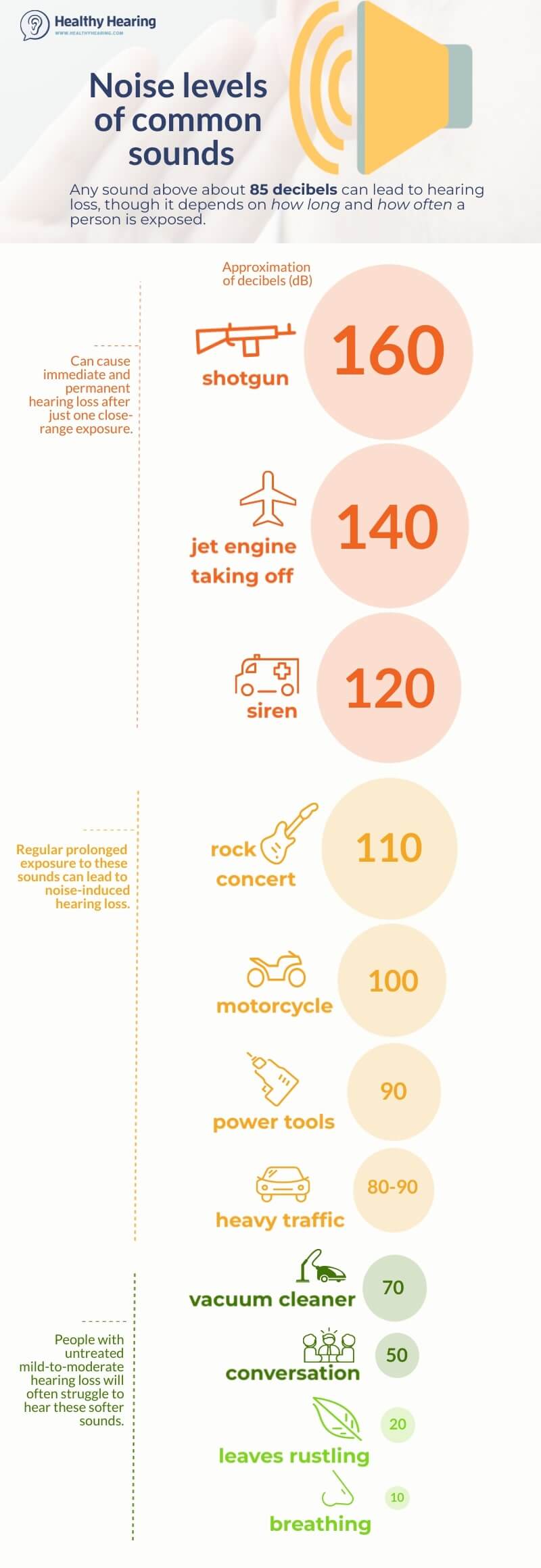
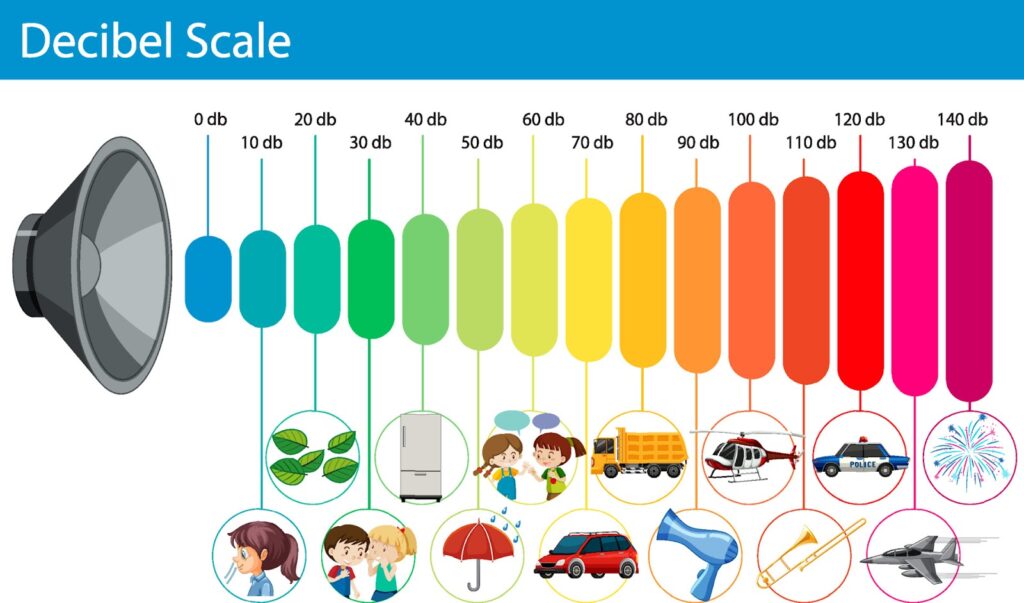
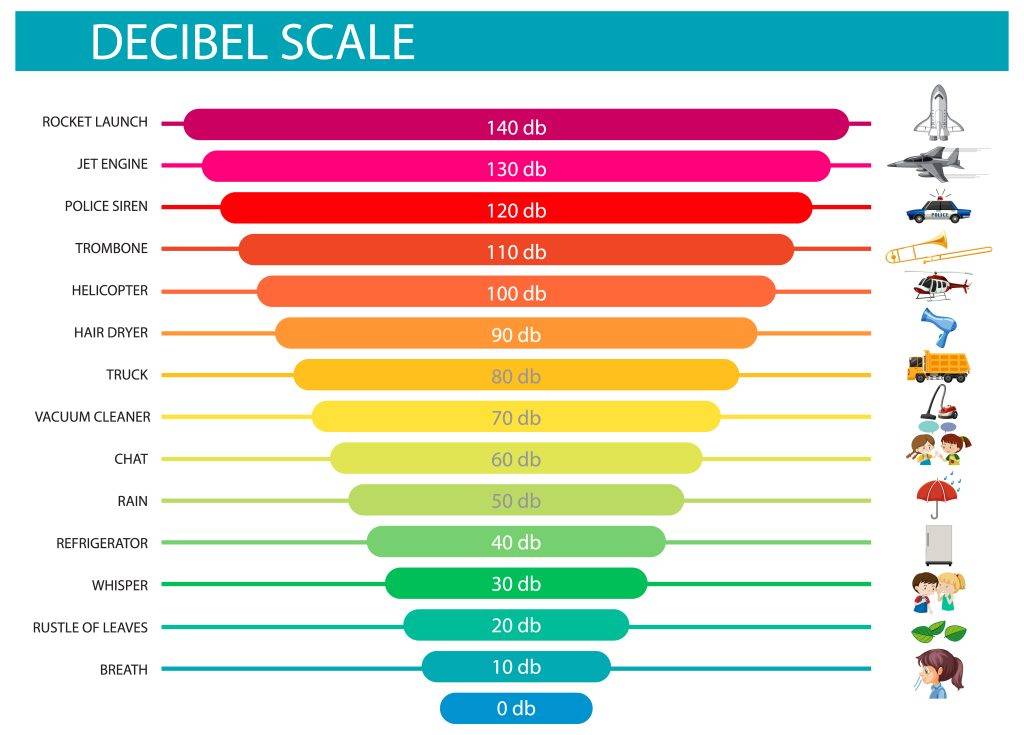
Most humans think linearly; if you have two apples and add two more, you have four. However, physical phenomena like sound and light—and the electrical signals that represent them—operate on a scale so vast that linear numbers become unwieldy. For example, the difference in power between a faint whisper and a jet engine is a factor of one trillion. Writing out “1,000,000,000,000” in technical specifications is inefficient.
By using a logarithmic scale, the decibel compresses this massive range into a much smaller, more readable set of numbers (0 to 120 dB). This is not just a matter of convenience; it actually mirrors how biological systems, like human hearing, perceive changes. Our ears do not hear sound linearly; we perceive changes in volume based on ratios.
The Power Ratio and the 3dB Rule
In technology, specifically in hardware and electrical engineering, the “3dB rule” is a fundamental principle. Because the decibel is logarithmic, a change of 3dB represents a doubling (or halving) of power. If a signal booster increases a Wi-Fi signal by 3dB, it has effectively doubled the power of that signal. If a cable loses 3dB of signal over a certain distance (attenuation), the power at the end of that cable is half of what it was at the source. Understanding this ratio is critical for network architects and hardware designers who must calculate power budgets for complex systems.
Decibels in Audio Engineering: From Professional Studios to Consumer Tech
Perhaps the most visible application of decibels is in the world of audio. Whether you are adjusting the volume on a smartphone or mixing a track in a Digital Audio Workstation (DAW), you are interacting with various “flavors” of the decibel.
dB SPL: Measuring Sound in the Physical World
When we talk about how loud a concert is or the noise level of a cooling fan in a high-end gaming PC, we are referring to dB SPL (Sound Pressure Level). This uses a reference point of 20 micropascals, which is roughly the threshold of human hearing. In tech reviews, dB SPL is the standard for measuring the acoustic footprint of hardware. A laptop fan hitting 45 dB SPL is considered audible, while a server rack exceeding 80 dB SPL requires hearing protection for data center technicians.
dBFS: The Digital Limit
In software and digital recording, the scale changes to dBFS (Decibels Relative to Full Scale). In this digital realm, 0 dB is the absolute maximum that a system can handle before the signal “clips” or distorts. Consequently, almost all values in digital audio editing are negative (e.g., -6 dB, -12 dB). For software developers building audio apps or AI voice synthesis tools, maintaining a high signal-to-noise ratio while staying below 0 dBFS is the primary challenge in ensuring high-quality output.
Signal-to-Noise Ratio (SNR)
SNR is a critical technical specification for any device that processes data or sound. Expressed in decibels, it measures the ratio of the desired signal to the background noise inherent in the circuitry. A high SNR (e.g., 100 dB or higher) indicates that the audio or data is incredibly clean, which is a hallmark of premium DACs and high-end microphones. As AI tools for noise cancellation become more sophisticated, they essentially work to widen this decibel gap between the “signal” (your voice) and the “noise” (the coffee shop background).
Connectivity and Networking: The Decibel as a Measure of Signal Integrity
Beyond audio, decibels are the lifeblood of telecommunications. Every time your phone displays “bars” of service, it is performing a complex calculation involving decibels to determine the quality of your connection.
dBm: Absolute Power in Wireless Tech
In networking, the standard unit is the dBm (decibels relative to one milliwatt). Unlike the general dB, which is a ratio, dBm is an absolute measure of power. A Wi-Fi signal of -30 dBm is considered excellent, while -90 dBm is nearly unusable. For engineers deploying 5G networks or mesh Wi-Fi systems, the goal is to manage the “link budget”—the sum of all gains and losses in decibels from the transmitter to the receiver.
Path Loss and Attenuation
As data travels through the air or through copper and fiber-optic cables, it loses energy—a process called attenuation. This loss is measured in decibels per meter or kilometer. High-frequency signals, such as those used in mmWave 5G, suffer from high attenuation, meaning they can be blocked by something as simple as a glass window or a tree leaf. Tech companies must innovate with beamforming and signal repeaters to overcome these decibel losses and maintain high-speed connectivity in urban environments.
The Role of Gain in Signal Boosting
Conversely, when a signal is weak, we use amplifiers to provide “gain,” also measured in decibels. In the world of satellite internet (like Starlink) or deep-space communication, the gain provided by high-gain antennas is what allows data to be transmitted across thousands of miles. By focusing the signal into a narrow beam, the antenna increases the decibel level at the receiving end without increasing the raw power consumption of the satellite.
Practical Applications in Consumer Hardware and Digital Security
The application of decibels extends into the physical design of gadgets and the safety protocols built into our digital ecosystems. As hardware becomes more powerful, the heat and noise they generate become significant engineering hurdles.
Thermal Management and Acoustic Footprints
In the review and development of gadgets—ranging from the latest MacBook to high-end GPUs—the “noise-to-performance” ratio is a key metric. Engineers use decibel measurements to optimize fan blade geometry. A fan that produces 35 dB of “white noise” is often preferred over one that produces 30 dB of high-pitched “whine,” showing that in tech, the quality of the decibels matters as much as the quantity.
Hearing Safety in Wearable Tech
Modern operating systems, such as iOS and Android, now include “Headphone Safety” features that monitor decibel levels in real-time. This is an example of tech using decibel math to protect biological health. By tracking the “dose” of decibels over time, these AI-driven systems can automatically lower the volume or alert the user if they have exceeded safe exposure limits, preventing permanent hearing loss caused by high-decibel digital consumption.
Digital Security and Acoustic Side-Channel Attacks
In the niche field of digital security, decibels play a surprising role in “side-channel attacks.” Sophisticated hackers can sometimes use high-sensitivity microphones to record the “noise” of a computer processor (the coil whine) as it decrypts data. By analyzing the minute changes in decibel levels and frequencies produced by the hardware, they can occasionally reconstruct encryption keys. This has led to a new frontier in hardware tech: “acoustic shielding” to ensure that the decibels produced by a machine do not leak sensitive information.
Conclusion: The Invisible Standard
The decibel is far more than just a measurement of loudness; it is a versatile mathematical framework that allows us to map the extremes of the physical and digital worlds. It provides a common language for the audio engineer, the network architect, and the hardware designer to communicate complex ratios of power, pressure, and intensity.
As we move toward a future defined by 6G connectivity, ultra-high-definition spatial audio, and increasingly powerful compact computing, our reliance on the decibel will only grow. It remains the most efficient way to quantify the invisible forces—waves, signals, and pulses—that drive the modern technological age. Understanding “what are decibels” is, in many ways, the first step toward truly understanding how the tech around us functions at its most fundamental level.
aViewFromTheCave is a participant in the Amazon Services LLC Associates Program, an affiliate advertising program designed to provide a means for sites to earn advertising fees by advertising and linking to Amazon.com. Amazon, the Amazon logo, AmazonSupply, and the AmazonSupply logo are trademarks of Amazon.com, Inc. or its affiliates. As an Amazon Associate we earn affiliate commissions from qualifying purchases.