
Understanding the labyrinthine world of federal income tax rates is a cornerstone of sound personal and business finance. Far from a simple flat percentage, the U.S. federal income tax system is progressive, meaning different portions of your income are taxed at different rates. For individuals, these rates are determined by income levels and filing status, impacting everything from your take-home pay to your investment strategies. Navigating this landscape effectively requires not just knowing the numbers, but understanding the mechanisms behind them and how various financial decisions can influence your overall tax liability.
This article delves into the intricacies of current federal income tax rates, providing a comprehensive guide for individuals and offering insights into how these rates affect your financial planning. We’ll break down the progressive tax system, examine the latest tax brackets, and explore other critical factors like deductions, credits, and capital gains that play a pivotal role in determining your final tax bill. Whether you’re a seasoned taxpayer or just starting to grapple with your financial responsibilities, a clear understanding of these rates is indispensable for optimizing your financial health.
Understanding the Progressive Tax System: The Foundation of U.S. Taxation
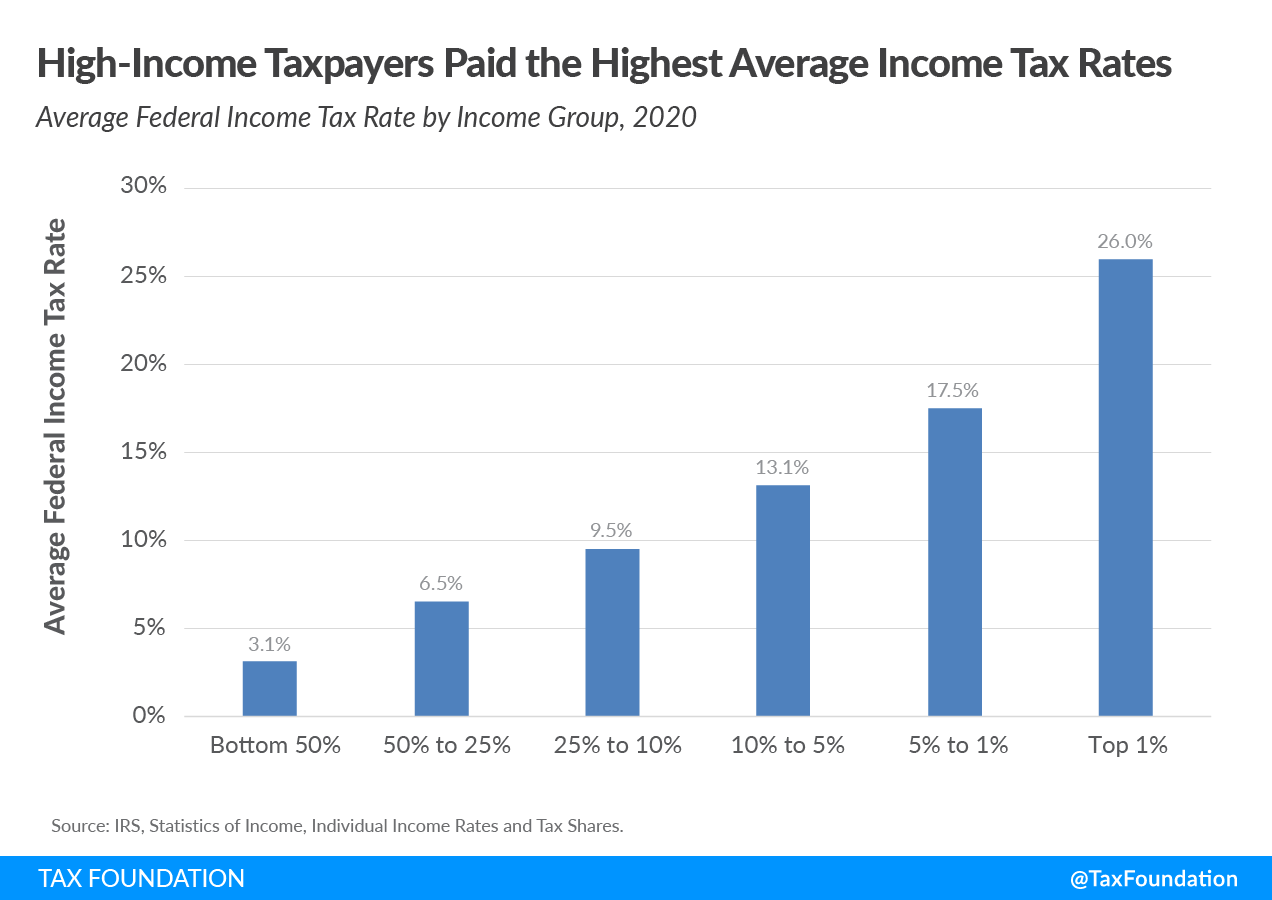
The U.S. federal income tax system is fundamentally progressive. This means that as your taxable income increases, you pay a higher percentage in taxes. It’s a common misconception that if you move into a higher tax bracket, all your income will be taxed at that higher rate. This is incorrect. The progressive system is designed to tax different portions of your income at different marginal rates, creating a stepped structure.
How Tax Brackets Work
Tax brackets are income ranges that are taxed at a specific rate. For example, if the first $11,600 (for a single filer in 2024) of taxable income is taxed at 10%, and the income between $11,601 and $47,150 is taxed at 12%, a person earning $40,000 would not pay 12% on the entire $40,000. Instead, the first $11,600 would be taxed at 10%, and the remaining $28,400 ($40,000 – $11,600) would be taxed at 12%. This tiered approach ensures that only the portion of your income that falls within a higher bracket is subjected to that higher rate.
The income thresholds for these brackets are adjusted annually for inflation by the Internal Revenue Service (IRS). This prevents “bracket creep,” where inflation pushes taxpayers into higher brackets even if their purchasing power hasn’t increased.
Marginal vs. Effective Tax Rates
Understanding the difference between marginal and effective tax rates is crucial.
- Marginal Tax Rate: This is the tax rate applied to your last dollar of taxable income. It’s the rate of the highest tax bracket your income falls into. When financial advisors speak about the tax impact of an additional dollar earned or a deduction taken, they are typically referring to your marginal tax rate.
- Effective Tax Rate: This is the total percentage of your income that you actually pay in taxes. It’s calculated by dividing your total tax liability by your total taxable income. Your effective tax rate will always be lower than or equal to your marginal tax rate in a progressive system because it’s an average of all the marginal rates applied to your income. For instance, someone in the 24% marginal bracket might have an effective tax rate of only 15-18% once all the lower bracket rates and any applicable deductions and credits are factored in.
Key Filing Statuses and Their Impact
Your filing status is one of the most significant determinants of which tax brackets apply to you. The five primary filing statuses are:
- Single: For unmarried individuals.
- Married Filing Jointly: For married couples who choose to file one joint tax return.
- Married Filing Separately: For married couples who choose to file separate returns. This is often less advantageous but can be beneficial in specific situations (e.g., separating liabilities).
- Head of Household: For unmarried individuals who pay more than half the cost of keeping up a home for themselves and a qualifying person. This status offers broader tax brackets and a higher standard deduction than Single.
- Qualifying Widow(er) with Dependent Child: For individuals whose spouse died recently and who have a dependent child. This status allows them to use the Married Filing Jointly rates for two years after their spouse’s death.
Each status has its own set of income thresholds for the various tax brackets, making it vital to select the correct one for your situation.
A Closer Look at the 2024 Federal Income Tax Brackets
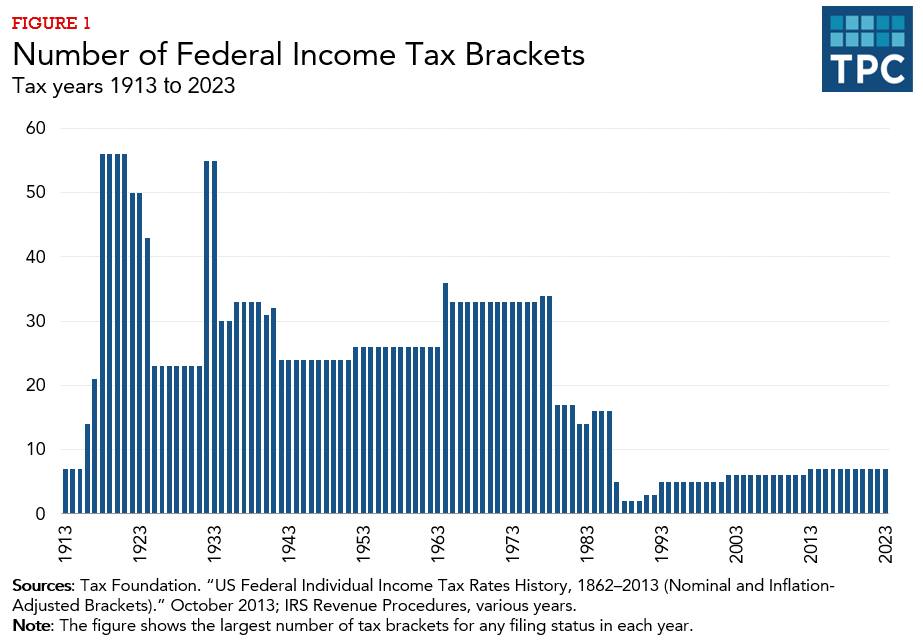
For tax year 2024 (returns filed in 2025), the IRS has adjusted the income thresholds for inflation. While specific income numbers are subject to change annually, the structure of the brackets (7 marginal rates) generally remains consistent. These rates apply to your taxable income, which is your gross income minus any deductions.
Here’s an overview of the 2024 marginal tax rates and their corresponding income brackets for each common filing status:
Single Filers
- 10%: $0 to $11,600
- 12%: $11,601 to $47,150
- 22%: $47,151 to $100,525
- 24%: $100,526 to $191,950
- 32%: $191,951 to $243,725
- 35%: $243,726 to $609,350
- 37%: $609,351 or more
Married Filing Jointly
- 10%: $0 to $23,200
- 12%: $23,201 to $94,300
- 22%: $94,301 to $201,050
- 24%: $201,051 to $383,900
- 32%: $383,901 to $487,450
- 35%: $487,451 to $731,200
- 37%: $731,201 or more
Married Filing Separately
- 10%: $0 to $11,600
- 12%: $11,601 to $47,150
- 22%: $47,151 to $100,525
- 24%: $100,526 to $191,950
- 32%: $191,951 to $243,725
- 35%: $243,726 to $365,600
- 37%: $365,601 or more
Head of Household
- 10%: $0 to $16,550
- 12%: $16,551 to $63,100
- 22%: $63,101 to $100,500
- 24%: $100,501 to $191,950
- 32%: $191,951 to $243,700
- 35%: $243,701 to $609,350
- 37%: $609,351 or more
Note: These figures are for illustrative purposes based on publicly available 2024 IRS data. Always consult official IRS publications or a tax professional for the most accurate and up-to-date information relevant to your specific situation.
Beyond Brackets: Other Factors Influencing Your Tax Bill
While tax brackets form the core of federal income taxation, they are just one piece of the puzzle. Several other factors significantly reduce or increase your actual tax liability.
Standard vs. Itemized Deductions
Before applying the tax bracket rates, your taxable income is reduced by either the standard deduction or itemized deductions.
- Standard Deduction: This is a fixed dollar amount that you can subtract from your adjusted gross income (AGI) if you choose not to itemize. The amount varies by filing status and is also adjusted annually for inflation. For 2024, the standard deduction is $14,600 for single filers, $29,200 for married filing jointly, and $21,900 for Head of Household. Many taxpayers find the standard deduction to be simpler and sufficiently large for their needs.
- Itemized Deductions: If your deductible expenses (such as state and local taxes, mortgage interest, charitable contributions, and certain medical expenses) exceed your standard deduction, you can choose to itemize. This requires more detailed record-keeping but can lead to a lower taxable income if your itemized deductions are substantial.
Choosing between the standard and itemized deduction is a critical decision that directly impacts your taxable income and, consequently, your federal income tax.
Tax Credits: A Powerful Tool
Unlike deductions, which reduce your taxable income, tax credits directly reduce the amount of tax you owe, dollar for dollar. A $1,000 credit reduces your tax bill by $1,000, regardless of your tax bracket. This makes credits incredibly valuable. Some common federal tax credits include:
- Child Tax Credit: For qualifying children under age 17.
- Earned Income Tax Credit (EITC): For low to moderate-income individuals and families.
- Education Credits: Such as the American Opportunity Tax Credit and the Lifetime Learning Credit.
- Child and Dependent Care Credit: For expenses incurred while working or looking for work.
- Clean Energy Credits: For installing energy-efficient home improvements or purchasing electric vehicles.
Credits can significantly lower your tax liability, even potentially resulting in a refund greater than the amount of tax withheld, especially if they are “refundable” credits.
Capital Gains Tax Rates
Income from the sale of assets like stocks, bonds, or real estate is generally categorized as capital gains. These gains are taxed differently from ordinary income and have their own set of rates.
- Short-Term Capital Gains: Apply to assets held for one year or less. These are taxed at your ordinary income tax rates (the same as your salary or wages).
- Long-Term Capital Gains: Apply to assets held for more than one year. These typically have preferential tax rates, which are often lower than ordinary income tax rates. For 2024, the long-term capital gains rates are 0%, 15%, or 20%, depending on your taxable income and filing status. For instance, single filers with taxable income up to $47,150 typically pay 0% on long-term capital gains, while those with incomes above $523,600 pay 20%.
Understanding capital gains rates is crucial for investors, as it dictates the after-tax return on their investments.
Payroll Taxes (FICA) – A Separate Consideration
It’s important to remember that federal income tax is not the only federal tax withheld from your paycheck. Payroll taxes, primarily FICA (Federal Insurance Contributions Act), fund Social Security and Medicare.
- Social Security Tax: 6.2% on earnings up to an annual limit ($168,600 for 2024). Your employer also pays 6.2%.
- Medicare Tax: 1.45% on all earnings, with no income limit. An additional 0.9% Medicare surtax applies to high earners ($200,000 for single filers, $250,000 for married filing jointly).
These FICA taxes are separate from federal income tax and are withheld from your gross pay alongside your income tax. For self-employed individuals, they are responsible for both the employer and employee portions, known as self-employment tax.
Navigating the Nuances: Planning for Your Taxes
A proactive approach to tax planning can lead to significant savings and peace of mind. Understanding your current federal income tax rates is the first step; strategically applying that knowledge is the next.
The Importance of Tax Withholding
For most employees, federal income tax is withheld from each paycheck based on the W-4 form submitted to their employer. It’s crucial to review and update your W-4 annually, or whenever there’s a significant life event (marriage, birth of a child, change in income). Proper withholding ensures you pay enough tax throughout the year to avoid penalties, but not so much that you’re giving the government an interest-free loan. The IRS Tax Withholding Estimator is an excellent tool for adjusting your W-4 accurately.
Estimated Taxes for Self-Employed Individuals
If you are self-employed, an independent contractor, or receive income not subject to withholding (like rental income), you are generally required to pay estimated taxes quarterly. This covers both your income tax and self-employment taxes. Failing to pay enough estimated tax throughout the year can result in penalties. Careful tracking of income and expenses is essential for accurately calculating and paying these quarterly installments.
Leveraging Retirement Accounts for Tax Advantages
Retirement accounts offer powerful tax advantages that can reduce your current federal income tax liability.
- Traditional IRAs and 401(k)s: Contributions are often tax-deductible in the year they are made, reducing your taxable income in the present. Taxes are then paid when you withdraw funds in retirement.
- Roth IRAs and 401(k)s: Contributions are made with after-tax dollars, meaning they do not reduce your current taxable income. However, qualified withdrawals in retirement are entirely tax-free.
- Health Savings Accounts (HSAs): Offer a triple tax advantage – tax-deductible contributions, tax-free growth, and tax-free withdrawals for qualified medical expenses.
Strategic use of these accounts can significantly lower your effective tax rate over your lifetime.
Staying Informed: When Do Rates Change?
Federal income tax rates, brackets, and deduction amounts are not static. The IRS adjusts them annually for inflation, and Congress can pass new legislation that fundamentally changes the tax code. Major tax reforms, like the Tax Cuts and Jobs Act of 2017, can have a profound impact on individual taxpayers. Staying informed through reliable financial news sources, IRS announcements, and consultations with tax professionals is vital to adapt your financial planning to current tax laws.
Seeking Professional Guidance
While understanding the basics is empowering, the complexity of the tax code means that specific situations often warrant expert advice.
When to Consult a Tax Professional
You should consider consulting a tax professional (such as a Certified Public Accountant – CPA, or an Enrolled Agent – EA) if you:
- Have a complex financial situation (e.g., self-employment, rental properties, significant investments, foreign income).
- Experience a major life event (marriage, divorce, birth of a child, home purchase, retirement).
- Are starting a new business or making significant business investments.
- Want to optimize your tax planning for long-term goals.
- Receive notice from the IRS or are facing an audit.
- Are unsure about which deductions or credits apply to you.
A tax professional can offer personalized advice, identify potential savings, and ensure compliance with all tax laws.

Resources for DIY Tax Preparation
For those with simpler tax situations, various resources are available for do-it-yourself tax preparation:
- IRS.gov: The official source for tax forms, publications, and instructions. It also offers the “Free File” program for eligible taxpayers to prepare and e-file their federal taxes for free.
- Tax Software: Popular software like TurboTax, H&R Block, and TaxAct guide users through the filing process, help identify deductions and credits, and perform calculations.
- Volunteer Income Tax Assistance (VITA) and Tax Counseling for the Elderly (TCE): These IRS-sponsored programs offer free tax help to qualifying individuals, including those with low to moderate income, persons with disabilities, and the elderly.
Understanding “what are current federal income tax rates” is more than just memorizing numbers; it’s about grasping a dynamic system that underpins personal financial health. By staying informed, utilizing available tools, and seeking professional advice when needed, you can navigate the tax landscape confidently and make informed decisions that support your financial goals.
aViewFromTheCave is a participant in the Amazon Services LLC Associates Program, an affiliate advertising program designed to provide a means for sites to earn advertising fees by advertising and linking to Amazon.com. Amazon, the Amazon logo, AmazonSupply, and the AmazonSupply logo are trademarks of Amazon.com, Inc. or its affiliates. As an Amazon Associate we earn affiliate commissions from qualifying purchases.