
The global financial landscape is undergoing a seismic shift, driven by the emergence and maturation of cryptocurrencies. Once relegated to the fringes of internet forums, digital assets have evolved into a multi-trillion-dollar asset class that challenges traditional notions of value, medium of exchange, and wealth management. For the modern investor or business owner, understanding the utility of cryptocurrency is no longer optional; it is a prerequisite for navigating the future of finance. Beyond the speculative headlines, cryptocurrencies serve specific, pragmatic roles in the contemporary economy, ranging from sophisticated investment strategies to the complete overhaul of international payment systems.
A New Frontier for Investment and Asset Allocation
The most prominent use case for cryptocurrency today is as a vehicle for wealth generation and preservation. As traditional markets face pressures from inflation and fluctuating interest rates, both retail and institutional investors have turned to digital assets to bolster their portfolios.
Digital Gold and Inflation Hedging
Bitcoin, the first and most well-known cryptocurrency, is frequently referred to as “digital gold.” This comparison stems from its programmed scarcity; there will only ever be 21 million coins. In a world where central banks can increase the money supply at will, resulting in the devaluation of fiat currencies, Bitcoin offers a deflationary alternative. Investors use it as a store of value, holding the asset over long periods to protect their purchasing power against the backdrop of rising consumer prices. This “HODL” strategy—a term derived from a misspelling of “hold”—has become a cornerstone of long-term financial planning for those skeptical of traditional monetary policy.
Diversification in the Modern Portfolio
Modern Portfolio Theory suggests that a diversified basket of assets can maximize returns while minimizing risk. Cryptocurrencies provide a unique advantage in this regard because they often exhibit a low correlation with traditional asset classes like stocks and bonds. By allocating a small percentage of a portfolio to digital assets, investors can potentially capture significant upside growth that is independent of the performance of the S&P 500 or the Treasury market. This diversification is particularly attractive in periods of geopolitical instability or regional economic downturns, where decentralized assets provide a safety net outside of localized financial systems.
Passive Income through Staking and Yield Farming
The utility of crypto extends beyond simple capital appreciation. Through mechanisms like “staking,” investors can earn a form of interest on their holdings. In networks that use Proof of Stake (PoS), users lock up their tokens to help secure the network and, in return, receive a percentage-based reward. Similarly, “yield farming” involves providing liquidity to decentralized exchanges. For the savvy participant, these methods represent a high-yield alternative to traditional savings accounts, which often offer interest rates that fail to keep pace with inflation. These practices have turned cryptocurrency from a static investment into a dynamic source of recurring income.
Revolutionizing Global Payments and Remittances
The traditional banking system is often slow, expensive, and burdened by intermediaries. Cryptocurrencies solve these friction points by enabling the near-instantaneous transfer of value across borders without the need for a central clearinghouse.
Eliminating Cross-Border Friction
Sending money internationally via traditional methods like SWIFT can take several business days and incur fees as high as 7% to 10% when currency conversion and intermediary bank cuts are factored in. Cryptocurrencies, particularly “stablecoins” pegged to the US Dollar, allow for borderless transactions that settle in minutes for a fraction of the cost. For businesses operating with international suppliers or remote workforces, this means improved cash flow and significant overhead reduction. The “always-on” nature of blockchain ensures that financial operations are not restricted by banking hours or public holidays.
Banking the Unbanked
A significant portion of the global population lacks access to traditional banking services but possesses a smartphone with internet access. Cryptocurrencies provide these individuals with a gateway to the global economy. By using a digital wallet, someone in a developing nation can receive payments, store wealth, and access credit without needing a physical bank branch or a formal credit history. This democratization of finance is perhaps one of the most socially impactful uses of the technology, fostering entrepreneurship and financial independence in regions that were previously marginalized by the legacy financial system.
Institutional and Corporate Treasury Integration
Forward-thinking corporations are no longer just looking at crypto as an external market; they are integrating it into their own balance sheets. Companies like MicroStrategy and Tesla have famously added Bitcoin to their corporate treasuries. Beyond speculation, firms use cryptocurrencies to facilitate large-scale business-to-business (B2B) payments. By utilizing blockchain-based settlement layers, corporations can bypass the delays associated with correspondent banking, allowing for “just-in-time” financial management that aligns with the speed of modern digital commerce.
Decentralized Finance (DeFi) and the Disruption of Traditional Banking
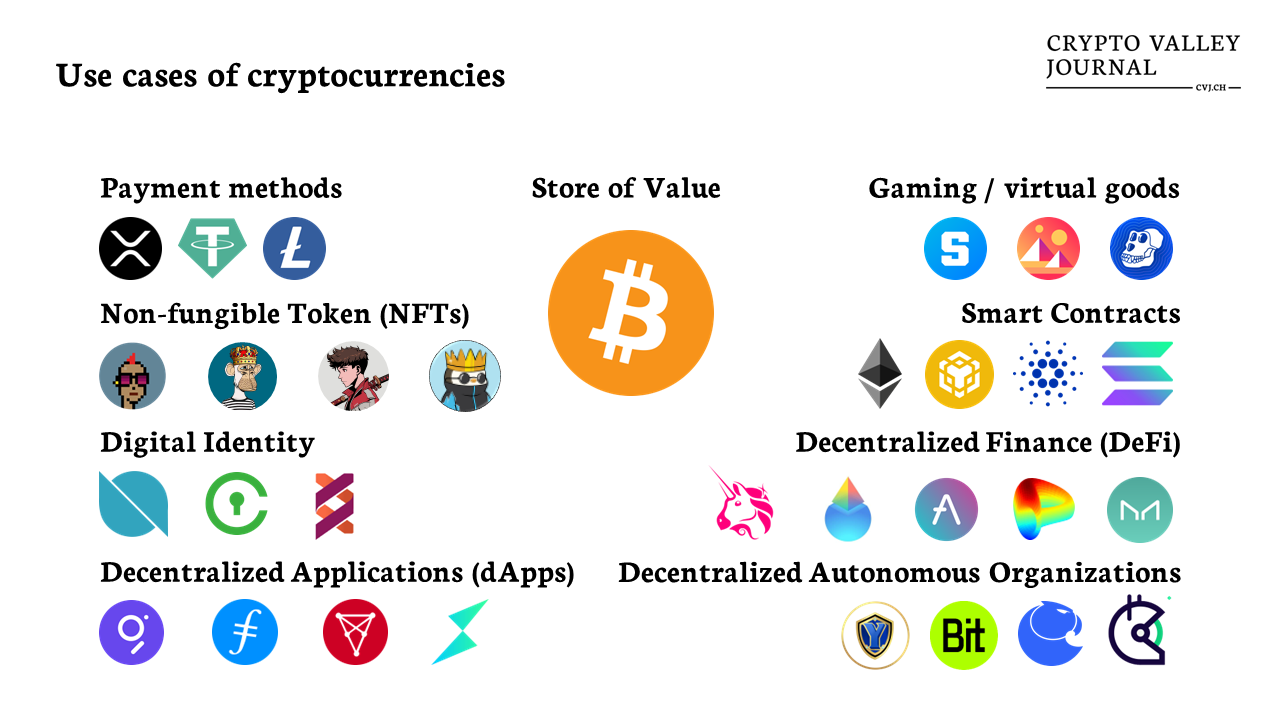
Decentralized Finance, or DeFi, is perhaps the most transformative application of cryptocurrency. It represents a shift from centralized financial systems (banks, brokerages) to peer-to-peer (P2P) finance enabled by smart contracts.
P2P Lending and Borrowing
In the traditional world, if you want a loan, you must go to a bank, provide collateral, and wait for approval based on your credit score. In the DeFi ecosystem, cryptocurrency is used as collateral to secure instant, automated loans. These platforms allow individuals to lend their assets to others and earn interest, or borrow against their holdings to gain liquidity without selling their assets. Because these platforms are governed by code rather than human loan officers, they are transparent, permissionless, and available to anyone with the required collateral.
Liquidity Provision and Automated Market Makers
Cryptocurrencies are the lifeblood of decentralized exchanges (DEXs). Unlike traditional stock exchanges that rely on market makers to provide liquidity, DEXs use “liquidity pools.” Users deposit their crypto into these pools to facilitate trades for others, earning a portion of the transaction fees in return. This creates a circular economy where the users of the platform are also the owners and the service providers, effectively cutting out the middleman and redistributing the profit back to the community of participants.
Smart Contracts as Financial Agreements
The use of “smart contracts”—self-executing contracts with the terms of the agreement directly written into code—allows for complex financial transactions to occur without a lawyer or notary. These contracts can handle everything from insurance payouts to escrow services and inheritance planning. When specific conditions are met (e.g., a flight is delayed or a certain date is reached), the cryptocurrency is automatically released to the intended recipient. This reduces the risk of fraud and ensures that financial agreements are honored precisely as written, increasing the efficiency of commercial law and personal finance management.
Monetizing the Digital Era: Income Generation and the Creator Economy
Cryptocurrencies have introduced entirely new ways for individuals to earn money online, bypassing traditional employment models and giving rise to a more flexible, globalized gig economy.
The Rise of Play-to-Earn and Social Finance
The gaming industry has seen the emergence of “Play-to-Earn” (P2E) models, where players are rewarded with cryptocurrency for their time and skill. In certain economies, these games have provided a primary source of income for thousands of people. Furthermore, “Social Finance” (SocialFi) platforms allow creators to tokenize their influence. By issuing “creator tokens,” influencers and artists can provide their followers with exclusive access or a stake in their future success. This aligns the financial incentives of the creator and the audience, creating a more direct and lucrative path to monetization than traditional ad-revenue models.
NFTs and the Tokenization of Real-World Assets
Non-fungible tokens (NFTs) have extended the utility of cryptocurrency into the realms of art, real estate, and intellectual property. By tokenizing a physical or digital asset, owners can prove authenticity and ownership on the blockchain. For investors, this means the ability to buy fractional shares of high-value assets, such as a piece of fine art or a commercial building, which would otherwise be unaffordable. This “fractionalization” increases market liquidity and opens up high-tier investment opportunities to the average person, further blurring the lines between traditional wealth and digital innovation.
Freelancing and the Gig Economy in Crypto
For the modern freelancer, being paid in cryptocurrency offers a level of financial autonomy that PayPal or bank transfers cannot match. Many platforms now cater specifically to the “crypto-gig” economy, where developers, writers, and designers are paid in digital assets. This is particularly beneficial for those living in countries with volatile local currencies. By receiving payment in a stablecoin or a major cryptocurrency, freelancers can avoid the rapid depreciation of their earnings and gain immediate access to global markets. This shift is redefining the “side hustle,” moving it from a localized endeavor to a globally competitive financial pursuit.
In conclusion, the use cases for cryptocurrency have expanded far beyond the initial vision of a simple digital currency. Today, they serve as a sophisticated tool for investment, a more efficient rail for global commerce, a foundation for a new decentralized financial system, and a catalyst for the burgeoning creator economy. As the technology continues to mature, its integration into everyday financial life will only deepen, offering individuals and businesses unprecedented control over their economic destiny.
aViewFromTheCave is a participant in the Amazon Services LLC Associates Program, an affiliate advertising program designed to provide a means for sites to earn advertising fees by advertising and linking to Amazon.com. Amazon, the Amazon logo, AmazonSupply, and the AmazonSupply logo are trademarks of Amazon.com, Inc. or its affiliates. As an Amazon Associate we earn affiliate commissions from qualifying purchases.