
As the digital asset landscape evolves from a niche interest into a cornerstone of modern financial planning, Coinbase has emerged as much more than a simple currency exchange. For the modern investor, business owner, or financial strategist, understanding the breadth of Coinbase’s product suite is essential for navigating the complexities of the decentralized economy. Since its inception in 2012, the company has methodically built a multi-layered ecosystem designed to bridge the gap between traditional fiat currency and the burgeoning world of Web3.
This guide explores the diverse array of Coinbase products, categorized by their utility in personal finance, institutional investing, and business operations. By the end, you will have a clear roadmap of how these tools can be leveraged to build, manage, and protect digital wealth.

The Foundation of Personal Finance: Coinbase for Individual Investors
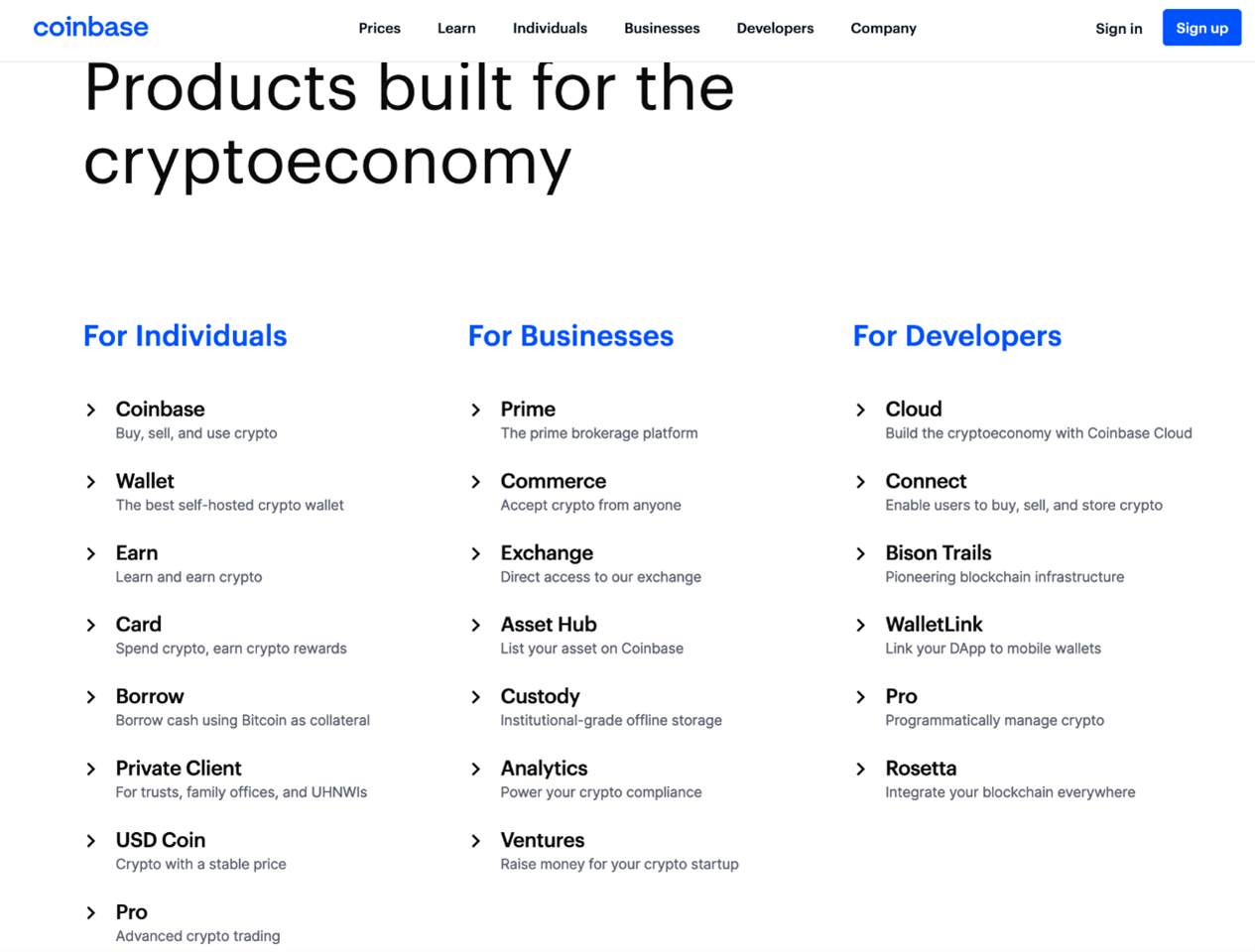
For most users, Coinbase is the primary entry point into the world of cryptocurrency. The company has developed several distinct interfaces and tools tailored to different levels of financial literacy and investment goals.
The Standard Coinbase App: Accessibility and Ease of Use
The flagship Coinbase retail application is designed for the everyday investor looking for a streamlined experience. Its primary function is to facilitate the buying, selling, and holding of hundreds of different digital assets. From a personal finance perspective, its greatest strength lies in its simplicity. Users can link traditional bank accounts or debit cards to execute recurring purchases—a strategy known as dollar-cost averaging (DCA)—which helps mitigate the impact of market volatility over time.
Coinbase Advanced: Precision for Active Traders
As investors become more sophisticated, they often require tools that provide greater control over execution and lower fee structures. Coinbase Advanced (formerly Coinbase Pro) is built for this purpose. It offers real-time order books, advanced charting powered by TradingView, and various order types such as limit and stop-loss orders. For the serious investor, moving to the Advanced interface is a critical step in optimizing portfolio returns by reducing the “spread” and transaction costs associated with simple retail swaps.
Coinbase Wallet: Empowering Financial Sovereignty
While the main Coinbase app is a custodial service (meaning Coinbase holds the private keys to your assets), the Coinbase Wallet is a self-custody solution. In the world of “Money,” the Wallet represents the ultimate form of financial autonomy. It allows users to store their own private keys, interact with decentralized finance (DeFi) protocols, and manage Non-Fungible Tokens (NFTs). By using the Wallet, investors can access decentralized lending markets to earn interest on their holdings without a centralized intermediary.
Coinbase Card: Bridging Digital Assets and Daily Spending
One of the historical hurdles for crypto adoption has been liquidity—the ability to use digital assets for real-world purchases. The Coinbase Card, a Visa debit card, solves this by allowing users to spend their crypto or US Dollar balances anywhere Visa is accepted. This product integrates crypto into the user’s daily financial lifecycle, often offering rewards in the form of crypto-back on every purchase, effectively acting as a high-yield loyalty program.
Generating Passive Income: Staking and Yield Products
In a traditional financial system, money sitting in a checking account often loses value to inflation. Coinbase has pioneered several products that allow crypto assets to work for the investor, generating recurring income through various mechanisms.
Coinbase Staking: Earning Rewards on Assets
Staking is a process used by “Proof of Stake” blockchains (like Ethereum, Solana, and Cardano) to secure the network. In exchange for “staking” their tokens to help validate transactions, users receive rewards in the form of additional tokens. Coinbase simplifies this highly technical process by allowing users to stake their assets with a single click. From a wealth-building perspective, staking can offer yields that significantly outperform traditional savings accounts, though it carries different risk profiles related to the underlying asset’s price.
Learning Rewards: Education as an Asset
Coinbase has turned financial education into a tangible benefit through its “Learning Rewards” program. By watching short educational modules about new blockchain projects and passing brief quizzes, users earn small amounts of the featured cryptocurrency. While the individual amounts may be modest, for a newcomer to the space, it provides a risk-free way to diversify a portfolio and understand the utility of different financial technologies.
USDC and Stablecoin Integration
Stability is a prerequisite for any functioning financial system. Coinbase co-founded the Centre Consortium, which issued USDC—a stablecoin pegged 1:1 to the US Dollar. Within the Coinbase ecosystem, USDC acts as a “safe haven” during market turbulence. It allows investors to exit volatile positions into a dollar-denominated asset without leaving the blockchain environment. Furthermore, Coinbase often provides incentivized rewards for holding USDC, making it a competitive alternative to traditional cash-equivalent holdings.
Institutional Grade Solutions: Corporate and Professional Finance
Beyond the individual, Coinbase has constructed a robust infrastructure for hedge funds, corporations, and high-net-worth individuals. These products focus on security, compliance, and deep liquidity.
Coinbase Prime: The Full-Stack Institutional Platform
Coinbase Prime is an integrated solution that combines agency execution, specialized cold storage custody, and prime brokerage services. For a corporation looking to add Bitcoin to its balance sheet, Prime provides the necessary tools to execute large trades without “slipping” the market price. It also offers sophisticated reporting tools essential for corporate accounting and tax compliance.
Coinbase Custody: Security at Scale
For many institutional investors, the primary concern is the physical and digital security of their assets. Coinbase Custody is a fiduciary under New York State Banking Law, offering one of the most secure and insured storage solutions in the world. It utilizes “cold storage,” where private keys are kept entirely offline, protected by multi-signature authorization and geographical distribution. This product is the bedrock upon which many of the world’s largest crypto ETFs and investment funds are built.
Coinbase Commerce: Crypto Payments for Business
For business owners looking to expand their customer base and reduce transaction fees, Coinbase Commerce provides a gateway to accept cryptocurrency payments. Unlike traditional credit card processors that may charge 3% or more and carry the risk of chargebacks, Coinbase Commerce allows for peer-to-peer settlement that is final and often has much lower overhead. This product enables businesses of all sizes to participate in the global digital economy with minimal friction.
The Future of the Economy: Infrastructure and Innovation
Coinbase is also investing heavily in the infrastructure that will define the next decade of digital finance. These products are geared toward the “builder” economy and the evolution of the internet itself.
Base: A New Layer of the Financial System
Base is Coinbase’s Ethereum Layer 2 (L2) network. Its goal is to make transactions faster and significantly cheaper while maintaining the security of the Ethereum mainnet. For the financial world, Base represents a new playground for “on-chain” finance. It allows developers to build low-cost decentralized applications (dApps) for lending, borrowing, and trading. As more financial activity moves on-chain, Base is positioned to be the superhighway for digital transactions.
Coinbase NFT: The Marketplace for Digital Property
While often associated with art, NFTs (Non-Fungible Tokens) represent a breakthrough in digital property rights. The Coinbase NFT marketplace allows users to buy, sell, and discover unique digital assets. In the long term, this technology has implications for the tokenization of real-world assets like real estate, bonds, and luxury goods, potentially revolutionizing how ownership is recorded and transferred in a financial context.
Coinbase Cloud: The AWS of Crypto
Just as Amazon Web Services (AWS) provided the infrastructure for the Web2 era, Coinbase Cloud provides the tools for companies to build on Web3. It offers blockchain nodes, data APIs, and staking infrastructure for developers. This product is essential for fintech companies that want to integrate crypto features into their own apps without building the complex backend infrastructure from scratch.

Navigating the Financial Risks and Opportunities
Investing in or utilizing Coinbase products requires a nuanced understanding of the risks associated with the digital asset class. While Coinbase provides the tools for wealth creation, the underlying assets are subject to market volatility, regulatory changes, and technological shifts.
From a strategic standpoint, a diversified approach within the Coinbase ecosystem often yields the best results. An individual might keep the majority of their long-term holdings in the “Vault” (a time-delayed withdrawal feature for the main app), use “Advanced” for tactical rebalancing, and utilize “Staking” to grow their total coin count regardless of price action.
For the modern professional, Coinbase products offer a comprehensive toolkit for every stage of the financial journey. Whether it is a small business accepting its first Bitcoin payment, an individual building a retirement nest egg with Ethereum, or a corporation managing institutional liquidity, the Coinbase suite provides the necessary bridges to the future of money. As the boundary between “traditional finance” and “crypto finance” continues to blur, these products serve as the essential interface for those looking to capitalize on the next era of global wealth.
aViewFromTheCave is a participant in the Amazon Services LLC Associates Program, an affiliate advertising program designed to provide a means for sites to earn advertising fees by advertising and linking to Amazon.com. Amazon, the Amazon logo, AmazonSupply, and the AmazonSupply logo are trademarks of Amazon.com, Inc. or its affiliates. As an Amazon Associate we earn affiliate commissions from qualifying purchases.