
For most retail investors, the stock market experience begins at 9:30 AM ET when the opening bell rings on the New York Stock Exchange. However, for a growing segment of sophisticated traders and institutional players, the real work begins hours earlier. Pre-market trading offers a unique window of opportunity to capitalize on news, earnings reports, and global economic shifts before the broader public can react.
Navigating the pre-market requires a different set of skills and a heightened awareness of risk compared to the standard trading session. Because the environment is characterized by lower liquidity and higher volatility, understanding the mechanics and the psychology of the early hours is essential for anyone looking to gain a competitive edge in the financial markets.
Understanding the Pre-Market Environment
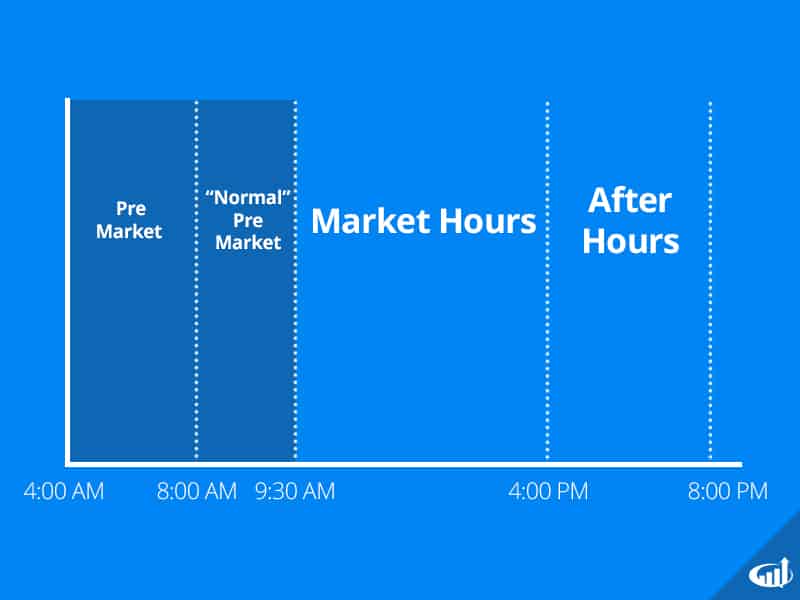
The pre-market session is the period of trading activity that occurs before the regular market session. While the official hours vary slightly depending on the brokerage, the US pre-market generally runs from 4:00 AM to 9:30 AM ET. During this time, trading does not happen on the floor of an exchange; instead, it occurs via Electronic Communication Networks (ECNs).
What is Pre-Market Trading?
Pre-market trading allows investors to buy and sell stocks before the official market open. Historically, this was a playground reserved exclusively for institutional investors and high-net-worth individuals. However, with the advent of digital brokerage platforms and ECNs, the barrier to entry has vanished. Today, almost any retail investor with a standard brokerage account can participate in the early session, provided their broker supports extended-hours trading.
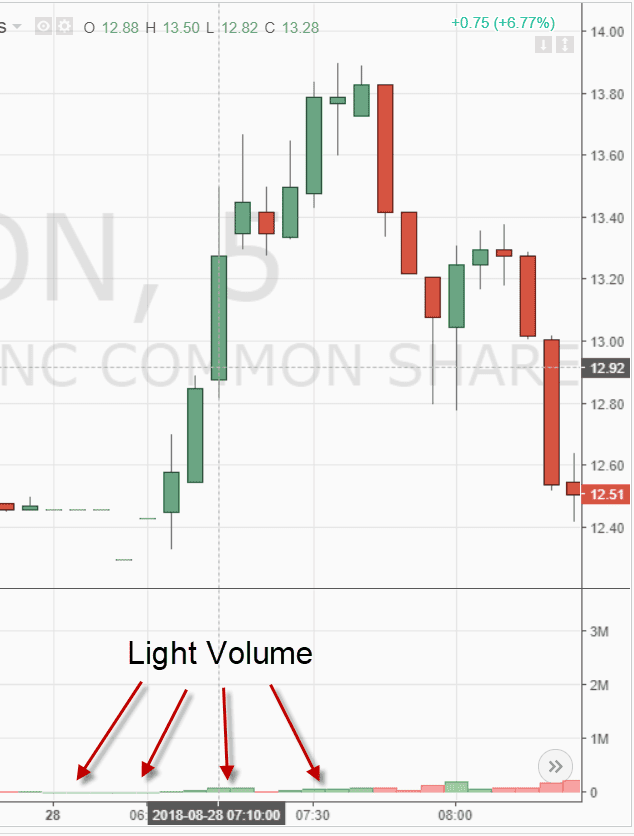
The primary difference between the pre-market and the regular session lies in the volume. Because there are fewer participants, the number of shares being traded is significantly lower. This lack of volume can lead to “thin” markets where price movements are exaggerated by relatively small orders.
The Role of Electronic Communication Networks (ECNs)
In the absence of a centralized exchange floor during these hours, ECNs act as the bridge. An ECN is an automated system that matches buy and sell orders for securities. When you place a pre-market order, your broker sends it to one of several ECNs (such as Arca or Instinet). If another trader has placed a corresponding order at the same price on that network, the trade is executed.
It is important to note that because different brokers may use different ECNs, you might see slightly different price quotes depending on which platform you are using. This fragmentation is one of the reasons why price discovery in the pre-market can be fragmented and why liquidity remains a primary concern for traders.
The Strategic Advantages of Early Trading
Why would a trader choose to wake up at 4:00 AM to watch candles flicker on a screen? The answer lies in the early bird’s ability to front-run the massive wave of volume that hits at 9:30 AM. For those who know how to read the signals, the pre-market is where the day’s most significant trends are often born.
Reacting to Overnight News and Earnings
The most common driver of pre-market activity is the release of corporate earnings. Many companies choose to release their quarterly results either after the market closes or before it opens. If a major tech giant reports a massive earnings beat at 7:30 AM, the stock will likely begin moving immediately. By trading in the pre-market, an investor can take a position before the general public reacts at the open, potentially capturing a significant portion of the price move.
Beyond earnings, the pre-market is the primary time for reacting to geopolitical events, overnight developments in European or Asian markets, and US economic data. Key indicators such as the Consumer Price Index (CPI) or the monthly Jobs Report are typically released at 8:30 AM ET. These reports can cause instantaneous and violent shifts in market sentiment, and the pre-market allows traders to position themselves according to the data.
Identifying Price Gaps and Momentum
Technical traders use the pre-market to identify “gaps.” A gap occurs when a stock opens at a price significantly higher or lower than its previous day’s close. By observing the pre-market price action, traders can determine the “gap and go” potential of a security.
For instance, if a stock is gapping up on high volume during the pre-market, it signals strong institutional interest. Conversely, if a stock is gapping down but the volume is low, it might indicate a “fakeout” where the price might recover shortly after the opening bell. Watching the pre-market high and low levels provides critical support and resistance points that often dictate how the stock will behave throughout the rest of the day.
Managing the Risks and Realities
While the rewards can be high, the pre-market is often referred to as the “Wild West” of trading. The rules are different, and the safety nets are thinner. Successful pre-market trading is as much about risk avoidance as it is about profit seeking.
Reduced Liquidity and Wider Spreads
Liquidity refers to the ease with which you can enter or exit a position without significantly affecting the stock’s price. In the regular session, thousands of buyers and sellers are active, creating a “tight” bid-ask spread (the difference between the highest price a buyer will pay and the lowest price a seller will accept).
In the pre-market, the bid-ask spread can widen dramatically. For a stock that normally has a one-cent spread, the pre-market spread might be twenty or fifty cents. This means that as soon as you buy a stock, you are effectively “down” on the trade because the price you would have to sell it at is much lower. For this reason, trading large positions in the pre-market can be dangerous, as it becomes difficult to exit without taking a “haircut” on the price.
Increased Volatility and Price Reversals
Because there are fewer shares being traded, it takes less capital to move a stock’s price. This results in high volatility. A stock might jump 5% on a single large order, only to drop 6% moments later when that buyer disappears.
One of the most common traps for novice traders is the “Pre-Market Fade.” This occurs when a stock shows immense strength in the early hours, leading retail traders to “FOMO” (fear of missing out) into the trade. However, when the 9:30 AM bell rings, institutional sellers who held the stock overnight use the increased liquidity of the open to dump their shares, causing the price to crash. Understanding that pre-market price action does not always translate to regular session success is a vital lesson in capital preservation.
Step-by-Step Guide to Executing Pre-Market Trades
If you have decided that the advantages of the pre-market outweigh the risks, you must ensure your technical setup is optimized for this specific environment.
Selecting the Right Brokerage
Not all brokers are created equal when it comes to extended hours. Some platforms, especially those aimed at casual investors, may only allow trading starting at 8:00 AM or 9:00 AM ET. Professional-grade brokers like Interactive Brokers, Fidelity, or Charles Schwab offer the full window starting at 4:00 AM.
Before trading, you must check your broker’s “Extended Hours Trading” agreement. Often, you are required to read and sign a disclosure acknowledging the risks of low liquidity and volatility before the feature is activated on your account.
Using Limit Orders for Protection
This is perhaps the most important rule of pre-market trading: Never use market orders.
In the regular session, a market order tells your broker to buy the stock at the best available current price. Because liquidity is high, you usually get a price close to what you see on your screen. In the pre-market, a market order can be catastrophic. If the “ask” price suddenly spikes due to a lack of sellers, a market order could fill your trade at a price 10% higher than intended.
Always use “Limit Orders.” A limit order specifies the maximum price you are willing to pay or the minimum price you are willing to accept. If the market moves past your limit, the trade simply won’t execute, protecting you from the erratic “price spikes” common in the early hours.
Best Practices and Expert Tips for Success
To survive and thrive in the pre-market, you need a disciplined approach that prioritizes data over emotion.
Monitoring Global Markets and Futures
The pre-market does not exist in a vacuum. Before looking at individual stocks, successful traders look at the S&P 500 and Nasdaq futures (often denoted as /ES and /NQ). These futures contracts trade nearly 24 hours a day and provide the “macro” context for the morning. If the futures are down 1%, it is unlikely that a random mid-cap stock will sustain a massive rally without extraordinary news.
Additionally, keep an eye on the 10-year Treasury yield and the US Dollar Index (DXY). In the current economic climate, shifts in these macro indicators during the early morning hours often dictate whether the stock market will open in a “risk-on” or “risk-off” mood.

Maintaining Discipline and Risk Management
The pre-market is a time for sniping, not for broad-market participation. Focus on stocks that have a “catalyst”—specific news, earnings, or upgrades that justify the early volume. Avoid trading “quiet” stocks that have no news, as the low liquidity will work against you.
Furthermore, many traders find success by using the pre-market only for observation. They watch how the price reacts to levels, identify the “high of pre-market,” and then wait for the 9:30 AM open to see if those levels hold. If a stock breaks its pre-market high on heavy volume at the open, it is often a high-probability long setup.
Ultimately, trading in the pre-market is a powerful tool for the modern investor. It allows for rapid response to a fast-moving world, but it requires a level of precision and caution that the regular session does not. By mastering the use of limit orders, understanding the mechanics of ECNs, and respecting the dangers of low liquidity, you can transform the early morning hours into one of the most profitable parts of your financial strategy.
aViewFromTheCave is a participant in the Amazon Services LLC Associates Program, an affiliate advertising program designed to provide a means for sites to earn advertising fees by advertising and linking to Amazon.com. Amazon, the Amazon logo, AmazonSupply, and the AmazonSupply logo are trademarks of Amazon.com, Inc. or its affiliates. As an Amazon Associate we earn affiliate commissions from qualifying purchases.