
Carbines, at their core, represent a significant evolution in firearm design, stemming from the need for more maneuverable and practical weapons, particularly for mounted troops and specialized units. While often confused with rifles, the defining characteristic of a carbine lies in its shorter barrel length, which directly impacts its handling, ballistic performance, and intended applications. This distinction, seemingly simple, has profound implications for their utility across various sectors, from military and law enforcement to civilian sporting and self-defense. Understanding the fundamental differences, historical development, and modern applications of carbines is crucial for appreciating their place in the landscape of personal defense and technological advancement in weaponry.
The Evolution of the Carbine: From Cavalry Saber to Compact Firearm
The concept of a shorter firearm designed for ease of use in confined spaces or on horseback predates modern firearms. However, the term “carbine” gained prominence with the advent of firearms that could be effectively shortened. The original “carabins” were soldiers who rode horses, and their firearms were adapted to suit their mounted role.
The Origins in Mounted Warfare
Historically, rifles were long and cumbersome, making them ill-suited for cavalry. Soldiers on horseback needed a weapon that could be readily deployed from the saddle, discharged with accuracy, and easily handled while maneuvering a horse. Early carbines were essentially shortened versions of existing musket or rifle designs. This reduction in barrel length made them lighter and more manageable, but it also came with trade-offs in terms of velocity and range. The accuracy and power limitations were considered acceptable compromises for the tactical advantage of increased maneuverability. This period saw the development of iconic carbines that became synonymous with specific historical conflicts and military branches.
Adapting to Changing Battlefield Needs
As warfare evolved, so did the role and design of carbines. The development of more reliable and faster-firing firearms led to carbines being adopted by other units that benefited from their compact size. Artillery crews, engineers, and even some infantry units found carbines advantageous in close-quarters combat or when operating in environments where a full-length rifle was a hindrance. This expansion of their use underscored the growing recognition of the carbine as a distinct and valuable firearm category, rather than merely a shortened rifle. The technological advancements in metallurgy and manufacturing during the late 19th and early 20th centuries allowed for more precise and robust carbine designs.
The Impact of Modern Warfare and Technology
The 20th century witnessed a dramatic shift in military tactics and technology, which profoundly influenced the carbine’s trajectory. The rise of trench warfare, urban combat, and the increasing use of vehicles created a demand for firearms that offered a balance of firepower, compactness, and effectiveness at typical engagement distances. Modern carbines, especially those chambered for intermediate cartridges, proved to be ideal for these scenarios. The integration of advanced materials, improved ergonomics, and modular accessory systems further enhanced their versatility and effectiveness, solidifying their position as a staple in many modern armed forces.
Defining Characteristics: What Sets a Carbine Apart?
The fundamental distinction between a carbine and a rifle lies primarily in its barrel length, but this difference cascades into other functional and performance aspects. Understanding these characteristics is key to discerning the practical implications of carbine design.
Barrel Length: The Defining Metric
The most universally accepted defining feature of a carbine is its shorter barrel length compared to a standard rifle. While there isn’t a single, universally agreed-upon inch or centimeter cutoff, a common guideline is that a carbine’s barrel is typically 16 inches (approximately 40.6 cm) or less in civilian legal terms in many jurisdictions, though military specifications may vary. This reduction in barrel length directly impacts the firearm’s overall length, making it significantly more compact and easier to maneuver. This is particularly advantageous in confined spaces, such as vehicles, buildings, or dense vegetation, where a longer rifle would be cumbersome.
Impact on Ballistics: Velocity, Range, and Energy
The shorter barrel length of a carbine has a direct effect on the ballistic performance of the rounds it fires. Gunpowder requires a certain distance to burn completely and propel the projectile at its maximum velocity. In a carbine, the bullet exits the barrel before it can achieve the same velocity it would from a longer rifle barrel. This reduction in muzzle velocity generally translates to:
- Reduced Muzzle Velocity: The bullet travels slower.
- Shorter Effective Range: While still effective at typical engagement distances, the maximum effective range is diminished compared to a rifle firing the same ammunition.
- Lower Muzzle Energy: The projectile carries less kinetic energy upon impact, which can affect its terminal ballistics (how it performs on the target).

However, modern ammunition development has mitigated some of these drawbacks. Specialized carbine ammunition has been designed to optimize performance in shorter barrels, and advancements in propellants can generate higher velocities even with shorter barrels.
Maneuverability and Handling: The Practical Advantage
The most significant advantage of a carbine is its enhanced maneuverability and ease of handling. Its shorter profile makes it quicker to bring to bear on a target, easier to navigate through doorways or around corners, and less likely to snag on obstacles. This is crucial for:
- Mounted Units: As originally intended, facilitating use from vehicles or horseback.
- Special Operations Forces: Requiring compact and agile firearms for diverse environments.
- Law Enforcement: Officers often operate in urban settings or vehicles where a shorter weapon is preferable.
- Civilian Self-Defense: Providing a more manageable firearm for home defense or personal protection in close quarters.
The reduced weight, stemming from the shorter barrel and often lighter overall construction, also contributes to reduced shooter fatigue, especially during extended periods of carrying or use.
Modern Applications and Technological Advancements
The carbine has transcended its historical origins to become a versatile and highly adaptable platform in contemporary use. Modern technological advancements have transformed it into a sophisticated tool for a wide range of applications.
Military and Law Enforcement: The Ubiquitous Tool
In modern military and law enforcement contexts, carbines have largely replaced full-sized rifles as the standard issue firearm for many units. Their balance of firepower, compactness, and adaptability makes them ideal for a variety of roles.
- Infantry and Special Forces: Carbines chambered in intermediate cartridges like 5.56x45mm NATO or 7.62x39mm offer significant stopping power while remaining manageable in close-quarters combat and urban environments. Their modularity allows for customization with optics, lights, lasers, and other accessories to suit specific mission requirements.
- Law Enforcement Agencies: Carbines are invaluable for patrol officers and SWAT teams. They provide superior accuracy and range over handguns, while their compact size allows for easy storage and deployment in patrol vehicles and for navigating indoor environments. The use of carbines has been credited with improving officer safety and effectiveness in active shooter situations and high-risk arrests.
- Specialized Roles: From vehicle crews to reconnaissance units, any personnel operating in confined spaces or requiring a highly maneuverable weapon will find the carbine to be an indispensable tool.
Civilian Use: Self-Defense, Sport, and Competition
The appeal of the carbine extends well beyond professional use, finding significant traction in the civilian market.
- Self-Defense: For home defense and personal protection, carbines chambered in common pistol calibers (like 9mm or .45 ACP) or rifle calibers offer a more controllable and accurate option than handguns for many individuals. Their manageable size makes them easier to handle and store safely.
- Sporting and Hunting: While not typically used for long-range precision hunting, carbines are popular for certain types of hunting, particularly in brushy terrain where maneuverability is key. They are also widely used in various shooting sports, including competitive rifle matches and informal target practice, where their ease of use and accuracy are appreciated.
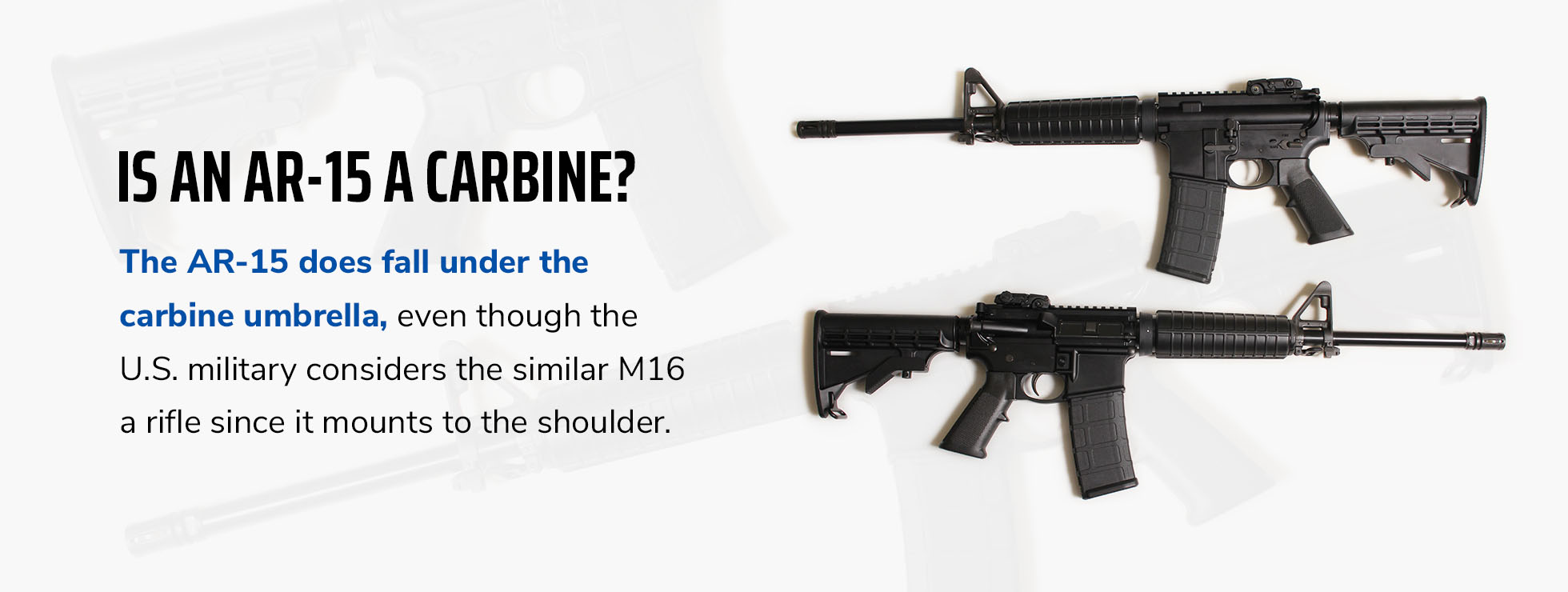
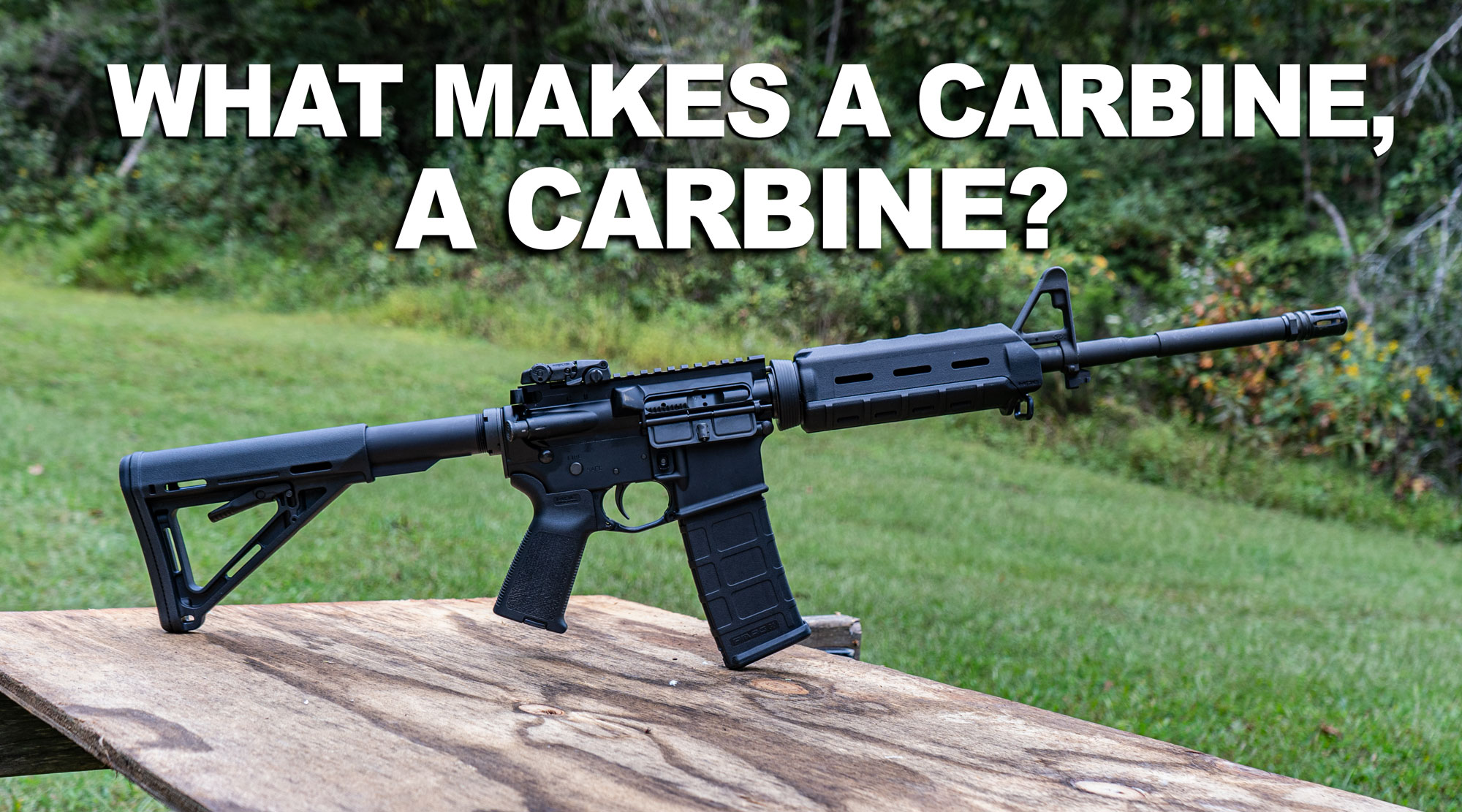
- Modern Sporting Rifles (MSRs): The AR-15 platform, often considered a modern carbine, has become incredibly popular for civilian use. These platforms are highly customizable, allowing users to tailor them for specific purposes, from recreational shooting to serious self-defense applications. The widespread availability of aftermarket parts and accessories for these platforms further enhances their appeal and adaptability.
Technological Innovations: Enhancing Performance and Versatility
The evolution of carbines has been driven by continuous technological innovation, enhancing their performance, ergonomics, and modularity.
- Advanced Materials: The use of lightweight and durable materials like polymer composites and aerospace-grade aluminum alloys has reduced the weight of carbines, further improving their handling and reducing shooter fatigue.
- Ergonomic Design: Modern carbines feature significantly improved ergonomics, with adjustable stocks, pistol grips, and ambidextrous controls designed for comfort and intuitive operation. This allows shooters to maintain better control and a more stable shooting platform.
- Optics and Accessory Integration: The widespread adoption of Picatinny or M-LOK rail systems has transformed carbines into highly adaptable platforms. These systems allow for the easy attachment of a wide array of accessories, including red dot sights, holographic sights, magnified optics, tactical lights, lasers, vertical foregrips, and bipods. This modularity enables users to customize their carbines for virtually any task or preference.
- Ammunition Development: As mentioned earlier, advancements in ammunition have allowed carbines to perform more effectively. This includes improved propellants, bullet designs for better terminal ballistics, and specialized loads optimized for shorter barrels.
- Gas System Optimization: Modern carbine designs often incorporate optimized gas systems that reduce recoil and improve reliability, making follow-up shots faster and more accurate.
In conclusion, the carbine, born out of a practical need for maneuverable firearms, has evolved into a sophisticated and indispensable tool. Its defining characteristic – the shorter barrel – coupled with continuous technological innovation, has cemented its role across military, law enforcement, and civilian spheres. Understanding what defines a carbine and its various applications provides valuable insight into the ongoing evolution of personal defense and tactical weaponry.
aViewFromTheCave is a participant in the Amazon Services LLC Associates Program, an affiliate advertising program designed to provide a means for sites to earn advertising fees by advertising and linking to Amazon.com. Amazon, the Amazon logo, AmazonSupply, and the AmazonSupply logo are trademarks of Amazon.com, Inc. or its affiliates. As an Amazon Associate we earn affiliate commissions from qualifying purchases.