
In the world of diamonds, few terms hold as much financial sway as “carat.” Often misunderstood as a measure of size, carat is, in fact, the fundamental unit of weight for diamonds and other gemstones. For investors, collectors, and consumers alike, comprehending carats is not merely an exercise in gemology; it is a critical component of understanding a diamond’s intrinsic value, market price, and potential as a financial asset. The weight of a diamond, expressed in carats, directly impacts its rarity, demand, and ultimately, its cost, making it an indispensable metric for any financial consideration involving these precious stones.

The Core Financial Metric of Diamond Value
The carat system provides a globally recognized standard for measuring diamond weight, underpinning its financial valuation. This standardization is vital for international trade, insurance, and investment, ensuring transparency and comparability across markets. Without a consistent unit of weight, assessing and transacting in diamonds would be fraught with financial uncertainty.
Carat Weight vs. Size: A Common Misconception
A prevalent misconception is that carat directly denotes a diamond’s size. While a heavier diamond is generally larger, carat refers exclusively to weight. One carat is precisely defined as 200 milligrams (0.2 grams). The apparent size of a diamond can vary significantly even for stones of the exact same carat weight, due to differences in their cut. For instance, a shallow-cut diamond might have a wider diameter and appear larger than a deeply-cut diamond of the same carat weight, but it may also lose brilliance and value due to poor light performance.
From a financial perspective, this distinction is crucial. Buyers often pay a premium for perceived size, but the underlying asset value is tied to its weight. An expertly cut diamond maximizes brilliance and sparkle, making it appear more vibrant, even if its dimensions are slightly smaller than a poorly cut, equal-carat stone. Investors must look beyond superficial appearance to the underlying weight and, more importantly, how that weight is utilized by the cut to enhance the stone’s overall financial and aesthetic appeal. A well-cut diamond, even if its face-up dimensions are slightly less, often commands a higher price per carat due to its superior optical properties and enduring desirability.
The Origin of the Carat Unit and its Standardization
The term “carat” originates from the carob seed, historically used by ancient traders as a precise, consistent counterweight for small, precious items due to their remarkably uniform size and weight. While this organic origin provided a rudimentary standard, it lacked the scientific precision required for a modern, global market. Recognizing the need for universal uniformity, the metric carat was officially adopted in 1907 and standardized at 200 milligrams.
This standardization was a pivotal moment for the diamond industry’s financial infrastructure. It transformed diamond trading from an imprecise, regionally variable practice into a globally consistent, measurable commodity market. For investors, this means a 1-carat diamond bought in New York holds the exact same weight standard as one bought in London or Mumbai, facilitating transparent pricing, valuation, and liquidity. The standardization of the carat unit provides a bedrock of trust and predictability, making diamonds a more viable and understandable asset class within a complex financial landscape. It underpins the ability of global exchanges and auction houses to confidently price and trade these valuable assets, assuring buyers and sellers of an objective measure of intrinsic worth.
Carat Weight and its Impact on Diamond Pricing
The relationship between a diamond’s carat weight and its market price is arguably the most financially significant aspect of diamond valuation. It is a nuanced relationship, characterized by non-linear increases and psychological pricing thresholds, which shrewd buyers and investors leverage to their advantage.
Non-Linear Pricing: The Premium for Rarity
One of the most critical financial lessons regarding diamonds is that price does not increase linearly with carat weight. A 2-carat diamond is almost never simply twice the price of a 1-carat diamond of similar quality (color, clarity, cut). Instead, larger diamonds command a disproportionately higher price per carat. This exponential increase is primarily driven by rarity. Finding high-quality rough diamonds that can yield larger polished stones is significantly more difficult than finding rough suitable for smaller diamonds.
For example, while a 1-carat diamond might cost $7,000 to $10,000, a 2-carat diamond of comparable quality could easily be $25,000 to $40,000 or more. This means the price per carat jumps dramatically as the weight increases. A 1-carat might be $10,000/carat, while the 2-carat might be $20,000/carat. This non-linear escalation means that investing in larger, high-quality diamonds, while requiring a greater initial outlay, can potentially yield higher returns due to their inherent scarcity and sustained demand among discerning collectors and investors. Understanding this premium on rarity is key for financial planning when considering diamond acquisitions.
The Psychological and Market Value of Round Numbers
The diamond market exhibits a fascinating psychological phenomenon known as “magic numbers” or “sweet spots.” Prices per carat tend to jump significantly at key round numbers, such as 0.50, 0.75, 1.00, 1.50, 2.00 carats, and so forth. A diamond weighing 0.98 carats, for instance, might be significantly less expensive per carat than a 1.00-carat diamond, despite being virtually indistinguishable in physical size to the naked eye. The slight difference in weight translates into a substantial difference in price.
For financially savvy buyers, this presents a significant opportunity. By choosing a diamond that falls just under one of these magic numbers (e.g., a 0.90-carat or 1.45-carat stone), one can often acquire a diamond that visually appears identical to its slightly heavier counterpart but at a considerably lower price per carat. This strategy allows investors to maximize their purchasing power, acquiring a diamond that offers excellent perceived value without incurring the premium associated with reaching an arbitrary round number. It’s a prime example of how market psychology can impact asset valuation and offer strategic entry points for smart investing.
Price Per Carat vs. Total Price
When evaluating diamonds, it is crucial to differentiate between the “price per carat” and the “total price.” Jewelers often quote the price per carat, especially for larger stones, to make them seem more accessible. However, the total price is the actual financial outlay.
For instance, two diamonds might have a similar price per carat, but if one is 1.00 carat and the other is 1.50 carats, their total prices will be vastly different. Investors and financial analysts primarily use the price per carat to compare the relative value of different diamonds, making it a critical metric for assessing market fairness and potential investment returns. A higher price per carat for a given quality level typically indicates a rarer, more sought-after stone. Conversely, understanding the total price is essential for budgeting and assessing the overall commitment of funds. A balanced understanding of both metrics is fundamental for making informed financial decisions in the diamond market, allowing for accurate comparison of value and cost.
The Interplay of Carat with the 4Cs (and beyond) in Investment
While carat is a dominant factor, a diamond’s financial value is a complex interplay of the “4 Cs”: Carat weight, Cut, Color, and Clarity. For an investor, understanding how these attributes interact is vital for maximizing value and mitigating risk.
Carat as One Pillar: Clarity, Color, and Cut’s Financial Influence
Carat forms one of the four essential pillars that determine a diamond’s financial worth, but it cannot stand alone. A diamond with a high carat weight but poor cut, low color grade, or significant inclusions (clarity issues) will have its value severely diminished. A poorly cut large diamond, for instance, may leak light, appearing dull and lifeless, significantly eroding its market appeal and resale value. Similarly, a high-carat diamond with a strong yellow tint or numerous visible imperfections will be valued far less than a smaller, but colorless and flawless, alternative.
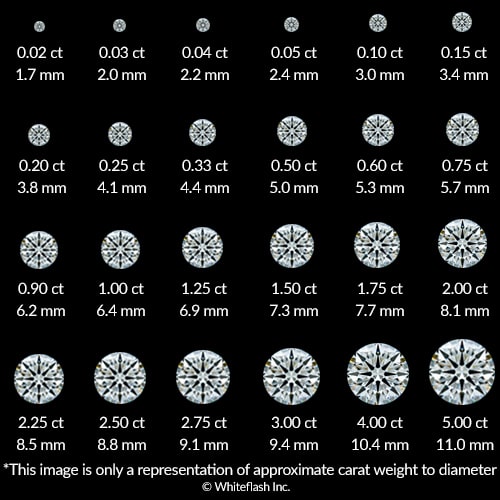
From an investment perspective, this means that simply pursuing the largest possible diamond is often a flawed strategy. A balanced approach that considers the synergistic effect of all 4Cs typically yields a more desirable and financially sound asset. An investor must weigh the premium for higher carat against the potential depreciation caused by compromises in the other Cs, recognizing that optimal beauty and rarity, derived from a harmonious balance, drive the most robust long-term value.
Balancing the 4Cs for Optimal Value
Strategic purchasing in the diamond market involves intelligently balancing the 4Cs to achieve optimal value within a given budget. For instance, an investor might choose a diamond with a slightly lower color grade (e.g., G or H, which still appear colorless to the untrained eye) or a minor clarity imperfection (e.g., VS2 or SI1, where inclusions are not visible without magnification) to afford a higher carat weight or a superior cut. This approach leverages market inefficiencies and psychological pricing thresholds.
The “cut” grade is often considered the most important C for overall beauty and can significantly impact a diamond’s sparkle, making it appear more vibrant and sometimes even larger than its carat weight suggests. Allocating a greater portion of the budget to an excellent cut, even if it means a slight reduction in carat or clarity, can result in a more visually stunning and financially appealing diamond. This strategic trade-off reflects a sophisticated understanding of how perceived value and actual market demand are shaped by the collective attributes of a diamond, leading to a more astute financial acquisition.
Certification: A Financial Imperative
For any diamond considered an investment or significant financial asset, independent certification from a reputable grading laboratory like the Gemological Institute of America (GIA) or the American Gem Society (AGS) is not merely recommended—it is a financial imperative. A grading report provides an objective, unbiased assessment of a diamond’s 4Cs, verifying its quality and authenticity.
Without such a certificate, a diamond’s value is purely speculative. Investors cannot confidently assess its quality, insurance companies cannot accurately appraise it, and potential buyers cannot verify its characteristics. A certified diamond eliminates much of the uncertainty inherent in an illiquid asset, providing a standardized basis for valuation, enabling fair pricing, and facilitating easier resale. It acts as the financial passport for your diamond, safeguarding your investment by providing transparency and credibility, and ensuring that the asset’s stated characteristics are verifiable and globally recognized.
Strategic Diamond Purchasing and Investment
Investing in diamonds requires a strategic approach, considering market dynamics, rarity, and future liquidity. Understanding how carats fit into this broader picture is paramount for making financially sound decisions.
Buying for Value: Sweet Spots and Scarcity
For those looking to optimize their diamond purchase for value, strategic targeting of carat weights is key. As discussed, diamonds just shy of major carat thresholds (e.g., 0.90-0.99 ct, 1.40-1.49 ct, 1.90-1.99 ct) often offer significant savings per carat while appearing visually similar to their slightly heavier counterparts. These “sweet spots” allow investors to acquire substantial visual impact without paying the premium associated with reaching an arbitrary round number.
Furthermore, true scarcity drives long-term value. While smaller diamonds are abundant, larger diamonds (especially those over 3-5 carats) with exceptional color, clarity, and cut are exceedingly rare. These truly unique specimens tend to hold and appreciate their value more consistently over time, offering a stronger hedge against inflation and market volatility for a high-net-worth portfolio. Understanding this dynamic—balancing immediate value with long-term scarcity—is crucial for strategic diamond investment.
Diamonds as a Tangible Asset Class
Diamonds, particularly high-quality natural diamonds, are increasingly viewed as a tangible asset class, offering diversification benefits for investment portfolios. Unlike stocks or bonds, diamonds are physical assets that cannot be created digitally and are not subject to the same counterparty risks. They can serve as a store of wealth, an inflation hedge, and a portable form of capital, particularly in times of economic uncertainty.
For investors seeking to diversify beyond traditional financial instruments, diamonds offer an attractive alternative, especially those with exceptional carat weight and overall quality. Their inherent beauty and enduring cultural significance contribute to a steady demand, bolstering their long-term value proposition. However, like any asset, their value can fluctuate, and understanding market cycles and global economic trends is essential for prudent diamond investment.
Liquidity and Resale Considerations
While diamonds can be a valuable investment, it’s crucial for investors to understand their relative illiquidity compared to more traditional financial assets. Selling a diamond, particularly outside of specialized auction houses or dealer networks, can take time, and resale values often do not reflect the initial retail purchase price. Retail markups, which cover operational costs and branding, can be substantial, meaning a diamond may need to appreciate significantly before an investor can recoup their initial outlay.
Factors affecting resale value include the diamond’s original certification, its condition, current market demand for specific carat weights and qualities, and global economic conditions. Investors should have realistic expectations regarding liquidity and potential returns. For larger, higher-quality stones, specialized brokers or auction houses can facilitate better resale opportunities, but understanding the market and having clear expectations from the outset is critical for safeguarding a diamond investment.
Protecting Your Diamond Investment
Like any valuable asset, a diamond investment requires careful protection and ongoing management to preserve its financial integrity and value over time.
Insuring Your Asset
Protecting a significant diamond investment through comprehensive insurance is non-negotiable. Jewelry insurance typically covers loss, theft, and damage, safeguarding the financial value of your asset against unforeseen circumstances. Most policies require a recent appraisal (often within the last 1-3 years) to accurately determine the stone’s current market value and ensure adequate coverage.
Regular appraisals are essential, as diamond values can fluctuate due to market shifts, discovery of new mines, or evolving consumer preferences. An outdated appraisal could lead to underinsurance, leaving an investor exposed to significant financial loss in the event of a claim. Proactive insurance and consistent valuation updates are fundamental aspects of responsible diamond asset management, ensuring the financial security of your valuable investment.

Understanding Market Fluctuations and Trends
The diamond market, while often perceived as stable, is subject to various influences that can cause fluctuations in value. Global economic health, geopolitical stability, new mine discoveries, shifts in consumer demand (e.g., the rise of lab-grown diamonds), and even marketing campaigns can impact diamond prices across different carat weights and qualities.
Savvy investors keep abreast of these trends, understanding that the value of their diamond asset is not entirely static. While high-quality, rare natural diamonds have historically demonstrated long-term appreciation, short-term volatility can occur. For example, a surge in supply of a particular carat size or a downturn in luxury spending in key markets could temporarily affect prices. A comprehensive understanding of these market dynamics allows investors to make informed decisions about holding, buying, or selling, thereby optimizing the financial performance and security of their diamond portfolio.
aViewFromTheCave is a participant in the Amazon Services LLC Associates Program, an affiliate advertising program designed to provide a means for sites to earn advertising fees by advertising and linking to Amazon.com. Amazon, the Amazon logo, AmazonSupply, and the AmazonSupply logo are trademarks of Amazon.com, Inc. or its affiliates. As an Amazon Associate we earn affiliate commissions from qualifying purchases.