
The landscape of personal finance is constantly shifting, and perhaps nowhere is this more evident than in the automotive sector. For most households, a vehicle is the second-largest purchase they will ever make, surpassed only by a home. Consequently, the interest rate secured on an auto loan can mean the difference between a manageable monthly obligation and a significant financial burden. Understanding what car loan rates are today requires a deep dive into the macroeconomic factors at play, the nuances of credit scoring, and the strategic maneuvers consumers can make to minimize their total cost of ownership.
The State of the Auto Lending Market: Macroeconomic Drivers
To understand current car loan rates, one must first look at the broader economic environment. Interest rates are not set in a vacuum; they are a reflection of the cost of capital across the entire financial system.
The Role of the Federal Reserve
The primary driver of car loan rates is the Federal Funds Rate set by the Federal Reserve. When the Fed raises rates to combat inflation, the cost for banks to borrow money increases. These institutions then pass those costs on to consumers in the form of higher Annual Percentage Rates (APR) on auto loans. In recent years, we have transitioned from a “zero-interest” environment to one where the benchmark rates have reached multi-decade highs. This shift has pushed average new car loan rates from the 3–4% range into the 7–9% range for well-qualified buyers.
Inflation and Lender Risk Appetite
Beyond the Fed, inflation impacts the automotive market in two ways. First, it drives up the “sticker price” of vehicles due to manufacturing and supply chain costs. Second, it affects the lender’s risk assessment. When the cost of living rises, lenders become more cautious about the debt-to-income (DTI) ratios of borrowers, fearing that high grocery and utility bills might lead to loan defaults. This cautiousness often manifests as tighter lending standards and higher “risk premiums” added to interest rates.
How Your Credit Profile Determines Your Personal Rate
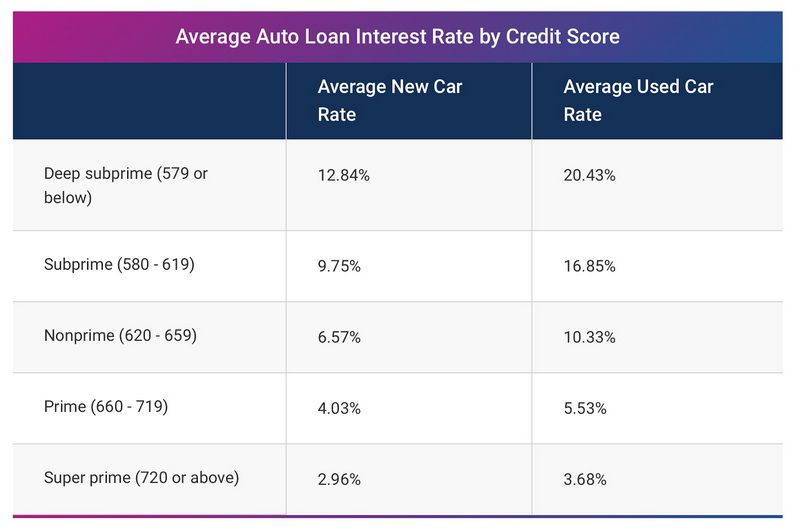
While market averages provide a benchmark, your individual rate is dictated primarily by your creditworthiness. Lenders categorize borrowers into tiers, and the disparity between these tiers has widened significantly in today’s economy.
The Prime vs. Subprime Gap
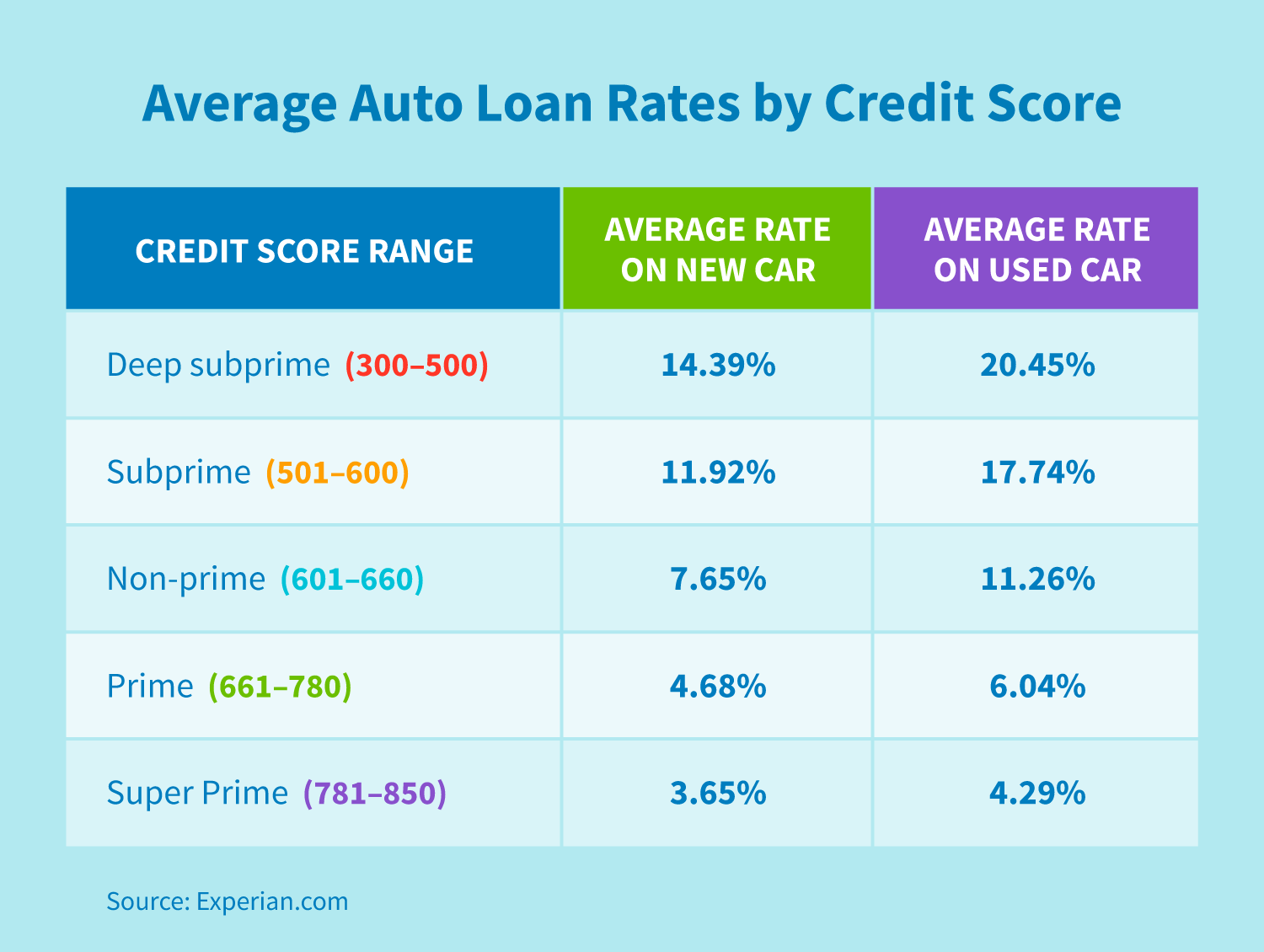
For “Super Prime” borrowers (typically those with FICO scores above 780), rates remain relatively competitive as banks vie for their low-risk business. However, for “Subprime” or “Deep Subprime” borrowers (scores below 600), the situation is starkly different. While a Super Prime buyer might secure a 6.5% rate on a new car, a Subprime buyer might face rates exceeding 18% or even 20%. Over a 60-month loan on a $35,000 vehicle, this difference equates to tens of thousands of dollars in interest.
Factors Beyond the FICO Score
Modern lenders are increasingly looking at “alternative data” to determine rates. This includes your employment history stability, your history of previous auto loans (often weighted more heavily than credit card history), and your current debt-to-income ratio. A borrower with a 720 credit score but a high DTI may actually receive a higher rate than a 700-score borrower with no other outstanding debts. Understanding this holistic view of financial health is critical for anyone entering the market today.
New vs. Used Car Loan Rates: Key Differences
One of the most common questions in personal finance is whether it is more cost-effective to buy new or used. From a pure interest-rate perspective, new cars almost always win.
Why New Cars Often Have Lower APRs
Lenders view new cars as lower-risk collateral. They have predictable valuations, are under warranty (reducing the risk of the owner defaulting due to a major repair bill), and are easier to resell if repossessed. Furthermore, “captive lenders”—the financial arms of manufacturers like Ford Credit or Toyota Financial Services—often offer subsidized rates (sometimes as low as 0% or 1.9%) to move inventory. These promotional rates are essentially marketing spend by the manufacturer to facilitate sales.
The Rising Cost of Used Car Financing
Used car rates are typically 2% to 5% higher than new car rates. This is because the valuation of a used car is more volatile. If a borrower defaults on a five-year-old vehicle, the lender may find that the car’s market value has dropped significantly below the remaining loan balance. Additionally, as the used car market saw record price spikes in recent years, lenders have become more conservative with “Loan-to-Value” (LTV) ratios, often requiring larger down payments to offset the risk of market corrections.
Strategies to Secure the Best Possible Car Loan Rate
Navigating the world of auto finance requires a proactive approach. Accepting the first rate offered at a dealership is rarely the most financially sound decision.
The Power of Shopping and Pre-Approval
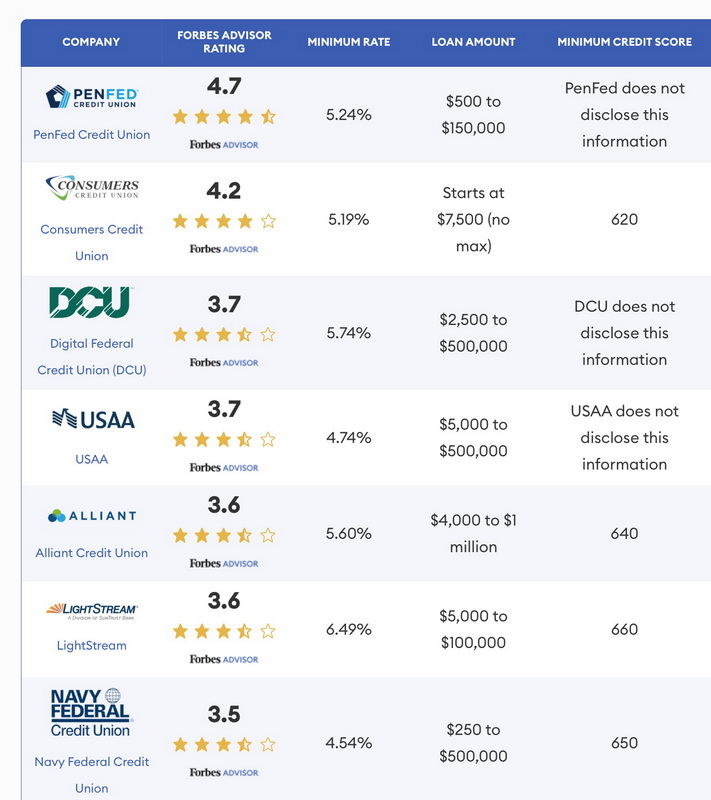
Before stepping foot on a dealership lot, consumers should seek pre-approval from at least two or three external sources. Credit unions are often the gold standard for auto loans, as they are member-owned non-profits that frequently offer rates 1% to 2% lower than large commercial banks. Having a pre-approval letter in hand serves two purposes: it gives you a “floor” rate that the dealer must beat to earn your business, and it shifts the negotiation from “monthly payments” to the “total cost of the loan.”
The Importance of the Down Payment and Loan Term
In a high-interest environment, the math of the loan term becomes punishing. There is a growing trend toward 72-month and 84-month loans to keep monthly payments low. However, these long-term loans result in significantly higher total interest paid and increase the likelihood of becoming “underweight” or “upside down” (owing more than the car is worth). Aiming for a 20% down payment and a term no longer than 48 or 60 months is the most effective way to minimize the financial impact of current interest rates.
Future Outlook: Where Are Rates Heading?
Predicting the trajectory of car loan rates requires monitoring the Federal Reserve’s stance on monetary policy. As of the current cycle, there is a general consensus among economists that rates may have peaked, but a return to the historic lows of the 2010s is unlikely in the near term.
The “Higher for Longer” Sentiment
The financial markets are currently adjusting to a “higher for longer” interest rate environment. This means that while we may see incremental decreases in car loan rates if inflation continues to cool, the baseline for a “good” rate has fundamentally shifted. Consumers should not wait for 0% financing to return before making a necessary purchase, but they should be prepared to refinance their loans if the market moves significantly downward in the next 18 to 24 months.
The Impact of Electric Vehicles (EVs) on Financing
A burgeoning niche in the money side of the auto market is EV-specific financing. Many lenders and government programs now offer “green” auto loans with slightly lower interest rates or specialized tax-credit-integrated financing. As the market share of EVs grows, these specialized financial products will become a more prominent feature of the lending landscape, potentially offering a path to lower rates for environmentally conscious and budget-minded consumers alike.
In conclusion, “what car loan rates are today” is a question with a complex answer that depends on the economy, your personal credit profile, and the type of vehicle you choose. By focusing on credit improvement, shopping with credit unions, and avoiding the trap of long-term loans, you can navigate these high-rate waters and ensure that your next vehicle purchase strengthens your financial foundation rather than weakening it. Investing time in the financing process is just as important as researching the vehicle itself; in the world of personal finance, the “how” of the purchase is often more important than the “what.”
aViewFromTheCave is a participant in the Amazon Services LLC Associates Program, an affiliate advertising program designed to provide a means for sites to earn advertising fees by advertising and linking to Amazon.com. Amazon, the Amazon logo, AmazonSupply, and the AmazonSupply logo are trademarks of Amazon.com, Inc. or its affiliates. As an Amazon Associate we earn affiliate commissions from qualifying purchases.