
An economic bubble, often referred to as a speculative bubble, is a market phenomenon characterized by a rapid escalation in the price of an asset—or a class of assets—that significantly outpaces the asset’s intrinsic value. Driven by exuberant market behavior rather than fundamental economic indicators, bubbles create an environment where prices become detached from reality. This collective delusion continues as long as investors remain confident that they can sell the asset to someone else at an even higher price, a concept famously described as the “Greater Fool Theory.”
Bubbles are a recurring feature of modern capitalism. They have appeared across centuries and industries, from the Dutch Tulip Mania of the 1630s to the dot-com surge of the late 1990s. While they vary in their origins and the assets involved, the underlying psychology and market mechanics remain strikingly consistent.
The Life Cycle of an Economic Bubble
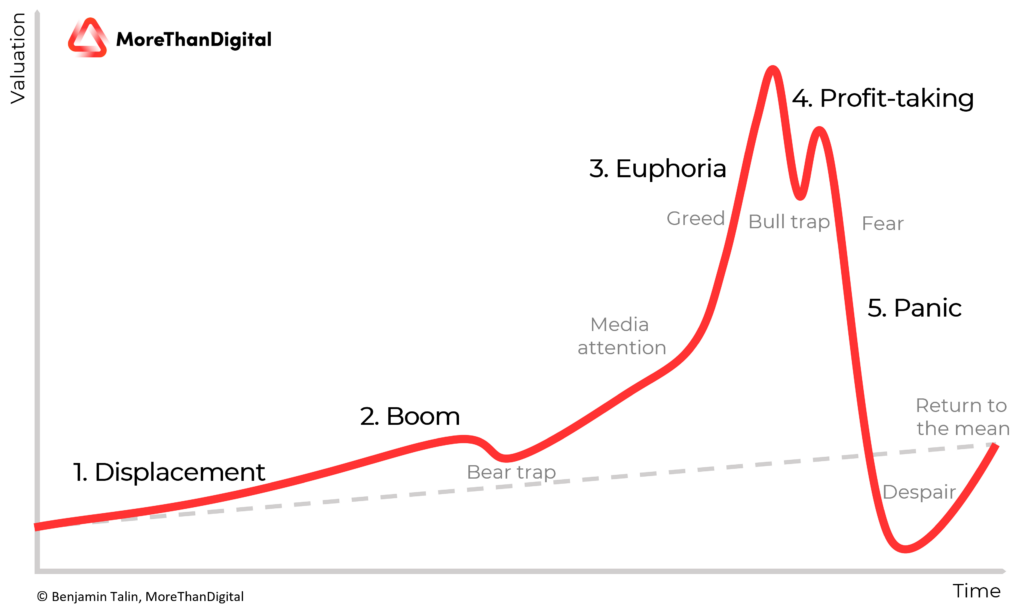
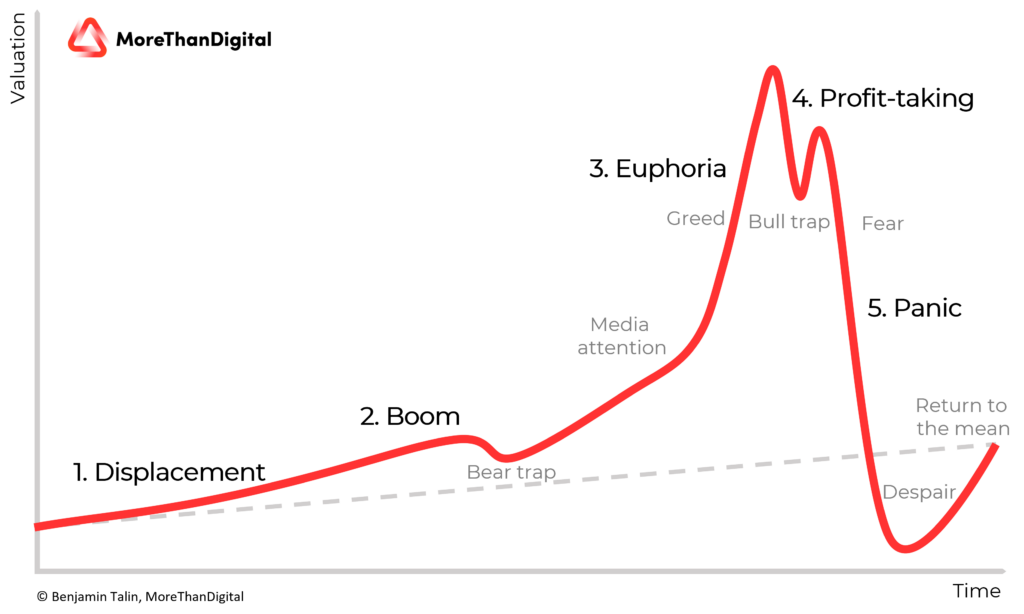
To understand how bubbles form and eventually dissipate, economists typically break the process down into five distinct phases. Recognizing these stages is essential for any investor looking to preserve capital and navigate volatile markets.
1. Displacement
The cycle begins with a displacement, or a shift in the economic landscape. This is often triggered by a new technology, a significant drop in interest rates, or a major change in government policy. Investors become enamored with a “new era” narrative, believing that traditional valuation metrics no longer apply. This optimism acts as the spark that ignites interest in a particular asset class.
2. Boom
As interest grows, early institutional and retail investors enter the market. The price begins to rise, creating a feedback loop. This rise in price attracts more participants, which in turn drives the price even higher. During this phase, the media often amplifies the trend, convincing skeptics that they are missing out on a once-in-a-lifetime opportunity. This is the era of “Fear Of Missing Out” (FOMO), where rational analysis is replaced by speculative greed.
3. Euphoria
During the euphoria phase, prices reach astronomical levels. The asset has become the topic of conversation at dinner parties and in casual social settings. Leverage is at its peak; investors borrow money heavily to increase their positions, convinced that the upward trajectory is permanent. At this stage, caution is thrown to the wind, and the market becomes completely detached from any measurable underlying value.
4. Profit Taking and Deterioration
Eventually, the “smart money”—the institutional investors and early adopters—begins to sell. They recognize that the assets are vastly overvalued and look to secure their profits. As selling pressure mounts, the price begins to stall. Some investors start to question the narrative, and the initial wave of selling creates a ripple effect. This is the moment the momentum reverses.
5. Panic and Burst
The final stage is the “burst.” Panic sets in as prices begin to collapse. Investors scramble to exit their positions simultaneously to prevent further losses. Because everyone is selling and there are few buyers left, the market experiences a violent, rapid decline. This is the point where the “bubble” technically bursts, wiping out wealth and often causing significant disruption to the broader financial system.
The Psychological Drivers of Market Irrationality
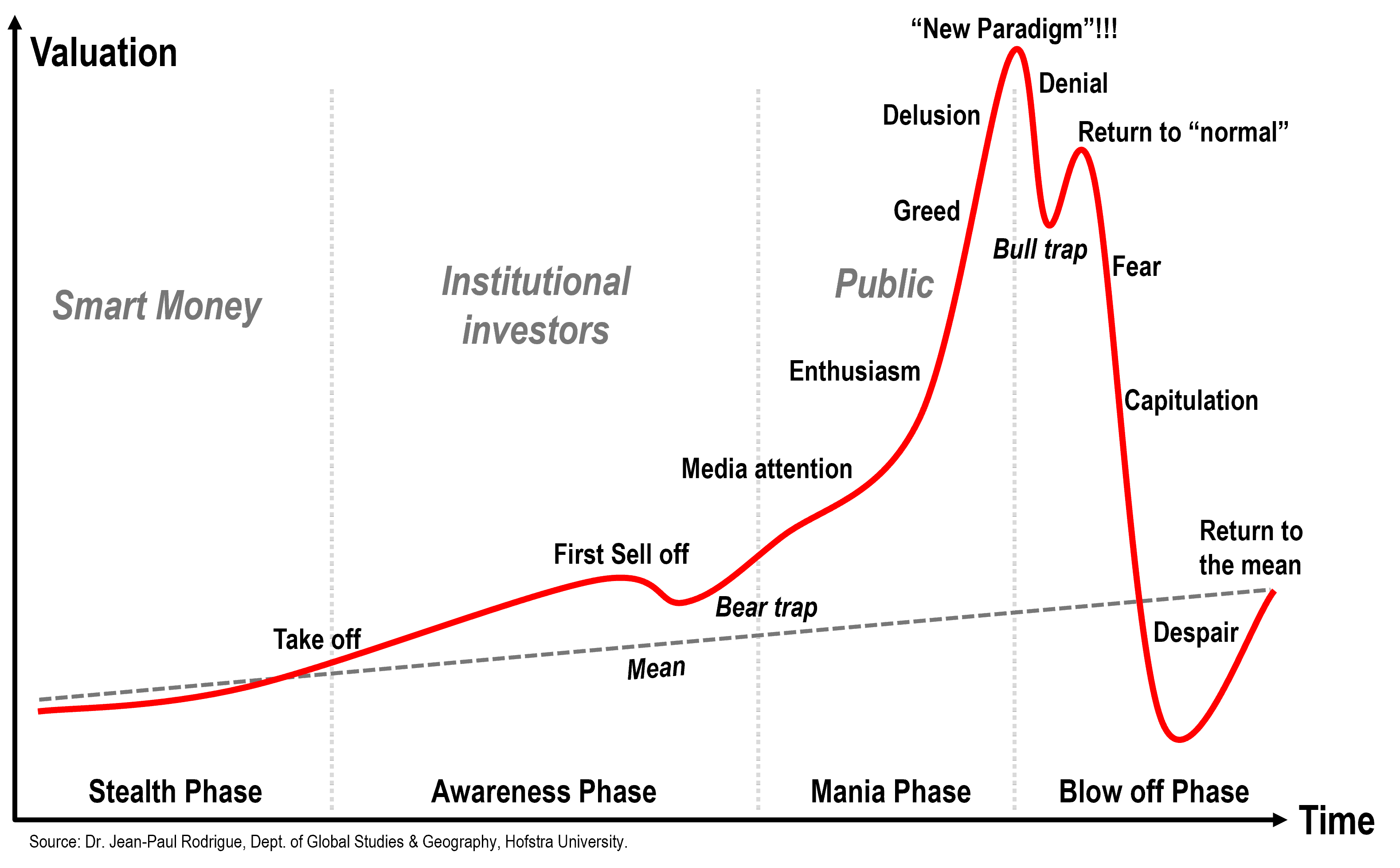
Economic bubbles are not merely the result of complex financial algorithms or monetary policy; they are deeply rooted in human psychology. Behavioral economics provides the framework for why markets consistently lose their collective sense of judgment.
Herd Mentality
Humans are social creatures, and this instinct is often our downfall in financial markets. Herd behavior occurs when individual investors ignore their own research and instead follow the crowd. If everyone else is buying, it feels safer to join the herd than to remain on the sidelines. This conformity bias reinforces the bubble, as the sheer volume of buyers creates the illusion of validity.
Overconfidence Bias
During the growth phase, investors often overestimate their own ability to predict market movements. They may attribute initial profits to their own analytical skill rather than a rising tide that is lifting all boats. This overconfidence leads to increased risk-taking, larger position sizing, and the use of dangerous levels of margin, all of which exacerbate the eventual crash.
Anchoring and Availability Bias
Investors often become “anchored” to the highest price an asset has reached, viewing it as the new baseline rather than a peak. Furthermore, the availability heuristic leads individuals to focus on recent, positive news stories—such as a friend’s massive return on a specific stock—while ignoring historical patterns or negative data that suggest the market is overheating.
Distinguishing Value from Price
The most effective defense against becoming trapped in an economic bubble is a rigid adherence to fundamental analysis. To avoid the trap of speculative fervor, one must distinguish between the “price” of an asset and its “value.”
Fundamental Analysis
Fundamental analysis involves examining the intrinsic value of an asset based on tangible metrics. For a business, this includes revenue, profit margins, debt levels, and market share. For a real estate investment, this might include rental yields, location quality, and supply-demand demographics. If an asset’s price is rising while its underlying fundamentals remain flat or decline, a red flag should be raised immediately.
Valuation Multiples
Investors often use valuation multiples—such as the Price-to-Earnings (P/E) ratio for stocks or Price-to-Rent ratios for housing—to determine if an asset is overbought. When these multiples reach levels far above their historical averages, it is a sign that the asset is likely in bubble territory. While a “new era” may justify slightly higher valuations, a radical departure from historical norms is almost always unsustainable.
Lessons from History and Future Prevention
History is a graveyard of bubbles. The 1929 stock market crash, the 2000 dot-com collapse, and the 2008 global financial crisis all serve as stark reminders of what happens when speculation outpaces reality. However, history also provides the tools necessary for modern investors to protect their portfolios.
Diversification as a Hedge
Diversification is the most powerful tool against the catastrophic failure of a single bubble. By maintaining a portfolio that includes assets across different sectors, geographies, and asset classes, an investor can mitigate the impact if one particular area of the market experiences a collapse.
Skepticism of “Miracle” Assets
The most dangerous phrases in finance are “this time it’s different” and “it’s a paradigm shift.” Whenever you hear that old rules no longer apply, you are likely looking at the early stages of a bubble. Whether it is a new digital currency, a hyped-up artificial intelligence startup, or an emerging real estate market, maintain a healthy level of skepticism.
Maintaining Liquidity
A bubble’s burst is often exacerbated by a lack of liquidity—the inability to sell an asset quickly without causing a massive drop in price. Maintaining a portion of your portfolio in cash or highly liquid, stable assets allows you to weather the storm. More importantly, it provides the “dry powder” needed to purchase high-quality assets at depressed prices after the bubble has inevitably burst.
Economic bubbles are an inevitable consequence of the intersection between financial markets and human nature. While they cannot be avoided, they can be navigated. By understanding the life cycle of bubbles, recognizing the psychological triggers that drive them, and maintaining a disciplined approach to valuation, investors can ensure that they remain spectators—rather than victims—when the bubble finally bursts. Success in finance is rarely about hitting the top of a speculative market; it is about preserving capital through the cycles of greed and fear.
aViewFromTheCave is a participant in the Amazon Services LLC Associates Program, an affiliate advertising program designed to provide a means for sites to earn advertising fees by advertising and linking to Amazon.com. Amazon, the Amazon logo, AmazonSupply, and the AmazonSupply logo are trademarks of Amazon.com, Inc. or its affiliates. As an Amazon Associate we earn affiliate commissions from qualifying purchases.