
In the rapidly evolving landscape of digital entertainment, few titles demonstrate the mastery of the “Games as a Service” (GaaS) model as effectively as Fortnite. Developed by Epic Games, Fortnite has transcended its origins as a battle royale game to become a sophisticated software ecosystem characterized by constant iteration. One of the most intriguing technical and gameplay additions in recent seasonal updates is the introduction of the Birthday Medallion. Released as part of Fortnite’s anniversary celebrations, this item represents more than just a commemorative digital trinket; it is a manifestation of complex software balancing, real-time buff architecture, and strategic meta-shifting.
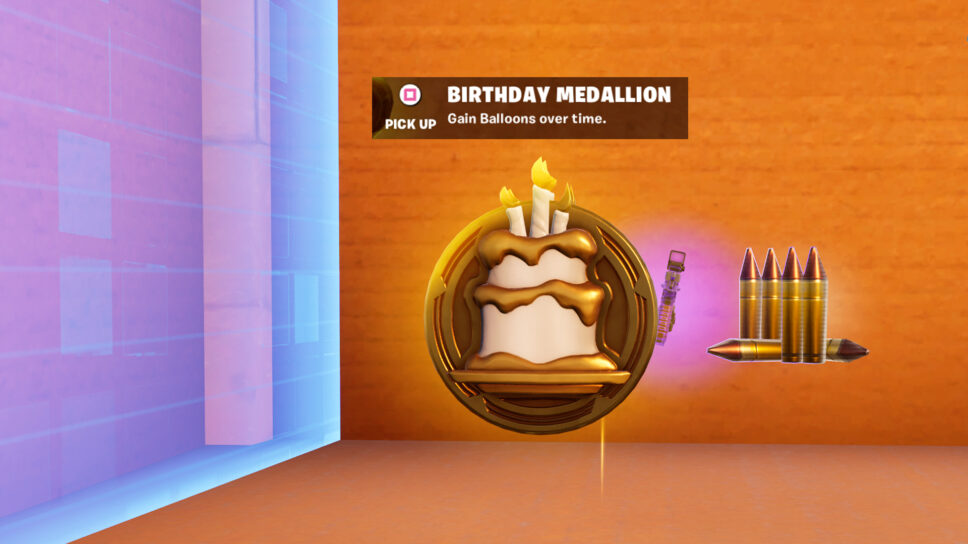
To understand what Birthday Medallions are, one must look past the colorful graphics and delve into the underlying mechanics that govern player interaction within the Unreal Engine environment. This article explores the technical nuances of Birthday Medallions, their role in the current gaming software landscape, and how Epic Games utilizes such items to maintain a dynamic user experience.
Understanding the Medallion System within Fortnite’s Software Architecture
The concept of a “Medallion” was first introduced in Fortnite Chapter 5, marking a significant shift in the game’s logic. Unlike traditional loot items—which occupy a specific slot in a player’s limited inventory—medallions operate as passive, persistent buffs that exist outside the standard five-slot inventory system.
The Evolution of Buff-Based Mechanics
Historically, Fortnite relied on consumable items (like potions or medkits) to manage player stats. The introduction of medallions signaled a move toward a more “RPG-lite” software structure. From a technical perspective, a medallion is a persistent status effect tied to a player’s unique session ID. When a player picks up a Birthday Medallion, the game server triggers a continuous logic loop that checks the player’s health and utility status at set intervals.
The Birthday Medallion specifically iterates on this by providing a unique set of perks designed to celebrate the game’s history. Instead of the raw shield regeneration seen in earlier boss medallions, the Birthday variant often focuses on “fun” and “mobility” mechanics—such as the periodic spawning of balloons. This requires the game engine to manage additional physics objects (the balloons) attached to the player model in real-time, showcasing the engine’s ability to handle complex physical interactions without compromising frame rate.
Dynamic Loot Pools and Server-Side Updates
One of the most impressive feats of the Fortnite tech stack is the ability to inject items like the Birthday Medallion into the live environment without requiring a massive client-side patch. Through server-side hotfixes, Epic Games can modify the “loot table”—the database that dictates what items appear in chests or as floor loot.
The Birthday Medallion is typically categorized as a “Mythic” or “Special” tier item within the software’s hierarchy. This classification ensures that the item’s drop rate is tightly controlled, preventing server-side clutter and ensuring that the gameplay meta remains balanced. By analyzing player data in real-time, developers can adjust the spawn rates of these medallions to ensure that they remain a high-value, sought-after asset during the anniversary event.
The Birthday Medallion: Functionality and Gameplay Impact
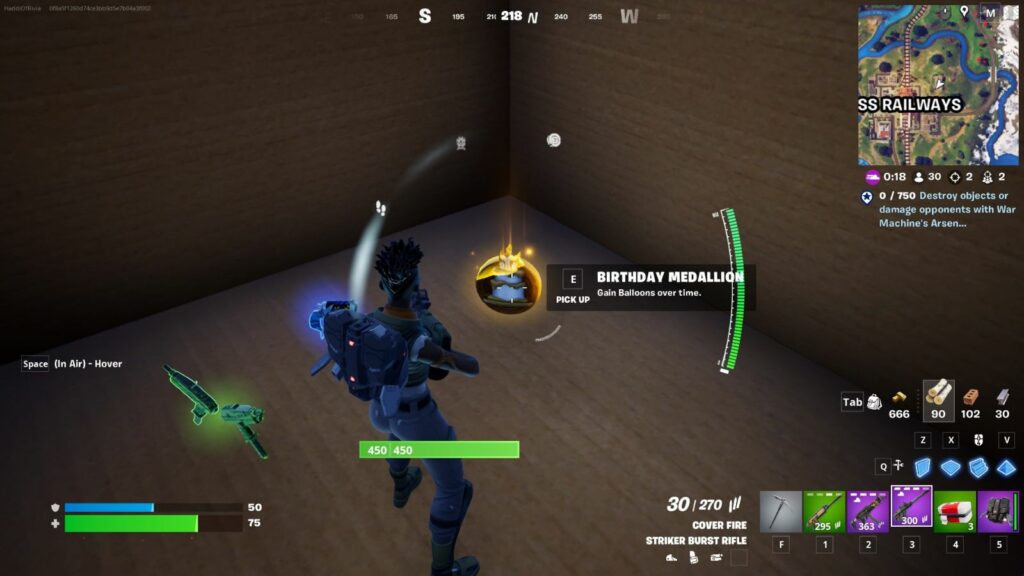
From a user-experience (UX) standpoint, the Birthday Medallion is designed to empower the player while introducing a “risk-reward” technical mechanic. In Fortnite, holding a medallion often reveals the player’s approximate location on the map to all other participants. This “ping” system is a sophisticated piece of networking software that balances transparency with competitive tension.
Persistent Healing and Passive Bonuses
The primary function of the Birthday Medallion is often centered around the “Birthday Cake” and “Balloon” mechanics. Technically, the medallion acts as a continuous trigger for specific gameplay scripts. For instance, while holding the medallion, a player might receive a steady tick of Health or Shield.
More interestingly, the Birthday Medallion frequently incorporates the “Balloon” mechanic. In terms of game physics, this involves a modification of the gravity constant applied to the player’s character model. As balloons “spawn” from the medallion, the upward force vector increases, allowing for greater verticality. Programming this requires precise collision detection to ensure that players do not clip through map geometry while being lifted by these digital assets.
Strategic Implications for the Meta
In the tech world, “meta” refers to the most effective tactics available. The Birthday Medallion fundamentally alters the meta-game by providing utility that does not cost an inventory slot. In high-level competitive play, inventory management is a critical skill. By offloading utility (like mobility or healing) to a medallion, the software allows players to carry more offensive weaponry.
This creates a technical challenge for the developers: how to keep the game fair. Epic Games balances this by making the Medallion a “marked” item. The server broadcasts the medallion holder’s coordinates to the mini-maps of every other player in the session. This creates a “king of the hill” dynamic, where the technical advantage of the medallion is offset by the increased probability of combat encounters.
The Tech Behind Seasonal Events: Epic Games’ “Games as a Service” (GaaS) Model
The Birthday Medallion is a prime example of how Epic Games utilizes seasonal content to drive user engagement and test new software features. In the broader context of the tech industry, Fortnite serves as a massive laboratory for live-service deployment.
Time-Limited Assets and Modular Content Delivery
The Birthday Medallion is a “time-limited asset.” From a coding perspective, these items are often built using a modular framework. Developers can toggle the availability of the medallion based on a specific calendar date or event trigger. This modularity allows Epic to experiment with radical gameplay changes—like permanent balloons or health regen—without permanently altering the core codebase of the game.
This approach is highly efficient for software maintenance. If a specific medallion mechanic causes a bug (such as a physics glitch with the balloons), the developers can disable the item server-side in minutes. This level of control is essential for maintaining a global platform with millions of concurrent users.
Data Tracking and Player Engagement Metrics
Every time a player interacts with a Birthday Medallion, data is sent back to Epic’s analytics servers. They track metrics such as:
- Pick-up Rate: How many players choose to carry the medallion?
- Survival Time: Does holding the medallion significantly increase a player’s lifespan in a match?
- Kill/Death Ratio: Does the medallion provide an unfair advantage in combat?
This data-driven approach allows the tech team to refine future medallions. The lessons learned from the Birthday Medallion’s balloon physics or healing rates are directly applied to the development of the next season’s equipment, ensuring a cycle of continuous software improvement.
Optimizing the Gaming Experience: Performance and UI Integration
A significant portion of the development of the Birthday Medallion is dedicated to User Interface (UI) and performance optimization. In a game as visually dense as Fortnite, adding new mechanics can easily lead to “information overload” for the user.
Managing On-Screen Information Overload
When a player acquires a Birthday Medallion, the UI must update instantly to reflect the new status. This involves adding an icon to the player’s HUD (Heads-Up Display) and, crucially, updating the world map. The technical challenge here is synchronization. In a 100-player lobby, the server must ensure that when Player A picks up a medallion, the map icons for Players B through J are updated with minimal latency.
The developers use a technique called “Replication” in the Unreal Engine. Only the essential data (the medallion’s coordinates) is replicated across the network, while the actual rendering of the icon is handled locally by each player’s console or PC. This minimizes the bandwidth required to keep the game state consistent across a global network.
Network Latency and Real-Time Buff Calculations
Perhaps the most complex technical aspect of the Birthday Medallion is the calculation of real-time buffs in a high-latency environment. If a player is at 100ms ping, the server and the client must stay in agreement about exactly when a health tick occurs or when a balloon spawns.
Fortnite uses “Client-Side Prediction” to make the gameplay feel smooth. When you pick up the medallion, your computer immediately starts showing the health increase or the balloons, even before the server confirms it. If there is a discrepancy, the server—which acts as the “source of truth”—will subtly correct the client. This ensures that the Birthday Medallion feels responsive and powerful, regardless of the user’s internet speed.
Conclusion: The Future of Digital Items in the Software Age
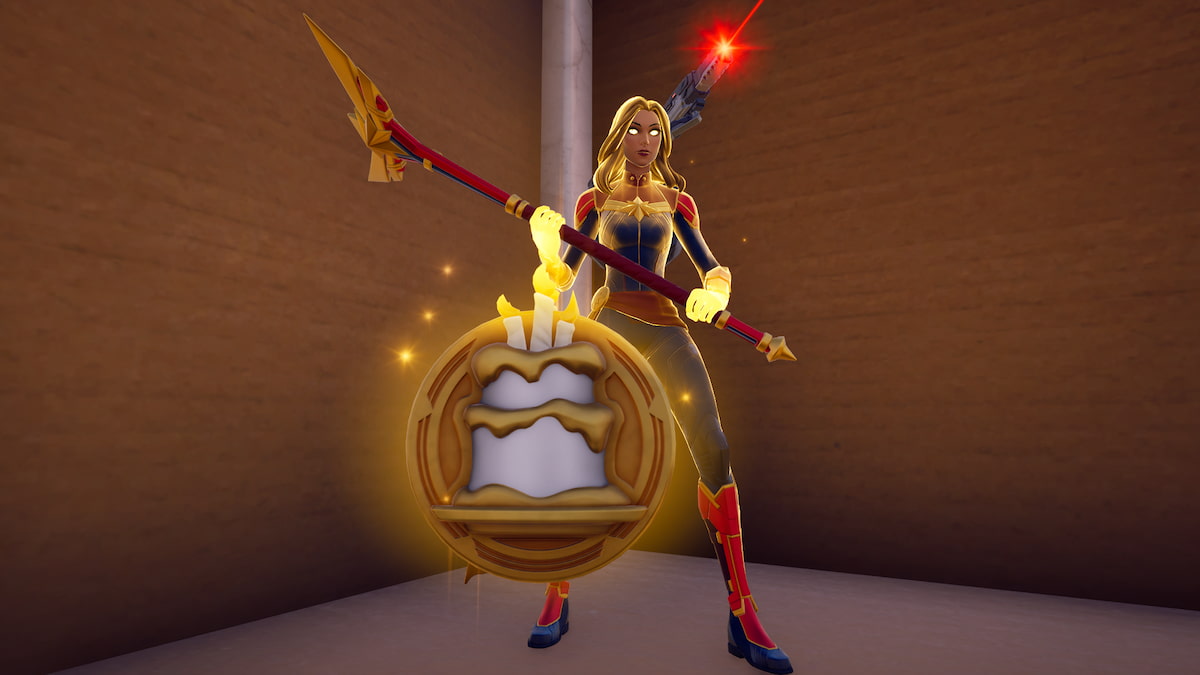
The Birthday Medallion in Fortnite is far more than a simple commemorative item for a game’s anniversary. It is a sophisticated piece of software engineering that demonstrates the current state of live-service gaming tech. By integrating persistent buffs, dynamic map markers, and physics-based mobility into a single item, Epic Games has created a template for how digital assets can evolve within a virtual ecosystem.
As we move toward more immersive digital environments, the technical architecture behind items like the Birthday Medallion—focusing on modularity, data-driven balancing, and high-performance networking—will become the standard. For the player, it’s a fun way to celebrate a birthday; for the tech industry, it’s a masterclass in modern software deployment and player engagement strategy. Whether you are chasing the medallion for the win or simply enjoying the festive balloons, you are participating in one of the most advanced real-time software simulations in the world today.
aViewFromTheCave is a participant in the Amazon Services LLC Associates Program, an affiliate advertising program designed to provide a means for sites to earn advertising fees by advertising and linking to Amazon.com. Amazon, the Amazon logo, AmazonSupply, and the AmazonSupply logo are trademarks of Amazon.com, Inc. or its affiliates. As an Amazon Associate we earn affiliate commissions from qualifying purchases.