
Purchasing a vehicle is often the second-largest financial commitment a consumer makes, trailing only the purchase of a home. While the sticker price of the car captures the initial attention, the true cost of ownership is dictated by the financing terms—specifically, the auto loan interest rate. Understanding what these rates are, how they are calculated, and how they impact your long-term financial health is essential for any savvy borrower. At its core, an auto loan interest rate is the cost you pay a lender for the privilege of borrowing money to purchase a vehicle. However, the simplicity of that definition masks a complex web of economic factors, personal financial metrics, and institutional policies.

The Mechanics of Auto Loan Interest Rates
To understand auto loan interest rates, one must first distinguish between the base interest rate and the Annual Percentage Rate (APR). While many people use these terms interchangeably, they represent different figures. The interest rate is the percentage of the principal loan amount charged by the lender annually. The APR, however, is a broader measure that includes the interest rate plus any additional fees, such as origination fees or documentation costs, spread over the life of the loan. For a borrower, the APR is the most accurate reflection of the total cost of credit.
Credit Score: The Primary Driver
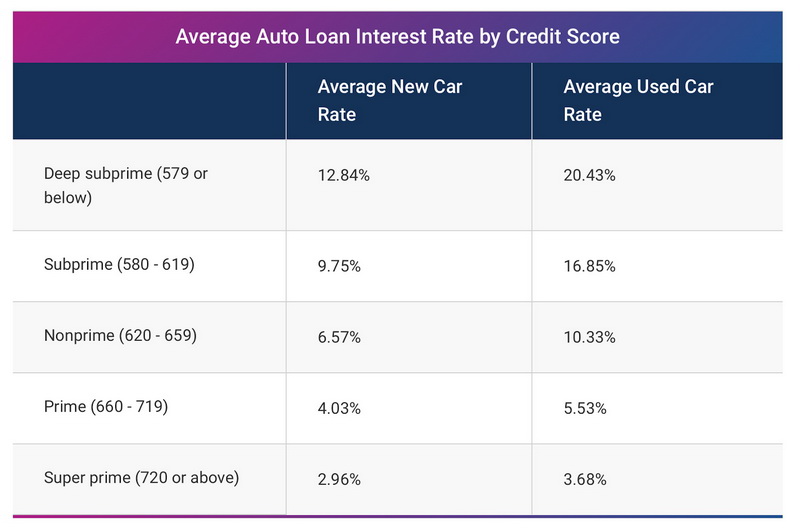
The most significant factor in determining your specific interest rate is your credit score. Lenders use credit tiers to categorize borrowers based on risk. Those in the “Superprime” category (typically scores of 780 and above) receive the most competitive rates because they have demonstrated a consistent history of timely payments and low debt utilization. Conversely, “Subprime” or “Deep Subprime” borrowers (scores below 600) are viewed as higher risk, leading lenders to charge significantly higher rates to offset the potential for default.
Even a 100-point difference in a credit score can result in thousands of dollars in extra interest over the life of a five-year loan. For example, a Superprime borrower might secure a rate of 5%, while a Subprime borrower could face rates upwards of 15% to 20%.
New vs. Used Vehicles
The age of the vehicle also plays a pivotal role. Generally, new cars carry lower interest rates than used cars. This discrepancy exists because new cars have a more predictable resale value and act as better collateral for the lender. If a borrower defaults on a new car, the lender can recoup a higher percentage of the loan through repossession and resale. Used cars, especially those older than five years, are seen as riskier assets due to potential mechanical failures and steeper depreciation curves, resulting in higher interest rates for the borrower.
Loan Term Length
The duration of the loan, or the “term,” inversely affects the interest rate and the total cost of the loan. While longer terms (such as 72 or 84 months) result in lower monthly payments, they almost always come with higher interest rates. Lenders charge a premium for longer terms because they are exposed to risk for a greater period. Additionally, a longer term increases the likelihood that the borrower will become “upside down” or have negative equity, meaning they owe more on the car than it is worth.
The Influence of the Macroeconomic Environment
Individual financial behavior is not the only thing that dictates auto loan interest rates. Global and national economic conditions create the baseline from which lenders operate.
The Federal Reserve and Prime Rates
The most influential external factor is the Federal Reserve’s monetary policy. When the Fed raises the federal funds rate to combat inflation, the cost of borrowing increases across the board. Banks and credit unions must pay more to borrow money themselves, and they pass these costs on to consumers in the form of higher APRs on auto loans. When the economy is sluggish and the Fed lowers rates to stimulate spending, auto loan rates typically drop, making it a more favorable time for consumers to finance a vehicle.
Inflation and Lender Risk Appetite
Inflation affects auto loan rates in two ways. First, it drives up the price of vehicles, requiring larger loan amounts. Second, it erodes the purchasing power of the interest the lender earns over time. To protect their margins during inflationary periods, lenders often tighten their lending standards and increase interest rates. Furthermore, during times of economic uncertainty, lenders may reduce their “risk appetite,” meaning they become more selective about who they lend to, often raising rates for everyone except those with the most pristine credit profiles.
How to Secure the Best Possible Rate
Securing a low interest rate is not a matter of luck; it is the result of preparation and strategic shopping. Because auto loans are a product, their prices vary significantly from one “store” to another.
The Power of Pre-Approval
One of the most effective strategies for a borrower is to secure a pre-approval from a bank or credit union before ever stepping foot on a dealership lot. A pre-approval gives the consumer a “ceiling” rate. When you enter negotiations at a dealership, you can present your pre-approved rate and ask the dealer to beat it. Dealerships often have relationships with dozens of lenders and can sometimes find a lower rate, but without a pre-approval, the dealer has little incentive to offer you their best available terms.
Credit Unions vs. Big Banks vs. Captive Finance
Where you shop for a loan matters. Credit unions are member-owned, non-profit organizations that often offer the most competitive rates in the market. Large national banks provide convenience and digital tools but may have stricter overlays.
Captive finance companies—the lending arms of manufacturers like Ford Credit, Toyota Financial Services, or GM Financial—are a unique category. These lenders often offer promotional rates, such as 0% or 1.9% APR, to move inventory. However, these “incentivized” rates are usually reserved exclusively for borrowers with top-tier credit and may require giving up other rebates or discounts on the vehicle’s price.
The 14-Day Shopping Window
Many borrowers fear that checking their credit with multiple lenders will damage their credit score. However, credit scoring models (such as FICO) recognize that consumers shop for the best rates. As long as all your inquiries for an auto loan occur within a short window—typically 14 to 45 days—they are treated as a single inquiry for scoring purposes. This allows you to compare offers from multiple institutions without penalizing your score.
Long-Term Financial Impact: The True Cost of Your Loan
The interest rate on an auto loan is more than just a percentage; it is a weight that dictates your monthly cash flow and your ability to build wealth.
Amortization and Interest Accrual
Most auto loans are simple interest loans, meaning interest is calculated based on the principal balance on the day the payment is due. In the early stages of the loan, a larger portion of your monthly payment goes toward interest rather than the principal. As the balance decreases, the amount of interest charged each month also decreases. Understanding this “amortization” is crucial. By making even small extra payments toward the principal, you can significantly reduce the total interest paid over the life of the loan and shorten the repayment period.
The Danger of Negative Equity
High interest rates combined with long loan terms often lead to a state of negative equity. Because vehicles are depreciating assets, they lose value rapidly—often 20% in the first year alone. If a borrower has a high interest rate and a low down payment, their loan balance may not decrease as fast as the car’s value drops. This becomes a significant problem if the car is totaled in an accident or if the owner needs to sell it. In these cases, the borrower may be required to pay the difference out of pocket. This is why many financial experts recommend a down payment of at least 20% and a loan term no longer than 48 to 60 months.
When to Consider Refinancing
If you were forced to accept a high interest rate due to poor credit at the time of purchase, you are not necessarily stuck with that rate forever. If your credit score has improved significantly after 12 to 18 months of on-time payments, or if market interest rates have dropped, refinancing your auto loan can be a brilliant financial move. Refinancing involves taking out a new loan with better terms to pay off the old one. This can lower your monthly payment, reduce your total interest cost, or both.

Navigating the Finance and Insurance (F&I) Office
The final stage of securing an auto loan interest rate happens in the dealership’s Finance and Insurance (F&I) office. This is where the “buy rate” meets the “sell rate.” The buy rate is the interest rate a lender offers the dealer based on your credit. The dealer is often allowed to add a “markup” to this rate—the sell rate—as a commission for facilitating the loan.
Awareness is your best defense here. By knowing your credit score and having a pre-approval in hand, you can identify if a dealer is attempting to pad the interest rate. Always ask the finance manager if the rate they are offering is the lowest one you qualify for and if it includes any discretionary markups.
Ultimately, auto loan interest rates are a reflection of your financial reputation and the broader economic climate. While you cannot control the Federal Reserve, you can control your credit habits, your down payment, and your willingness to shop around. By treating an auto loan with the same scrutiny as the vehicle itself, you can save thousands of dollars and ensure that your car remains a tool for mobility rather than a burden on your financial future. Knowledge of how these rates function transforms a borrower from a passive participant into a strategic consumer, capable of navigating the complexities of modern vehicle financing with confidence.
aViewFromTheCave is a participant in the Amazon Services LLC Associates Program, an affiliate advertising program designed to provide a means for sites to earn advertising fees by advertising and linking to Amazon.com. Amazon, the Amazon logo, AmazonSupply, and the AmazonSupply logo are trademarks of Amazon.com, Inc. or its affiliates. As an Amazon Associate we earn affiliate commissions from qualifying purchases.