
In the rapidly evolving landscape of the beauty industry, few brands have managed to capture a specific demographic as effectively as Bubble Skincare. Since its launch in late 2020, Bubble has transitioned from a direct-to-consumer startup to a retail powerhouse, finding its way onto the shelves of major retailers like Walmart and Ulta. While the physiological answer to “what age is Bubble skincare for” centers on the 13-to-25 demographic, the strategic answer lies in the brand’s mastery of modern marketing, visual identity, and the democratization of prestige skincare.

From a brand strategy perspective, Bubble represents a shift in how companies approach “entry-level” skincare. By identifying a gap between mass-market drugstore brands and high-end dermatologist-led lines, Bubble has built a corporate identity that prioritizes accessibility without sacrificing the “cool factor” that younger consumers demand.
Defining the Demographic: How Bubble Carved a Niche in the Gen Z and Gen Alpha Markets
The primary target audience for Bubble Skincare is adolescent and young adult consumers, specifically those between the ages of 13 and 25. This focus was not accidental; it was a calculated response to a underserved segment of the market. Before Bubble’s arrival, the skincare industry was largely divided into two camps: clinical, sterile brands targeting problematic teenage acne, or luxury anti-aging brands targeting millennials and older generations.
The Rise of the “Prejuvenation” Generation
Bubble successfully identified that Gen Z and the emerging Gen Alpha are starting their skincare journeys earlier than any generation before them. This is largely driven by social media exposure and the normalization of “shelfies.” Bubble positioned itself as the “first” brand for these consumers. By targeting the 13+ age group, the brand establishes loyalty at the exact moment a consumer begins to develop a personal care routine.
Bridging the Gap Between Fun and Efficacy
The strategic positioning of Bubble involves a delicate balance of “clinical” and “community.” The brand uses high-quality, plant-based ingredients and avoids common irritants, which appeals to the health-conscious Gen Z consumer. However, they wrap this clinical efficacy in a brand voice that is vibrant and relatable. This strategy removes the medicinal stigma often associated with teen skincare, transforming a chore into a lifestyle choice.
Brand Identity and Visual Language: Why Packaging Matters
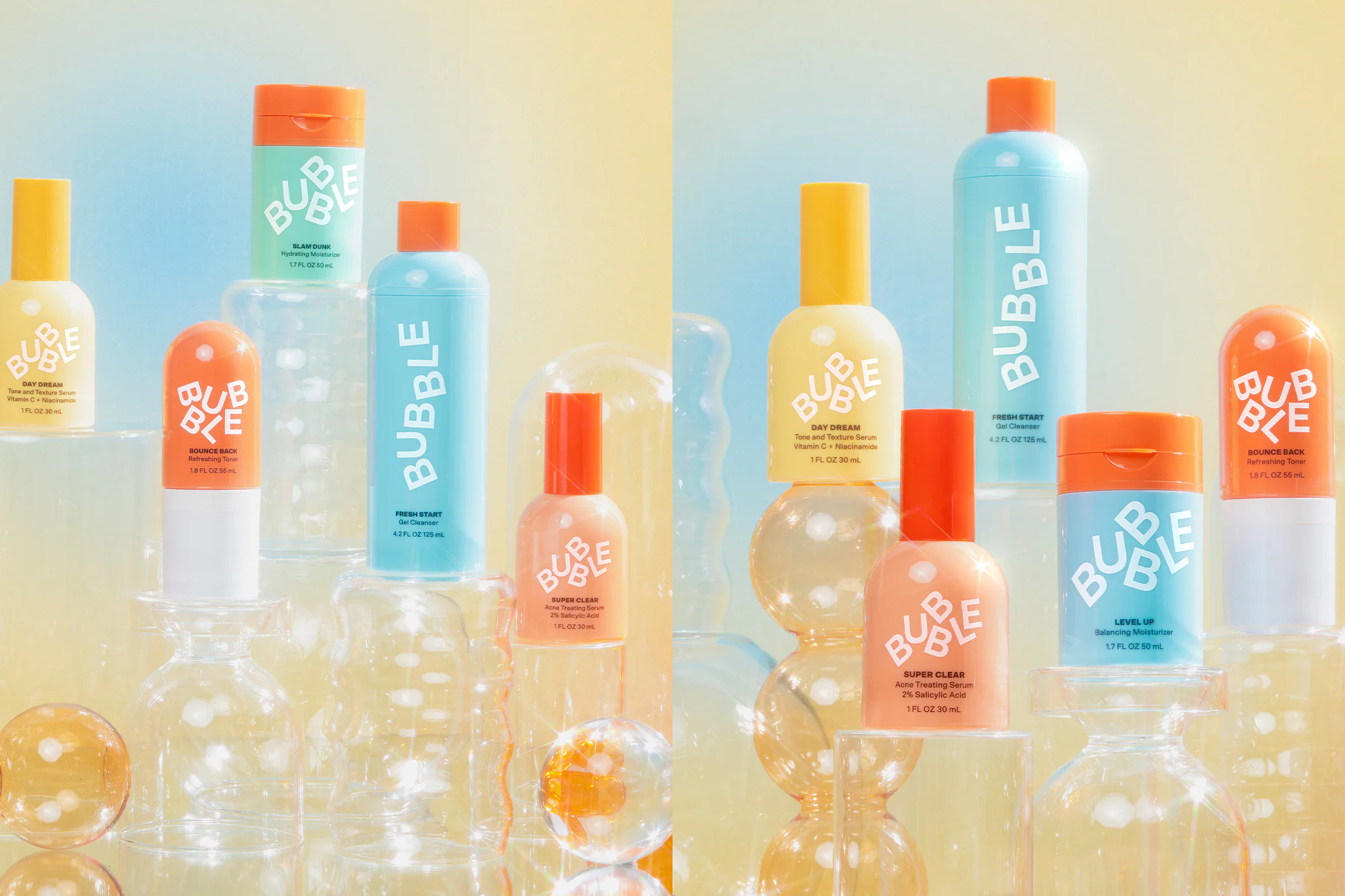
In the world of branding, visual identity is often the first point of contact between a product and its consumer. Bubble’s design strategy is a masterclass in shelf presence and digital-first aesthetics. When analyzing what age the brand is for, one only needs to look at the color palette and industrial design.
Color Theory and Social Media Virality
Bubble utilizes a bold, neon-inflected color palette—bright oranges, electric blues, and soft purples. This is a departure from the minimalist “Millennial Pink” or the clinical white-and-green schemes of legacy brands. These colors are designed to “pop” on a TikTok feed or an Instagram grid. For a brand targeting a younger demographic, the product must be as much an accessory as it is a functional tool.
The Innovation of the “Flower Pump”
One of the most recognizable elements of Bubble’s brand identity is the unique pump mechanism on their moisturizers, which dispenses product in the shape of a flower. From a marketing standpoint, this is a stroke of genius. It creates a “user experience” that is inherently shareable. It encourages users to film their skincare routine, providing the brand with millions of dollars in free user-generated content (UGC). This tactile innovation appeals directly to the sensory-seeking nature of younger consumers, reinforcing the brand’s position as a modern, playful alternative to traditional jars.
Digital Strategy: Community Building and the Power of Peer-to-Peer Marketing
Bubble’s growth can be largely attributed to its rejection of traditional top-down corporate marketing in favor of a decentralized, community-driven approach. The brand does not just sell to teenagers; it collaborates with them.
The Ambassador Program as a Growth Engine
Unlike many brands that rely solely on high-cost celebrity endorsements, Bubble built an army of thousands of “brand ambassadors”—everyday students and micro-influencers. This strategy democratizes the brand’s influence. By allowing their core demographic to lead the conversation, Bubble ensures that its messaging remains authentic. When a 16-year-old sees a peer using the product, the barrier to entry is lowered, and the trust factor is significantly higher than if they were seeing a traditional television advertisement.
Navigating the TikTok Ecosystem
Bubble’s content strategy is native to the platforms its audience inhabits. They utilize “edu-tainement,” a blend of education and entertainment, to explain complex ingredients like niacinamide or salicylic acid in 15-second clips. This empowers the young consumer, making them feel like an informed participant in their own skincare journey. This educational branding fosters a sense of sophistication that resonates with a demographic that prides itself on being “informed” and “aware.”
Market Expansion and Retail Partnerships: Scaling the Brand Beyond Digital
While Bubble was born on the internet, its long-term brand health depended on its ability to scale into physical retail. The choice of retail partners was a critical component of its brand strategy, reinforcing its accessibility and target age group.
The Walmart Partnership: Democratizing Prestige
The decision to launch in Walmart was a pivotal moment for Bubble. It signaled that the brand was for everyone, not just those living in metropolitan areas with access to specialty beauty boutiques. This move successfully disrupted the traditional “drugstore skincare” aisle. By placing high-design, high-efficacy products at an affordable price point ($10–$20) in a mass-market retailer, Bubble effectively cornered the market for the budget-conscious parent and the allowance-spending teenager.
Moving into Ulta: Elevating the Brand Perception
Once the brand established its volume and reach through Walmart, moving into Ulta Beauty allowed Bubble to capture the “prestige” side of the market. This dual-retail strategy ensures that as their core demographic ages and gains more purchasing power, the brand remains relevant. It bridges the gap between a “starter brand” and a “staple brand,” allowing the customer to grow with the company.
The Longevity of Youth-Centric Branding: Strategic Challenges and Future Outlook
The primary risk for any brand that targets a specific age bracket is the “aging out” phenomenon. As Gen Z grows older, Bubble must decide whether it will age with its customers or remain a dedicated entry-point for the next wave of Gen Alpha consumers.
Brand Evolution vs. Demographic Consistency
Currently, Bubble appears to be leaning into the “lifestyle” aspect of branding. By expanding into products like sunscreens and lip balms, they are moving beyond “problem-solving” and into “daily habit” formation. To maintain its market share, Bubble will likely continue to lean into its core identity as an affordable innovator. The brand’s strength lies in its agility; it can pivot its marketing messaging faster than the legacy conglomerates (like L’Oréal or Estée Lauder) that dominate the industry.

Ethical Branding and Corporate Responsibility
For the 13–25 demographic, brand ethics are often as important as product performance. Bubble has integrated sustainability and mental health awareness into its corporate identity. By partnering with organizations that support teen mental health and ensuring their products are vegan and cruelty-free, they align themselves with the values of their consumers. This value-based branding creates an emotional connection that transcends the product itself, making it much harder for competitors to displace them.
In conclusion, while the question of “what age is Bubble skincare for” has a simple chronological answer, the business reality is far more complex. Bubble has successfully built a brand that acts as a gateway to the world of beauty. Through strategic visual identity, community-led digital marketing, and a retail strategy that prioritizes accessibility, Bubble has defined the modern standard for how a brand can successfully capture and retain the attention of the world’s youngest and most digitally savvy consumers.
aViewFromTheCave is a participant in the Amazon Services LLC Associates Program, an affiliate advertising program designed to provide a means for sites to earn advertising fees by advertising and linking to Amazon.com. Amazon, the Amazon logo, AmazonSupply, and the AmazonSupply logo are trademarks of Amazon.com, Inc. or its affiliates. As an Amazon Associate we earn affiliate commissions from qualifying purchases.