
Deciding when to start receiving Social Security benefits is one of the most critical financial decisions many individuals will make in their lifetime. It’s a choice that significantly impacts the total income you’ll receive over your retirement years, influencing everything from your daily living expenses to your ability to fund leisure activities. This isn’t a one-size-fits-all answer; rather, it’s a deeply personal financial strategy that requires careful consideration of your health, other retirement assets, spousal benefits, and overall financial goals. Understanding the various claiming ages and their associated implications is paramount to making an informed decision that aligns with your unique circumstances. From the earliest possible age of 62 to the maximum delayed age of 70, each option presents distinct advantages and disadvantages that warrant thorough exploration. This comprehensive guide will delve into the nuances of Social Security claiming ages, helping you demystify the process and chart a course toward a more secure financial future.
Understanding the Key Ages for Claiming Social Security
The Social Security Administration (SSA) outlines specific age thresholds that dictate the amount of benefit you can receive. These aren’t arbitrary numbers but are meticulously calculated to balance individual needs with the program’s long-term solvency. Grasping the distinction between these ages is the foundational step in planning your Social Security strategy.
Early Retirement Age (ERA): The 62-Year-Old Option
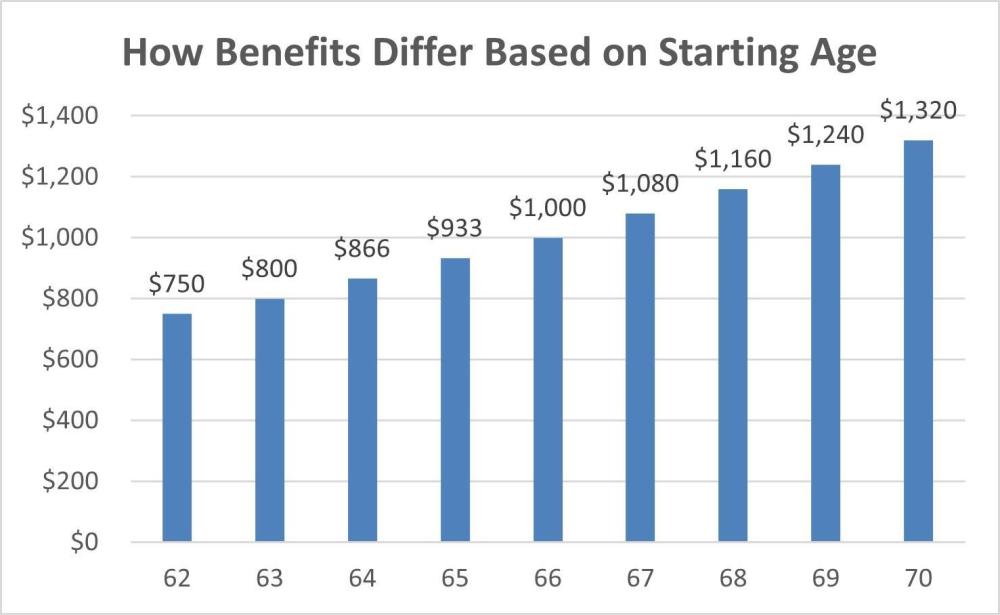
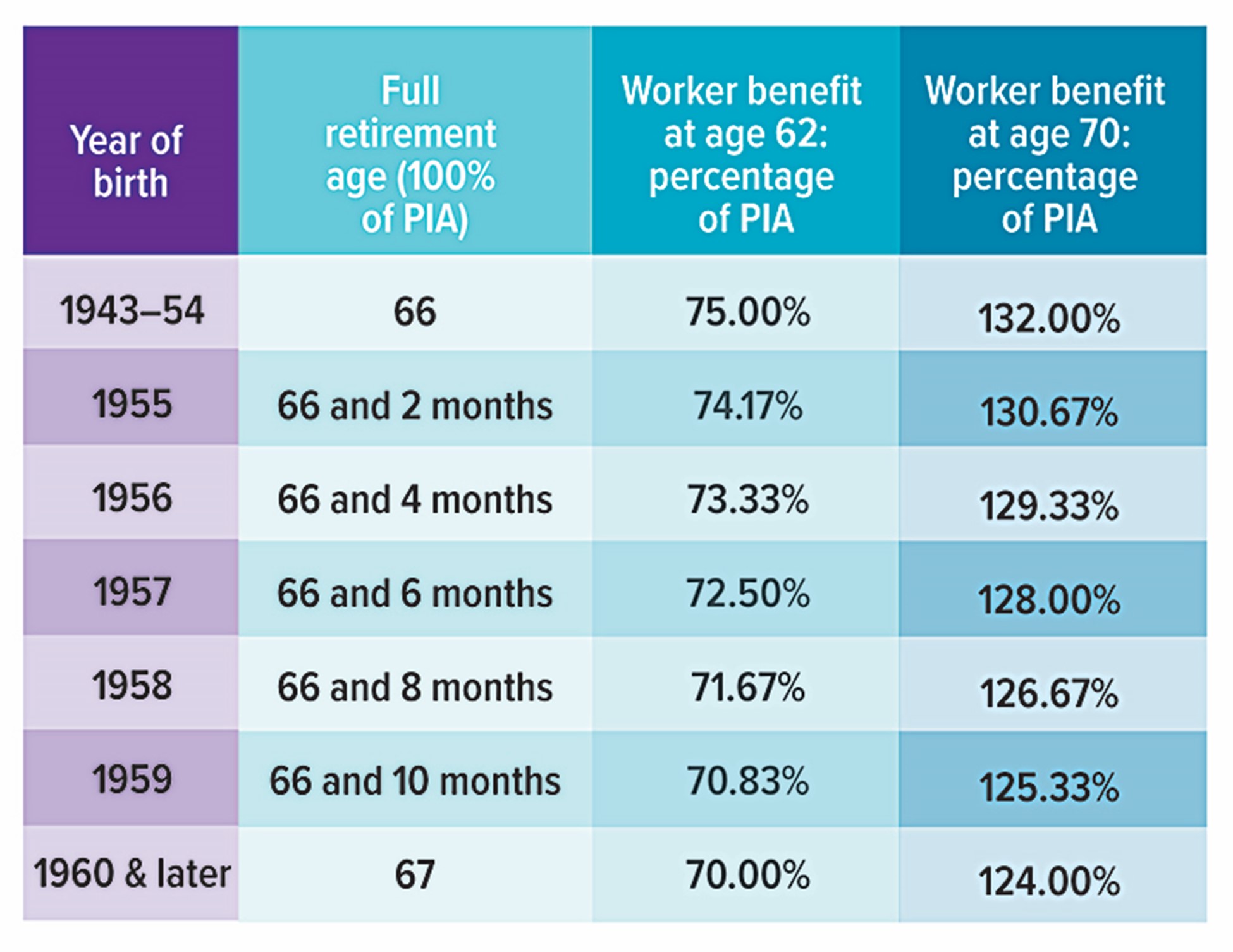
For most individuals, age 62 marks the earliest point at which they can begin claiming their Social Security retirement benefits. While this option offers the allure of receiving benefits sooner, it comes with a significant and permanent reduction in your monthly payment. This reduction is not trivial; it can amount to a cut of up to 30% of your Full Retirement Age (FRA) benefit. For instance, if your FRA benefit would be $2,000, claiming at 62 could reduce it to approximately $1,400. The rationale behind this reduction is simple: by starting earlier, you are expected to receive benefits for a longer duration, thus necessitating a lower monthly payout to balance the total lifetime benefit. Individuals often consider claiming at 62 due to job loss, health issues, the desire to retire early, or a perceived need for immediate income. However, it’s crucial to weigh the immediate gratification against the long-term financial implications, as this reduced amount will be your benefit for the rest of your life, adjusting only for cost-of-living increases.
Full Retirement Age (FRA): The Benchmark for Full Benefits
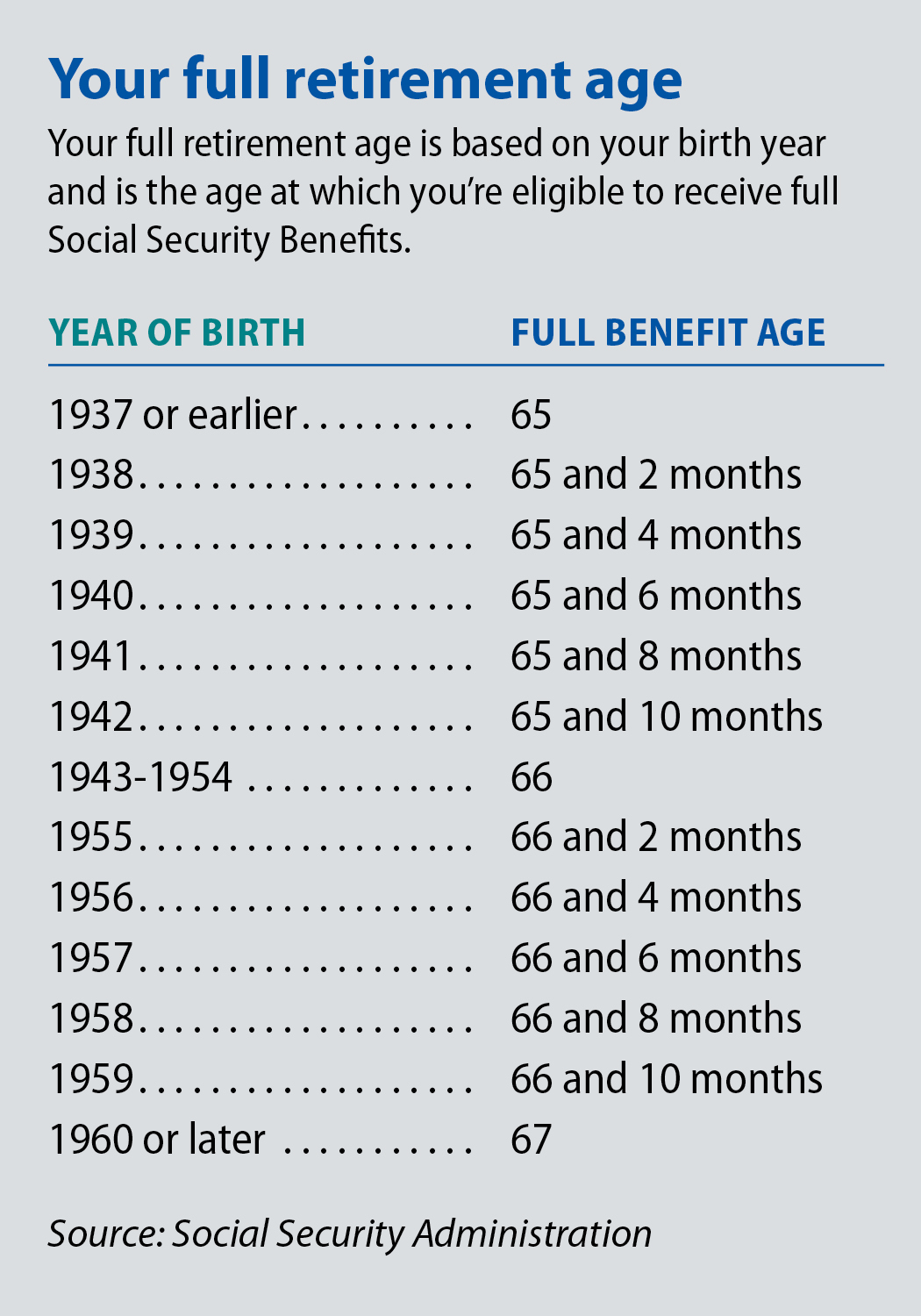
Your Full Retirement Age (FRA), also known as your “normal retirement age,” is the age at which you are entitled to receive 100% of the primary insurance amount (PIA) calculated based on your earnings history. This age is not static; it varies depending on your birth year. For those born between 1943 and 1954, FRA is 66. For those born in 1960 or later, it gradually increases to 67. If you were born in between these years, your FRA will be 66 plus a certain number of months. The SSA provides clear tables to determine your specific FRA. Claiming at your FRA means you receive the full benefit you’ve earned without any reduction or increase for delayed claiming. This age often serves as a central reference point for retirement planning, as it represents the “standard” benefit amount. Many financial advisors use the FRA benefit as a baseline to illustrate the impact of claiming earlier or later. It’s a practical choice for many retirees who wish to receive their full earned benefits without waiting too long or facing reductions.
Delayed Retirement Credits (DRCs): Boosting Your Future Income
For those who have the financial capacity and desire to postpone claiming benefits beyond their Full Retirement Age, the Social Security Administration offers Delayed Retirement Credits (DRCs). These credits provide a significant incentive to wait, increasing your monthly benefit by a certain percentage for each year you delay, up to age 70. The annual increase is typically 8% per year for those born in 1943 or later. This means that if your FRA is 67, and you delay claiming until age 70, you could increase your monthly benefit by 24% (3 years x 8% per year). This is a powerful strategy for maximizing your lifetime income, especially if you anticipate a long life expectancy or have sufficient other income sources to cover your expenses until age 70. Beyond age 70, there are no additional Delayed Retirement Credits, so there’s no financial advantage to waiting past this point. The decision to delay is often predicated on good health, the ability to continue working, or having ample retirement savings to bridge the gap.
The Financial Impact of Your Claiming Decision
The timing of your Social Security claim has profound and lasting financial consequences. It’s not merely about when the money starts flowing; it’s about the cumulative amount you receive over your lifetime, which can vary by tens or even hundreds of thousands of dollars depending on your choice.
How Early Claiming Reduces Your Monthly Benefit
As previously mentioned, claiming at age 62 results in a permanent reduction of your monthly benefit. For those whose FRA is 67, claiming at 62 means a 30% reduction. This means if your FRA benefit is $2,000 per month, claiming at 62 would reduce it to $1,400 per month. This reduction applies for the rest of your life. While receiving benefits earlier might seem appealing for immediate needs or simply the desire to enjoy retirement sooner, it’s crucial to understand the trade-off. Over a 20- or 30-year retirement, that $600 monthly difference (in this example) adds up to a substantial sum. This decision is often irreversible in practical terms, making it vital to fully grasp the long-term impact on your household budget and financial stability.
The Full Benefits at FRA: A Baseline for Planning
Claiming at your Full Retirement Age provides you with 100% of your calculated Primary Insurance Amount (PIA). This means you receive the benefit amount precisely as the SSA intended, without any penalties for early claiming or bonuses for delayed claiming. For many, this represents a balanced approach – not waiting too long, but also not incurring any reductions. It serves as a comfortable middle ground, offering a predictable and substantial income stream. When constructing a retirement budget or evaluating other income sources like pensions or 401(k) withdrawals, the FRA benefit amount often acts as the foundational piece, simplifying the overall financial planning process. Understanding this baseline is crucial for comparing the financial implications of choosing an earlier or later start date.
Magnifying Your Benefits with Delayed Claiming
Delaying your claim beyond your FRA, up to age 70, is arguably the most powerful strategy for maximizing your monthly Social Security check. Each year you delay, your benefit grows by approximately 8%, accumulating significant Delayed Retirement Credits. If your FRA is 67, and you wait until 70, your benefit could be 24% higher than your FRA benefit. If your FRA benefit was $2,000, waiting until 70 could boost it to $2,480 per month. This substantial increase is guaranteed, inflation-adjusted, and lasts for the rest of your life. For individuals concerned about outliving their savings or those with a strong family history of longevity, delaying Social Security can act as an effective longevity insurance policy, providing a larger, reliable income stream later in life.
Longevity and Break-Even Analysis
A key aspect of the financial impact revolves around longevity. When you claim earlier, you receive more payments initially, but each payment is smaller. When you delay, you receive fewer payments, but each is larger. The concept of a “break-even point” helps illustrate this. This is the age at which the cumulative total benefits from delaying claiming surpass the cumulative total benefits from claiming early. For example, if you claim at 62 instead of 67, you start receiving benefits five years earlier. However, the lower monthly amount means it might take until your late 70s or early 80s for the higher FRA benefit (had you waited) to “catch up” and surpass the total amount you would have received by claiming early. For those with excellent health and a family history of longevity, delaying past FRA often makes financial sense, as they are more likely to live long enough to benefit from the higher monthly payments. Conversely, for those with serious health concerns, claiming earlier might be more advantageous to ensure they receive as much as possible from the system.
Factors to Consider When Choosing Your Claim Age
The optimal Social Security claiming age is rarely purely a mathematical exercise. It involves a holistic assessment of your personal circumstances, health, family situation, and broader financial landscape.
Your Health and Life Expectancy
Perhaps the most personal and impactful factor is your health and anticipated life expectancy. If you are in excellent health and have a family history of living into your 80s or 90s, delaying your claim to maximize monthly benefits often proves to be the most financially prudent strategy. The longer you live, the more you benefit from those higher delayed payments. Conversely, if you have chronic health conditions that suggest a shorter life expectancy, claiming earlier might be a more sensible approach to ensure you receive benefits for as long as possible. This is a delicate and often difficult assessment, but it’s crucial for personalizing your strategy.
Other Retirement Income Sources (Pensions, 401ks, IRAs)
Your other retirement assets play a significant role. If you have substantial savings in 401(k)s, IRAs, or a private pension, you might have the luxury of delaying Social Security to allow it to grow, using your other assets to cover expenses in the interim. This strategy allows your Social Security benefit to become a larger, inflation-adjusted income stream later in life. If, however, Social Security will be your primary or sole source of retirement income, the decision might lean towards claiming earlier to meet immediate living expenses, despite the reduced benefit. Coordinating the draw-down of your various retirement accounts with your Social Security claiming age is a key aspect of comprehensive retirement planning.
Spousal and Survivor Benefits: A Joint Decision
For married couples, the decision of when to claim Social Security benefits becomes a joint strategy. One spouse’s claiming decision can significantly impact the other’s spousal or survivor benefits. For example, if the higher-earning spouse delays claiming until age 70, not only do their own benefits increase, but the potential survivor benefit for their spouse also increases substantially. If the higher-earning spouse passes away, the surviving spouse can claim the higher of their own benefit or 100% of the deceased spouse’s benefit (including any Delayed Retirement Credits). This makes the decision particularly complex and often requires modeling various scenarios to optimize benefits for both partners over their combined lifetimes. Divorced spouses may also be eligible for benefits based on an ex-spouse’s record under certain conditions.
Employment and Earnings Test Considerations
If you plan to claim Social Security benefits before your Full Retirement Age and continue working, you need to be aware of the earnings test. The SSA will temporarily withhold a portion of your benefits if your earnings exceed certain annual thresholds. For example, in 2024, if you are under FRA, $1 in benefits will be withheld for every $2 you earn above $22,320. In the year you reach FRA, the reduction is less severe, and once you reach your FRA, the earnings test no longer applies, and you can earn any amount without a reduction in benefits. While withheld benefits are not permanently lost (they are factored back into a higher benefit amount once you reach FRA), the earnings test can complicate claiming early if you plan to remain employed. This test is a critical consideration for those contemplating a phased retirement.
Dependents and Their Eligibility for Benefits
In some cases, your minor children (under 18 or up to 19 if still in high school) or a disabled adult child might be eligible for benefits based on your Social Security record when you start claiming. A dependent spouse caring for your child who is under age 16 or disabled may also be eligible for benefits. The decision to claim earlier could trigger benefits for these dependents, providing valuable income to your family. This is another layer of complexity that transforms the claiming decision from a purely individual one into a family-wide financial strategy.
Strategies for Maximizing Your Social Security Benefits
Beyond simply understanding the rules, proactive planning and strategic thinking can help you optimize your Social Security income over your lifetime.
Coordinating with a Spouse: Advanced Planning for Couples
For married couples, coordinating claiming strategies is often the most effective way to maximize combined lifetime benefits. While certain advanced strategies like “file and suspend” and “restricted application for spousal benefits” have been largely phased out by the Bipartisan Budget Act of 2015 for those born after certain dates, smart planning is still crucial. The key often lies in having the higher-earning spouse delay their claim as long as possible (up to age 70) to maximize their own benefit and, crucially, the potential survivor benefit for the lower-earning spouse. The lower-earning spouse might consider claiming their own benefit earlier, or a spousal benefit (if higher than their own), to provide immediate income while the primary earner’s benefit continues to grow. This requires careful consideration of both spouses’ age, health, and earnings history. It’s a complex area where professional financial advice can be particularly valuable.
Understanding the Cost-of-Living Adjustment (COLA)
Social Security benefits are adjusted annually based on the Cost-of-Living Adjustment (COLA). This adjustment is designed to help benefits keep pace with inflation, maintaining your purchasing power over time. The COLA is applied to your initial benefit amount, meaning that a higher starting benefit (achieved through delaying) will result in larger dollar-amount COLA increases over your retirement. For example, if your benefit is $2,000 and the COLA is 3%, your increase is $60. If your benefit is $2,480 (from delaying), that same 3% COLA yields a $74.40 increase. Over many years, these compounding increases on a higher base amount can significantly enhance your long-term financial security.
Seeking Professional Financial Advice
Given the complexity and the life-long implications of your Social Security claiming decision, consulting with a qualified financial advisor is highly recommended. A financial professional specializing in retirement planning can help you:
- Analyze your specific earnings record and project future benefits.
- Run break-even analyses tailored to your life expectancy estimates.
- Model different claiming scenarios for individuals and couples.
- Integrate your Social Security strategy with your other retirement assets (401k, IRA, pensions).
- Navigate the rules regarding earnings tests and spousal/survivor benefits.
They can provide personalized guidance, helping you weigh the various factors and make an informed decision that aligns with your unique financial situation and retirement goals.
The Application Process: What to Expect
Once you’ve decided on your optimal claiming age, the next step is to apply for your benefits. The process is designed to be accessible, though it requires attention to detail.
Gathering Necessary Documents
Before you apply, you’ll need to gather several important documents to verify your identity, age, and earnings history. These typically include:
- Your Social Security card or a record of your Social Security number.
- Your birth certificate (original or certified copy).
- Proof of U.S. citizenship or lawful alien status (if you were not born in the U.S.).
- Your W-2 forms or self-employment tax returns for the previous year.
- Your bank account number and routing number for direct deposit.
- Marriage certificate (if applying for spousal benefits) and divorce papers (if applicable).
- Military service discharge papers (if applicable).
Having these documents ready will streamline your application process.
Applying Online, By Phone, or In-Person
The Social Security Administration offers several convenient ways to apply for benefits:
- Online: For most people, applying online at the SSA’s official website (www.ssa.gov) is the quickest and easiest method. The online application is user-friendly and guides you through each step.
- By Phone: You can call the SSA’s toll-free number to apply or to get assistance with your application.
- In-Person: You can schedule an appointment at your local Social Security office if you prefer to apply in person or need personalized assistance.
Regardless of the method, it’s generally advisable to apply a few months before you wish your benefits to start to allow for processing time.
What Happens After You Apply
Once your application is submitted, the SSA will review your information. They may contact you if they need additional details or clarification. You will receive a letter from the SSA detailing their decision. If your application is approved, the letter will specify your monthly benefit amount and when your payments will begin. Payments are typically made via direct deposit into your bank account. If your application is denied, the letter will explain the reasons and inform you of your right to appeal the decision. Keeping a copy of your application and all correspondence with the SSA is always a good practice.
Conclusion
The decision of what age to start Social Security is far more than a simple formality; it is a pivotal financial decision that can shape the entirety of your retirement experience. From the earliest age of 62, offering immediate income with a permanent reduction, to the strategic delay until age 70, which significantly boosts your monthly payout, each option carries unique implications. Understanding your Full Retirement Age (FRA) serves as the indispensable benchmark, guiding your considerations about early reductions or delayed credits.
Factors such as your personal health and projected life expectancy, the availability of other retirement income sources, the intricate dynamics of spousal and survivor benefits, and the potential impact of the earnings test all converge to create a highly individualized decision matrix. There is no universally “right” answer; rather, there is the optimal strategy tailored to your specific circumstances, risk tolerance, and long-term aspirations.
By diligently gathering information, assessing your personal financial landscape, strategically coordinating with a spouse, and not hesitating to seek the expertise of a qualified financial advisor, you can navigate this complex terrain with confidence. The goal is to make a thoughtful, informed choice that not only provides a stable income stream but also maximizes your Social Security benefits, ensuring a more secure and fulfilling retirement journey. The time invested in understanding these options today will yield substantial dividends throughout your golden years.
aViewFromTheCave is a participant in the Amazon Services LLC Associates Program, an affiliate advertising program designed to provide a means for sites to earn advertising fees by advertising and linking to Amazon.com. Amazon, the Amazon logo, AmazonSupply, and the AmazonSupply logo are trademarks of Amazon.com, Inc. or its affiliates. As an Amazon Associate we earn affiliate commissions from qualifying purchases.