
The term “plaintiff” is a foundational concept in the legal system, denoting the party who initiates a lawsuit against another, known as the defendant. While the role might seem straightforward, particularly in the context of seeking justice, for individuals and businesses operating in the financial realm, understanding the multifaceted implications of being a plaintiff is paramount. This isn’t merely about righting a wrong; it’s about navigating a complex landscape where financial resources, risks, and potential rewards are constantly in play. For anyone contemplating legal action, or even for those seeking to understand the financial implications of legal disputes, a deep dive into “what a plaintiff” truly entails from a monetary perspective is essential.
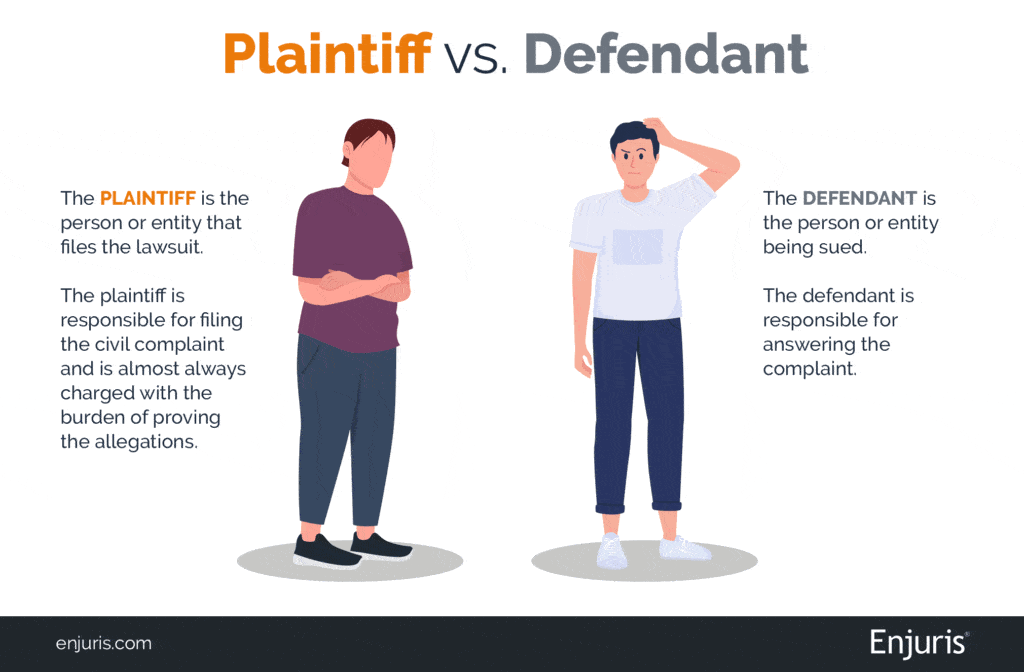
Understanding the Plaintiff’s Role in Financial Disputes
At its core, a plaintiff is an individual or entity that believes they have suffered a legal wrong—a breach of contract, a personal injury, fraud, or a violation of their rights—and seeks resolution through the courts. In the financial context, this almost invariably means seeking monetary damages, specific performance of a contract that has financial implications, or the return of assets.
The Initiator of Legal Action
The plaintiff is the driving force behind a lawsuit. They are the party with the grievance, and it is their decision to leverage the legal system to address that grievance. This initiation carries significant weight, as it sets in motion a chain of events that will demand time, emotional resilience, and, crucially, financial investment. From filing fees to attorney retainers, the upfront costs associated with becoming a plaintiff can be substantial. For individuals, this might mean dipping into savings or exploring financing options. For businesses, it requires allocating budget for potential litigation, which can impact cash flow and profitability projections. The decision to initiate legal action is, therefore, a strategic financial one, requiring a careful cost-benefit analysis before a single legal document is filed.
Seeking Financial Redress and Justice
While justice might be the overarching goal, the tangible outcome for most plaintiffs in civil cases is financial redress. This could range from compensation for direct losses (e.g., lost income due to an injury, the value of a breached contract) to indirect damages (e.g., pain and suffering, reputational harm that impacts future earnings). Businesses might seek recovery of lost profits, repair costs, or the enforcement of debts. The plaintiff’s claim will always be quantified in monetary terms, even if the initial grievance isn’t directly financial. Understanding how these damages are calculated, what evidence is required to prove them, and the likelihood of successful recovery becomes a central preoccupation for the financially-minded plaintiff. This pursuit of redress is not just about making whole what was lost; it’s about the recovery and protection of one’s financial well-being or the financial health of an enterprise.
Navigating the Financial Landscape of Litigation
Becoming a plaintiff means stepping into a complex financial arena. Beyond the direct costs, there are indirect financial impacts, strategic decisions concerning risk and reward, and the ultimate challenge of realizing any judgment awarded.
Costs of Pursuing a Claim
The financial commitment of litigation can be staggering. Attorney fees, often billed hourly, can quickly accumulate, especially in complex cases that span months or years. Contingency fee arrangements, where the lawyer takes a percentage of the final award, can mitigate upfront costs but mean a larger share of the potential payout is forgone. Beyond legal counsel, plaintiffs face a litany of expenses: court filing fees, deposition costs, expert witness fees (which can run into thousands per day), discovery expenses, mediation fees, and travel. For individuals, these costs can represent a significant portion of their net worth, potentially leading to financial hardship. For businesses, uncontrolled litigation expenses can erode profit margins, divert resources from core operations, and even threaten solvency. A prudent plaintiff must meticulously budget for these costs, seeking transparency from their legal team and understanding all potential expenditures before committing.
Valuation and Damages: What’s at Stake
A crucial aspect of being a plaintiff is accurately valuing the claim and understanding the types of damages that can be sought. Damages typically fall into several categories:
- Compensatory Damages: Intended to compensate the plaintiff for actual losses incurred. This includes economic damages (e.g., medical bills, lost wages, property repair costs, lost business profits) and non-economic damages (e.g., pain and suffering, emotional distress, loss of consortium).
- Punitive Damages: Awarded in cases of egregious misconduct, intended to punish the defendant and deter similar behavior. These are less common and often capped.
- Specific Performance: In contract disputes, a court might order the defendant to fulfill the terms of a contract rather than pay monetary damages, especially if the subject matter is unique (e.g., a specific piece of real estate).
The plaintiff’s legal team plays a vital role in calculating and substantiating these damages with evidence. Undervaluing a claim can lead to insufficient recovery, while overvaluing can make settlement difficult and raise unrealistic expectations. A clear, evidence-backed valuation strategy is a financial imperative for the plaintiff.
Settlement vs. Trial: The Financial Calculus

Most civil cases never reach a trial; they are resolved through settlement. For the plaintiff, a settlement offers certainty—a guaranteed financial outcome without the prolonged expense, stress, and uncertainty of a trial. While a settlement might be less than what could potentially be won at trial, it eliminates the risk of losing entirely, as well as the escalating legal fees. The financial calculus involves weighing the guaranteed, albeit potentially smaller, sum of a settlement against the possibility of a larger award (or no award) after a lengthy and costly trial. Factors such as the strength of evidence, the defendant’s ability to pay, the estimated duration of a trial, and the plaintiff’s personal or business financial stability all play a role in this critical decision. Sometimes, a smaller but quicker settlement is financially superior to a larger, delayed, and uncertain trial outcome.
Strategic Considerations for the Financial Plaintiff
Beyond the immediate costs and potential awards, becoming a plaintiff demands a strategic mindset, especially concerning the long-term financial health of the individual or business.
Due Diligence and Evidence Gathering
Before initiating a lawsuit, the plaintiff must engage in thorough due diligence. This means gathering all relevant documents, communications, and expert opinions that support their claim. For a business, this could involve forensic accounting, detailed contract analysis, or market research to quantify lost opportunities. For an individual, it might involve medical records, employment history, and personal financial statements. The strength of the evidence directly impacts the likelihood of success and the potential size of any financial award. Weak evidence not only jeopardizes the case but also wastes the financial resources invested in pursuing it. A robust evidence collection strategy is a critical financial investment that pays dividends by bolstering the claim.
Assessing Risk and Reward
Every lawsuit carries inherent risks. The plaintiff risks losing the case and being responsible for their own legal fees, potentially even some of the defendant’s costs in certain jurisdictions. There’s also the risk of not being able to collect on a judgment even if successful, especially if the defendant lacks assets. Against these risks, the potential rewards—monetary compensation, injunctive relief, or the vindication of rights—must be carefully weighed. This risk-reward assessment is a continuous process throughout the litigation. It informs decisions about whether to settle, how aggressively to pursue discovery, and whether to appeal an unfavorable ruling. A financially astute plaintiff understands that not every battle is worth fighting, especially if the potential reward doesn’t justify the escalating financial and emotional costs.
Managing Personal and Business Finances During a Lawsuit
Litigation can be a prolonged affair, often lasting months or even years. During this period, plaintiffs must effectively manage their personal or business finances to weather the storm. For individuals, this might mean maintaining a robust emergency fund, seeking alternative income streams, or adjusting lifestyle expenses. For businesses, it involves forecasting cash flow carefully, ensuring reserves are adequate to cover ongoing legal expenses, and communicating potential financial impacts to stakeholders. Furthermore, the emotional toll of litigation can distract from other financial responsibilities or business operations. Proactive financial planning, perhaps with the help of a financial advisor, is crucial to prevent the lawsuit itself from becoming a source of financial ruin, even if ultimately successful.
Post-Judgment: Realizing Financial Recovery
Winning a judgment is a significant milestone, but it does not automatically equate to immediate financial recovery. The plaintiff transitions from arguing their case to actively pursuing the awarded funds.
Enforcing Judgments
A judgment is a court order, but it’s not a self-executing check. Often, the plaintiff must take further steps to enforce it, especially if the defendant is unwilling or unable to pay. This can involve:
- Garnishment: Seizing a portion of the defendant’s wages or bank accounts.
- Liens: Placing a lien on the defendant’s property (real estate or personal property), which must be satisfied before the property can be sold or refinanced.
- Asset Seizure: In some cases, tangible assets of the defendant can be seized and sold to satisfy the judgment.
Each of these enforcement mechanisms can incur additional legal fees and take time. The plaintiff must consider the defendant’s financial solvency from the outset; a judgment against an insolvent defendant may be a hollow victory, a “paper judgment” with little actual financial recovery. Understanding the defendant’s asset base and willingness to pay is a critical part of the initial financial assessment for any plaintiff.

Tax Implications of Awards and Settlements
Finally, realizing financial recovery often brings with it tax implications. Not all legal awards or settlements are tax-free. Generally, damages for physical injury or sickness are non-taxable, but awards for emotional distress, lost wages, lost profits, or punitive damages are typically taxable income. The classification of the award can significantly impact the net financial recovery. For businesses, settlements or judgments can affect corporate tax liability, while for individuals, they might push them into higher tax brackets. It is crucial for a plaintiff to consult with a tax professional and their legal counsel to understand the tax treatment of any potential award or settlement before finalizing it. This foresight can prevent unexpected tax burdens and ensure the true financial benefit of the legal action is understood.
In essence, being a plaintiff is an undertaking fraught with financial considerations at every stage. From the initial decision to sue, through the arduous process of litigation, to the ultimate act of recovery, a clear understanding of the financial risks, costs, and potential rewards is indispensable for successful navigation and protection of one’s financial interests.
aViewFromTheCave is a participant in the Amazon Services LLC Associates Program, an affiliate advertising program designed to provide a means for sites to earn advertising fees by advertising and linking to Amazon.com. Amazon, the Amazon logo, AmazonSupply, and the AmazonSupply logo are trademarks of Amazon.com, Inc. or its affiliates. As an Amazon Associate we earn affiliate commissions from qualifying purchases.