
The Dynastic Blueprint: Understanding Political Family Branding
In the realm of high-stakes public office, a name often carries more than just personal identification; it carries a brand. A political brand, much like a corporate one, encompasses reputation, values, public perception, and a distinct identity. When a son follows a father into the presidency, the dynamics of this brand become exponentially complex and fascinating. This isn’t merely about inheriting a legacy; it’s about navigating an established brand, leveraging its equity, differentiating from its shadows, and ultimately forging a unique yet resonant identity.
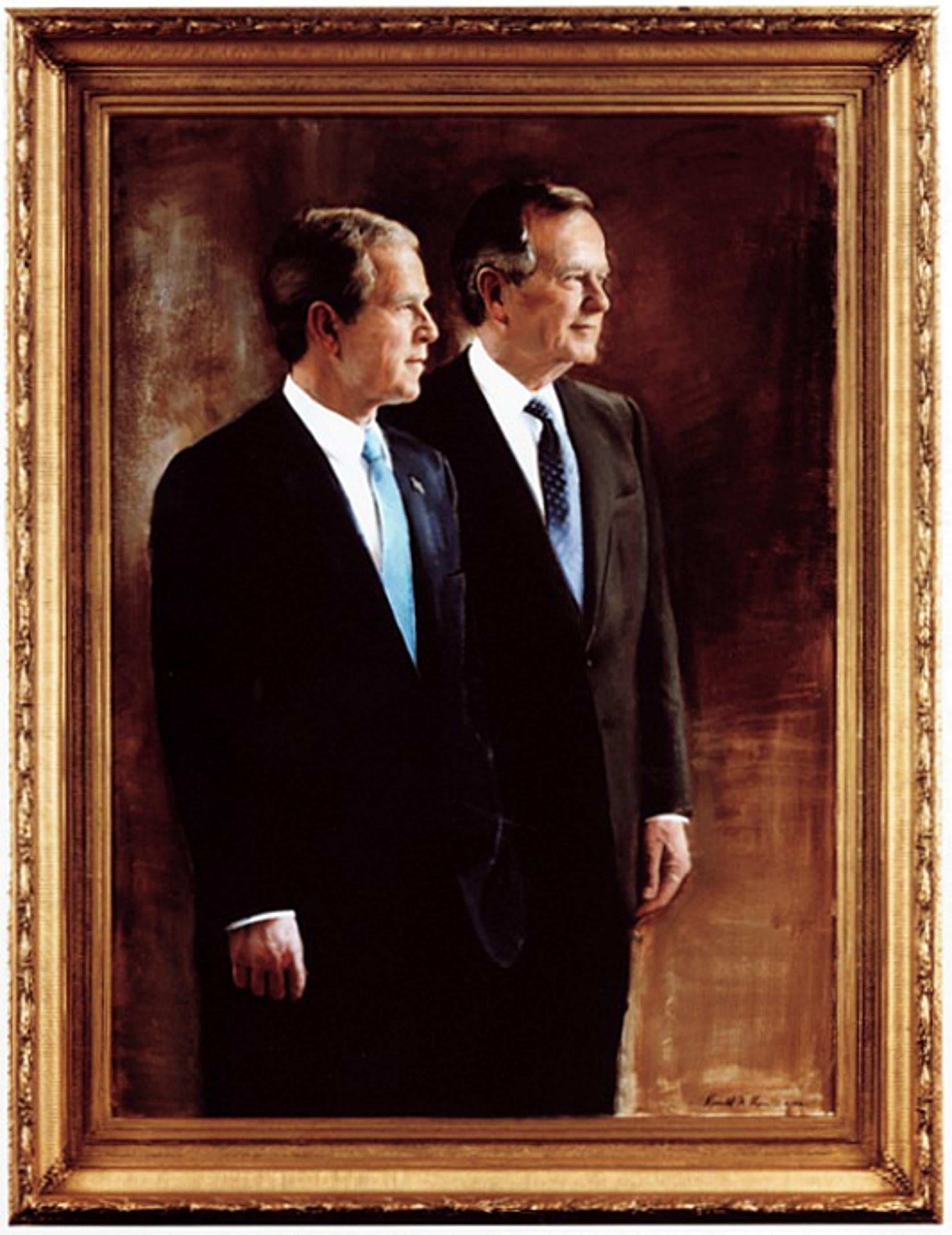
Political family branding refers to the strategic management of a public persona that extends across generations within a prominent political lineage. It involves the careful crafting of narrative, the consistent articulation of values, and the strategic positioning of individuals within a broader familial story. The advantages are clear: immediate name recognition, established networks, perceived experience, and a narrative of public service woven through generations. However, the challenges are equally formidable: the pressure to live up to a predecessor’s achievements, the difficulty of distinguishing oneself, and the risk of being perpetually compared. Understanding these branding complexities is crucial to appreciating the unique paths taken by the two sets of father-son presidents in American history.
The Adams Legacy: Crafting and Differentiating an Early American Brand
The first instance of a presidential father-son duo emerges from the very nascent stages of the American republic: John Adams, the second President, and his son, John Quincy Adams, the sixth. Their presidencies, separated by a quarter-century, offer a compelling case study in early American political branding, where brand communication was primarily through written word, speeches, and burgeoning print media.
John Adams: Forging the Foundational Brand
John Adams’ political brand was forged in the crucible of revolution and the foundational years of the republic. He cultivated an image as an intellectual giant, a fierce advocate for independence, and a statesman of unyielding principle. His brand was characterized by integrity, a deep understanding of constitutional law, and a sometimes gruff independence that alienated as many as it inspired. He was the “Atlas of Independence,” a man whose moral compass was as robust as his legal acumen.
Yet, his presidency, marked by intense partisan division and controversial foreign policies like the Alien and Sedition Acts, also saw his brand challenged. He struggled with public perception, often seen as aloof or overly intellectual. His brand was strong in its substance but sometimes faltered in its popular appeal. For his son, this meant inheriting a name synonymous with patriotism and intellectual rigor, but also with political controversy and a certain aloofness.
John Quincy Adams: Inheriting and Adapting the Brand
John Quincy Adams faced the monumental task of inheriting a name that was both an asset and a burden. His own brand had been meticulously built through a distinguished career as a diplomat, senator, and Secretary of State, positioning him as arguably the most qualified individual to ever assume the presidency. He leveraged his father’s brand equity in patriotism and intellectualism, yet he also sought to adapt and differentiate.
His brand, distinct from his father’s, emphasized national unity, internal improvements, and a vision for America’s economic and intellectual growth. He cultivated an image of a scholarly, dedicated public servant, free from partisan rancor. However, much like his father, John Quincy struggled with connecting emotionally with the electorate. His presidency, secured through a controversial election decided by the House of Representatives, was plagued by political infighting and a perceived lack of popular mandate.
The Adams duo illustrates early generational political branding challenges: how to carry a powerful name forward, capitalize on its positive associations, yet establish a distinct and relevant identity for a changing political landscape. John Quincy’s brand, though equally substantial and principled, ultimately faced similar challenges in widespread public acceptance and strategic communication in an evolving media environment.
The Bush Era: Modern Branding in a Media-Saturated Landscape

More than a century and a half later, the United States witnessed its second father-son presidential succession: George H.W. Bush, the 41st President, and George W. Bush, the 43rd. Their presidencies spanned the late 20th and early 21st centuries, a period defined by the rise of 24/7 news cycles, cable television, and the burgeoning digital age. This era demanded a far more sophisticated and agile approach to political branding.
George H.W. Bush: The Statesman’s Brand
George H.W. Bush crafted a brand rooted in vast experience, pragmatic moderation, and a distinguished record of public service as a congressman, ambassador, CIA director, and Vice President. His brand was that of a seasoned statesman, an internationalist with a steady hand, deeply committed to traditional American values and institutions. He excelled in foreign policy, projecting an image of calm authority during pivotal global events like the fall of the Berlin Wall and the Gulf War.
However, his brand faced challenges domestically. He was sometimes perceived as out of touch with ordinary Americans, struggling to articulate a clear domestic vision, encapsulated by phrases like “the vision thing.” While highly respected for his experience and character, his public persona often lacked the populist appeal that resonated with a changing electorate. His brand was strong on gravitas and competence but sometimes weak on emotional connection and clear, concise messaging in an increasingly soundbite-driven media world.
George W. Bush: Reimagining the Family Brand for a New Millennium
George W. Bush embarked on his political career acutely aware of the need to differentiate his brand from his father’s. He consciously sought to connect with a broader swath of the American public, often presenting himself as a “compassionate conservative.” His brand strategy was to emphasize relatability, straight talk, and a strong, decisive leadership style, a stark contrast to his father’s more reserved demeanor.
He used direct, folksy language and carefully curated photo opportunities to convey an image of an approachable leader. He leveraged his Texas roots and evangelical faith to resonate with specific demographics, building a brand that was more overtly ideological and emotionally resonant than his father’s. The events of 9/11 dramatically reshaped his presidency and his brand, transforming him into a wartime leader, but his initial branding efforts were key to his electoral success.
The Bush father and son illustrate modern generational political branding at its most strategic. George W. did not merely inherit his father’s brand; he actively re-engineered it. He capitalized on the positive associations of the Bush name—patriotism, public service—while consciously distinguishing his personal style and policy priorities. This involved deliberate messaging, visual branding, and a clear understanding of how to connect with voters in a media-saturated environment. His success demonstrates the power of authentic self-presentation and strategic positioning, even within an established political dynasty.
The Enduring Principles of Generational Political Branding
The experiences of the Adams and Bush families offer invaluable insights into the enduring principles of generational political branding, applicable far beyond the Oval Office.
Firstly, brand equity is a double-edged sword. A powerful family name provides an invaluable head start, offering instant recognition and inherited trust. However, it also creates immense pressure and the constant challenge of establishing one’s own unique identity. Both John Quincy Adams and George W. Bush grappled with this, seeking to honor their lineage while carving their own path.
Secondly, authenticity and differentiation are paramount. While leveraging the family brand, the successor must present a credible and distinct persona. John Quincy Adams struggled to fully differentiate his public image from his father’s, leading to similar challenges in public perception. George W. Bush, in contrast, consciously crafted a more distinct and relatable brand, effectively leveraging his father’s legacy while establishing his own political identity.
Thirdly, narrative and messaging evolve with the times. The methods of political communication changed dramatically between the Adams and Bush eras, from print-heavy discourse to multi-channel media blitzes. A successful generational brand must adapt its storytelling to the prevailing communication landscape, ensuring relevance and reach.
Finally, performance ultimately defines the brand. While initial branding efforts can secure office, it is the performance in power that solidifies or erodes the brand’s long-term legacy. Both sets of presidents left complex legacies, with their brands re-evaluated by history based on their decisions and leadership. The Adams family’s intellectual rigor and the Bush family’s service record remain core to their historical branding, despite the controversies of their individual presidencies.
In essence, generational political branding is a masterclass in strategic continuity and disruption. It’s about recognizing the power of an inherited name while possessing the foresight to evolve that brand for a new era, ensuring that the legacy endures, but the individual shines.
aViewFromTheCave is a participant in the Amazon Services LLC Associates Program, an affiliate advertising program designed to provide a means for sites to earn advertising fees by advertising and linking to Amazon.com. Amazon, the Amazon logo, AmazonSupply, and the AmazonSupply logo are trademarks of Amazon.com, Inc. or its affiliates. As an Amazon Associate we earn affiliate commissions from qualifying purchases.