
The question “How’s the Dow Jones today?” is a common refrain, echoing across financial news channels, morning coffees, and dinner conversations. For many, the movement of the Dow Jones Industrial Average (DJIA) serves as a quick, albeit sometimes superficial, barometer of the market’s health and the broader economy. While a single-day snapshot offers limited insight, understanding what the Dow is, what influences its daily fluctuations, and how to interpret these movements within a larger investment strategy is crucial for any discerning investor. This article delves into the intricacies of the DJIA, offering a professional, insightful, and engaging perspective on its significance and how to look beyond the headlines.

Understanding the Dow Jones Industrial Average (DJIA)
Before we can even begin to answer “How’s the Dow today?”, it’s essential to grasp what this venerable index truly represents. Often simply called “the Dow,” it holds a unique place in financial history and public perception.
What is the Dow Jones?
The Dow Jones Industrial Average is one of the oldest and most widely recognized stock market indices in the world. Created by Charles Dow in 1896, it initially comprised 12 industrial companies. Today, it tracks the performance of 30 large, publicly-owned companies traded on the New York Stock Exchange (NYSE) and Nasdaq. These companies are chosen to represent a broad cross-section of the U.S. economy, ranging from technology giants and financial institutions to consumer goods and industrial powerhouses.
It’s crucial to understand that the DJIA is a price-weighted index. This means that stocks with higher share prices have a greater impact on the index’s value than those with lower share prices, regardless of their market capitalization (total value of outstanding shares). This characteristic differentiates it from market-capitalization-weighted indices like the S&P 500, which better reflect the overall size and value of the companies within them. The components of the Dow are periodically reviewed and changed by a committee, ensuring they remain relevant representatives of the modern American economy.
Why is the Dow Significant?
Despite its price-weighted methodology, which some critics argue makes it less representative of the broader market compared to market-cap-weighted indices, the Dow’s significance endures for several reasons. Firstly, its historical longevity lends it an almost iconic status. It has weathered countless economic cycles, recessions, wars, and technological revolutions, providing a continuous, century-plus narrative of American business.
Secondly, the 30 companies within the Dow are typically “blue-chip” stocks – well-established, financially sound, and leading companies in their respective sectors. Their performance often reflects the health and sentiment of corporate America at large. Media attention heavily focuses on the Dow, making it a primary gauge for public perception of the stock market. A rallying Dow often signifies investor confidence and economic optimism, while a significant drop can trigger widespread concern. While not the most comprehensive measure, its simplicity and ubiquity make it an indispensable part of daily financial discourse.
Dow vs. Other Major Indices: A Broader Market View
While the Dow holds cultural and historical significance, a truly informed investor looks beyond it to gain a comprehensive understanding of market dynamics. The S&P 500 and the Nasdaq Composite are two other major indices that offer different, often more representative, perspectives.
The S&P 500 tracks 500 of the largest U.S. publicly traded companies, encompassing a much broader segment of the economy than the Dow’s 30 components. Importantly, it is a market-capitalization-weighted index, meaning companies with larger market caps have a greater influence on the index’s movement. This makes the S&P 500 generally considered a better indicator of the overall health of the U.S. stock market.
The Nasdaq Composite, on the other hand, is known for its heavy concentration of technology and growth-oriented companies. It includes over 3,000 stocks listed on the Nasdaq exchange, making it a crucial barometer for the tech sector and innovation-driven industries.
An investor asking “How’s the Dow today?” should ideally broaden their inquiry to include how the S&P 500 and Nasdaq are performing. Discrepancies between these indices can reveal important insights – for instance, if the Dow is up but Nasdaq is down, it might suggest that traditional industrial and financial sectors are outperforming technology stocks on that particular day. Diversifying your market overview provides a far more robust understanding of market sentiment and sectoral performance.
Key Factors Influencing Daily Dow Performance
The daily gyrations of the Dow Jones are not random. They are the cumulative result of a complex interplay of economic data, corporate news, geopolitical events, and human psychology. Understanding these underlying drivers helps transform a mere observation into an informed analysis.
Economic Indicators
Macroeconomic data provides the fundamental backdrop against which the market operates. Investors constantly gauge these indicators to assess the economy’s strength, potential for growth, and inflationary pressures, all of which directly impact corporate profitability and stock valuations.
- Inflation and Interest Rates: Perhaps the most significant drivers. Higher inflation often leads central banks (like the Federal Reserve) to raise interest rates to cool down the economy. Higher rates increase borrowing costs for companies and consumers, potentially slowing economic growth and reducing corporate earnings, which can depress stock prices. Conversely, lower inflation and stable rates can foster a more favorable environment for equities.
- Employment Data: Reports like the monthly Non-Farm Payrolls and jobless claims offer insights into labor market health. Strong employment numbers typically signal a robust economy, which is generally good for corporate earnings. However, excessively strong employment might also fuel inflation concerns, potentially prompting rate hikes.
- Gross Domestic Product (GDP): This measures the total value of goods and services produced in an economy. Sustained GDP growth indicates an expanding economy, which usually translates to higher corporate profits and, by extension, a rising stock market.
- Consumer Spending and Confidence: Consumer spending is a major component of GDP. High consumer confidence and spending often precede strong economic growth, benefiting companies in retail, manufacturing, and services.
- Manufacturing and Services PMIs: Purchasing Managers’ Index (PMI) data for manufacturing and services sectors provide a forward-looking indicator of economic activity. Readings above 50 generally suggest expansion, while those below 50 indicate contraction.
Corporate Earnings and News
While macroeconomic factors set the stage, specific corporate developments within the 30 Dow components have a direct and often immediate impact on the index’s daily movements.
- Quarterly Earnings Reports: The earnings season is a critical period. When Dow companies report better-than-expected earnings or provide optimistic future guidance, their stock prices typically rise, pulling the index higher. Conversely, earnings misses or downgraded outlooks can lead to significant drops.
- Company-Specific News: Mergers and acquisitions, product launches, regulatory approvals or setbacks, leadership changes, and even major cybersecurity breaches can significantly affect an individual Dow component’s stock price. Given the Dow’s price-weighted nature, a substantial swing in a high-priced stock can disproportionately influence the entire index.
- Sectoral Impact: News impacting a specific sector (e.g., new regulations for banks, technological breakthroughs for chipmakers, or shifts in oil prices for energy companies) can affect multiple Dow components within that sector, creating a concentrated impact on the index.
Geopolitical Events and Global Trends
The globalized nature of modern economies means that events far beyond U.S. borders can send ripples through the Dow Jones.
- Geopolitical Conflicts and Instability: Wars, political unrest, or significant diplomatic tensions can disrupt supply chains, increase commodity prices (like oil), and create uncertainty, leading investors to flee riskier assets like stocks in favor of safer havens.
- Trade Relations and Tariffs: Changes in international trade policies, the imposition of tariffs, or the signing of new trade agreements can have a profound impact on multinational corporations, many of which are Dow components, affecting their ability to source materials, manufacture goods, and sell products globally.
- Global Economic Health: Economic slowdowns or recessions in major trading partners (e.g., China, Europe) can reduce demand for U.S. exports and impact the international revenues of Dow companies, thereby affecting the index.
- Pandemics and Natural Disasters: As witnessed during recent global health crises, widespread pandemics or major natural disasters can cause unprecedented economic disruptions, forcing businesses to close, halting production, and drastically altering consumer behavior, with immediate and severe consequences for market indices.
Market Sentiment and Investor Psychology
Beyond the quantifiable data, the collective mood and psychological biases of investors play a significant, often irrational, role in daily market movements.
- Fear and Greed: These two powerful emotions are constant forces. Periods of excessive optimism (“greed”) can lead to speculative buying and market bubbles, while sudden “fear” (triggered by bad news or uncertainty) can spark panic selling, causing sharp declines.
- Technical Analysis: Many traders and investors use technical analysis – studying past price movements and patterns – to predict future trends. Chart patterns, support and resistance levels, and moving averages can influence buying and selling decisions, creating self-fulfilling prophecies.
- News Cycle and Media Hype: The rapid dissemination of information (and misinformation) through financial media, social media, and analyst reports can amplify sentiment, creating momentum (or downward spirals) that can temporarily detach the market from underlying fundamentals. Headlines often drive initial reactions, which can then be reinforced by algorithmic trading.
Interpreting Today’s Dow Jones Data
Merely knowing whether the Dow is “up” or “down” is insufficient for an insightful interpretation. A deeper dive requires understanding the nuances of the data and placing it within a broader context.

Beyond the Headline Number
The most common headline figure for the Dow is its point change and corresponding percentage change. If the Dow is reported as “up 150 points,” it’s more informative to also consider the percentage change. A 150-point gain when the Dow is at 10,000 is a 1.5% increase, whereas at 30,000, it’s only a 0.5% increase. The percentage change provides a more accurate representation of the magnitude of the day’s movement relative to the index’s current value.
Additionally, paying attention to trading volume can offer clues. A significant move (up or down) on unusually high volume suggests strong conviction behind the move, indicating broad participation by institutional investors. A similar move on low volume might be less significant, possibly driven by fewer participants or specific events rather than widespread sentiment. Finally, observing the breadth of the market (how many stocks are up versus down, even outside the Dow) can reveal if the Dow’s movement is isolated or reflective of a broader market trend.
Short-Term Volatility vs. Long-Term Trends
One of the most critical aspects of interpreting daily Dow movements is differentiating between short-term noise and long-term trends. The Dow, like all stock indices, experiences daily, weekly, and monthly volatility. These short-term fluctuations are often driven by news headlines, speculative trading, and temporary shifts in sentiment. Trying to react to every uptick or downtick is a recipe for stress and often poor investment decisions.
True wealth creation in the stock market rarely comes from day trading or reacting impulsively to daily news. Instead, it’s built by focusing on the underlying fundamentals of the economy and corporate earnings over longer periods. A long-term upward trend in the Dow, punctuated by occasional corrections and pullbacks, typically reflects economic growth and increasing corporate profitability over years and decades. Investors should primarily focus on these larger trends, using daily movements more as informational data points rather than decisive calls to action.
Using Financial News and Analysis Tools
In today’s information-rich environment, access to financial news and analysis tools is unprecedented. However, discerning reliable sources from speculative chatter is paramount.
- Reputable Financial News Outlets: Major financial news organizations (e.g., Wall Street Journal, Financial Times, Reuters, Bloomberg, CNBC) provide comprehensive coverage, expert analysis, and often access to real-time data. They are typically staffed by experienced journalists and analysts with deep market knowledge.
- Company Filings and Reports: For in-depth understanding, directly consult regulatory filings (like 10-K and 10-Q reports with the SEC) from the Dow companies themselves. These provide audited financial statements and detailed business outlooks.
- Analyst Commentary: Research reports from reputable investment banks and independent financial analysts can offer valuable perspectives on specific companies or sectors. However, be mindful of potential biases, especially from analysts covering companies that their own firms may have an investment banking relationship with.
- Financial Data Platforms: Platforms like Yahoo Finance, Google Finance, or more professional-grade terminals offer real-time quotes, historical data, charting tools, and news aggregation, enabling a more granular analysis.
When consuming information, always maintain a critical perspective. Question the source, understand potential biases, and cross-reference information to form your own informed opinion rather than blindly following a single narrative.
The Dow Jones and Your Investment Strategy
For the serious investor, the Dow Jones is not merely a daily scorekeeper but a piece of a larger puzzle that informs and validates a well-thought-out investment strategy. Its daily movements should rarely dictate immediate action but rather serve as a contextual backdrop.
Not Just a Daily Scorecard
It’s tempting to view the Dow’s performance as a personal win or loss each day, particularly if you hold investments in individual stocks or broad market index funds. However, a daily focus on the “score” can lead to emotional investing, which is often detrimental to long-term goals. Panicking during downturns and selling at a loss, or getting overly euphoric during upswings and taking on excessive risk, are common pitfalls.
Instead, view the Dow’s daily performance as information. A significant drop might warrant a review of why it dropped (e.g., economic data, specific company news) rather than an immediate reaction. If your investment thesis for your holdings remains intact, short-term volatility in the Dow should not derail your strategy. Maintain discipline and focus on your pre-defined investment objectives.
The Importance of Diversification
Reliance on any single index, including the Dow, highlights the critical importance of diversification in an investment portfolio. While the Dow’s 30 blue-chip companies are leaders, they don’t represent the entire economy. An investor whose portfolio mirrors the Dow exclusively would be heavily concentrated in large-cap U.S. stocks, potentially missing out on growth opportunities in small-cap companies, international markets, or other asset classes.
A truly diversified portfolio should spread investments across:
- Different Asset Classes: Stocks, bonds, real estate, commodities, cash equivalents.
- Various Market Capitalizations: Large-cap, mid-cap, and small-cap companies.
- Different Geographies: Domestic and international markets (developed and emerging).
- Diverse Sectors: Technology, healthcare, financials, energy, consumer staples, etc.
Diversification helps mitigate risk. If one sector or region performs poorly, the impact on your overall portfolio can be cushioned by better performance elsewhere. The Dow’s movements should remind you to regularly assess the balance and diversification of your own holdings, ensuring you’re not overly exposed to any single area.
Long-Term Perspective and Dollar-Cost Averaging
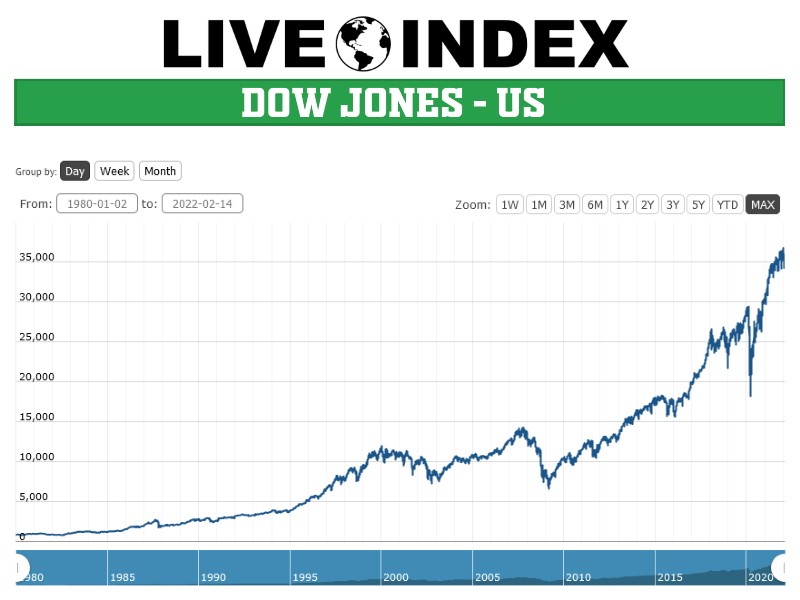
Perhaps the most valuable lesson from the Dow’s century-plus history is the power of a long-term perspective. Despite numerous recessions, market crashes, and periods of economic turmoil, the Dow Jones Industrial Average has consistently trended upwards over the very long run. This historical trajectory underscores the wisdom of “time in the market” rather than “timing the market.”
For most investors, especially those saving for retirement or other long-term goals, strategies like dollar-cost averaging are highly effective. This involves investing a fixed amount of money at regular intervals (e.g., monthly) regardless of market conditions. When the Dow (or the broader market) is down, your fixed investment buys more shares; when it’s up, it buys fewer. Over time, this strategy averages out your purchase price, reduces the impact of short-term volatility, and allows you to capitalize on the market’s long-term growth.
Looking Ahead: What to Watch For
To stay ahead of the curve and make informed decisions, investors should always keep an eye on upcoming events and trends that are likely to influence the Dow and the broader market.
Upcoming Economic Releases
The economic calendar is a predictable rhythm that influences market sentiment. Key releases to monitor include:
- Inflation reports: Consumer Price Index (CPI), Producer Price Index (PPI).
- Central Bank Announcements: Federal Reserve meetings, interest rate decisions, and accompanying statements or press conferences.
- Employment Reports: Non-Farm Payrolls, unemployment rate.
- GDP Revisions: Final estimates of economic growth.
- Retail Sales Data: Insights into consumer spending.
These releases can often cause immediate market reactions, providing clues about the economic trajectory and potential future actions by central banks.
Corporate Reporting Seasons
Approximately four times a year, public companies release their quarterly earnings reports. These periods, typically a few weeks after the end of each quarter (January, April, July, October), are highly active for the market. Investors watch not just the reported earnings per share (EPS) and revenue, but also the companies’ forward guidance, which gives an indication of their expected performance in upcoming quarters. Strong guidance can fuel rallies, while weak guidance can lead to sell-offs, particularly for key Dow components.
Global Developments and Policy Changes
The interconnectedness of the global economy means that significant developments anywhere in the world can ripple through U.S. markets. Key areas to watch include:
- Geopolitical hotspots: Ongoing conflicts, political elections in major global powers.
- International trade policy: Developments in trade agreements, tariffs, or disputes.
- Major commodity prices: Fluctuations in oil, natural gas, or critical metal prices can impact energy, manufacturing, and transportation sectors.
- Technological advancements: Breakthroughs in AI, biotechnology, or renewable energy can create new opportunities or disrupt existing industries, affecting the competitive landscape for Dow companies.
- Environmental and Social Governance (ESG) trends: Increasing focus on sustainability and ethical practices can influence investment flows and corporate valuations.
By staying informed about these factors, investors can develop a more nuanced understanding of “how the Dow is today” and, more importantly, “how the Dow might be tomorrow,” allowing them to align their investment strategies with an evolving economic and market landscape. The Dow, while a historical icon, is a dynamic indicator, and appreciating its complexity is key to navigating the world of money.
aViewFromTheCave is a participant in the Amazon Services LLC Associates Program, an affiliate advertising program designed to provide a means for sites to earn advertising fees by advertising and linking to Amazon.com. Amazon, the Amazon logo, AmazonSupply, and the AmazonSupply logo are trademarks of Amazon.com, Inc. or its affiliates. As an Amazon Associate we earn affiliate commissions from qualifying purchases.