
The question “How’s the Dow doing?” is perhaps the most frequently asked query in the world of finance. Whether it is shouted across a trading floor, discussed over a morning coffee, or typed into a search engine during a lunch break, the status of the Dow Jones Industrial Average (DJIA) serves as the primary pulse check for the American economy. While professional investors often pivot toward more complex indices like the S&P 500 or the Nasdaq, the Dow remains the iconic “Main Street” barometer, representing thirty of the most significant, blue-chip companies in the United States.
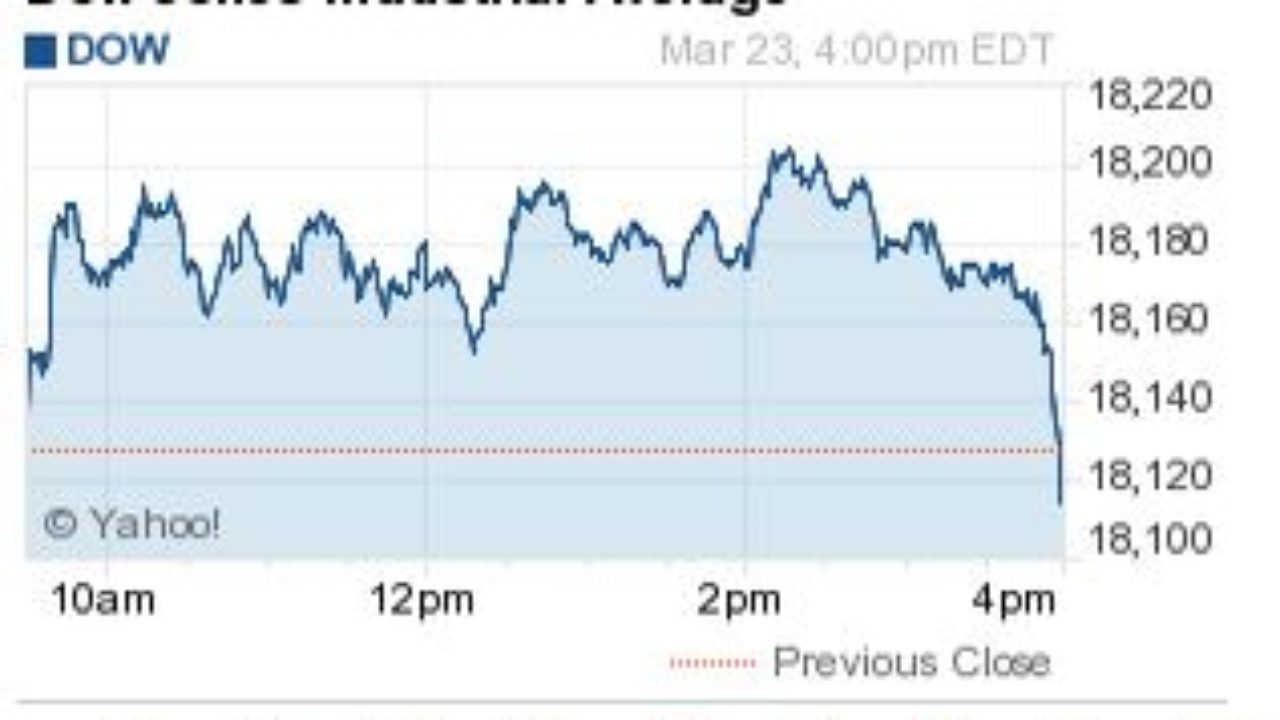
To understand how the Dow is doing today requires more than just looking at a green or red number on a screen. It requires a deep dive into the underlying economic catalysts, the structural methodology of the index, and the broader sentiment governing the global markets.
Understanding the Pulse: What “How’s the Dow Doing” Really Means
When we ask about the Dow, we are asking about the health of a price-weighted index that has existed since 1896. Unlike modern indices that track market capitalization, the Dow is unique—and occasionally controversial—because of how it is calculated.
Defining the Dow Jones Industrial Average
The Dow Jones Industrial Average is a curated list of 30 prominent companies listed on stock exchanges in the United States. It is not an “average” in the traditional sense of adding thirty prices and dividing by thirty; instead, it uses the “Dow Divisor,” a figure that accounts for stock splits, dividends, and other corporate actions to ensure continuity. The companies included are meant to represent the broad health of the U.S. industrial and commercial landscape, ranging from tech giants like Microsoft and Apple to retail staples like Walmart and Home Depot.
The Price-Weighted Paradox
Because the Dow is price-weighted, a company with a higher stock price has a much greater impact on the index’s daily movement than a company with a lower stock price, regardless of their actual company size. For instance, a 1% move in a $500 stock affects the Dow significantly more than a 1% move in a $50 stock. This quirk means that when we ask how the Dow is doing, we are often seeing the reflection of a handful of high-priced “heavy hitters.” Understanding this distinction is crucial for any investor trying to gauge if the “market” is actually moving or if just a few specific stocks are driving the narrative.
Market Catalysts: What is Driving the Dow Today?
The performance of the Dow is rarely the result of a single event. Instead, it is the culmination of various macroeconomic forces that influence the “Big Thirty.” In the current financial climate, three specific factors are dictating the index’s trajectory.
Monetary Policy and the Federal Reserve
The single most influential factor in how the Dow is doing today is the Federal Reserve’s stance on interest rates. Because the Dow is comprised of established, capital-intensive companies, the cost of borrowing is a critical variable for their bottom lines. When the Fed signals a “hawkish” stance (maintaining or raising high interest rates to fight inflation), the Dow often reacts with volatility. Conversely, the “dovish” pivot—the anticipation of rate cuts—tends to send the Dow to record highs. Investors watch the Federal Open Market Committee (FOMC) meetings with bated breath, as the “higher for longer” narrative directly impacts the valuation models of blue-chip stocks.
Corporate Earnings and Blue-Chip Stability
While the S&P 500 is often driven by growth-oriented tech stocks, the Dow is the land of the “Value” stock. Consequently, the Dow’s performance is heavily tied to quarterly earnings reports. When we analyze how the Dow is doing, we are looking at the operational efficiency of companies like Caterpillar, Boeing, and Goldman Sachs. In periods of economic uncertainty, the Dow often outperforms other indices because its components are “cash cows”—mature companies with deep pockets and consistent dividend payouts. If these companies report strong margins and robust guidance, the Dow remains resilient even when more speculative sectors of the market are failing.
Geopolitical Influences and Global Trade
The Dow is inherently international. While the companies are American, their footprints are global. Supply chain disruptions in Asia, conflicts in Eastern Europe, or trade tensions with major partners can immediately dampen the Dow’s performance. For industrial giants like 3M or Dow Inc., global trade fluidity is the lifeblood of their business. Therefore, any shift in the geopolitical landscape that threatens the flow of goods or increases the cost of energy will inevitably show up in the Dow’s daily percentage change.

Deconstructing the Components: Which Sectors are Leading and Lagging?
To truly answer how the Dow is doing, one must look “under the hood.” The 30 stocks are not a monolith; they represent various sectors that often move in opposite directions.
Technology and Financials: The Twin Engines
In recent years, the Dow has become increasingly tech-heavy with the inclusion of Salesforce and the continued dominance of Microsoft and Apple. When tech sentiment is high—driven perhaps by breakthroughs in Artificial Intelligence—these components lift the entire index. Simultaneously, the financial sector, represented by JPMorgan Chase and American Express, plays a massive role. In a rising interest rate environment, banks often see expanded net interest margins, which can propel the Dow upward even if other sectors are struggling.
Healthcare and Consumer Staples: The Defensive Play
When the Dow is “doing well” during a broader market downturn, it is usually because of its defensive components. Companies like UnitedHealth Group, Johnson & Johnson, and Procter & Gamble provide essential services and products that consumers buy regardless of the economy. If the Dow is holding steady while the Nasdaq is crashing, it is a signal that investors are rotating into “safety.” This rotation is a classic hallmark of the Dow’s role in a balanced financial ecosystem; it acts as a stabilizer for portfolios during turbulent times.
Beyond the Number: How to Use Dow Insights for Your Portfolio
For the individual investor, knowing the current level of the Dow is only useful if it informs a broader investment strategy. The Dow should be viewed as a signal, not the entire story.
The Difference Between the Dow, the S&P 500, and the Nasdaq
Investors should avoid the trap of looking only at the Dow. Because it only contains 30 stocks, it can sometimes provide a skewed view of reality. For example, if one major component (like Boeing) has a specific corporate crisis, it can drag the Dow down even if the rest of the U.S. economy is booming. Comparing the Dow’s performance against the S&P 500 (which tracks 500 large companies) and the Nasdaq (which is tech-heavy) provides a more holistic view of “how the money is moving.” If the Dow is rising while the Nasdaq is falling, the market is favoring value and stability over growth.
Long-Term Investing vs. Short-Term Volatility
The daily fluctuations of the Dow—the “noise”—can be distracting. For those focused on personal finance and long-term wealth building, the Dow’s long-term chart is far more important than its 24-hour performance. Historically, the Dow has an upward bias, reflecting the long-term growth of the American and global economies. Successful investors use “How’s the Dow doing?” as a point of entry for rebalancing their portfolios rather than a reason for emotional selling. When the Dow experiences a significant “correction” (a drop of 10% or more), it has historically presented a buying opportunity for high-quality, dividend-paying blue chips.
The Road Ahead: Navigating the Dow in an Uncertain Economy
As we look toward the future, the question of “How’s the Dow doing?” will likely be answered by how well these 30 companies adapt to a rapidly changing technological and environmental landscape. The transition to green energy, the integration of AI into legacy industrial processes, and the navigation of a post-globalization trade world are the challenges of the next decade.
Investors should remain vigilant but optimistic. The Dow Jones Industrial Average has survived depressions, world wars, and pandemics. Its ability to swap out underperforming companies for rising stars ensures that it remains relevant. When you check the Dow tomorrow, remember that you aren’t just looking at a number; you are looking at the aggregated successes, failures, and hopes of the largest engines of capitalism.
In conclusion, “How’s the Dow doing?” is a question about the current state of corporate America. Currently, it is caught in a tug-of-war between high-interest rates and resilient consumer spending. However, for the disciplined investor, the Dow remains the ultimate testament to the power of compounding and the enduring strength of established enterprise. Whether it is up 200 points or down 500, the Dow continues to do what it does best: providing a snapshot of history in the making.
aViewFromTheCave is a participant in the Amazon Services LLC Associates Program, an affiliate advertising program designed to provide a means for sites to earn advertising fees by advertising and linking to Amazon.com. Amazon, the Amazon logo, AmazonSupply, and the AmazonSupply logo are trademarks of Amazon.com, Inc. or its affiliates. As an Amazon Associate we earn affiliate commissions from qualifying purchases.