
Social Security stands as a cornerstone of financial security for millions of Americans, providing a safety net against the uncertainties of retirement, disability, and the loss of a primary wage earner. Yet, for many, the intricate details of “how much is Social Security” remain a perplexing question. It’s not a static figure but rather a highly personalized calculation, influenced by a multitude of factors ranging from your work history to your claiming age. Understanding these dynamics is crucial for effective financial planning, allowing you to accurately estimate your future income stream and integrate it into a comprehensive retirement strategy.
This deep dive aims to demystify Social Security benefits, guiding you through the calculation processes, the critical decisions that impact your payout, and strategies to maximize this vital component of your financial future. Whether you’re decades from retirement or nearing the age to claim, a clear understanding of your Social Security benefits is paramount to building a resilient financial plan.
Understanding the Fundamentals of Social Security Benefits
Before delving into the specifics of “how much,” it’s essential to grasp the foundational principles of Social Security. This federal program, established in 1935, is funded through payroll taxes (FICA contributions) paid by workers and employers. It’s designed to replace a portion of income when earnings stop or are reduced due to retirement, disability, or death.
What is Social Security? A Brief Overview
Social Security provides three primary types of benefits:
-
Retirement Benefits: The most common form, paid to eligible workers and their families when they reach retirement age.
-
Disability Benefits: Provided to workers who are unable to engage in substantial gainful activity due to a severe medical condition expected to last at least a year or result in death.
-
Survivor Benefits: Paid to eligible family members (spouses, children, parents) of a deceased worker who earned enough Social Security credits.
The system operates on a “pay-as-you-go” basis, meaning today’s workers pay for today’s retirees and beneficiaries. Any surplus is held in trust funds.
Eligibility Requirements: Who Qualifies?
To qualify for Social Security benefits, you must earn “credits” by working and paying Social Security taxes. In 2024, you earn one credit for every $1,730 in earnings, up to a maximum of four credits per year. Most people need 40 credits (10 years of work) to be eligible for retirement benefits. The number of credits required for disability and survivor benefits can vary based on age and other factors.
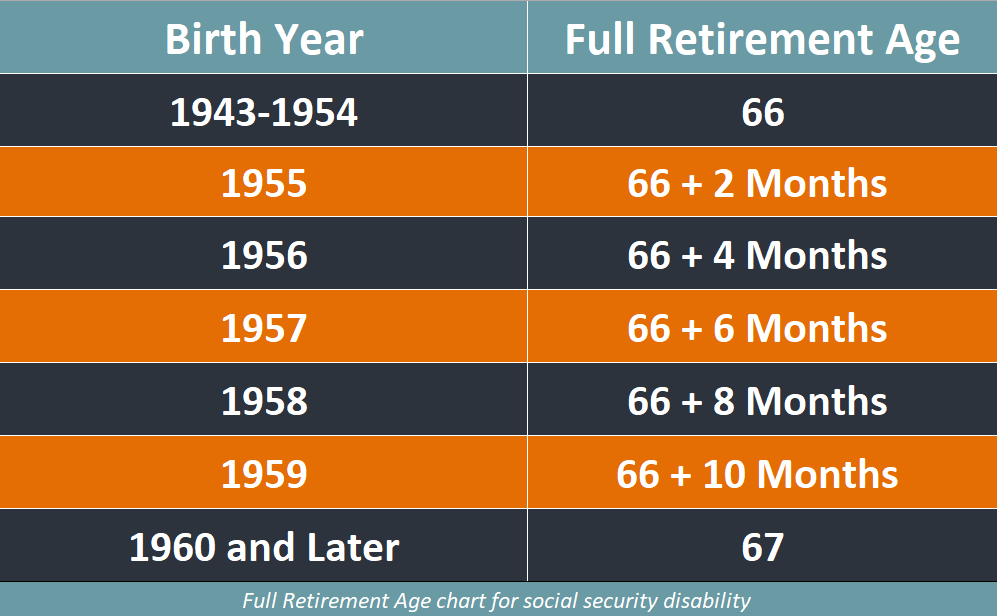
Beyond work credits, age is a critical factor for retirement benefits. While you can start receiving benefits as early as age 62, your “Full Retirement Age” (FRA) is the age at which you are entitled to receive 100% of your primary insurance amount (PIA). FRA varies based on your birth year, ranging from 66 for those born between 1943 and 1954, gradually increasing to 67 for those born in 1960 or later.
The Calculation Conundrum: How Your Benefit is Determined
The amount of your Social Security benefit is not arbitrarily assigned; it’s the result of a complex calculation primarily based on your average indexed monthly earnings (AIME). The process involves several steps:
-
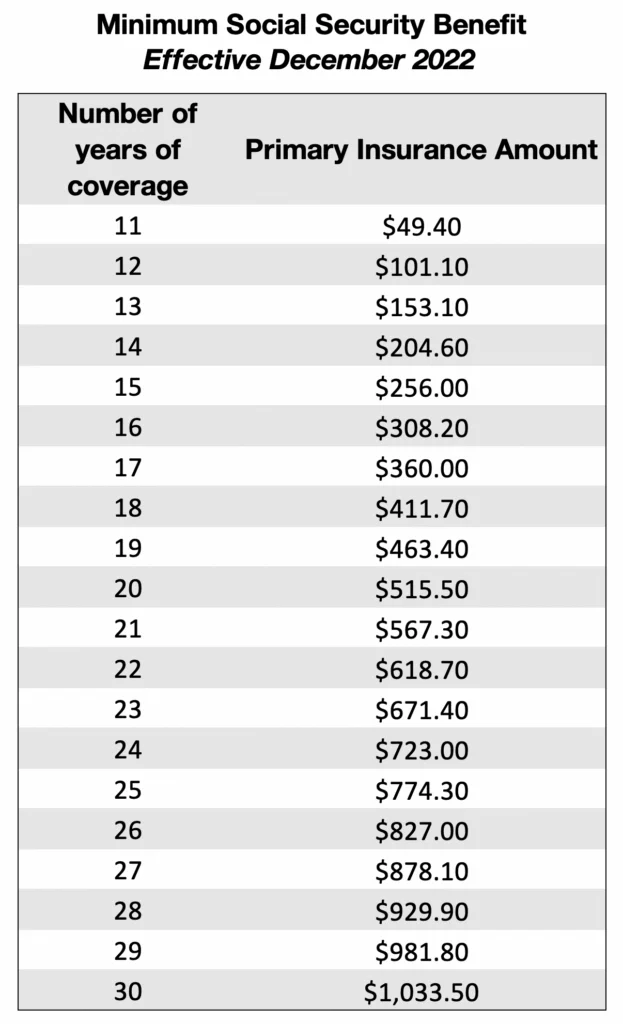
Earnings History: The Social Security Administration (SSA) maintains a record of your earnings throughout your working life. They take your highest 35 years of earnings, indexing them to account for changes in average wages over time. If you have fewer than 35 years of earnings, zeros are entered for the missing years, which will reduce your overall average.
-
Average Indexed Monthly Earnings (AIME): Your indexed annual earnings are summed and then divided by the number of months in those 35 years to arrive at your AIME.
-
Primary Insurance Amount (PIA): Your AIME is then run through a formula that applies “bend points.” These bend points are dollar amounts that delineate different percentages of your AIME that will be included in your PIA. The formula is progressive, meaning it replaces a higher percentage of earnings for lower-income workers than for higher-income workers. The result is your PIA, which is the amount you would receive if you claim benefits precisely at your Full Retirement Age (FRA).
It’s a common misconception that Social Security replaces a fixed percentage of pre-retirement income. While it aims to replace about 40% of average lifetime earnings for a typical worker, this figure varies significantly based on individual earnings history and claiming age.
Factors Influencing Your Social Security Payout
While the PIA forms the baseline, several critical decisions and life events can significantly alter the actual monthly check you receive. Understanding these influencing factors is key to optimizing your Social Security income.
Your Earning History: The Foundation of Your Benefit
As established, your 35 highest-earning years are the bedrock of your Social Security calculation. Years with low or no earnings can substantially drag down your average, leading to a lower PIA. This underscores the importance of consistent employment and aiming for the highest possible earnings, particularly during your peak earning years. Self-employment income is also included if you pay self-employment taxes. The annual Social Security earnings limit (the maximum amount of earnings subject to Social Security tax) also plays a role, as earnings above this limit are not taxed or counted toward your benefit calculation.
Age at Claiming: A Critical Decision Point
This is perhaps the most impactful factor within your control.
-
Early Claiming (Age 62 to FRA): You can start receiving benefits as early as age 62, but your monthly payment will be permanently reduced. The reduction is roughly 5/9 of 1% for each month before FRA, up to 36 months, and 5/12 of 1% for each additional month. Claiming at 62 can result in a reduction of up to 30% from your PIA.
-
Claiming at Full Retirement Age (FRA): You receive 100% of your PIA.
-
Delayed Claiming (FRA to Age 70): For each month you delay claiming past your FRA, up to age 70, your benefit increases by a certain percentage, known as “Delayed Retirement Credits” (DRCs). This amounts to an 8% annual increase (or 2/3 of 1% per month) for those born in 1943 or later. Delaying until age 70 can increase your monthly benefit by up to 32% compared to claiming at FRA.
The choice of when to claim involves weighing the immediate need for income against the desire for a larger monthly payment over your lifetime. Health, other income sources, and life expectancy are all crucial considerations.
Spousal and Survivor Benefits: Leveraging Family Provisions
Social Security is not just for individual workers; it extends benefits to certain family members based on the worker’s earnings record.
-
Spousal Benefits: If your spouse is eligible for their own retirement benefits, they may also be eligible for spousal benefits based on your record. A spouse can receive up to 50% of your PIA, provided they claim at their own FRA. If they claim earlier, their spousal benefit will also be reduced. They generally must be at least age 62 or caring for your qualifying child.
-
Divorced Spousal Benefits: An ex-spouse may also be eligible for spousal benefits on your record if the marriage lasted at least 10 years, they are not remarried, and they are at least age 62.
-
Survivor Benefits: When a worker dies, certain family members can receive survivor benefits. These can include a widow(er), divorced widow(er), children under 18 (or 19 if still in high school), or even dependent parents. The amount varies but can be up to 100% of the deceased worker’s PIA for a widow(er) claiming at their FRA.
These provisions highlight the importance of understanding how your Social Security decisions can impact your family’s financial well-being.
Impact of Working While Receiving Benefits
If you claim Social Security benefits before your Full Retirement Age and continue to work, your benefits may be reduced if your earnings exceed certain annual limits. This is known as the “earnings test.”
-
Before FRA: For every $2 you earn above the annual limit ($22,320 in 2024), $1 will be deducted from your benefits.
-
In the Year You Reach FRA: A different, higher limit applies ($59,520 in 2024), and for every $3 you earn above this limit, $1 will be deducted from your benefits. This applies only to earnings before the month you reach FRA.
-
At or After FRA: Once you reach your Full Retirement Age, the earnings test no longer applies, and you can earn any amount without your Social Security benefits being reduced.
Any benefits withheld due to the earnings test are not permanently lost; they are used to increase your future monthly benefit amount when you reach FRA.
Estimating Your Future Social Security Income

Given the complexity, how can you get a reliable estimate of your future Social Security income? Fortunately, the SSA provides user-friendly tools designed to help you project your benefits.
Utilizing the Social Security Administration (SSA) Tools
The most accurate way to estimate your benefits is through the SSA itself:
-
My Social Security Account: This is an indispensable tool. By creating a free, secure online account at www.ssa.gov/myaccount, you can access your personalized Social Security Statement. This statement provides a detailed record of your earnings history, estimated benefits at different claiming ages (62, FRA, 70), and estimates for disability and survivor benefits. It’s crucial to review your earnings history periodically to ensure accuracy.
-
Online Benefit Estimators: The SSA website also offers various benefit calculators that allow you to plug in different scenarios (e.g., future earnings projections, different claiming ages) to see how they impact your estimated benefit.
Regularly checking your “My Social Security” account is a proactive step in managing your financial future, allowing you to catch any discrepancies in your earnings record and make informed decisions.
Professional Guidance: When to Seek an Advisor
While SSA tools are excellent, a financial advisor specializing in retirement planning can provide invaluable insights, especially for complex situations. They can help you:
-
Integrate Social Security into your overall financial plan: See how it fits with your 401(k)s, IRAs, pensions, and other savings.
-
Analyze optimal claiming strategies: For couples, this can involve intricate calculations to maximize combined lifetime benefits.
-
Understand taxation of benefits: A portion of your Social Security benefits may be taxable depending on your “provisional income.”
-
Plan for potential policy changes: Advisors stay abreast of legislative discussions that could impact future benefits.
For a holistic approach, especially as retirement approaches, consulting a qualified professional is often a wise investment.
Beyond Social Security: Integrating with Other Retirement Income
It’s vital to remember that Social Security is designed to be a component of your retirement income, not the sole source. On average, it replaces only about 40% of pre-retirement income. To maintain your desired lifestyle in retirement, you’ll need to integrate your estimated Social Security benefits with other income streams:
-
Personal Savings: 401(k)s, IRAs, Roth IRAs, brokerage accounts.
-
Pensions: If you are fortunate enough to have one.
-
Other Investments: Real estate, annuities, etc.
-
Part-time Work: Many retirees choose to work part-time to supplement their income and stay engaged.
A robust retirement plan considers all these elements, ensuring a diversified and sustainable income stream for your golden years.
Maximizing Your Social Security Benefits
Understanding the rules is one thing; strategically applying them to maximize your benefits is another. This requires careful consideration of your personal circumstances, health, and financial goals.
Strategic Claiming Ages: A Deep Dive
The decision of when to claim is highly personal.
-
The “Break-Even” Analysis: While claiming early means more checks upfront, claiming later means larger checks for life. A “break-even” analysis can help determine at what age the cumulative benefits from delaying would surpass the cumulative benefits from claiming early. This point is often in your late 70s or early 80s.
-
Health and Longevity: If you expect to have a shorter-than-average life expectancy, claiming earlier might make sense to receive benefits for more years. Conversely, if you have excellent health and a family history of longevity, delaying until 70 could significantly increase your lifetime income.
-
Other Income Needs: If you have sufficient other retirement savings or a pension, you might be able to afford to delay claiming Social Security, allowing your benefits to grow. If you have immediate financial needs, claiming early might be your only option.
There’s no single “best” age to claim; it’s about finding the optimal strategy for your unique situation.
Coordinating with Your Spouse: Joint Claiming Strategies
For married couples, the claiming decision becomes even more intricate, offering opportunities for strategic coordination. While some sophisticated strategies like “file and suspend” have been phased out, couples can still maximize their combined lifetime benefits.
-
Higher Earner Delays: Often, the strategy involves the higher-earning spouse delaying claiming until age 70 to maximize their benefit, which will also typically lead to a higher survivor benefit for the surviving spouse.
-
Lower Earner Claims Earlier: The lower-earning spouse might claim their benefits earlier (even at 62) if their own benefit is relatively low, or if they qualify for a higher spousal benefit based on the higher earner’s record.
-
Spousal Maximums: A spouse’s benefit is capped at 50% of the primary earner’s PIA. If both spouses have their own significant earning records, they might each claim on their own record. An advisor can help navigate these options to ensure the couple receives the highest possible combined lifetime income.
Addressing Gaps in Earning History
If you have years with low or no earnings (e.g., due to childcare, education, or unemployment), these “zero” years in your 35-year average can reduce your PIA.
-
Working Longer: If you are nearing retirement and have fewer than 35 years of substantial earnings, working a few extra years could replace some of those zero-earning years with higher figures, thereby increasing your average.
-
Continued Earnings After Claiming: Even if you start receiving benefits, continued earnings above your previous lowest 35 years can incrementally increase your benefit amount, as the SSA will automatically substitute higher earnings for lower ones in your record.
Every year of higher earnings can potentially boost your overall Social Security benefit.
The Future of Social Security and Financial Planning
Social Security has been a bedrock for generations, but discussions about its long-term solvency often raise questions. Understanding these broader contexts is part of comprehensive financial planning.
Understanding Program Solvency and Trust Funds
The Social Security program faces long-term financial challenges due to demographic shifts, specifically a declining birth rate and increasing life expectancy, meaning fewer workers are paying into the system relative to the number of beneficiaries. The Social Security Trust Funds are projected to be able to pay 100% of promised benefits until the mid-2030s. After that, without Congressional action, the program would be able to pay about 80% of scheduled benefits.
It’s important to note that this does not mean Social Security will run out of money. It means the system may only be able to pay a reduced percentage of benefits unless legislative changes are made (e.g., increasing the retirement age, raising the payroll tax rate, adjusting benefit formulas, or means-testing benefits). While these discussions can be unsettling, policymakers have historically found ways to adjust the system, and it is highly likely that Social Security will continue to be a vital source of retirement income, albeit potentially with some modifications.
Integrating Social Security into Your Holistic Financial Plan
Given the potential for future adjustments, a prudent financial plan treats Social Security as a crucial, but not the sole, component of retirement income.
-
Diversification: Do not rely solely on Social Security. Diversify your retirement savings across various vehicles (401k, IRA, personal investments) to mitigate risks.
-
Conservative Estimates: When projecting future income, it might be wise to use slightly more conservative estimates for Social Security benefits, accounting for potential future reductions.
-
Flexibility: Build flexibility into your retirement plan to adapt to changes in Social Security policy or your personal financial situation.
Staying Informed: Keeping Up with Policy Changes
The landscape of Social Security is not static. Annual cost-of-living adjustments (COLAs), changes in earnings limits, and legislative discussions can all impact your benefits.
-
Official Sources: Regularly check the SSA website (www.ssa.gov) for official updates and news.
-
Financial News: Follow reputable financial news sources that cover Social Security policy debates and reforms.
-
Professional Advice: Your financial advisor should keep you informed about relevant changes.
In conclusion, “how much is Social Security” is a complex but answerable question, unique to each individual. By understanding the calculation methods, critically evaluating the factors that influence your payout, and utilizing available tools and expert advice, you can gain clarity on your future benefits. This knowledge empowers you to make informed decisions, build a robust retirement plan that incorporates Social Security effectively, and ultimately secure a more confident financial future.
aViewFromTheCave is a participant in the Amazon Services LLC Associates Program, an affiliate advertising program designed to provide a means for sites to earn advertising fees by advertising and linking to Amazon.com. Amazon, the Amazon logo, AmazonSupply, and the AmazonSupply logo are trademarks of Amazon.com, Inc. or its affiliates. As an Amazon Associate we earn affiliate commissions from qualifying purchases.