
For most individuals, purchasing a home represents the single largest financial transaction and commitment of their lives. It’s not just about finding the right property; it’s equally, if not more, about securing the right financing. A seemingly small difference in interest rates or fees can translate into tens of thousands of dollars over the lifespan of a loan, profoundly impacting one’s financial well-being. Therefore, approaching the home loan comparison process with diligence, insight, and a clear understanding of the various components is not merely recommended – it is absolutely essential. This comprehensive guide aims to demystify the complexities of home loans, providing a structured approach to comparing offers and ultimately making an informed decision that aligns with your long-term financial goals.
The Imperative of Strategic Loan Comparison
Navigating the mortgage market can feel overwhelming due to the sheer volume of products, terms, and lenders. However, treating this phase with the necessary gravity can save you substantial amounts of money and future headaches. A strategic comparison goes beyond just looking at the advertised interest rate; it involves a holistic evaluation of all associated costs, terms, and conditions.
Understanding the Long-Term Financial Commitment
A typical home loan spans 15, 20, or even 30 years. Over such an extended period, the cumulative effect of interest payments can be staggering. A half-percent difference in interest rate on a $300,000, 30-year mortgage could mean paying an additional $30,000 to $50,000 over the life of the loan. This illustrates the critical importance of optimizing every aspect of your financing. Furthermore, your monthly mortgage payment directly impacts your disposable income and overall budget for decades. Choosing a loan that stretches your finances too thin can lead to financial stress and limit opportunities for saving or investing. Conversely, a well-structured loan can free up capital, allowing for greater financial flexibility and security.
Why Diligence Pays Off
The mortgage industry is competitive, with lenders eager to attract borrowers. This competition is beneficial for consumers, but it also necessitates careful scrutiny. Lenders often present their products in ways that highlight their strengths while potentially downplaying less attractive features or hidden costs. By being diligent, gathering multiple offers, and understanding how each component of a loan works, you empower yourself to negotiate better terms and avoid costly surprises. Proactive comparison not only secures a better deal but also builds confidence in your financial decisions, knowing that you have thoroughly explored your options.
Key Financial Metrics to Evaluate
To effectively compare home loan offers, you must first understand the fundamental financial metrics that define each product. These metrics form the bedrock of your comparison strategy, allowing for an apples-to-apples assessment.
Interest Rates: Fixed vs. Variable
The interest rate is arguably the most publicized and understood component of a loan. It is the cost you pay to borrow money, expressed as a percentage of the principal.
-
Fixed-Rate Mortgages (FRM): The interest rate remains constant throughout the life of the loan. This provides predictability and stability in your monthly payments, making budgeting easier. It’s generally preferred in periods of rising interest rates.
-
Adjustable-Rate Mortgages (ARM): The interest rate is fixed for an initial period (e.g., 3, 5, 7, or 10 years) and then adjusts periodically based on a predetermined index plus a margin. ARMs typically offer lower initial rates than FRMs, which can be attractive for those planning to sell or refinance before the fixed period ends. However, the risk of higher payments if rates rise falls on the borrower.
Annual Percentage Rate (APR) vs. Interest Rate
While the interest rate reflects the cost of borrowing the principal amount, the Annual Percentage Rate (APR) provides a more comprehensive measure of the total cost of a loan. The APR includes the interest rate, plus most of the fees charged by the lender (such as origination fees, discount points, and some closing costs) spread out over the loan term. When comparing loans, the APR is often a better metric than the interest rate alone, as it gives a truer picture of the overall expense. A loan with a lower interest rate but higher fees might end up having a higher APR than a loan with a slightly higher interest rate but fewer fees.
Loan Term Lengths and Their Implications
The loan term is the period over which you agree to repay the loan. Common terms are 15, 20, and 30 years.
-
Shorter Terms (e.g., 15 years): Typically come with lower interest rates and allow you to pay off your home much faster, saving you significant money in total interest paid. However, the monthly payments will be higher.
-
Longer Terms (e.g., 30 years): Result in lower monthly payments, making homeownership more affordable on a month-to-month basis. The trade-off is that you’ll pay more interest over the life of the loan. Your choice should balance your desire for lower long-term cost savings with your need for manageable monthly payments.
Down Payment Requirements and Loan-to-Value (LTV) Ratios
The down payment is the initial sum of money you pay towards the home purchase, reducing the amount you need to borrow. The Loan-to-Value (LTV) ratio is the amount of your loan compared to the value of your home, expressed as a percentage. A lower LTV (meaning a larger down payment) often translates to better interest rates because it signifies less risk for the lender. Additionally, putting down less than 20% on a conventional loan usually requires you to pay Private Mortgage Insurance (PMI), an added monthly cost that protects the lender in case you default.
Origination Fees and Closing Costs
Beyond interest, several fees are associated with obtaining a mortgage.
-
Origination Fees: Charged by the lender for processing the loan application, underwriting, and funding the loan. These are typically expressed as a percentage of the loan amount (e.g., 1%).
-
Closing Costs: A broader category encompassing various fees paid at the close of the transaction. These can include appraisal fees, credit report fees, title insurance, attorney fees, recording fees, and escrow fees. Closing costs typically range from 2% to 5% of the loan amount and can be substantial. Some lenders may offer “no closing cost” loans, but often these costs are simply rolled into a higher interest rate, so careful calculation is needed.
Types of Home Loans and Their Suitability
Understanding the different categories of home loans is crucial, as each caters to specific borrower profiles and financial situations. Choosing the right type of loan can significantly impact your eligibility, down payment requirements, and ongoing costs.
Conventional Loans
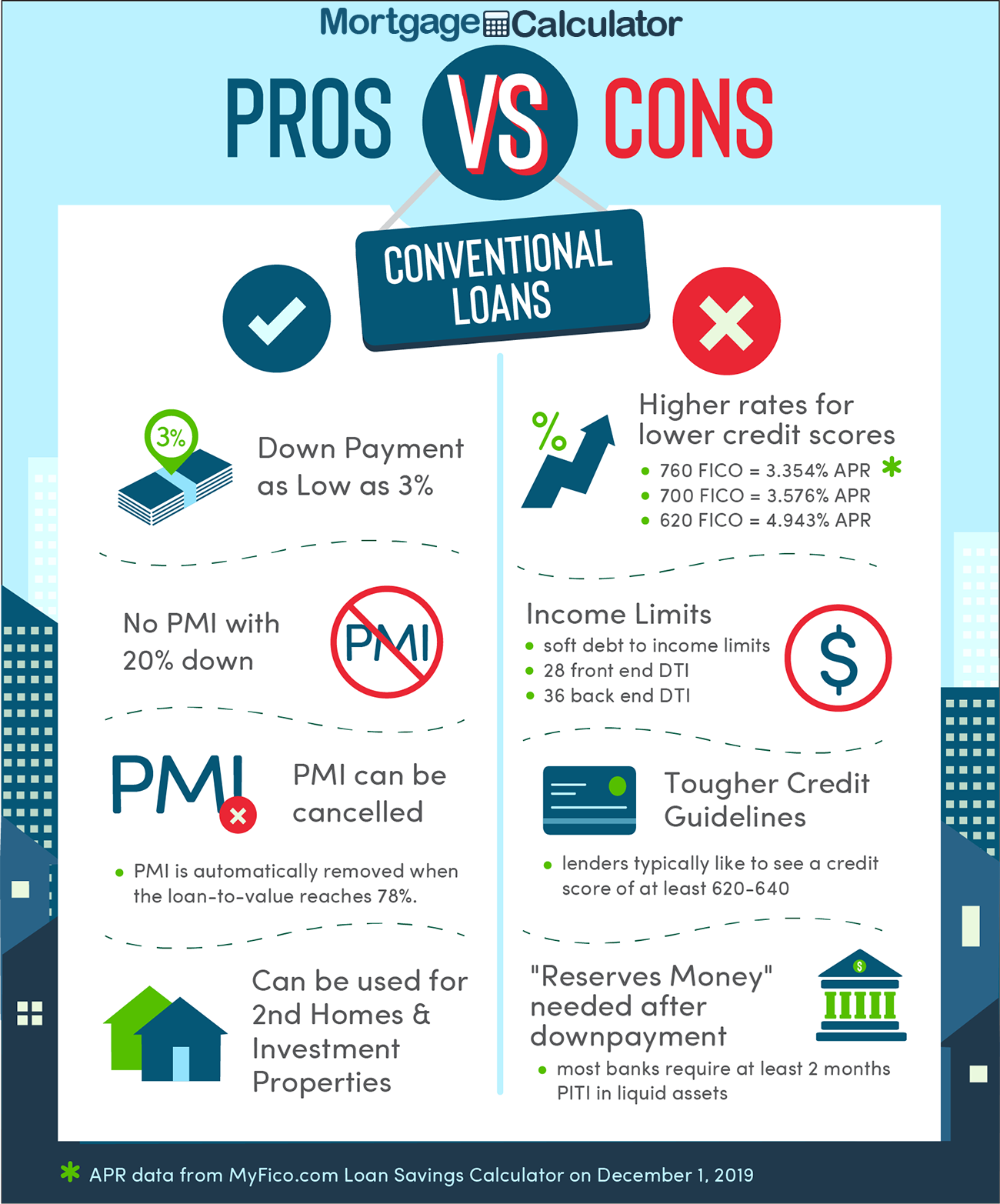
Conventional loans are not insured or guaranteed by the government. They are the most common type of mortgage and adhere to guidelines set by Fannie Mae and Freddie Mac. These loans typically require a credit score of 620 or higher, and generally, the higher your score, the better your interest rate. Down payments can be as low as 3%, but if you put down less than 20%, you will likely need to pay PMI. Conventional loans are suitable for borrowers with good credit and a stable financial history.
Government-Backed Loans (FHA, VA, USDA)
These loans are designed to make homeownership more accessible to specific groups of borrowers.
-
FHA Loans: Insured by the Federal Housing Administration, these loans are popular among first-time homebuyers and those with lower credit scores (as low as 580 with a 3.5% down payment). While offering more lenient credit requirements, FHA loans require both upfront and annual mortgage insurance premiums (MIP), which add to the overall cost.
-
VA Loans: Guaranteed by the U.S. Department of Veterans Affairs, these are exclusive to eligible service members, veterans, and surviving spouses. VA loans are highly advantageous as they typically require no down payment and do not require mortgage insurance, even with 0% down.
-
USDA Loans: Backed by the U.S. Department of Agriculture, these loans are designed for low to moderate-income borrowers purchasing homes in eligible rural areas. They also offer 0% down payment options for qualified applicants.
Jumbo Loans
Jumbo loans are for properties that exceed the conventional loan limits set by Fannie Mae and Freddie Mac. These are typically used for high-value homes and often come with stricter underwriting requirements, including higher credit scores, larger down payments (often 20% or more), and more substantial reserve requirements. The interest rates on jumbo loans can sometimes be slightly higher or lower than conventional loans, depending on market conditions and the borrower’s financial profile.
Adjustable-Rate Mortgages (ARMs) Explained
As mentioned earlier, ARMs have an interest rate that changes periodically after an initial fixed-rate period. They are often identified by two numbers, such as 5/1 ARM or 7/1 ARM. The first number indicates the number of years the initial interest rate is fixed, and the second number indicates how frequently the rate will adjust after the fixed period (e.g., once a year). ARMs can be beneficial for borrowers who anticipate selling or refinancing before the fixed period ends or those who expect their income to increase significantly to absorb potential rate hikes. However, they carry the risk of increased monthly payments if interest rates rise.
Beyond the Numbers: Lender Considerations
While financial metrics are paramount, the quality of the lender and their processes can significantly influence your borrowing experience. It’s not just about the cheapest rate, but also about the reliability and transparency of the institution you partner with.
Lender Reputation and Customer Service
A loan is a long-term relationship, and the quality of your lender can impact your peace of mind. Researching lender reviews, checking their ratings with consumer protection agencies, and asking for referrals can provide insight into their customer service. A lender with a reputation for clear communication, efficiency, and helpfulness can make the entire process smoother, especially when navigating the complexities of closing. Conversely, a lender with poor customer service can lead to frustrations, delays, and potential miscommunications.
Prequalification vs. Pre-approval
These terms are often used interchangeably, but there’s a significant difference.
-
Prequalification: An estimate of how much you might be able to borrow, based on a brief review of your finances. It’s a casual assessment and not a commitment from the lender.
-
Pre-approval: A more thorough evaluation where the lender verifies your financial information (income, credit, assets) and commits to lending you a specific amount, subject to an appraisal of the property. A pre-approval letter strengthens your offer when you find a home, showing sellers you are a serious and qualified buyer. Always aim for pre-approval when you start seriously looking for a home.
Understanding Loan Servicing
Once your loan closes, it will be serviced by a company responsible for collecting your monthly payments, managing your escrow account (for taxes and insurance), and handling any inquiries. Sometimes, the original lender sells the servicing rights to another company. Understanding who will service your loan and their reputation for customer service can be important. Issues with loan servicers can create headaches down the line, so knowing who you’ll be dealing with is a valuable piece of information.
A Step-by-Step Comparison Process
With a foundational understanding of loan types, financial metrics, and lender considerations, you are ready to implement a structured comparison process. This systematic approach ensures you cover all bases and make the most informed decision.
Define Your Financial Comfort Zone
Before even looking at loan offers, honestly assess your financial situation. Determine how much you can comfortably afford for a monthly mortgage payment, factoring in property taxes, home insurance, potential PMI, and other homeownership costs (utilities, maintenance). Consider your existing debts, savings, and future financial goals. This personal budget will serve as your benchmark against all loan offers. It’s better to choose a loan that fits within your comfort zone than to stretch yourself thin for a slightly lower interest rate, as a higher monthly payment might restrict your lifestyle or ability to handle unexpected expenses.
Gather Multiple Loan Offers
Never settle for the first offer you receive. Contact at least three to five different lenders – including banks, credit unions, and mortgage brokers. Mortgage brokers can be particularly useful as they work with multiple lenders and can often shop for the best rates and terms on your behalf, potentially saving you time and effort. When requesting quotes, ensure each lender has the same information (loan amount, property type, down payment, credit score) so you can compare “apples to apples.” All lenders are required to provide a Loan Estimate form within three business days of receiving your application, which standardizes the information, making direct comparison easier.
Utilize Comparison Tools and Spreadsheets
Once you have multiple Loan Estimates, organize the information systematically. A simple spreadsheet can be invaluable for comparing different aspects side-by-side. Include columns for:
-
Interest Rate
-
APR
-
Loan Term
-
Origination Fees
-
Total Closing Costs
-
Monthly Principal & Interest Payment
-
Total estimated payments over the life of the loan
-
Lender fees, third-party fees, and pre-paid items
-
PMI/MIP (if applicable)
-
Lender contact information and notes
This visual comparison will quickly highlight the strengths and weaknesses of each offer. Pay close attention to the APR, as it includes most of the upfront costs.
Read the Fine Print and Ask Questions
The Loan Estimate is a great start, but details often hide in the fine print. Carefully review all disclosures provided by the lender. Don’t hesitate to ask questions about anything you don’t understand, no matter how minor it seems. Key questions might include:
-
Are there any prepayment penalties if I pay off the loan early?
-
What are the exact terms of the ARM adjustments (if applicable), including caps?
-
What is included in the escrow account, and how are adjustments handled?
-
Can any of the closing costs be negotiated or waived?
-
What happens if interest rates change before closing? (Locking in your rate is crucial)

Seek Professional Guidance (Mortgage Brokers, Financial Advisors)
While this guide provides a solid framework, the complexity of home loans can still warrant professional assistance. A reputable mortgage broker can help you navigate the myriad of options, explain complex terms, and negotiate with lenders. A financial advisor can also provide an unbiased perspective, helping you integrate the home loan decision into your broader financial plan, ensuring it aligns with your long-term wealth-building goals and risk tolerance. Their expertise can be invaluable in identifying subtle advantages or disadvantages that an untrained eye might miss.
Comparing home loans is a meticulous process, but one that offers significant financial rewards for your efforts. By understanding the key metrics, considering different loan types, evaluating lender quality, and following a structured comparison process, you empower yourself to make a decision that supports your financial health for decades to come. Armed with knowledge and diligence, you can confidently secure the best possible home loan, turning a complex transaction into a cornerstone of your financial stability.
aViewFromTheCave is a participant in the Amazon Services LLC Associates Program, an affiliate advertising program designed to provide a means for sites to earn advertising fees by advertising and linking to Amazon.com. Amazon, the Amazon logo, AmazonSupply, and the AmazonSupply logo are trademarks of Amazon.com, Inc. or its affiliates. As an Amazon Associate we earn affiliate commissions from qualifying purchases.