
In an increasingly digital world, Venmo has emerged as a cornerstone of peer-to-peer (P2P) payments, fundamentally changing how individuals send and receive money. What began as a simple solution for splitting dinner bills among friends has evolved into a robust financial technology platform, processing billions in transactions annually. Beyond its user-friendly interface and distinctive social feed, lies a sophisticated technological infrastructure that powers its seamless operations. This article delves into the intricate mechanisms and underlying technologies that make Venmo work, dissecting its core functionalities, security protocols, and architectural design from a purely technological perspective.

The Core Technological Infrastructure for P2P
At its heart, Venmo is an application engineered to facilitate the swift and secure transfer of funds between individuals. This seemingly simple function relies on a complex interplay of account management, transaction processing, and real-time data synchronization.
Account Architecture and Digital Wallets
Every Venmo user initiates their journey by creating a digital account, which serves as their personal financial hub within the platform. This account isn’t merely a profile; it’s a sophisticated digital wallet system designed to manage various funding sources and balances. When a user links external financial instruments—such as bank accounts via routing and account numbers, or debit/credit cards—Venmo’s backend technology performs a crucial set of operations. Instead of storing sensitive bank details directly on its primary servers, Venmo employs tokenization. This process replaces sensitive data with a unique, algorithmically generated string of characters (a “token”), which significantly reduces the risk if Venmo’s systems were ever breached. The digital wallet then maintains an internal balance, representing funds received directly from other Venmo users or transferred in from linked accounts. This balance is essentially a record within Venmo’s ledger system, updated in real-time as transactions occur. The architecture is built to segregate user data, ensuring that personal financial information is compartmentalized and accessible only through authorized channels, bolstering both security and privacy.
The Transaction Engine: Sending and Receiving Funds
The true marvel of Venmo lies in its transaction engine, which orchestrates the complex dance of sending and receiving money with remarkable efficiency. When a user initiates a payment, the app sends an encrypted request to Venmo’s backend servers. This request, containing sender, recipient, amount, and an optional memo, triggers a series of validations. The system first checks the sender’s available balance and linked funding sources. If the Venmo balance is insufficient, the system intelligently defaults to drawing funds from a primary linked bank account or debit card.
The actual movement of money from an external bank account to Venmo, or from Venmo to an external bank, typically leverages the Automated Clearing House (ACH) network in the United States. ACH is a batch-processing system for electronic funds transfers, which, while reliable, historically involves settlement times of 1-3 business days. However, Venmo has engineered its system to provide an instantaneous user experience even when underlying ACH transfers are still pending. This is achieved through a combination of credit risk management and provisional crediting: when you send money, your Venmo balance (or linked account) is debited immediately, and the recipient’s Venmo balance is credited instantly, allowing them to use the funds within Venmo without waiting for the ACH settlement. For transfers out of Venmo, users can opt for “Instant Transfer,” which utilizes real-time payment rails provided by partner banks or card networks (like Visa Direct or Mastercard Send), albeit often for a small fee, reflecting the cost of accessing these expedited payment services. The transaction engine is designed to handle immense volumes, employing robust database management systems and queuing mechanisms to ensure every transaction is processed accurately and promptly, even during peak usage.
Real-Time Notifications and Data Synchronization
A critical component of Venmo’s seamless user experience is its ability to provide real-time updates and maintain synchronized data across its platform. When a payment is sent or received, the system doesn’t just process the transaction; it immediately pushes notifications to both the sender and recipient’s devices. This relies on advanced push notification services (e.g., Apple Push Notification Service, Firebase Cloud Messaging) to deliver alerts almost instantaneously. Furthermore, Venmo’s backend ensures that account balances, transaction histories, and social feed updates are synchronized across all user sessions and devices in real-time. This synchronization is achieved through distributed databases and caching layers, which ensure data consistency and low latency. The underlying architecture is designed for high availability, meaning that even if one server or data center experiences an issue, others can seamlessly take over, preventing service interruptions and ensuring users always have access to their most current financial information. This constant synchronization is key to fostering trust and providing an uninterrupted flow of financial interaction.
Beyond Core P2P: Expanding the Ecosystem Through APIs and Integrations
Venmo’s evolution from a simple P2P app to a broader financial platform is largely attributable to its strategic use of Application Programming Interfaces (APIs) and third-party integrations, allowing it to extend its functionality into various aspects of commerce and finance.
Merchant Services and QR Code Technology
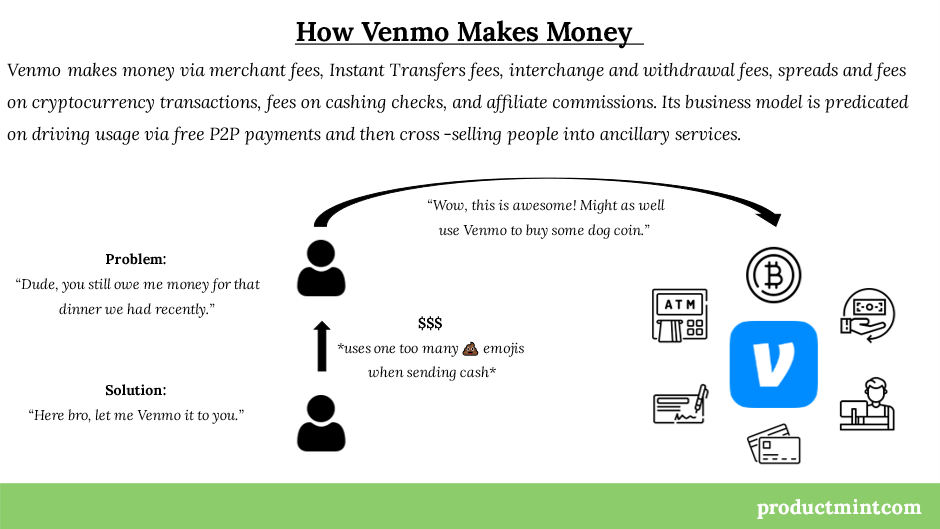
Recognizing the potential beyond friend-to-friend payments, Venmo developed robust merchant services, enabling businesses to accept Venmo as a payment method. This integration typically involves Venmo’s APIs connecting with point-of-sale (POS) systems or e-commerce platforms. For in-person transactions, Venmo heavily leverages QR code technology. When a business generates a unique Venmo QR code, it’s not just a static image; it often contains encrypted data linked to the merchant’s Venmo business profile and, for specific transactions, even pre-populated payment amounts. A user scanning this QR code with their Venmo app initiates a secure payment request, which then follows a similar transaction flow as P2P payments but routes funds to the business’s designated account. The backend systems manage the reconciliation of these payments, providing businesses with dashboards and reporting tools to track sales efficiently. This integration expands Venmo’s utility from social payments to a significant player in the digital commerce landscape, powered by precise API calls and secure data exchange protocols.
Integrating with Physical and Digital Commerce: Venmo Cards
To further bridge the gap between digital wallets and traditional commerce, Venmo introduced physical cards: the Venmo Debit Card and the Venmo Credit Card. These products are technologically sophisticated integrations with established payment networks. The Venmo Debit Card, for instance, is typically issued by a partner bank and leverages Mastercard’s debit network. When a user makes a purchase, the transaction request is routed through Mastercard to the issuing bank, which then interfaces with Venmo’s system. Venmo’s backend dynamically checks the user’s Venmo balance and, if necessary, pulls funds from linked bank accounts to cover the transaction in real-time. This requires extremely low-latency communication between Venmo’s servers and the banking infrastructure. The Venmo Credit Card, on the other hand, operates on a credit network (e.g., Visa) and integrates Venmo’s social features and rewards directly into a traditional credit product. Both cards extend Venmo’s reach into any establishment that accepts their respective network, effectively turning a user’s digital Venmo balance into a universally accepted payment method, all while maintaining the security and real-time updates characteristic of the Venmo ecosystem.
Blockchain Integration and Cryptocurrency Trading

In a move to embrace emerging financial technologies, Venmo has integrated cryptocurrency trading capabilities directly into its app. This integration is a prime example of a financial technology platform leveraging blockchain. When a user buys cryptocurrency (e.g., Bitcoin, Ethereum, Litecoin, Bitcoin Cash) through Venmo, the app doesn’t necessarily operate its own blockchain node for every transaction. Instead, it typically partners with specialized cryptocurrency custodians and exchange platforms via APIs. Venmo’s system handles the user interface, order placement, and the debiting of fiat currency (USD) from the user’s Venmo balance. The partner’s technology then executes the trade on the cryptocurrency market, manages the blockchain transaction, and holds the cryptocurrency securely on behalf of the user. Venmo’s role is to display the user’s crypto holdings and provide price feeds, which are pulled from market data providers. Selling crypto involves a reverse process, converting the crypto back to fiat currency and crediting the user’s Venmo balance. This integration showcases Venmo’s adaptability and its ability to incorporate complex, decentralized ledger technologies into a centralized, user-friendly application, managing the underlying complexities away from the end-user.
Digital Security and Trust Protocols
The financial nature of Venmo’s operations necessitates an unwavering commitment to digital security. The platform employs a multi-layered defense strategy, integrating advanced encryption, robust authentication, and intelligent fraud detection systems to protect user assets and data.
Advanced Encryption and Data Protection
Venmo safeguards sensitive user data through state-of-the-art encryption technologies. All data transmitted between a user’s device and Venmo’s servers is secured using Transport Layer Security (TLS) and Secure Sockets Layer (SSL) protocols. These cryptographic protocols encrypt the data in transit, preventing eavesdropping and tampering. Furthermore, sensitive financial information, such as bank account numbers and card details, is not stored directly on Venmo’s main transactional databases. Instead, as mentioned, it’s tokenized and stored in highly secure, isolated environments that adhere to industry standards like PCI DSS (Payment Card Industry Data Security Standard). Data at rest (i.e., stored on servers) is also encrypted, often using AES-256 (Advanced Encryption Standard with a 256-bit key) or similar strong algorithms. Regular security audits and penetration testing are conducted to identify and patch potential vulnerabilities, ensuring a proactive approach to data protection.
Multi-Factor Authentication (MFA) and Biometric Security
To prevent unauthorized account access, Venmo implements Multi-Factor Authentication (MFA). Beyond a username and password, MFA requires users to provide additional verification, such as a one-time code sent to a registered mobile number via SMS or generated by an authenticator app. This significantly elevates account security, as an attacker would need to compromise not only login credentials but also the second factor. Furthermore, Venmo integrates with device-level biometric security features, allowing users to secure their app with fingerprint recognition (e.g., Touch ID, Android Fingerprint) or facial recognition (e.g., Face ID). These biometric capabilities rely on the secure enclave processors within modern smartphones, which store biometric data locally and never transmit it to Venmo’s servers, offering an extremely convenient and robust layer of personal security.
AI-Driven Fraud Detection and Risk Management
Given the high volume and velocity of transactions, manual fraud detection is impractical. Venmo leverages advanced Artificial Intelligence (AI) and Machine Learning (ML) algorithms for real-time fraud detection and risk management. These systems continuously analyze vast datasets of transaction patterns, user behavior, and network anomalies. AI models are trained to identify suspicious activities that deviate from typical user patterns—for example, unusually large transfers, rapid succession of payments, or transactions to previously unknown recipients. When a potentially fraudulent transaction is flagged, the system can automatically block it, require additional verification from the user, or alert a human fraud analyst for investigation. This predictive analytics approach allows Venmo to proactively mitigate risks, prevent financial losses, and maintain a high level of trust in its platform, protecting both individual users and the integrity of the payment network.
User Experience Engineering and Scalability
The intuitive design and seamless performance of Venmo are not accidental; they are the result of meticulous user experience engineering and a scalable underlying architecture.
Intuitive UI/UX Design Principles
Venmo’s success owes much to its commitment to user-centric design (UI/UX). The application’s interface is characterized by its simplicity, clarity, and ease of navigation, which makes complex financial transactions feel effortless. Key design principles include:
- Minimalist Design: Reducing clutter and focusing on core functionalities.
- Clear Call-to-Actions: Guiding users intuitively through the payment process.
- Visual Feedback: Providing immediate confirmation of actions (e.g., payment sent animations).
- Accessibility: Ensuring the app is usable by a broad range of users, considering diverse needs.
- Mobile-First Approach: Optimizing the experience for smartphones, where the majority of interactions occur.
The development team continuously refines the UI/UX through A/B testing, user feedback analysis, and iterative design cycles, ensuring that new features integrate smoothly without disrupting the established user flow. This constant refinement based on user interaction data is critical to maintaining its lead in the competitive P2P payment space.
Cloud Infrastructure and Microservices Architecture
To handle its massive and ever-growing user base and transaction volume, Venmo relies on a highly scalable cloud infrastructure, typically leveraging leading providers like Amazon Web Services (AWS) or Google Cloud Platform (GCP). This allows Venmo to dynamically scale its computing resources up or down based on demand, ensuring high availability and performance even during peak times. A core component of this scalability is its microservices architecture. Instead of a monolithic application, Venmo’s functionalities are broken down into smaller, independent services (e.g., a service for user authentication, another for transaction processing, one for notifications). Each microservice can be developed, deployed, and scaled independently, which accelerates development cycles, improves fault isolation (an issue in one service doesn’t bring down the entire system), and optimizes resource utilization. This distributed architecture, combined with technologies like containerization (e.g., Docker, Kubernetes) for efficient deployment and management of these services, is fundamental to Venmo’s ability to process millions of transactions concurrently with minimal latency.
The Social Layer: Data Privacy and Customization
A distinctive feature of Venmo is its integrated social feed, which displays anonymized or public payment activities among friends. This social layer is powered by a robust data management system that balances user engagement with privacy controls. When a user makes a payment, the system processes their privacy preference (public, friends-only, or private). This preference dictates how the transaction data is displayed on the social feed. Technically, this involves storing transaction details alongside privacy flags, and the social feed service filters and renders information based on the viewer’s relationship to the transacting parties and their respective privacy settings. While the social feed enhances the app’s sticky factor and encourages engagement, Venmo’s engineering team prioritizes data privacy by design. Users have granular control over their privacy settings, and the system is built to strictly enforce these preferences, ensuring that sensitive financial details are never exposed without explicit consent. This careful blend of social interaction and stringent privacy controls highlights the sophistication of Venmo’s user experience engineering.
Conclusion
Venmo’s ubiquitous presence in the digital payments landscape is a testament to its robust and continuously evolving technological foundation. From its core infrastructure facilitating instant P2P transfers to its expansive ecosystem of merchant services, card integrations, and even cryptocurrency trading, every facet of Venmo is underpinned by sophisticated engineering. Its relentless focus on advanced encryption, multi-factor authentication, and AI-driven fraud detection ensures a secure environment for billions of dollars in transactions. Coupled with intuitive UI/UX design and a scalable microservices architecture hosted on cutting-edge cloud platforms, Venmo has mastered the art of making complex financial operations feel effortless. As digital finance continues to advance, Venmo’s technological prowess positions it as a key innovator, constantly refining its systems to meet the evolving demands of a connected world.
aViewFromTheCave is a participant in the Amazon Services LLC Associates Program, an affiliate advertising program designed to provide a means for sites to earn advertising fees by advertising and linking to Amazon.com. Amazon, the Amazon logo, AmazonSupply, and the AmazonSupply logo are trademarks of Amazon.com, Inc. or its affiliates. As an Amazon Associate we earn affiliate commissions from qualifying purchases.