
In the intricate world of personal and business finance, formalizing financial agreements is paramount to safeguarding interests and ensuring clarity. Whether it’s a loan between family members, a personal investment, or a formal business transaction, a promissory letter — often referred to as a promissory note — serves as a legally binding document that outlines the terms of a debt. It’s more than just a simple “I owe you”; it’s a detailed blueprint for repayment, offering security and transparency to both the lender and the borrower. Understanding how to accurately and comprehensively draft one is an essential skill for anyone navigating financial relationships. This guide will walk you through the critical components and steps to create an effective promissory letter, ensuring your financial dealings are built on a solid foundation.
Understanding the Essence of a Promissory Letter
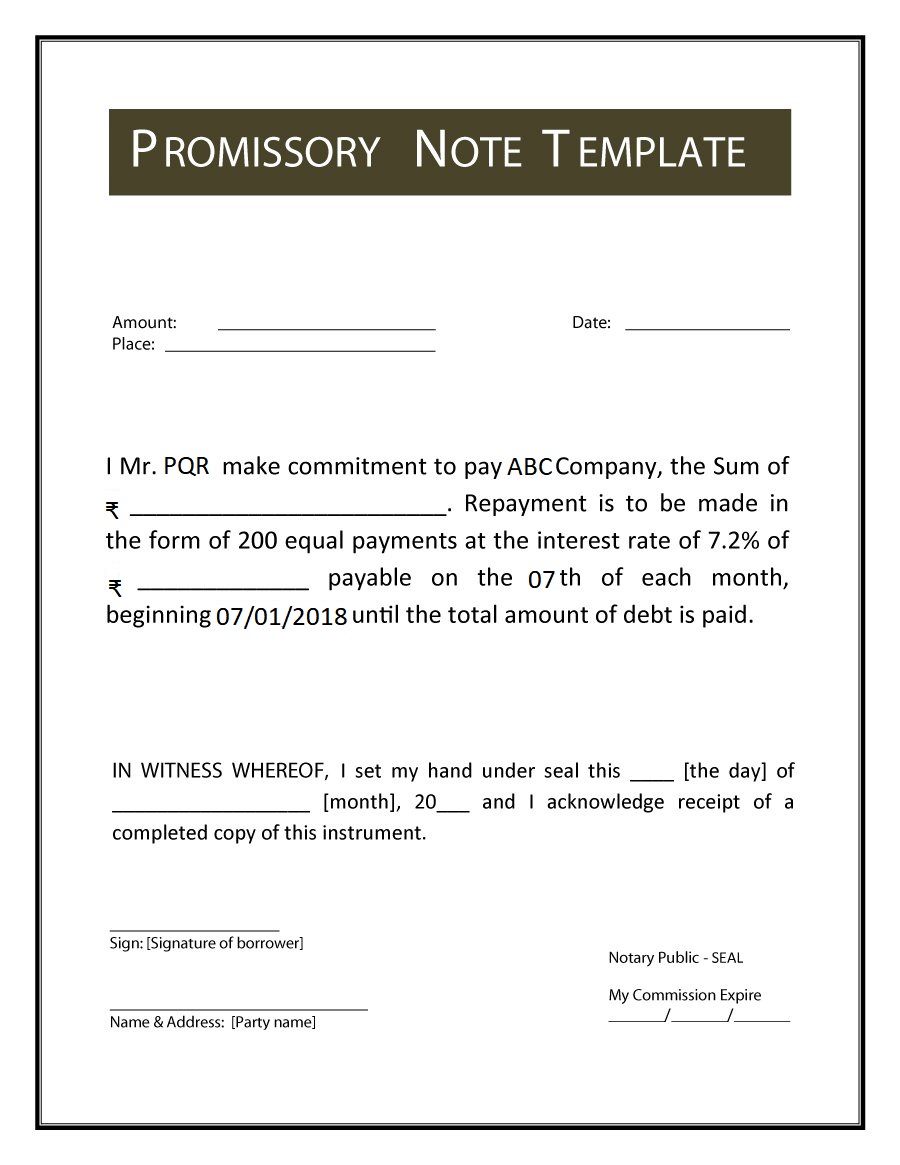
A promissory letter is a written, unconditional promise by one party (the maker or borrower) to pay a specific sum of money to another party (the payee or lender) at a predetermined time or on demand. It is a fundamental financial tool that transforms a verbal agreement into a legally enforceable contract, thereby mitigating risks and misunderstandings.
What Exactly is a Promissory Letter?
At its core, a promissory letter is a debt instrument that contains the borrower’s written promise to pay a defined sum of money to the lender. It typically includes the principal amount, interest rate (if any), repayment schedule, and other specific terms and conditions. While often used interchangeably with “promissory note,” the term “letter” can sometimes imply a slightly less formal, though still legally binding, agreement, particularly in personal or inter-family lending scenarios. However, the legal weight and essential components remain largely the same.
The beauty of a promissory letter lies in its simplicity yet robustness. Unlike a complex loan agreement, it focuses directly on the promise to repay, making it accessible even to those without extensive legal or financial backgrounds, provided they follow standard guidelines. This accessibility makes it an invaluable instrument for various financial arrangements, from short-term loans to structured repayment plans for larger sums.
Why Use a Promissory Letter?
The benefits of using a promissory letter extend to both the lender and the borrower, fostering trust and providing a clear framework for financial interactions.
For the Lender:
-
Legal Recourse: In the event of non-payment, the promissory letter provides concrete legal evidence of the debt and the agreed-upon terms, facilitating legal action if necessary.
-
Clarity and Certainty: It clearly outlines the repayment schedule, interest rates, and any penalties for default, leaving no room for ambiguity.
-
Documentation for Taxes: It serves as official documentation for tax purposes, particularly if interest income is generated.
-
Asset Security (if collateralized): If the note is secured by collateral, it provides a mechanism for the lender to claim assets in case of default.
For the Borrower:
-
Clear Expectations: Borrowers understand exactly what is expected of them regarding repayment, interest, and deadlines.
-
Protection Against Unfair Demands: A written agreement prevents the lender from arbitrarily changing terms or demanding immediate repayment outside the agreed schedule.
-
Establishes Creditworthiness: Successfully repaying a formally documented loan can help build a positive financial reputation, even if it’s a private loan.
When to Use a Promissory Letter?
Promissory letters are versatile and find application in numerous scenarios, both personal and professional:
-
Personal Loans: Lending money to friends or family members for significant expenses like education, a down payment on a home, or starting a small business.
-
Small Business Loans: When a business owner needs capital from an individual investor or a private lender.
-
Real Estate Transactions: Used in some owner-financed property sales, where the seller acts as the lender.
-
Student Loans: Though typically issued by institutions, private student loans between individuals or family often use a form of promissory note.
-
Employee Advances: Formalizing a salary advance or a loan from an employer to an employee.
-
Asset Sales: When selling a large asset (e.g., a car, equipment) and allowing the buyer to pay in installments.
In any situation where money is exchanged with an expectation of repayment over time, a promissory letter provides the necessary structure and legal backing.
Key Elements of an Effective Promissory Letter
A robust promissory letter includes several critical components that ensure it is comprehensive, legally sound, and unambiguous. Omitting any of these can weaken the document and lead to disputes.
Identifying the Parties Involved
Clearly identify both the borrower (maker) and the lender (payee). Include their full legal names, current addresses, and contact information. If the parties are businesses, include the full legal business name, registered address, and the name and title of the authorized signatory. This ensures there is no doubt about who is obligated to pay and who is entitled to receive payment.
Clearly Stating the Principal Sum
This is the exact dollar amount of the loan. It should be written numerically and also spelled out in words to prevent any misinterpretation or alteration. For example, “The principal sum of Five Thousand Dollars ($5,000.00).”
Defining the Interest Rate and Calculation
If interest is to be charged, specify the annual interest rate. Clearly state whether the interest is simple or compound, how it will be calculated (e.g., daily, monthly, annually), and when it begins to accrue. If no interest is charged, explicitly state “no interest” to avoid any future claims. Ensure the interest rate complies with state usury laws, which limit the maximum allowable interest rate.
Establishing Repayment Terms
This is a crucial section detailing how and when the loan will be repaid. Common repayment structures include:
-
Installment Payments: Regular, fixed payments (e.g., monthly) that include both principal and interest, continuing until the loan is fully repaid. Specify the amount of each payment and the due date.
-
Lump Sum (Balloon Payment): The entire principal and any accrued interest are due on a specific future date.
-
On Demand: The lender can demand full repayment at any time. This type is less common in personal loans as it offers less predictability for the borrower.
Also, specify the method of payment (e.g., bank transfer, check) and where payments should be sent.
Specifying Default Provisions and Remedies
What happens if the borrower fails to make a payment on time? This section outlines the consequences of default. It should include:
-
Grace Period: A short period (e.g., 5-10 days) after a missed payment before it’s considered late.
-
Late Fees: The amount charged for overdue payments.
-
Acceleration Clause: A provision that allows the lender to demand the entire outstanding balance immediately if the borrower defaults on an installment.
-
Collection Costs: Who bears the costs (e.g., legal fees, collection agency fees) incurred by the lender to recover the debt.
Including Collateral Details (if applicable)
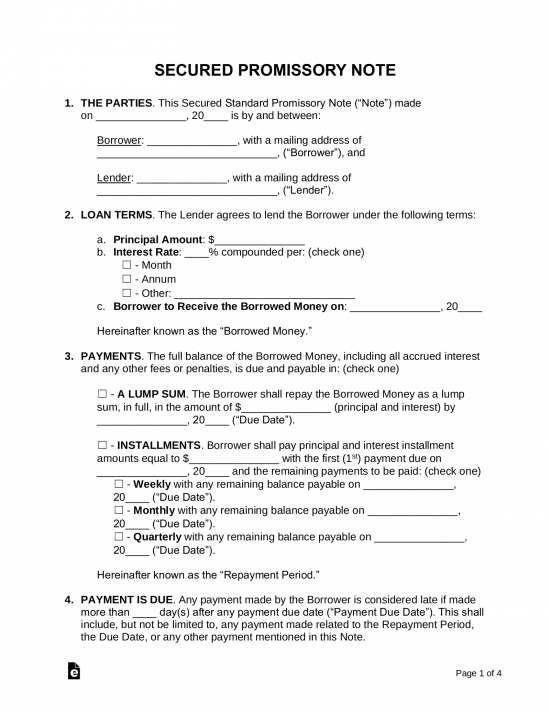
If the loan is secured by collateral (an asset the borrower pledges to the lender in case of default, like a car or property), describe the collateral in detail. Include identifying information such as VIN numbers for vehicles or legal descriptions for real estate. This makes the note a “secured promissory note,” offering greater protection to the lender. If the note is unsecured, state that explicitly.
Governing Law and Signatures
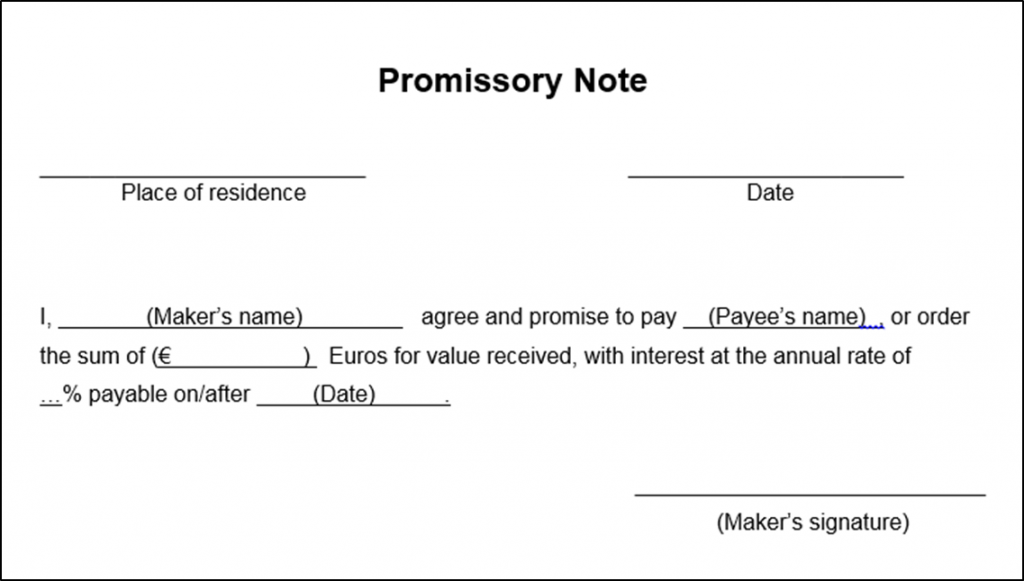
State which state’s laws will govern the promissory letter. This is important for legal enforceability. Finally, the letter must be signed and dated by the borrower. While not always legally required, having the lender’s signature, and ideally, the signatures of one or two witnesses or a notary public, significantly strengthens the document’s legal standing. A notary public verifies the identities of the signatories, adding an extra layer of authentication.
Step-by-Step Guide to Drafting Your Promissory Letter
Drafting a promissory letter doesn’t require a law degree, but it does demand meticulous attention to detail. Follow these steps to create a comprehensive and legally sound document.
Step 1: Gather All Necessary Information
Before you begin writing, collect all relevant details:
-
Full legal names and addresses of borrower and lender.
-
The exact principal amount.
-
Agreed-upon interest rate (if any).
-
Repayment schedule details (payment amounts, due dates, frequency).
-
Default terms (grace period, late fees, acceleration clause).
-
Description of collateral (if applicable).
-
Any other specific conditions or agreements.
Step 2: Choose the Right Type of Promissory Note
Based on your agreement, decide on the type of promissory note that best fits:
-
Demand Promissory Note: Repayable whenever the lender demands it. Less common for personal loans due to borrower uncertainty.
-
Installment Promissory Note: The most common type, with regular payments over a set period.
-
Balloon Promissory Note: Smaller payments for a period, followed by one large final payment (the “balloon”).
-
Secured Promissory Note: Backed by collateral.
-
Unsecured Promissory Note: Not backed by collateral, relying solely on the borrower’s promise to pay.
Step 3: Structure Your Document
Begin with a clear title, such as “Promissory Note” or “Promissory Letter,” centered at the top. Follow with:
-
Date of Agreement: The date the document is created and signed.
-
Identification of Parties: Clearly state “FOR VALUE RECEIVED, the undersigned [Borrower’s Full Name], residing at [Borrower’s Address] (hereinafter referred to as “Borrower”), hereby promises to pay to [Lender’s Full Name], residing at [Lender’s Address] (hereinafter referred to as “Lender”).”
Step 4: Detail the Financials
This is the core of the agreement:
-
Principal Sum: Clearly state the loan amount in both numbers and words.
-
Interest Rate: Specify the annual interest rate, if applicable, and how it will be calculated. State “no interest” if appropriate.
-
Repayment Schedule: Detail the payment amounts, frequency (e.g., “monthly installments of $X”), due dates, and the total number of payments or the final maturity date. If it’s a lump sum, state the specific due date.
-
Application of Payments: Clarify how payments will be applied (e.g., “Payments shall first be applied to accrued interest, then to the principal balance.”).
Step 5: Outline Contingencies and Legalities
Include sections for:
-
Late Payments and Default: Describe grace periods, late fees, and the acceleration clause.
-
Collateral: If secured, clearly describe the collateral and the lender’s rights upon default.
-
Prepayment: State whether the borrower can prepay the loan without penalty.
-
Waiver: A clause stating that a delay by the lender in exercising rights doesn’t waive those rights.
-
Governing Law: Specify the state whose laws will govern the interpretation and enforcement of the note.
-
Amendments: How any changes to the note must be made (usually in writing and signed by both parties).
Step 6: Review, Sign, and Secure
Once drafted, meticulously review the entire document for accuracy, completeness, and clarity. Ensure all dates, names, and financial figures are correct.
-
Signatures: Have the borrower sign and date the document. Ideally, also have the lender sign, and secure signatures from independent witnesses or a notary public.
-
Copies: Make multiple copies. The lender and borrower should each retain an original signed copy.
-
Record Keeping: Keep the promissory letter in a safe and accessible place, along with any related payment records.
Legal Considerations and Best Practices
While a promissory letter can be relatively straightforward, certain legal considerations and best practices can significantly enhance its enforceability and prevent future disputes.
The Importance of Notarization
Though not a universal legal requirement, having a promissory letter notarized adds a crucial layer of authenticity. A notary public verifies the identity of the signatories and confirms that they signed the document willingly. This official stamp can be invaluable in court, helping to prove the document’s validity and discouraging claims of forgery or coercion. It removes potential disputes over whether a signature is authentic.
Consulting Legal Counsel
For significant sums of money, complex repayment structures, or when dealing with parties you don’t know well, it is always prudent to consult with an attorney. A lawyer can review your draft, ensure it complies with all relevant state and federal laws (such as usury laws, which limit interest rates), and advise on specific clauses that might be beneficial for your unique situation. Investing in legal advice upfront can save considerable time, money, and stress down the line if a dispute arises.
Keeping Meticulous Records
The promissory letter is just the starting point. Throughout the life of the loan, both parties should keep detailed records of all payments made and received, including dates, amounts, and payment methods. This documentation is critical for tracking the outstanding balance and proving compliance with the agreement. Digital payment records, bank statements, and signed receipts can serve as evidence.
Avoiding Common Pitfalls
-
Vagueness: Avoid ambiguous language. Every term, especially financial ones, should be clear and precise.
-
Omitting Key Clauses: Do not forget crucial elements like default provisions, governing law, or collateral details.
-
Incorrect Information: Double-check all names, addresses, amounts, and dates.
-
Ignoring Usury Laws: Ensure interest rates do not exceed legal limits in your state.
-
Verbal Amendments: Any changes to the promissory letter should be made in writing and signed by both parties, forming an addendum to the original document. Verbal agreements can be difficult to prove and enforce.
Promissory Letters as a Financial Tool
In essence, a promissory letter is a versatile and powerful financial tool that brings structure, clarity, and legal enforceability to lending and borrowing. It transforms informal agreements into formal commitments, protecting both parties and fostering responsible financial behavior.
Enhancing Financial Clarity and Security
By detailing every aspect of a loan – from the principal amount to the last repayment schedule – a promissory letter eliminates ambiguity. This clarity is crucial for personal finance, helping individuals manage their budgets and understand their obligations, and for business finance, providing a clear asset or liability on the balance sheet. The legal backing it offers provides a sense of security, knowing that agreed-upon terms are enforceable.
When to Seek Professional Assistance
While this guide provides a comprehensive overview, remember that financial agreements can have significant implications. For complex loans, substantial amounts, or if you are unsure about any aspect of drafting or interpreting a promissory letter, do not hesitate to seek professional advice from a financial advisor or a legal expert. Their expertise can help ensure your promissory letter is robust, compliant, and perfectly suited to your specific financial needs, ultimately paving the way for smooth and successful financial transactions. A well-written promissory letter is not just a piece of paper; it’s a cornerstone of financial trust and accountability.
aViewFromTheCave is a participant in the Amazon Services LLC Associates Program, an affiliate advertising program designed to provide a means for sites to earn advertising fees by advertising and linking to Amazon.com. Amazon, the Amazon logo, AmazonSupply, and the AmazonSupply logo are trademarks of Amazon.com, Inc. or its affiliates. As an Amazon Associate we earn affiliate commissions from qualifying purchases.