
In the realm of personal and business finance, numbers are the fundamental language of progress. However, raw figures—such as a $5,000 increase in revenue or a $200 drop in a stock price—rarely tell the full story. To truly understand the velocity of growth, the severity of a loss, or the efficiency of an investment, one must master the concept of percentage change. Whether you are a retail investor tracking a portfolio, a small business owner analyzing year-over-year growth, or an individual trying to outpace inflation, knowing how to work out the percentage change is an indispensable financial skill.
This guide explores the mechanics of percentage change through the lens of financial literacy, providing you with the tools to transform raw data into actionable insights.
The Fundamental Mechanics of Percentage Change in Finance
At its core, percentage change measures the relationship between an old value and a new value. In finance, this is the primary way we determine performance. Without this calculation, it is impossible to compare two different investments or assess the health of a business over time.
The Basic Formula Explained
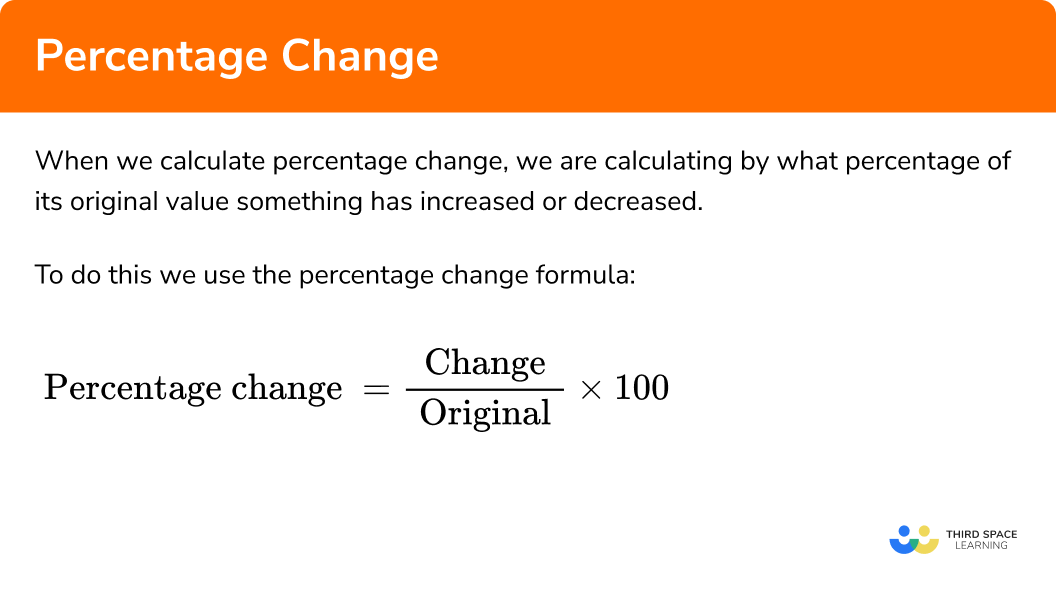
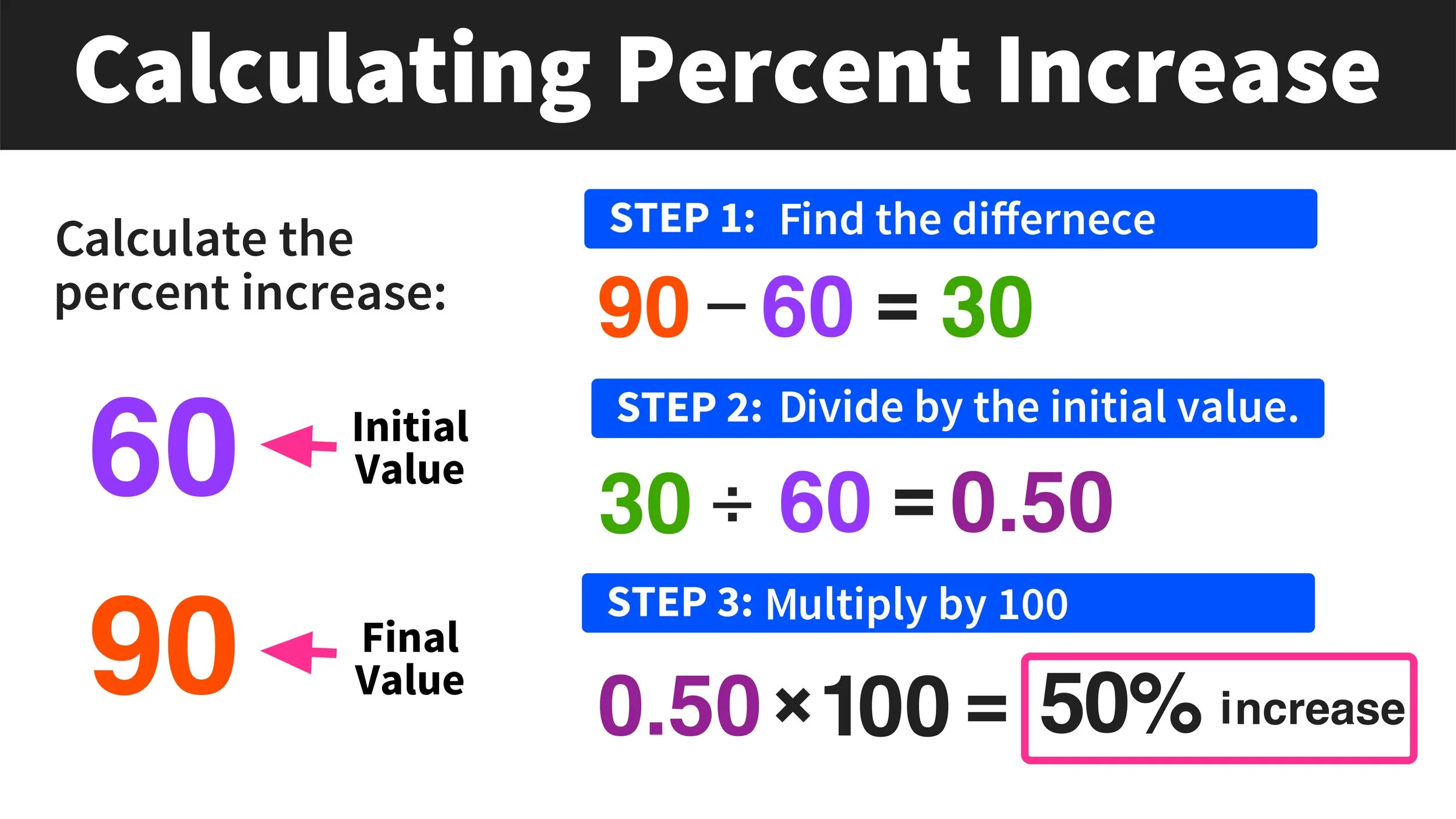
To calculate the percentage change, you follow a simple three-step mathematical process. First, subtract the original value (the “old” value) from the current value (the “new” value). Second, divide that result by the original value. Finally, multiply the result by 100 to convert it into a percentage.
The formula looks like this:
((New Value – Old Value) / Old Value) x 100 = Percentage Change
For example, if you bought a share of a tech company for $150 and it is now worth $180, the calculation would be:
($180 – $150) / $150 = 0.2
0.2 x 100 = 20%
This tells you that your investment has grown by 20%.
Understanding Positive vs. Negative Change
In the financial world, the direction of the change is just as important as the magnitude. A positive result indicates growth, appreciation, or an increase in costs. A negative result indicates a decline, depreciation, or a reduction in expenses.
It is crucial to note a psychological trap in finance known as “asymmetric volatility.” If a financial asset drops by 50%, it requires a 100% gain just to return to its original value. Understanding the math behind percentage change helps investors realize why capital preservation is often more important than chasing high-risk gains. By monitoring these percentages rather than just the dollar amounts, you gain a clearer perspective on the volatility of your net worth.
The Baseline Importance: Why the Denominator Matters
The most common mistake in financial calculations is dividing by the wrong number. In percentage change, you must always divide by the original value. This is because the original value represents your starting capital or your baseline. If you change the denominator to the “new” value, you are calculating a “margin” or a “discount” rather than a growth rate. Staying consistent with the original value as your denominator ensures that your financial reporting remains accurate across different fiscal periods.
Strategic Applications in Personal Investing
For the individual investor, percentage change is the “north star” of portfolio management. It allows for the comparison of “apples to oranges”—such as comparing the performance of a high-priced blue-chip stock to a low-priced penny stock.
Calculating Return on Investment (ROI)
The most frequent use of percentage change in money management is determining the Return on Investment (ROI). ROI is the ultimate metric of efficiency. When you account for the percentage change of your initial principal, you can see how hard your money is working for you.
However, a sophisticated investor looks beyond simple price appreciation. To get a true percentage change in an investment’s value, you must include dividends or interest earned. If your $10,000 investment grew to $10,500 but also paid out $200 in dividends, your “new value” for the calculation is $10,700. This results in a 7% total return, rather than a 5% price increase.
Analyzing Portfolio Diversification and Sector Shifts
Percentage change is also vital when rebalancing a portfolio. Financial advisors often recommend specific allocations—for example, 60% stocks and 40% bonds. Over a year, if the stock market performs exceptionally well, your stocks might now represent 70% of your portfolio.
By calculating the percentage change of each asset class, you can identify which sectors are becoming “overweighted.” If your technology holdings have a 40% change while your utility holdings have a 2% change, the disparity indicates a shift in your risk profile. Utilizing percentage change allows you to make data-driven decisions on when to sell winners and buy underperformers to maintain your desired level of risk.
Benchmarking Against the Market
No investment exists in a vacuum. If your portfolio grew by 10% this year, you might feel successful. However, if the S&P 500 (a common market benchmark) grew by 15% in the same period, your relative performance is actually negative compared to a simple index fund. By calculating the percentage change of both your portfolio and a benchmark, you can evaluate whether your active management (or your advisor’s strategy) is actually adding value.
Business Finance and Corporate Growth Metrics
In the corporate world, percentage change is used to communicate health to stakeholders, plan budgets, and set sales targets. Executives rarely care about a $1 million increase in sales unless they know what that represents as a percentage of the previous year’s total.
Revenue Growth and Profit Margins
The “top line” of a business is its revenue. To attract investors or secure loans, a company must demonstrate consistent Year-over-Year (YoY) revenue growth. If a company earned $2 million in 2022 and $2.5 million in 2023, that is a 25% increase.
Similarly, percentage change is applied to profit margins. If your revenue stays the same but your net profit increases from 10% to 12% of revenue, you have achieved a 20% increase in profitability. This indicates that the business has become more efficient at controlling costs, which is often more impressive to analysts than simple revenue growth.
Operating Expenses and Cost Optimization
On the “bottom line,” percentage change is the primary tool for cost-cutting. Managers look at month-over-month (MoM) changes in operating expenses. If the cost of raw materials increases by 15% in a single quarter, the business must decide whether to absorb that cost (lowering their profit margin) or raise their prices (passing the change on to the consumer).
Monitoring the percentage change in “Customer Acquisition Cost” (CAC) is also vital for modern businesses. If the cost to acquire a new customer moves from $50 to $60, that 20% increase could jeopardize the company’s long-term sustainability if not addressed through better marketing strategies or improved conversion rates.
Forecasting and Budgeting
Businesses use historical percentage changes to forecast future performance. If a company has seen an average growth of 8% over the last five years, they will likely use that percentage to project next year’s budget. This “trend analysis” relies entirely on the consistent application of the percentage change formula to identify patterns in consumer behavior and market cycles.
Macroeconomic Trends and Your Purchasing Power
Beyond individual stocks and business balances, percentage change helps us understand the broader economic environment. This is where “Money” meets the “Real World,” affecting how much you pay for groceries and how much you earn on your savings account.
Tracking Inflation and Consumer Price Index (CPI)
Inflation is essentially the percentage change in the price of a “basket” of goods and services over time. When the government reports an inflation rate of 3%, they are telling you that, on average, the cost of living has increased by 3% compared to the previous year.
For an individual, understanding this is a matter of survival. if your salary increases by 3% in a year where inflation is 5%, you have effectively experienced a 2% decrease in purchasing power. By calculating the percentage change in your own expenses, you can create a “personal inflation rate” that is more accurate for your lifestyle than the national average.
Interest Rates and Debt Management
Percentage change is also the mechanism behind interest rates. When the Federal Reserve raises interest rates from 3% to 3.25%, that is a “25 basis point” increase. While 0.25 might seem small, the percentage change of the interest rate itself is significant (an 8.33% increase in the cost of borrowing).
For anyone carrying debt—such as a mortgage or a credit card balance—a change in interest rates can dramatically alter the total amount repaid over the life of a loan. Understanding how these percentages compound is the difference between falling into a debt trap and building a solid financial foundation.
Currency Fluctuations in a Global Economy
For those involved in international business or travel, the percentage change in currency exchange rates is a critical factor. If the US Dollar strengthens against the Euro by 10%, American goods become 10% more expensive for European buyers, potentially slowing down exports. Conversely, it makes traveling to Europe 10% cheaper for Americans. Mastering these calculations allows businesses to “hedge” their currency risk and protect their international profits.

Conclusion: The Power of Proportional Thinking
Mastering how to work out the percentage change is more than just a mathematical exercise; it is a shift in how you perceive value. In the world of money, absolute numbers can be deceptive. A $100 gain is massive for a child with a piggy bank, but irrelevant to a multi-billion dollar corporation. The percentage change provides the necessary context to make these figures meaningful.
By consistently applying the percentage change formula to your investments, business operations, and personal expenses, you move away from reactive “guesswork” and toward proactive financial management. You begin to see the trends before they become crises and identify opportunities before they become common knowledge. In the pursuit of wealth and financial stability, the ability to measure your progress with precision is the most valuable asset you can own.
aViewFromTheCave is a participant in the Amazon Services LLC Associates Program, an affiliate advertising program designed to provide a means for sites to earn advertising fees by advertising and linking to Amazon.com. Amazon, the Amazon logo, AmazonSupply, and the AmazonSupply logo are trademarks of Amazon.com, Inc. or its affiliates. As an Amazon Associate we earn affiliate commissions from qualifying purchases.