
In an increasingly complex financial world, understanding percentages isn’t just a useful skill – it’s an indispensable foundation for sound money management. From evaluating sales discounts and calculating loan interest to understanding investment returns and budgeting effectively, percentages are the silent language spoken by nearly every financial transaction. For many, the idea of calculating percentages might evoke memories of school math classes, but in the realm of personal and business finance, these calculations are far from abstract. They are practical tools that empower individuals and organizations to make informed decisions, identify opportunities, and mitigate risks.
This article delves into the core principles of calculating percentages of money, demystifying the process and illustrating its profound relevance in everyday financial scenarios. Whether you’re a student trying to grasp the basics, a consumer looking to optimize your spending, an investor assessing potential gains, or a business owner managing profits and losses, mastering percentage calculations will significantly enhance your financial literacy and decision-making capabilities. We’ll cover the fundamental formulas, explore their application in various financial contexts, discuss more advanced concepts, and provide practical tips for accurate and efficient calculations, ensuring you’re well-equipped to navigate your financial landscape with confidence.
The Fundamentals of Percentages: A Financial Lens
Before we plunge into the intricacies of financial applications, it’s crucial to establish a solid understanding of what percentages represent and why they are so fundamental to money matters.
What is a Percentage?
At its simplest, a percentage is a way of expressing a number as a fraction of 100. The word “percent” literally means “per hundred” or “out of one hundred.” It’s denoted by the symbol “%”. For instance, 50% means 50 out of 100, or 50/100, which simplifies to 1/2. This standardized way of expressing proportions makes it easier to compare different quantities, especially when the total amounts being compared are different. Instead of saying “10 out of 20 apples are red” and “20 out of 50 oranges are sweet,” we can convert these to percentages (50% of apples are red, 40% of oranges are sweet) to instantly see which proportion is larger.
Why Percentages Matter in Finance
In the financial world, percentages provide a universal metric for comparison and evaluation. They allow us to:
- Compare Values Consistently: Whether you’re comparing the interest rate on a small personal loan versus a large mortgage, or the growth of a small investment portfolio versus a large one, percentages offer a normalized basis for comparison.
- Quantify Change: Percentages are essential for expressing increases or decreases in value over time, such as inflation rates, investment returns, or changes in income.
- Allocate Resources: Budgeting often involves allocating specific percentages of income to different categories like housing, savings, and entertainment.
- Understand Proportions: From tax brackets to asset allocation in an investment portfolio, percentages help delineate parts of a whole.
Without a firm grasp of percentages, it would be challenging to accurately assess financial products, manage personal finances, or understand broader economic indicators.
The Basic Formula: Understanding the Core Calculation
The most fundamental percentage calculation involves finding a percentage of a given number, or determining what percentage one number is of another.
To find a percentage of a number:
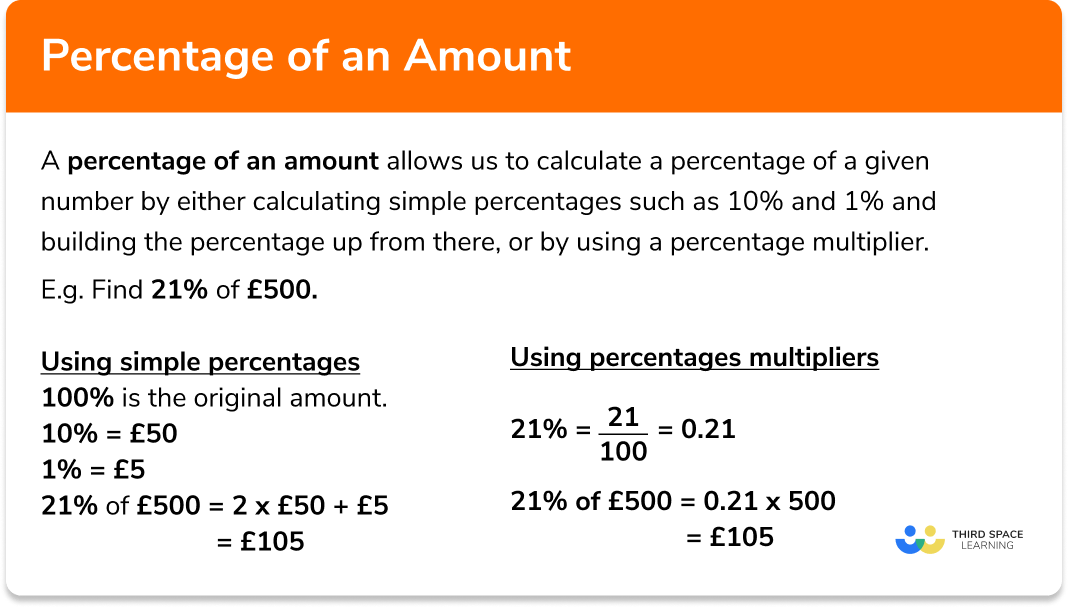
Convert the percentage to a decimal (divide by 100) and multiply it by the number.
- Formula:
Percentage (as decimal) × Whole Amount = Part - Example: What is 20% of $500?
- 20% as a decimal is 0.20 (20 ÷ 100).
- 0.20 × $500 = $100.
To find what percentage one number is of another:
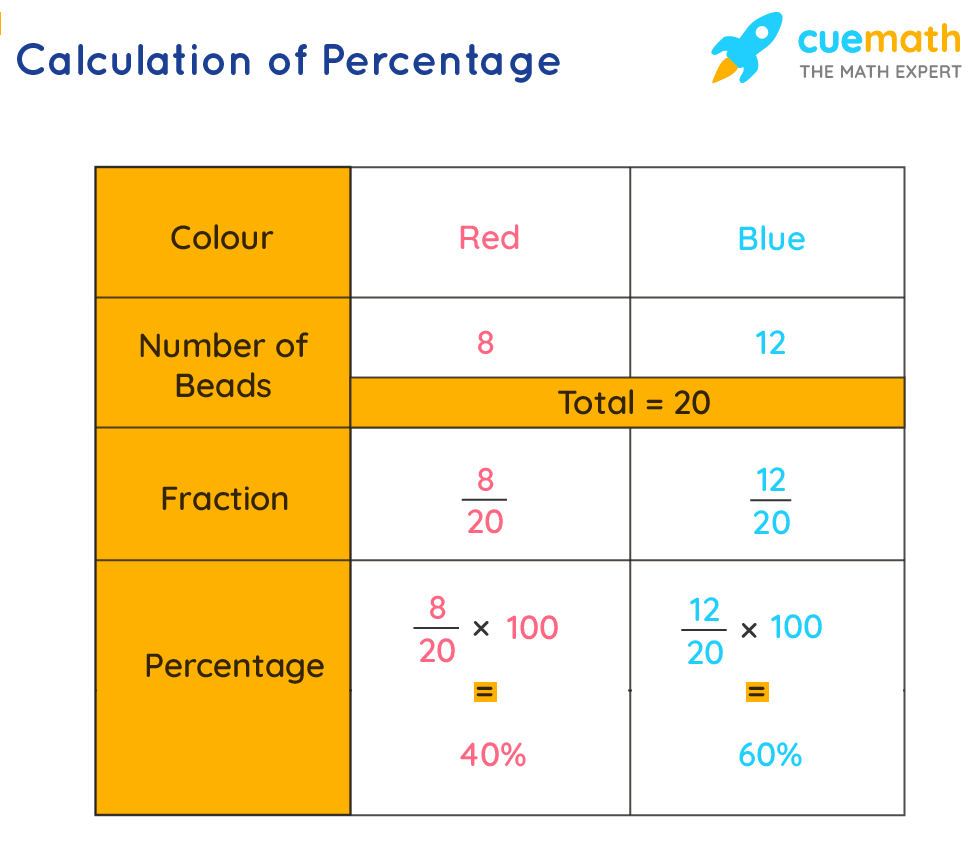
Divide the part by the whole amount, then multiply by 100 to express it as a percentage.
- Formula:
(Part ÷ Whole) × 100 = Percentage - Example: You spent $150 out of a $500 budget. What percentage of your budget did you spend?
- ($150 ÷ $500) × 100 = 0.30 × 100 = 30%.
These two core calculations form the bedrock for almost all financial percentage applications.
Practical Applications: Calculating Percentages in Everyday Financial Scenarios
Once you understand the basic formulas, applying them to real-world financial situations becomes straightforward. Here’s how percentages play out in common money matters.
Discounts and Sales: Saving Money Intelligently
One of the most frequent encounters with percentages is during sales. Understanding how to calculate discounts can save you significant money.
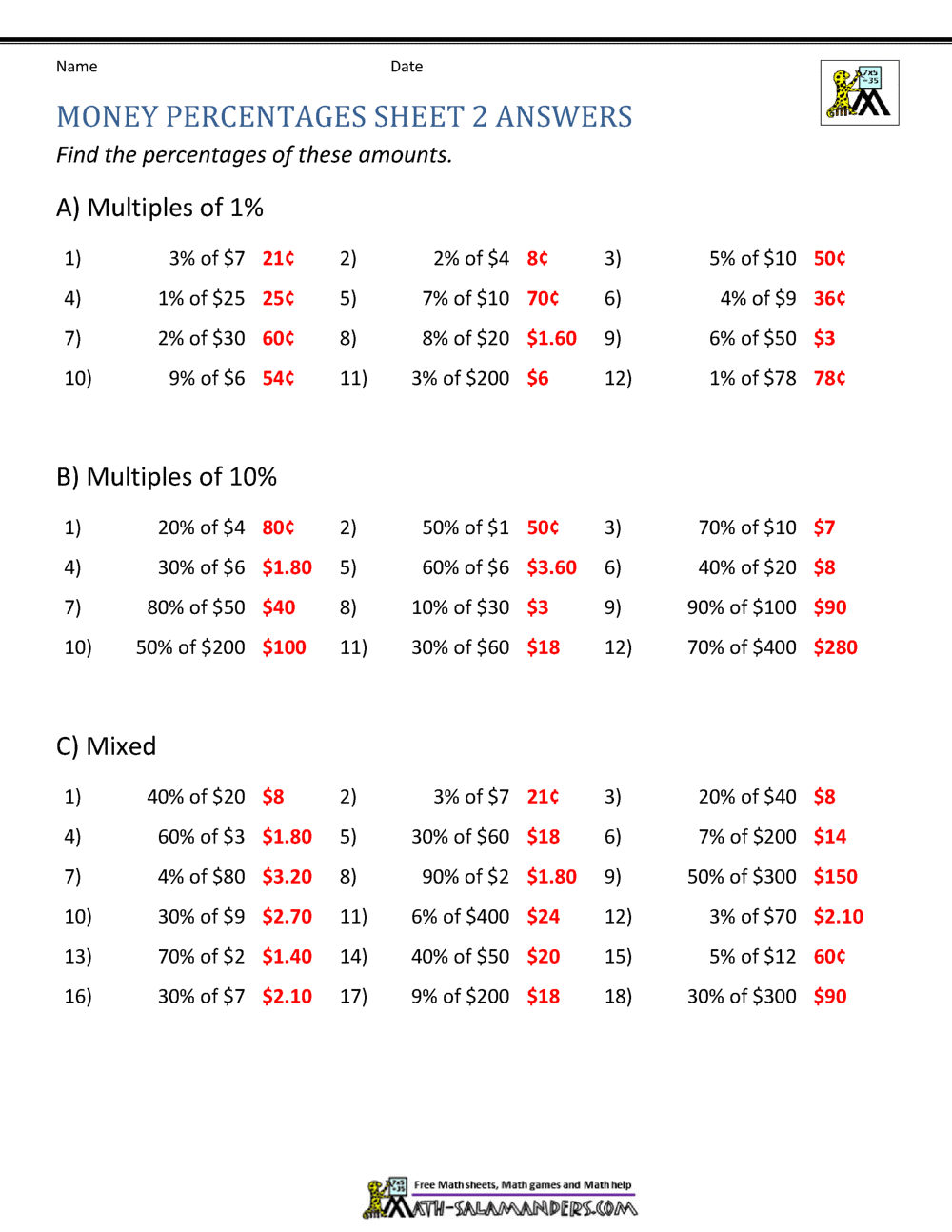
- Scenario: A shirt costs $60 and is on sale for 25% off. How much will you save, and what is the final price?
- Saving: 25% of $60 = 0.25 × $60 = $15.
- Final Price: $60 – $15 = $45.
- Alternatively, if it’s 25% off, you’re paying 75% of the original price: 0.75 × $60 = $45.
Tips and Service Charges: Calculating Gratuity
In many service industries, tipping is customary, and service charges might be automatically added. Knowing how to calculate these ensures you pay the correct amount.
- Scenario: Your restaurant bill is $85, and you want to leave a 15% tip. How much should you tip?
- 15% of $85 = 0.15 × $85 = $12.75.
- Total amount (bill + tip) = $85 + $12.75 = $97.75.
Interest Rates: Understanding Loan Costs and Investment Returns
Interest is essentially the cost of borrowing money or the return on lending money. It’s almost always expressed as a percentage.
- Simple Interest Scenario (Loan): You take out a $10,000 personal loan with a 5% simple annual interest rate. How much interest will you pay in one year?
- 5% of $10,000 = 0.05 × $10,000 = $500.
- Investment Return Scenario: You invest $2,000, and it earns a 7% return over a year. How much profit did you make?
- 7% of $2,000 = 0.07 × $2,000 = $140.
Taxes and Deductions: Navigating Your Income
From income tax to sales tax, percentages dictate how much of your money goes to government bodies or is withheld from your paycheck.
- Sales Tax Scenario: An item costs $20, and the sales tax is 8%. What is the total cost?
- Tax amount: 8% of $20 = 0.08 × $20 = $1.60.
- Total cost: $20 + $1.60 = $21.60.
- Payroll Deduction Scenario: Your gross monthly salary is $4,000, and 20% is deducted for taxes and benefits. What is your net pay?
- Deduction amount: 20% of $4,000 = 0.20 × $4,000 = $800.
- Net pay: $4,000 – $800 = $3,200.
Budgeting and Financial Planning: Allocating Your Funds
Budgeting involves strategically allocating your income to various expenses and savings goals, often using percentage-based rules. The popular 50/30/20 rule, for example, suggests allocating 50% of your after-tax income to needs, 30% to wants, and 20% to savings and debt repayment.
- Scenario: Your after-tax monthly income is $3,500. How much should you allocate to needs, wants, and savings based on the 50/30/20 rule?
- Needs (50%): 0.50 × $3,500 = $1,750
- Wants (30%): 0.30 × $3,500 = $1,050
- Savings/Debt (20%): 0.20 × $3,500 = $700
These everyday examples highlight how a solid understanding of percentage calculations empowers you to manage your money more effectively and make informed financial decisions.
Advanced Percentage Concepts for Smarter Money Management
Beyond the basics, several advanced percentage concepts are crucial for deeper financial analysis and long-term planning.
Percentage Increase and Decrease: Tracking Growth and Depreciation
When evaluating investments, analyzing inflation, or understanding asset depreciation, you’ll often need to calculate the percentage change between two values.
- Formula:
((New Value - Old Value) / Old Value) × 100 - Scenario (Increase): Your stock investment grew from $1,000 to $1,250. What is the percentage increase?
- (($1,250 – $1,000) / $1,000) × 100 = ($250 / $1,000) × 100 = 0.25 × 100 = 25% increase.
- Scenario (Decrease): The value of your car depreciated from $20,000 to $18,000. What is the percentage decrease?
- (($18,000 – $20,000) / $20,000) × 100 = (-$2,000 / $20,000) × 100 = -0.10 × 100 = 10% decrease.
Compound Interest: The Power of Earning on Earnings
Compound interest is the interest on a loan or deposit calculated based on both the initial principal and the accumulated interest from previous periods. It’s a powerful concept, often called the “eighth wonder of the world” due to its ability to make investments grow exponentially over time.
While the full compound interest formula can be complex (A = P(1 + r/n)^(nt)), understanding the concept is key: your interest earns interest.
- Example: If you invest $1,000 at 5% annual interest compounded annually for two years:
- Year 1: $1,000 × 0.05 = $50 interest. Total: $1,050.
- Year 2: Interest is now calculated on $1,050: $1,050 × 0.05 = $52.50 interest. Total: $1,102.50.
- Notice the second year’s interest is higher because it’s calculated on a larger principal. This compounding effect is why early and consistent saving is so beneficial.
Return on Investment (ROI): Measuring Financial Performance
ROI is a widely used metric to evaluate the efficiency or profitability of an investment. It measures the amount of return on an investment relative to the investment’s cost.
- Formula:
((Net Profit from Investment - Cost of Investment) / Cost of Investment) × 100 - Scenario: You invested $5,000 in a business, and after a year, your net profit was $1,500. What is your ROI?
- (($1,500 – $0) / $5,000) × 100 = (0.30) × 100 = 30%.
- If there were additional costs (e.g., $100 for marketing), the Net Profit would be $1,400, leading to a different ROI.
Understanding Financial Ratios: Debt-to-Income, Savings Rate
Financial ratios expressed as percentages offer quick insights into financial health.
- Debt-to-Income (DTI) Ratio: Used by lenders to assess borrowing risk.
Total Monthly Debt Payments / Gross Monthly Income × 100- A DTI of 36% or less is generally considered healthy.
- Savings Rate: Measures how much of your income you’re saving.
Monthly Savings / Gross Monthly Income × 100- A higher savings rate means greater financial security and faster progress toward goals.
These advanced applications demonstrate that percentages are not just for basic arithmetic but are essential for comprehensive financial analysis and strategic planning, whether for personal wealth building or business growth.
Tools and Tips for Accurate Percentage Calculations
While understanding the underlying concepts is paramount, leveraging the right tools and employing smart techniques can make percentage calculations more efficient and accurate.
Calculators and Spreadsheets: Leveraging Technology
In today’s digital age, manual calculations are often unnecessary, especially for complex scenarios.
- Basic Calculators: Most smartphones have a built-in calculator with a percentage function (%). This is perfect for quick discounts, tips, or simple interest.
- Spreadsheets (Excel, Google Sheets): For more intricate financial planning, budgeting, or investment analysis, spreadsheets are invaluable. They allow you to set up formulas once and apply them to numerous data points. For example, you can calculate various deductions from a salary column or compute ROI for a portfolio of investments automatically. Using cell references for your values makes it dynamic, updating calculations as you change inputs.
- Online Percentage Calculators: Numerous websites offer free percentage calculators tailored for specific tasks, such as sales tax, tip calculators, or loan amortization schedules.
Mental Math Shortcuts: Quick Estimates
While precision is crucial for official financial records, being able to quickly estimate percentages mentally can be incredibly useful in everyday situations, like checking if a discount is correct or roughly figuring out a tip.
- Finding 10%: A simple mental trick is to move the decimal point one place to the left. For example, 10% of $75 is $7.50.
- Finding 5%: Find 10% and then divide that result by 2. So, 5% of $75 is $7.50 / 2 = $3.75.
- Finding 1%: Move the decimal point two places to the left. 1% of $75 is $0.75.
- Building Up/Down: To find 20% of $150, find 10% ($15) and multiply by 2 ($30). To find 25% of $80, know that 25% is 1/4, so $80 / 4 = $20.
Common Pitfalls to Avoid: Misinterpretations and Errors
Even with tools, misinterpreting the context or making simple errors can lead to incorrect financial decisions.
- Percentage Points vs. Percentage Change: Be careful not to confuse a change in “percentage points” with a “percentage change.” For example, if an interest rate goes from 4% to 5%, that’s a 1 percentage point increase, but it’s a ( (5-4)/4 ) * 100 = 25% increase in the rate itself.
- Applying Percentages Sequentially: When multiple discounts or increases are applied, the order matters. A 10% discount followed by another 10% discount is not a 20% discount on the original price. Instead, the second discount applies to the already discounted price.
- Gross vs. Net: Always clarify whether a percentage applies to the gross amount (before deductions) or the net amount (after deductions). This is crucial for income, profits, and taxes.
- Rounding Errors: For precise financial calculations, avoid premature rounding. Carry calculations to sufficient decimal places and only round the final result.
By being mindful of these pitfalls and utilizing the right tools, you can ensure your percentage calculations are consistently accurate, leading to better financial outcomes.
Conclusion
The ability to accurately work out percentages of money is more than just a mathematical skill; it’s a fundamental aspect of financial literacy that underpins almost every decision we make regarding our finances. From the mundane task of calculating a tip to the critical decisions involved in budgeting, investing, and understanding loan agreements, percentages serve as our compass in the financial world.
We’ve explored the foundational concepts, delved into practical, everyday applications like discounts and taxes, and ventured into more sophisticated financial metrics such as ROI and compound interest. The recurring theme is clear: mastering percentages empowers you to not only understand your money better but also to control its flow and growth more effectively.
In an era where financial products and opportunities are increasingly complex, relying on an intuitive grasp of percentages can be the difference between making a savvy move and a costly mistake. By continuously honing this skill, embracing the digital tools at your disposal, and remaining vigilant against common errors, you position yourself to navigate your financial journey with greater confidence, make informed choices, and ultimately achieve your monetary goals. Start applying these principles today, and watch as your financial acumen—and potentially your financial well-being—grows.
aViewFromTheCave is a participant in the Amazon Services LLC Associates Program, an affiliate advertising program designed to provide a means for sites to earn advertising fees by advertising and linking to Amazon.com. Amazon, the Amazon logo, AmazonSupply, and the AmazonSupply logo are trademarks of Amazon.com, Inc. or its affiliates. As an Amazon Associate we earn affiliate commissions from qualifying purchases.