
In the realm of personal finance and wealth management, the ability to interpret numbers is the boundary between those who merely earn and those who build lasting wealth. At the heart of this numerical literacy lies one of the most fundamental mathematical operations: the percentage. Whether you are calculating the return on a stock market investment, determining the impact of an interest rate on a mortgage, or simply trying to understand how much of your monthly income is consumed by fixed expenses, knowing how to work out a percentage of two numbers is an indispensable skill.

Percentages serve as a universal language for comparison. They strip away the noise of absolute values and allow us to see the “relative” truth of a situation. For instance, a $500 profit might seem significant, but its true value is only revealed when expressed as a percentage of the initial investment. This guide provides a comprehensive look at how to master these calculations within the niche of financial management, ensuring you can make data-driven decisions for your economic future.
The Foundation: Understanding the Percentage Formula in a Financial Context
Before diving into complex financial models, one must master the basic mechanics of the percentage. In its simplest form, a percentage represents a “part” of a “whole,” standardized to a scale of 100. The term literally translates to “per cent” or “for every hundred.”
The Basic Equation
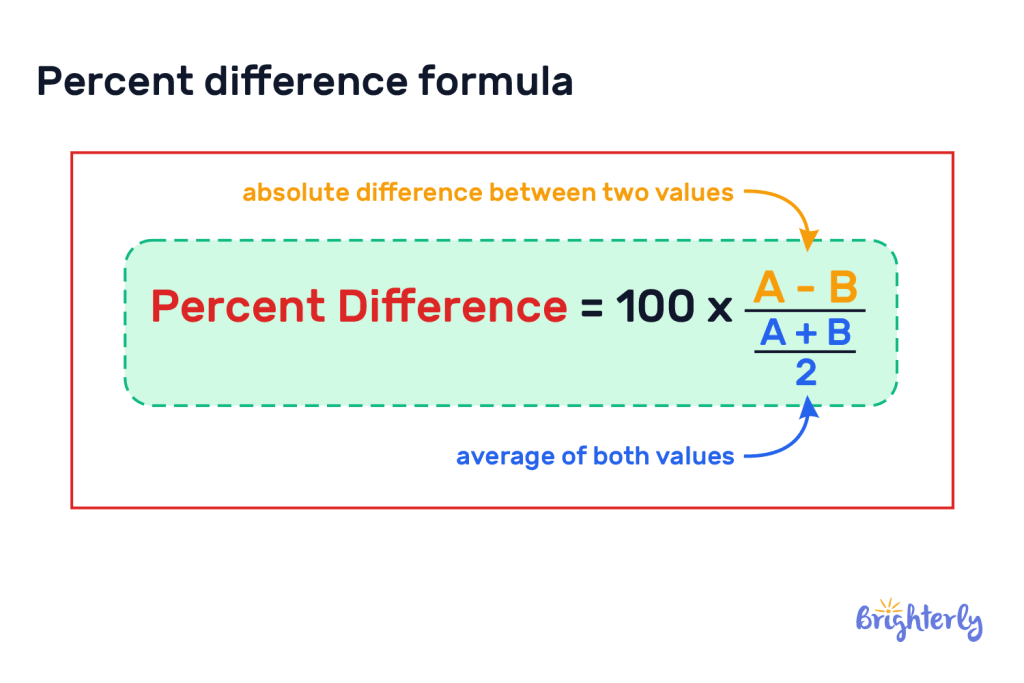
To find what percentage one number (the part) is of another number (the whole), the formula is straightforward:
** (Part ÷ Whole) × 100 = Percentage **
For example, if you saved $200 from a $1,000 paycheck, you would divide 200 by 1,000 to get 0.2. Multiplying by 100 gives you 20%. In financial terms, this means your “Savings Rate” for that period was 20%. While calculators are ubiquitous, understanding this internal logic allows you to perform mental “sanity checks” on financial statements and offers.
Why Decimals are Your Best Friend
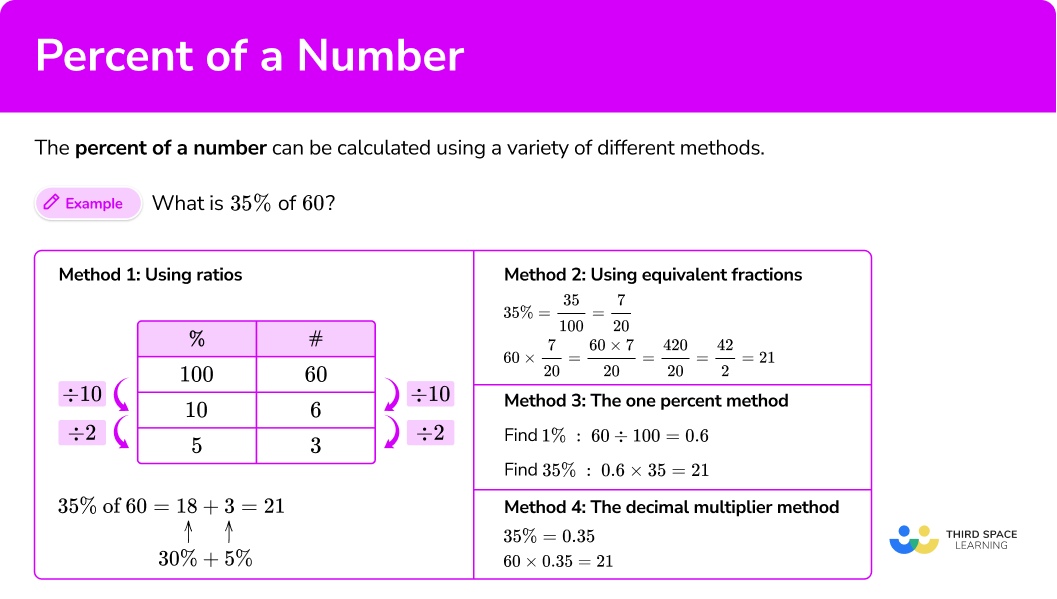
In professional finance, we often skip the “multiply by 100” step and work directly with decimals. A 5% interest rate is 0.05; a 25% tax bracket is 0.25. Converting percentages to decimals is essential when you need to calculate a specific dollar amount based on a percentage. If you want to find 15% of a $60 restaurant bill for a tip, you multiply $60 by 0.15. This fluidity between fractions, decimals, and percentages is the hallmark of a financially literate individual.
Maximizing Wealth Through Investment Math
For investors, percentages are the primary metric for success. Absolute gains can be misleading; it is the percentage growth that tells the story of efficiency and risk-adjusted performance.
Calculating ROI (Return on Investment)
Return on Investment (ROI) is perhaps the most critical application of the percentage formula. It measures the gain or loss generated on an investment relative to the amount of money invested.
To calculate ROI, you first find the net profit (Current Value – Initial Cost). You then divide that profit by the Initial Cost and multiply by 100.
Formula: [(Current Value – Original Cost) ÷ Original Cost] × 100
Consider an investor who buys a stock for $50 and sells it for $75. The profit is $25. By dividing $25 by the original $50, we get 0.5, or a 50% ROI. If another investor made $25 profit on a $500 stock, their ROI would only be 5%. Despite the dollar profit being identical, the first investor utilized their capital ten times more effectively.
Dividend Yields and Portfolio Allocation
Beyond simple growth, percentages help investors understand income and risk. A dividend yield is calculated by taking the annual dividend per share and dividing it by the share price. This percentage allows you to compare the income potential of a stock against a high-yield savings account or a bond.
Furthermore, portfolio allocation is entirely percentage-based. Financial advisors often recommend a “60/40” split (60% stocks, 40% bonds). To maintain this balance, you must constantly calculate what percentage of your total portfolio each asset class represents. If your stocks perform exceptionally well, they might grow to represent 75% of your total wealth. To “rebalance,” you would need to calculate how much to sell to return that “part” to the desired 60% of the “whole.”
Managing Debt: Percentages as the Language of Interest
While percentages can work for you in investments, they can work against you in the form of debt. Understanding how interest rates are calculated is vital for minimizing the cost of borrowing.
Decoding APR and APY
When you take out a loan or a credit card, the cost is expressed as an Annual Percentage Rate (APR). This is the “price” of the money you are borrowing. If you have a $5,000 balance on a card with a 20% APR, you aren’t just paying back the $5,000; you are paying a percentage of that balance in interest every year.
However, the “true” percentage is often the Annual Percentage Yield (APY), which accounts for compounding. Compounding happens when interest is added to the principal, and then that interest earns (or costs) interest. Understanding the difference between these two percentages can save a borrower thousands of dollars over the life of a mortgage or car loan.
Credit Utilization Ratios
In the world of personal finance, your credit score is heavily influenced by a specific percentage: the credit utilization ratio. This is the “part” (your total credit card balances) divided by the “whole” (your total available credit limits).
Financial experts generally suggest keeping this percentage below 30%. If you have a total limit of $10,000 across all cards and you are carrying a balance of $7,000, your utilization is 70%. Even if you make your payments on time, this high percentage signals to lenders that you may be overextended, potentially lowering your credit score and increasing the interest rates you are offered in the future.
Strategic Budgeting: Using Percentages to Optimize Cash Flow
Budgeting is often viewed as a restrictive exercise in counting pennies, but the most effective budgets are built on percentages. This approach, known as “Proportional Budgeting,” allows your financial plan to scale automatically as your income rises or falls.
The 50/30/20 Rule Explained
The 50/30/20 rule is a popular financial framework that uses percentages to allocate after-tax income. It suggests:
- 50% for Needs: Housing, utilities, groceries, and insurance.
- 30% for Wants: Dining out, travel, and hobbies.
- 20% for Financial Goals: Debt repayment, emergency funds, and retirement investments.
By converting your income into these percentage buckets, you gain an immediate bird’s-eye view of your financial health. If your “Needs” are consuming 70% of your income, the percentage math tells you clearly that either your housing is too expensive for your current earnings or you need to increase your “whole” (income) to bring the “part” (expenses) back into a healthy proportion.
Variance Analysis in Business Finance
For entrepreneurs and small business owners, calculating the percentage of “variance” is essential for staying profitable. Variance analysis compares your budgeted numbers to your actual numbers. If you budgeted $1,000 for marketing but spent $1,200, you have a 20% unfavorable variance. Identifying these percentage shifts early allows a business to pivot before a small overage turns into a financial crisis.
Navigating the Marketplace: Taxes, Discounts, and Inflation
Finally, percentages govern our daily interactions with the economy. From the checkout counter to the annual tax filing, being able to calculate the relationship between two numbers is a defensive tool against overspending.
Sales Tax and Gratuities
Most consumer transactions involve a percentage-based addition. Understanding that a 10% sales tax on a $150 item adds $15 is basic, but the mental math becomes more important when comparing prices across different jurisdictions or calculating tips. In a professional setting, being able to quickly calculate a 15%, 20%, or 25% gratuity or service fee ensures you are navigating business etiquette with precision and speed.
Real vs. Nominal Returns (Adjusting for Inflation)
One of the most sophisticated uses of percentage math in finance is adjusting for inflation. If your savings account offers a 4% interest rate (the nominal return), but inflation is running at 3%, your “real” return is only about 1%.
This is calculated by looking at the change in the Consumer Price Index (CPI)—which is itself a percentage of change between two price points over time. Understanding that your purchasing power is tied to the difference between these two percentages is the key to long-term wealth preservation. If you don’t account for the percentage of inflation, you might believe you are gaining wealth when, in reality, your “whole” is buying fewer “parts” of the goods and services you need.
Conclusion: The Power of the Percent
Mastering how to work out a percentage of two numbers is more than just a mathematical exercise; it is a fundamental pillar of financial sovereignty. By viewing your money through the lens of percentages, you move away from emotional decision-making and toward analytical clarity. You begin to see your savings rate, your investment returns, your debt costs, and your tax obligations as interconnected ratios that you can influence and optimize. In the world of money, the numbers rarely lie, but they only speak to those who understand the language of the percent.
aViewFromTheCave is a participant in the Amazon Services LLC Associates Program, an affiliate advertising program designed to provide a means for sites to earn advertising fees by advertising and linking to Amazon.com. Amazon, the Amazon logo, AmazonSupply, and the AmazonSupply logo are trademarks of Amazon.com, Inc. or its affiliates. As an Amazon Associate we earn affiliate commissions from qualifying purchases.