
Managing student loans effectively is a cornerstone of sound personal finance, and the very first step in this journey is knowing precisely what you owe. For many, navigating the labyrinthine world of student loan debt can feel daunting, with multiple loans, servicers, and fluctuating interest rates creating a complex financial picture. However, gaining clarity on your outstanding balance is not just about satisfying curiosity; it’s a critical act of financial empowerment. It forms the bedrock for informed decisions regarding budgeting, repayment strategies, and ultimately, achieving financial freedom.
This guide aims to demystify the process of viewing your student loan balance, providing a clear roadmap to accessing, understanding, and ultimately managing this significant financial obligation. From official federal databases to individual loan servicer portals, we will explore the essential tools and insights needed to keep your student loan debt firmly in your grasp.
The Imperative of Knowing Your Student Loan Balance
Ignorance is certainly not bliss when it comes to student loans. Understanding your current balance, along with its underlying details, is fundamental for maintaining financial health and making strategic decisions that can save you thousands of dollars and years of repayment.
Foundation for Financial Planning
Your student loan balance represents a significant liability on your personal balance sheet. Integrating this figure into your overall financial planning is non-negotiable. Knowing your balance allows you to accurately assess your net worth, set realistic savings goals, and determine how much discretionary income you truly have after essential expenditures, including loan payments. Without this clarity, any budget or long-term financial projection is built on an incomplete foundation, potentially leading to unrealistic expectations and subsequent financial strain. It influences major life decisions, such as buying a home, saving for retirement, or starting a family, by dictating your debt-to-income ratio and overall financial capacity.
Avoiding Surprises and Default
Few financial experiences are as unwelcome as unexpected debt. Regularly checking your student loan balance helps you stay ahead of potential issues like accruing interest, changes in repayment terms, or even administrative errors. Unmanaged debt can quickly spiral, leading to missed payments, accumulating late fees, and ultimately, default. Student loan default carries severe consequences, including damaged credit scores, wage garnishment, tax refund offsets, and even the loss of professional licenses. Proactive monitoring allows you to identify problems early, such as an incorrect payment application or a sudden spike in interest, giving you time to contact your servicer and rectify the situation before it escalates into a crisis.
Empowering Repayment Strategies
The path to paying off student loans is rarely a one-size-fits-all solution. There are various repayment plans, from standard fixed payments to income-driven options, and understanding your current balance is crucial for choosing the most effective strategy. If you have multiple loans, knowing their individual balances, interest rates, and terms allows you to implement strategies like the “debt avalanche” (paying off high-interest loans first) or “debt snowball” (paying off smallest balances first) to accelerate repayment. It also empowers you to explore options like refinancing or consolidation, knowing precisely what figures you are working with and what potential savings you might achieve. Without this detailed understanding, you might default to a suboptimal repayment plan, costing you more in the long run.
Primary Methods for Accessing Your Loan Information
Fortunately, accessing your student loan balance doesn’t require detective work. Several established and reliable platforms exist to provide you with the comprehensive details you need.
Utilizing Your Loan Servicer’s Portal
For most borrowers, the primary and most detailed source of information will be your loan servicer. A loan servicer is the company that handles the billing, customer service, and other administrative tasks for your student loans. If you have federal student loans, your servicer might be companies like Aidvantage, Nelnet, MOHELA, or Edfinancial. Private loans are typically serviced by the bank or credit union that originated the loan, or a third-party servicer they employ (e.g., Sallie Mae, Discover Student Loans).
To view your balance:
- Identify Your Servicer: If you don’t know who your servicer is, check your loan statements, emails, or the National Student Loan Data System (NSLDS) for federal loans.
- Create an Online Account: Visit your servicer’s website and register for an online account if you haven’t already. You’ll typically need your Social Security number, date of birth, and email address.
- Log In and Navigate: Once logged in, you should find a clear dashboard displaying your current loan balance(s), payment history, interest rates, payment due dates, and often tools for managing your account.
It’s important to remember that if you have multiple federal loans, they might be split among different servicers. You’ll need to check each servicer’s portal to get a complete picture of your federal loan portfolio.
The National Student Loan Data System (NSLDS)
For federal student loans, the National Student Loan Data System (NSLDS) is an invaluable resource. This is the central database for all federal student aid, providing a comprehensive view of your federal loans and grants.
To access your information on NSLDS:
- Obtain an FSA ID: If you don’t already have one, you’ll need to create an FSA ID on the Federal Student Aid website (StudentAid.gov). This ID serves as your legal signature for federal student aid documents and allows you to access your personal information.
- Log In to StudentAid.gov: Once you have your FSA ID, log in to StudentAid.gov.
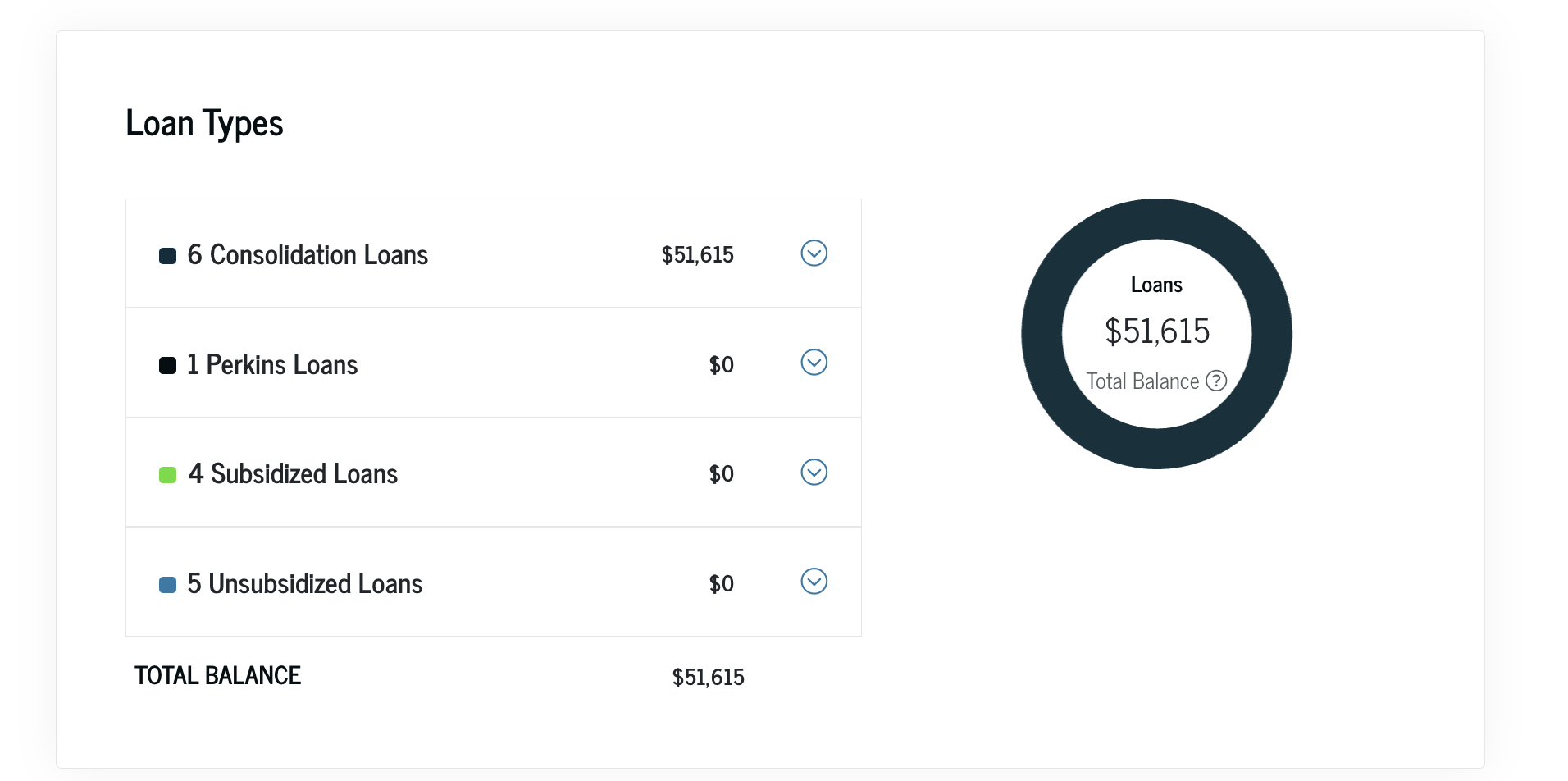
- Access Your Dashboard: Navigate to your personal dashboard. Here, you’ll find a detailed summary of all your federal student loans, including their original amount, current balance, interest rates, loan status, and most importantly, the name and contact information for each loan servicer.
NSLDS is particularly useful if you’ve lost track of a specific federal loan or can’t remember which servicer handles a particular loan. It provides a holistic overview that individual servicer portals cannot.
Other Federal and Private Loan Resources
Beyond your loan servicers and NSLDS, there are a few other avenues to consider:
- Credit Reports: Your student loans, both federal and private, are reported to the major credit bureaus. You can obtain a free copy of your credit report from AnnualCreditReport.com once every 12 months from each of the three major credit reporting agencies (Equifax, Experian, and TransUnion). While credit reports will show the outstanding balance for each loan, they may not provide the detailed breakdown of interest, repayment status, or specific servicer contact information that direct portals offer. However, they can serve as a good starting point to identify all your creditors.
- Original Loan Documentation: If all else fails, your original loan agreements or promissory notes will contain essential information. While not a real-time balance, they provide the foundation for understanding your debt.
Deciphering Your Loan Statement: Beyond the Balance
While knowing the numerical balance is key, true financial literacy involves understanding the components that contribute to that figure and the terms that govern its repayment. A student loan statement is much more than just a number; it’s a critical document detailing your financial obligations.
Understanding Principal vs. Interest

The “balance” displayed on your statement isn’t just the original amount you borrowed (the principal). It includes any accrued interest that hasn’t yet been paid or capitalized.
- Principal: This is the initial amount of money you borrowed.
- Interest: This is the cost of borrowing money, calculated as a percentage of the outstanding principal.
- Accrued Interest: This is the interest that has accumulated since your last payment or the last time interest was capitalized.
- Capitalized Interest: This occurs when unpaid interest is added to your principal balance, causing your principal to grow. This typically happens after periods of deferment or forbearance, or if you switch repayment plans, leading to interest accruing on a larger sum, known as “interest on interest.”
- Subsidized vs. Unsubsidized: Federal subsidized loans do not accrue interest while you are in school or during periods of deferment. Unsubsidized loans, however, accrue interest from the moment they are disbursed. Understanding this distinction can significantly impact your total repayment amount.
Your statements will usually break down how much of your payment goes towards principal versus interest, helping you see the true impact of your repayments.
Identifying Your Loan Servicer and Contact Information
Each statement should prominently display the name of your loan servicer, along with their customer service contact information (phone number, email, and mailing address). This is crucial because your servicer is your primary point of contact for any questions, concerns, or changes related to your loan. Whether you need to discuss repayment options, apply for deferment, or dispute an error, you must know how to reach the correct party. Keep this information readily accessible.
Tracking Repayment Status and Due Dates
Your statement will indicate your current repayment status (e.g., “in-school,” “grace period,” “in repayment,” “deferment,” “forbearance,” or “default”). It will also clearly state your next payment due date and the minimum amount due. This information is vital for avoiding late payments, which can incur fees and negatively impact your credit score. Many servicers also offer the option to set up automatic payments, which can help ensure payments are made on time and sometimes even qualify you for a small interest rate reduction. Regularly verifying your payment status helps confirm that your payments are being correctly applied and that you are on track with your repayment plan.
Spotting Important Loan Terms and Conditions
Beyond the numbers, your statement provides a snapshot of your loan’s specific terms:
- Interest Rate: This is the percentage charged on your loan. Knowing whether it’s fixed or variable is critical for long-term planning.
- Loan Type: Differentiating between federal (Stafford, Plus, Perkins) and private loans is important, as they come with different benefits, protections, and repayment options.
- Original Loan Amount: This helps you track how much principal you have repaid since the loan’s inception.
- Repayment Plan Details: If you’re on an income-driven repayment (IDR) plan, your statement might show details like your calculated monthly payment based on your income and family size.
Reviewing these terms periodically ensures you understand the nuances of your debt and can make informed decisions about your financial future.
Strategies for Managing Multiple Student Loans
Many borrowers graduate with a portfolio of student loans rather than a single one. This complexity requires a strategic approach to tracking and managing everything effectively.
Consolidating Information for a Holistic View
When you have multiple loans from different servicers, piecing together your total debt can be challenging. A proactive approach involves creating a centralized system for tracking all your loans. This could be a simple spreadsheet where you list each loan’s servicer, balance, interest rate, type (federal/private), and monthly payment. Alternatively, you can leverage financial aggregation tools like Mint, Empower Personal Dashboard (formerly Personal Capital), or YNAB (You Need A Budget). These platforms allow you to link all your financial accounts, including student loans, providing a consolidated view of your entire financial picture. This holistic perspective is crucial for understanding your total debt burden and planning your repayment strategy.
Prioritizing High-Interest Loans
With multiple loans, deciding where to allocate extra payments can significantly impact your total cost of borrowing. A popular strategy is the “debt avalanche” method, which involves prioritizing loans with the highest interest rates. You make minimum payments on all loans except the one with the highest interest rate, on which you pay as much extra as you can afford. Once that loan is paid off, you roll those payments into the next highest-interest loan. This method mathematically minimizes the total amount of interest you’ll pay over the life of your loans, saving you money in the long run.
Exploring Refinancing and Consolidation Options
For borrowers with multiple loans, especially those with high interest rates or diverse repayment schedules, consolidation or refinancing can simplify management and potentially reduce costs.
- Federal Direct Consolidation Loan: This option allows you to combine multiple federal student loans into a single new federal loan with a single monthly payment and a fixed interest rate (calculated as the weighted average of your original loans, rounded up to the nearest one-eighth of a percent). This can simplify your payments and, crucially, may open doors to certain income-driven repayment plans or public service loan forgiveness programs that might not be available for all loan types. However, it does not lower your interest rate and may extend your repayment period.
- Private Student Loan Refinancing: This involves taking out a new loan from a private lender to pay off all your existing federal and/or private student loans. The primary goal is often to secure a lower interest rate, which can significantly reduce your total repayment cost and monthly payment. It can also simplify your payments into a single bill. However, refinancing federal loans into a private loan means forfeiting valuable federal benefits, such as access to income-driven repayment plans, generous deferment/forbearance options, and federal loan forgiveness programs. This step should be carefully considered, weighing potential interest savings against the loss of federal protections.
Proactive Steps for Effective Student Loan Management
Staying on top of your student loans is an ongoing process that requires diligence and proactive engagement.
Regular Monitoring and Record Keeping
Make it a habit to check your student loan balances and statements at least once a quarter, or monthly if you’re actively making extra payments or navigating a complex repayment scenario. Keep meticulous records of all loan-related communications, payments made, and any changes to your loan terms. This includes saving emails, screenshots of online portals, and notes from phone calls (including dates, times, and the names of representatives you spoke with). These records can be invaluable in resolving disputes or clarifying misunderstandings with your servicer.
Communicating with Your Servicer
Never hesitate to contact your loan servicer if you have questions, face financial hardship, or notice discrepancies. They are there to help you understand your options. If you’re struggling to make payments, for instance, they can guide you through deferment, forbearance, or income-driven repayment plan applications. Always document your conversations, including dates, times, and summaries of what was discussed. If you’re dissatisfied with a servicer’s response, you can escalate your complaint to the Federal Student Aid Ombudsman Group (for federal loans) or the Consumer Financial Protection Bureau (for federal and private loans).

Leveraging Financial Tools and Advisors
Beyond direct servicer portals, a plethora of financial tools and resources can aid in student loan management. Budgeting apps can help you integrate loan payments into your overall spending plan, while debt management software can assist in tracking progress. For complex situations, or if you simply feel overwhelmed, consider consulting a certified financial planner (CFP) who specializes in debt management. A CFP can provide personalized advice, help you analyze your repayment options, and integrate your student loans into your broader financial goals, offering professional guidance to navigate what can be a challenging financial landscape.
In conclusion, knowing how to view your student loan balance is more than just a procedural step; it’s a fundamental act of financial stewardship. By regularly accessing and understanding this crucial information, you equip yourself with the knowledge to make informed decisions, avoid costly pitfalls, and proactively work towards a future free from student debt. Take control of your student loans today, and empower your financial tomorrow.
aViewFromTheCave is a participant in the Amazon Services LLC Associates Program, an affiliate advertising program designed to provide a means for sites to earn advertising fees by advertising and linking to Amazon.com. Amazon, the Amazon logo, AmazonSupply, and the AmazonSupply logo are trademarks of Amazon.com, Inc. or its affiliates. As an Amazon Associate we earn affiliate commissions from qualifying purchases.