
The stock market is often viewed through two distinct lenses: a high-stakes casino for the reckless or a complex labyrinth reserved for the financial elite. In reality, the stock market is the most accessible and effective engine for wealth creation ever devised. It is a public marketplace where ownership in the world’s most successful companies is bought and sold, allowing everyday individuals to participate in the growth of the global economy. To use the stock market effectively, one must move beyond the noise of daily price fluctuations and understand the underlying mechanics, strategies, and psychological discipline required for long-term success.

Understanding the Foundation: How the Stock Market Operates
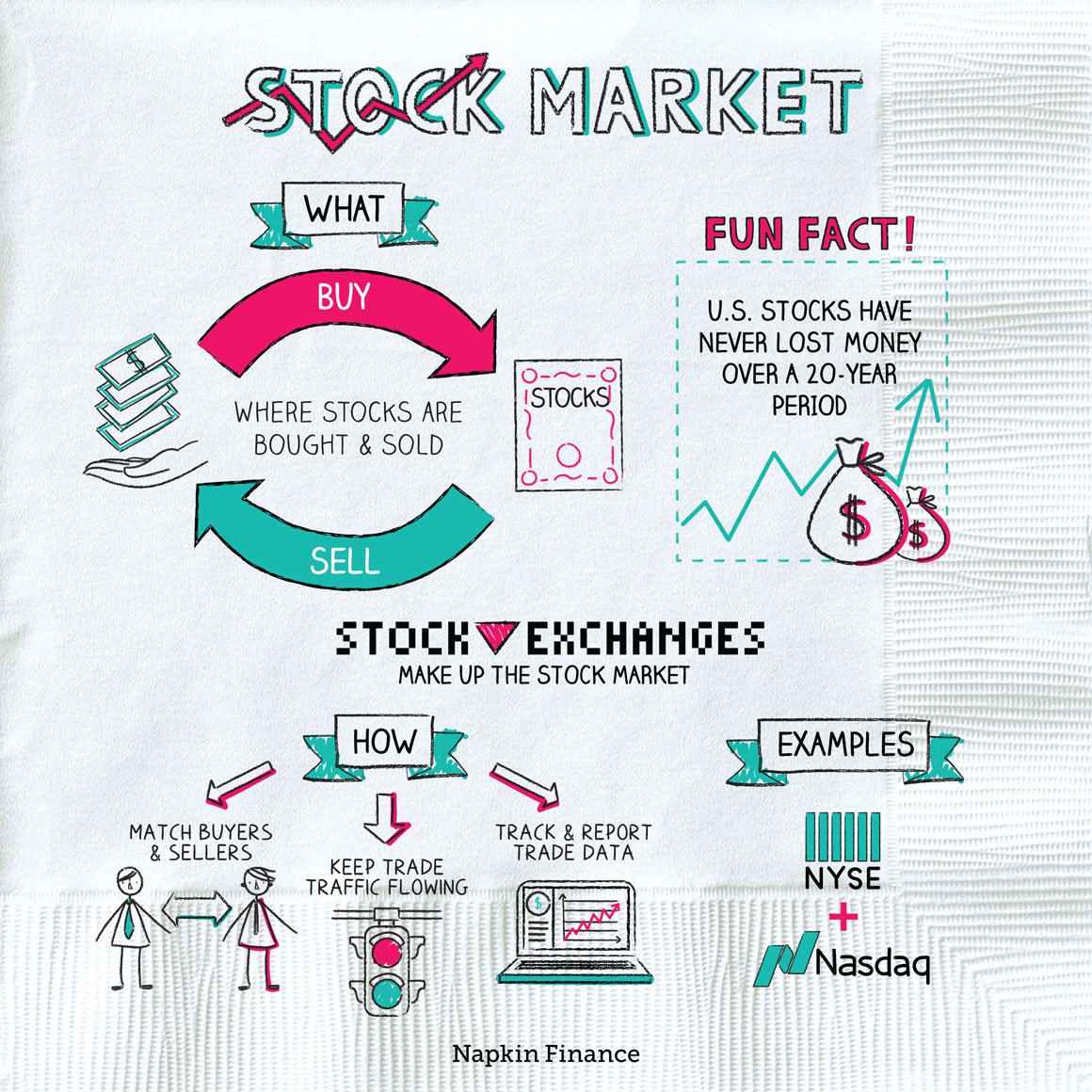
Before placing your first dollar into an investment, it is essential to understand what the stock market actually is and how it functions. At its core, the stock market is a collection of exchanges where shares of publicly held companies are issued, bought, and sold. When you buy a stock, you are purchasing a piece of a business. This entitles you to a portion of the company’s assets and earnings, providing a claim on its future success.
The Concept of Equity and Ownership
Equity represents ownership. When a company decides to go public, it undergoes an Initial Public Offering (IPO). This process allows the company to raise capital from the general public to fund expansion, research, or debt repayment. In exchange for this capital, the company issues shares. As a shareholder, your “use” of the market is essentially acting as a silent partner in these enterprises. If the company grows its profits or develops innovative products, the value of your shares typically increases, and you may receive a portion of those profits in the form of dividends.
Primary vs. Secondary Markets
It is important to distinguish between where stocks are born and where they live. The primary market is where securities are created; this is the aforementioned IPO stage where institutional investors usually get the first bite. The secondary market—which includes well-known exchanges like the New York Stock Exchange (NYSE) and the Nasdaq—is where individual investors participate. In the secondary market, you are not buying shares directly from the company, but rather from another investor who wishes to sell. The price is determined by the laws of supply and demand, influenced by company performance, economic data, and investor sentiment.
Market Indices and Benchmarks
To use the stock market effectively, you need a yardstick to measure performance. This is where indices come in. The S&P 500, for instance, tracks the performance of 500 of the largest companies in the United States. The Dow Jones Industrial Average (DJIA) tracks 30 blue-chip companies. These indices serve as a pulse for the overall economy. Most successful long-term investors use these benchmarks to gauge whether their individual picks or managed funds are actually providing value above what a simple, broad-market investment would offer.
Getting Started: The Infrastructure of Investing
The barrier to entry for the stock market has never been lower. Technology has democratized access, allowing anyone with a smartphone and a few dollars to become an investor. However, the ease of access requires a disciplined approach to setting up your financial infrastructure.
Choosing the Right Brokerage Platform
Your gateway to the stock market is a brokerage account. Modern investors have a wealth of choices, ranging from traditional powerhouses like Fidelity and Charles Schwab to fintech disruptors like Robinhood or Vanguard. When selecting a platform, consider the fee structure. Most major brokerages now offer commission-free trading for stocks and Exchange-Traded Funds (ETFs). Look for a user interface that matches your experience level and ensures the platform provides robust research tools and educational resources.
Selecting the Correct Account Type
How you hold your stocks is often as important as which stocks you buy, primarily due to taxation.
-
Taxable Brokerage Accounts: These offer the most flexibility. You can deposit and withdraw money at any time, but you will owe capital gains taxes on any profits you realize and taxes on dividends received.
-
Tax-Advantaged Accounts (IRAs/401ks): For many, using the stock market is a means to fund retirement. Individual Retirement Accounts (IRAs) offer significant tax benefits—either tax-deductible contributions (Traditional) or tax-free withdrawals in retirement (Roth). Utilizing these accounts is a critical component of a professional financial strategy, as it shields your growth from the corrosive effects of annual taxation.
Executing Your First Trade
When you are ready to buy, you will encounter different order types. A “Market Order” executes the trade immediately at the current best available price. A “Limit Order” allows you to set a specific price at which you are willing to buy or sell. For beginners, market orders are generally sufficient for highly liquid stocks, but limit orders provide more control in volatile markets, ensuring you don’t pay more than you intended during a sudden price spike.
Core Investment Strategies for the Modern Investor
Using the stock market effectively requires a strategy that aligns with your financial goals, time horizon, and risk tolerance. Without a strategy, an investor is merely a gambler reacting to headlines.
The Power of Index Funds and ETFs
For the vast majority of people, the most effective way to use the stock market is through passive investing. This involves buying Index Funds or ETFs that track a specific market segment. Instead of trying to find the next “Amazon,” you simply buy the entire market. This strategy is rooted in the “Efficient Market Hypothesis,” which suggests that it is incredibly difficult to consistently beat the market average over long periods. By owning an S&P 500 ETF (like VOO or SPY), you gain instant diversification across 500 companies with incredibly low management fees.
Value vs. Growth Investing
If you choose to invest in individual stocks, you will likely lean toward one of two philosophies:
-
Growth Investing: This focuses on companies that are expected to grow at a rate significantly above the average for the market. These companies often reinvest all their profits into expansion and may not pay dividends. Think of technology or biotech firms.
-
Value Investing: Popularized by Benjamin Graham and Warren Buffett, this strategy involves looking for “deals.” Value investors seek out companies that are trading for less than their intrinsic value—businesses with strong fundamentals that are currently out of favor with the market.
Dividend Growth Investing
Another popular strategy involves focusing on companies that pay consistent and increasing dividends. This “Money” niche strategy treats the stock market as a source of passive income. By reinvesting those dividends, investors benefit from a “double compounding” effect: the stock price grows over time, and the number of shares you own grows as dividends are used to buy more stock.
Risk Management and Emotional Intelligence
The stock market is a volatile environment. To use it successfully, you must master your emotions and implement rigorous risk management techniques. The biggest threat to an investor’s portfolio is often the person looking back at them in the mirror.
Diversification: The Only Free Lunch
Diversification is the practice of spreading your investments across various assets to reduce exposure to any single one. If you put all your money into one tech stock and that company fails, your portfolio is decimated. However, if you spread that money across tech, healthcare, energy, and consumer staples, a failure in one sector is buffered by the stability or growth in others. Diversification doesn’t just apply to stocks; it can include different geographies (international stocks) and asset classes (bonds, real estate, or commodities).
Understanding Volatility vs. Risk
It is vital to distinguish between volatility and risk. Volatility is the “price of admission” for the stock market—the daily ups and downs that can feel nauseating. Risk, however, is the permanent loss of capital. A 10% market correction is volatility; selling your stocks at the bottom of that correction because you are afraid is the realization of risk. Successful investors view volatility as an opportunity to buy assets at a discount rather than a reason to flee.
The Psychology of Market Cycles
Markets move in cycles: bull markets (rising prices) and bear markets (falling prices). Human psychology tends to work against us here; we feel like buying when everyone else is greedy and selling when everyone else is fearful. To use the stock market like a professional, you must adopt a contrarian mindset or, at the very least, a mechanical one. “Dollar-cost averaging”—investing a fixed amount of money at regular intervals regardless of the price—is a powerful tool to remove emotion from the equation.
Long-Term Maintenance: Compounding and Tax Efficiency
Using the stock market is not a “set it and forget it” endeavor, but it should also not be a daily preoccupation. Long-term maintenance ensures your portfolio remains aligned with your objectives.
The Magic of Compounding
The most powerful force in the stock market is time. Compounding is the process where the returns on your investment begin to earn their own returns. In the early years, the growth may seem slow. However, after two or three decades, the exponential curve takes over. This is why the best time to start using the stock market was twenty years ago, and the second-best time is today. Even small amounts invested consistently can grow into significant sums due to the relentless math of compound interest.
Portfolio Rebalancing
Over time, some of your investments will outperform others. This can lead to a “tilted” portfolio. For example, if you started with a 60% stock and 40% bond split, a massive bull market might leave you with 80% stocks. This exposes you to more risk than you originally intended. Rebalancing involves selling some of your “winners” and buying more of your “underperformers” to return to your target allocation. This forced discipline makes you follow the golden rule of investing: sell high and buy low.

Tax-Loss Harvesting
In taxable accounts, savvy investors use a technique called tax-loss harvesting. This involves selling a security that is at a loss to offset any capital gains taxes you owe from winning investments. It is a way to find a “silver lining” in a market downturn by using those losses to lower your overall tax bill. This strategy requires a firm understanding of IRS rules, such as the “wash-sale rule,” which prevents you from buying the same security back within 30 days.
The stock market remains the premier venue for individuals to build significant wealth. By understanding its foundational mechanics, selecting the right brokerage tools, employing a consistent strategy, and maintaining emotional discipline, you can transform the market from a source of anxiety into a reliable vehicle for your financial future. Success does not require a high IQ or a finance degree; it requires patience, a long-term perspective, and the courage to stay the course when others are distracted by the noise of the moment.
aViewFromTheCave is a participant in the Amazon Services LLC Associates Program, an affiliate advertising program designed to provide a means for sites to earn advertising fees by advertising and linking to Amazon.com. Amazon, the Amazon logo, AmazonSupply, and the AmazonSupply logo are trademarks of Amazon.com, Inc. or its affiliates. As an Amazon Associate we earn affiliate commissions from qualifying purchases.