
In an increasingly data-driven world, the ability to effortlessly navigate between different numerical representations is not merely a mathematical nicety but a fundamental skill underpinned by technology. Fractions and decimals are two sides of the same coin, each offering unique advantages depending on the context. While fractions elegantly represent parts of a whole, decimals provide a standardized, universally understood format essential for computation, especially within digital systems and scientific applications. The bridge between these two forms, once a manual and often arduous task, has been revolutionized by technology – specifically, the calculator. From the simplest handheld device to sophisticated online platforms and integrated software solutions, calculators have transformed the conversion of fractions to decimals from a chore into an instantaneous action. This guide delves into the technological aspects of this conversion, exploring how various digital tools facilitate this process, their underlying mechanisms, and what the future holds for such essential computational aids.
The Fundamental Relationship: Fractions, Decimals, and Their Digital Bridge
At their core, both fractions and decimals are ways to express quantities that are not whole numbers. Understanding their interrelationship is crucial for anyone engaging with mathematics, science, engineering, or even daily financial transactions. The advent of digital tools has not only simplified the conversion process but also deepened our reliance on decimal representation for most computational tasks.
Understanding Fractions and Decimals
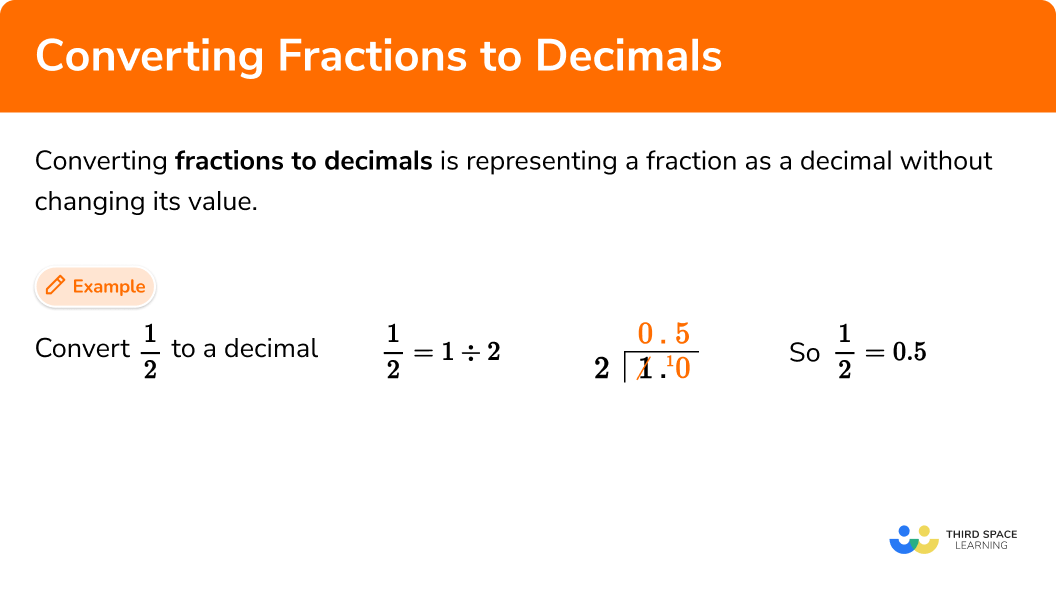
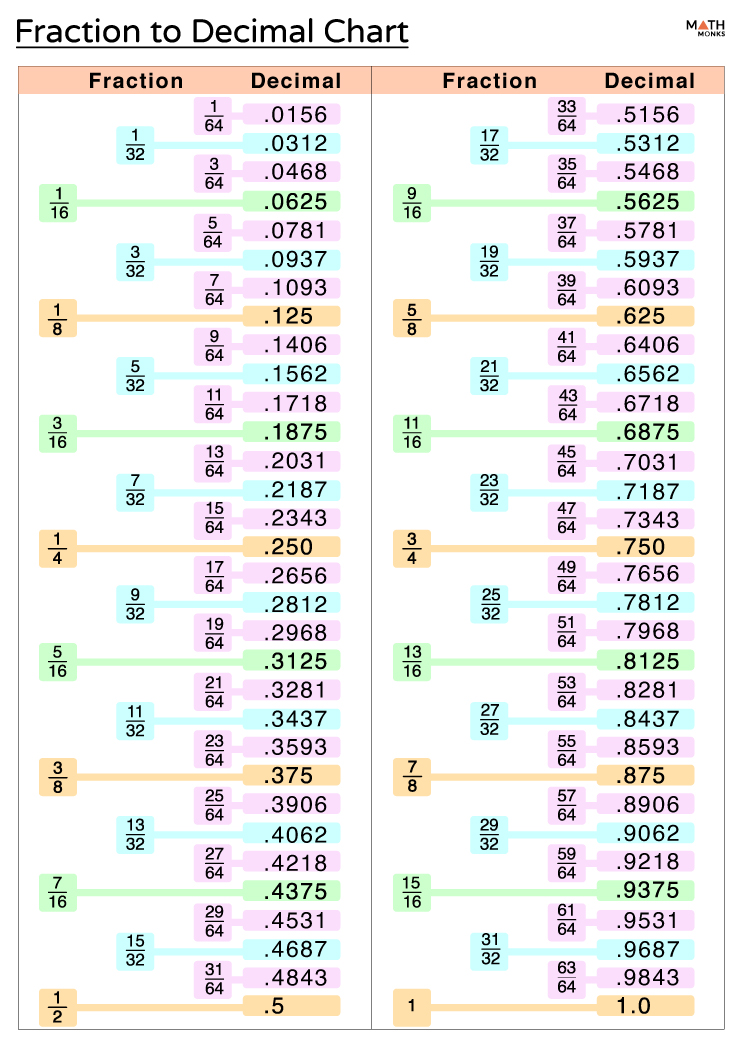
A fraction, typically written as a numerator over a denominator (e.g., 3/4), represents a part of a whole, indicating division. It’s an intuitive way to visualize proportions. Decimals, on the other hand, express fractions with denominators that are powers of ten (e.g., 0.75 for 3/4). They offer a linear, single-line representation that is highly compatible with digital processing and display, making them the default format for most computing systems. The inherent challenge arises when a fraction does not neatly translate into a terminating decimal, leading to recurring or repeating decimals, which pose unique challenges for both manual calculation and digital display.
The Inherent Value of Conversion
The necessity for converting fractions to decimals stems from practical applications across numerous domains. In engineering, precise decimal values are critical for designing components and executing measurements. In scientific research, data often needs to be presented and analyzed in decimal form to maintain consistency and facilitate statistical analysis. Financial systems universally rely on decimals for currency representation, interest calculations, and transaction processing, ensuring accuracy and avoiding ambiguity. Even in everyday scenarios, such as cooking measurements or understanding statistics, decimals often provide a more readily interpretable and calculable format. Technology, in the form of calculators and software, has become the indispensable enabler for these conversions, making complex computations accessible and efficient.
Manual Methods vs. The Calculator Revolution
Before the widespread adoption of digital calculators, converting fractions to decimals was a purely manual process, demanding a solid grasp of long division. While this method remains a foundational mathematical skill, its inherent limitations paved the way for technological solutions that offer unparalleled speed, accuracy, and ease of use.
The Traditional Path: Long Division
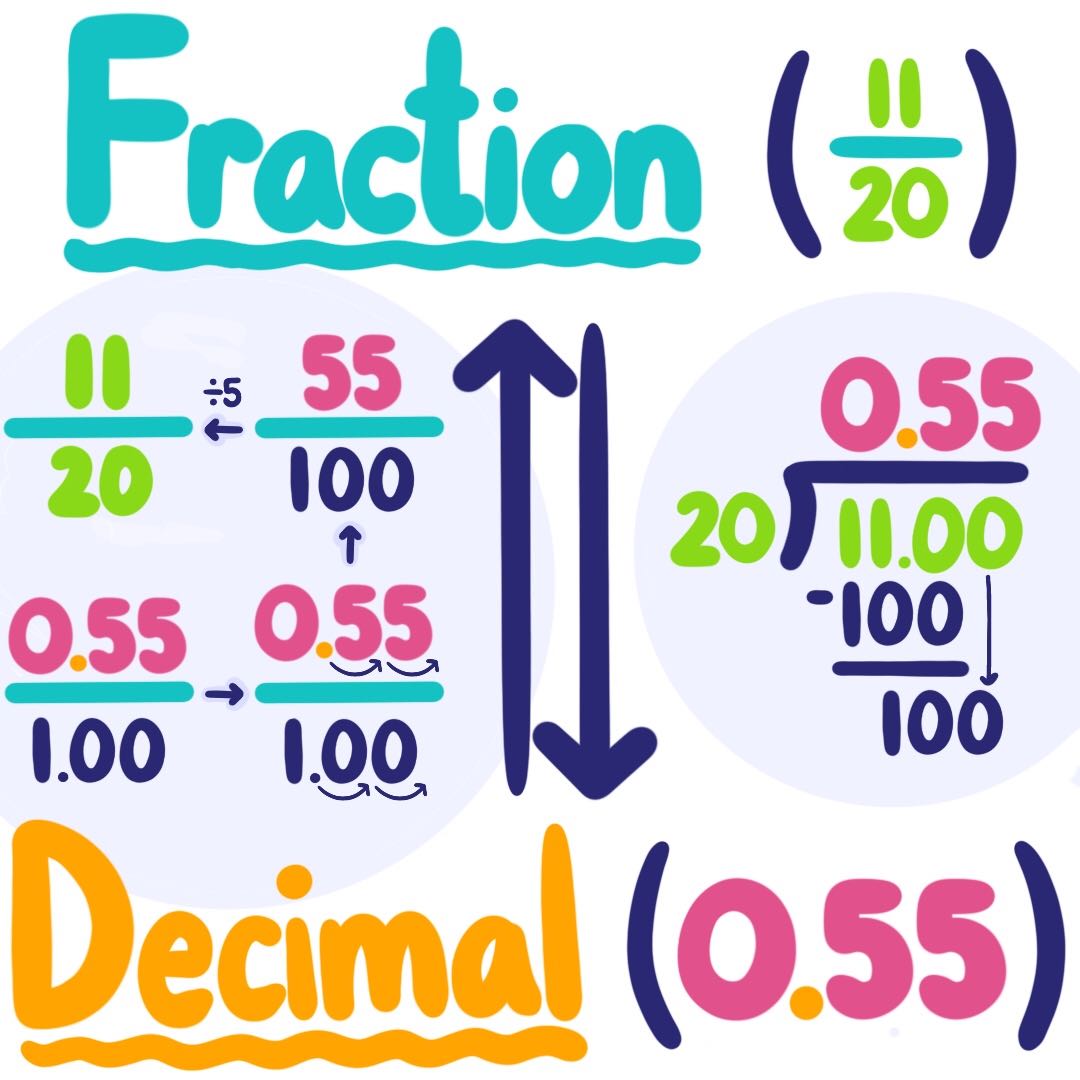
The manual process of converting a fraction to a decimal involves dividing the numerator by the denominator using long division. For instance, to convert 3/4, one would divide 3 by 4, yielding 0.75. While straightforward for simple fractions, this method quickly becomes cumbersome and error-prone when dealing with larger numbers, improper fractions, mixed numbers, or fractions that result in repeating decimals (e.g., 1/3 = 0.333…). The iterative nature of long division, requiring meticulous tracking of remainders and decimal places, consumes significant time and mental effort, especially in high-stakes environments where precision is paramount.
Embracing Automation: The Calculator’s Role
The advent of electronic calculators marked a significant paradigm shift in numerical computation. Early mechanical calculators laid the groundwork, but it was the electronic calculator that democratized access to instant arithmetic. For fraction-to-decimal conversion, the calculator automates the long division process, performing the calculation internally and presenting the result with specified precision or indicating recurring patterns. This automation dramatically reduces the time required for conversions, minimizes the risk of human error, and allows individuals to focus on the application of the numbers rather than the mechanics of their conversion. From basic four-function devices to advanced scientific models and sophisticated software, calculators have become an indispensable tool, epitomizing the power of technology to simplify complex tasks.
Navigating Calculator Types and Functions
The term “calculator” has expanded far beyond the traditional handheld device. Today, a spectrum of technological tools, each with varying capabilities and interfaces, stands ready to convert fractions into decimals. Understanding these different types and their specific functions is key to leveraging technology effectively.
Basic Calculators and Direct Input
Many modern basic calculators, especially those found in operating systems or simple online interfaces, primarily function by direct decimal input. To convert a fraction like 5/8, the user typically inputs “5 ÷ 8 =” and the calculator displays “0.625”. While lacking dedicated fraction buttons, these calculators still perform the underlying division, making the conversion straightforward for any user familiar with basic arithmetic operations. Their simplicity is their strength, making them highly accessible for quick, unambiguous conversions.
Scientific Calculators for Advanced Needs
Scientific calculators are specifically engineered with a broader array of mathematical functions, including dedicated features for handling fractions. Many scientific calculators include a “fraction button” (often denoted as ‘a b/c’, ‘d/c’, or ‘F↔D’). Users can input fractions directly (e.g., “3 a b/c 4”) and then press the fraction-to-decimal conversion button to instantly display the decimal equivalent. These calculators can also convert mixed numbers (e.g., 1 1/2) and often simplify fractions before conversion, providing a robust solution for students, engineers, and scientists who frequently work with fractional values.
Online Converters and Mobile Apps
The digital age has brought forth a wealth of online fraction-to-decimal converters and mobile applications. Websites like Wolfram Alpha, Desmos, or dedicated math converter sites offer intuitive interfaces where users simply input the fraction, and the decimal equivalent is displayed instantly, often along with step-by-step explanations or visual representations. Mobile apps, available for both iOS and Android, provide similar functionality on the go, sometimes integrating additional features like unit conversion, graphing, or problem-solving capabilities. These tools stand out for their accessibility, often being free, and their ability to handle complex inputs while providing supplementary educational content.
Spreadsheet Software (Excel, Google Sheets)
For handling large datasets or performing conversions as part of broader analytical tasks, spreadsheet software like Microsoft Excel or Google Sheets is invaluable. Fractions can be input in various ways (e.g., ‘3/4’ if formatted as text, or directly as a division ‘=(3/4)’ in a cell). By entering the numerator in one cell (e.g., A1) and the denominator in another (e.g., B1), one can simply use the formula “=A1/B1” in a third cell to instantly get the decimal equivalent. This method is particularly powerful for bulk conversions or integrating fraction-to-decimal conversions into more elaborate financial models, scientific data analysis, or statistical computations. The underlying tech here is the formula parser and calculation engine, which is a core component of these sophisticated software applications.
Mastering the Conversion Process: Practical Steps and Best Practices
While technology simplifies the process, understanding how to effectively use these tools and interpret their output is crucial for mastery. Precision, context, and recognizing limitations are key elements of digital literacy in this domain.
Step-by-Step Guide for Common Calculators
Regardless of the specific calculator type, the fundamental steps for converting a fraction (Numerator/Denominator) to a decimal remain consistent:
- Identify Numerator and Denominator: Clearly distinguish which number is on top (numerator) and which is on the bottom (denominator).
- Input Numerator: Enter the numerator into your calculator.
- Select Division Operator: Press the division (÷ or /) button.
- Input Denominator: Enter the denominator.
- Execute Calculation: Press the equals (=) button.
The calculator will display the decimal equivalent. For scientific calculators with fraction buttons, the process might involve inputting the fraction directly and then pressing a dedicated conversion key.
Handling Recurring Decimals and Precision
A critical aspect of digital conversion is understanding how calculators handle non-terminating (recurring) decimals. Fractions like 1/3 (0.333…) or 1/7 (0.142857142857…) produce infinite decimal expansions. Calculators, having finite display capacities, will either truncate (cut off) or round the decimal to a certain number of decimal places. It’s essential to be aware of the calculator’s precision settings (e.g., Fix 2, Fix 4) and to understand that the displayed value is often an approximation. In contexts requiring high accuracy, it’s vital to know how many significant figures or decimal places are required and to round appropriately or retain the fractional form until the final calculation.
Troubleshooting and Common Pitfalls
Even with advanced technology, user error can occur. Common pitfalls include:
- Incorrect Input: Mismatched numerator/denominator or typographical errors. Always double-check your input.
- Calculator Mode Settings: Some scientific calculators have modes (e.g., ‘Rad’ for radians, ‘Deg’ for degrees) that don’t directly impact fraction-to-decimal conversion but can affect other operations if you switch context. Ensure the calculator is in a standard computational mode.
- Understanding Error Messages: An ‘Error’ or ‘Divide by Zero’ message indicates a fundamental mathematical problem, most commonly trying to divide by a zero denominator, which is undefined.
- Interpreting Recurring Decimals: Sometimes, a calculator might display a long string of numbers (e.g., 0.16666667) where the last digit is rounded up. Recognizing these patterns and knowing the exact fraction is important for precise work.
The Future of Digital Conversion Tools
As technology continues its relentless march forward, the digital tools for converting fractions to decimals are poised for even greater sophistication, integration, and user-friendliness. The evolution of AI, enhanced interfaces, and seamless interoperability will redefine how we interact with numerical conversions.
AI and Machine Learning Integration
Future calculators and conversion tools will likely leverage Artificial Intelligence and Machine Learning. Imagine voice-activated calculators that understand natural language queries like “What’s 5/16 as a decimal?” or tools that predict the most likely conversion needed based on previous inputs or the context of a document. AI could also provide intelligent error correction, guiding users to identify mistakes in input or offering alternative representations. Machine learning algorithms could analyze user habits to personalize interfaces, suggesting relevant precision settings or conversion types automatically.
Enhanced User Interfaces and Educational Features
The user experience of conversion tools is also set to evolve. Augmented reality (AR) could allow students to point their smartphone cameras at a handwritten fraction and instantly see its decimal equivalent overlaid on the paper. Integrated learning modules within apps could offer interactive tutorials, quizzes, and even gamified challenges to reinforce understanding. Beyond simple output, future tools might dynamically show the long division process step-by-step, adapting to different learning styles and providing deeper insights into the mathematical mechanics rather than just the result.
Interoperability and Workflow Automation
The most significant advancements might come in the realm of interoperability. Imagine conversion tools seamlessly integrated into broader software ecosystems – CAD programs automatically converting fractional engineering dimensions into decimals for simulations, or scientific research platforms instantly converting experimental data from fractional outputs to decimal for statistical analysis. Developers could use APIs to embed conversion functionalities directly into their custom applications, automating workflows and eliminating the need for manual data entry or switching between different programs. This level of integration would transform conversion from a discrete task into an invisible, background utility that powers more complex technological processes.
Conclusion
The journey from manual long division to instantaneous digital conversion of fractions to decimals exemplifies the profound impact of technology on our ability to interact with numbers. Calculators, in their myriad forms – from physical handheld devices to sophisticated software applications and online platforms – have not only democratized access to precise computation but have also become indispensable tools across academic, professional, and personal spheres. Understanding the capabilities and limitations of these diverse technological aids is crucial for harnessing their full potential. As we look ahead, the integration of AI, the evolution of intuitive user interfaces, and seamless interoperability promise to further refine and expand the capabilities of these essential conversion tools, continuing to simplify mathematical complexities and empower users in an increasingly digital world. The ongoing evolution of this seemingly simple function underscores a broader truth: technology continues to augment human intellect, making the once difficult, effortless, and opening new frontiers for innovation.
aViewFromTheCave is a participant in the Amazon Services LLC Associates Program, an affiliate advertising program designed to provide a means for sites to earn advertising fees by advertising and linking to Amazon.com. Amazon, the Amazon logo, AmazonSupply, and the AmazonSupply logo are trademarks of Amazon.com, Inc. or its affiliates. As an Amazon Associate we earn affiliate commissions from qualifying purchases.