
The demand for instant financial transactions has surged dramatically in recent years, transforming how individuals and businesses manage their money. Gone are the days when waiting several business days for funds to clear was the norm. Today, the ability to move money across accounts, send funds to friends, or pay suppliers in real-time is not just a convenience but often a necessity. Understanding the various mechanisms available, along with their associated costs, limits, and security considerations, is paramount for anyone looking to leverage the power of instant money transfers effectively.
The Growing Need for Instant Money Transfers
The shift towards an increasingly digital and interconnected global economy has fueled an unprecedented demand for immediate financial settlements. This evolution is not merely a technological advancement but a fundamental change in financial behavior and expectations.
The Evolution of Financial Transactions
Historically, money transfers were cumbersome, involving paper checks, physical cash, or slow bank transfers that could take days to process. The advent of electronic funds transfers (EFTs) marked a significant leap, but even these often involved overnight processing. The current wave of “instant” or “real-time” payments represents the pinnacle of this evolution, driven by consumer expectations for speed, convenience, and accessibility that mirror other digital services. From ordering groceries to hailing a ride, immediacy has become a baseline expectation, extending naturally to financial interactions. This paradigm shift affects everything from personal budgeting and bill payments to business liquidity and supply chain management.
Advantages of Real-Time Payments for Individuals and Businesses
For individuals, instant money transfers offer unparalleled convenience. They can split dinner bills with friends instantly, send emergency funds to family members without delay, or pay contractors immediately upon job completion. This immediacy eliminates the anxiety of waiting and improves personal financial agility. Budgeting becomes more dynamic, as funds can be moved between accounts for specific purposes precisely when needed.
For businesses, the benefits are even more profound. Instant payments can significantly improve cash flow management, allowing businesses to pay suppliers promptly, reducing late payment penalties, and fostering stronger vendor relationships. Small businesses, in particular, benefit from receiving payments instantly, helping them manage daily operations and invest in growth without waiting for funds to clear. Payroll can be more flexible, enabling on-demand payments for freelancers or shift workers. Furthermore, real-time payments can enhance customer experience, for instance, by allowing instant refunds or faster payouts for insurance claims, thereby building trust and loyalty.
Key Mechanisms for Instant Money Transfers
Several platforms and systems facilitate instant money transfers, each with its own operational nuances, fee structures, and limitations. Choosing the right method depends on the transfer amount, recipient location, urgency, and cost sensitivity.
Peer-to-Peer (P2P) Payment Apps
P2P payment applications have revolutionized how individuals send and receive money. Services like Zelle, Venmo, Cash App, and PayPal allow users to transfer funds directly from their bank accounts or digital wallets to others, often within seconds.
-
Zelle: Integrated directly into many banking apps, Zelle offers instant transfers between participating U.S. bank accounts at no cost. Its primary advantage is its seamless integration with existing banking infrastructure, making it highly secure and convenient for many users. However, transfers are generally irreversible, emphasizing the need for careful recipient verification.
-
Venmo & Cash App: These popular apps cater primarily to social transactions, allowing users to send money quickly to friends and family. While standard transfers from the app to a bank account typically take 1-3 business days, both offer an “instant transfer” option for a small fee (usually 0.5% to 1.75% of the transfer amount, with a minimum fee). They function as digital wallets, meaning funds might reside within the app’s ecosystem before being cashed out to a bank.
-
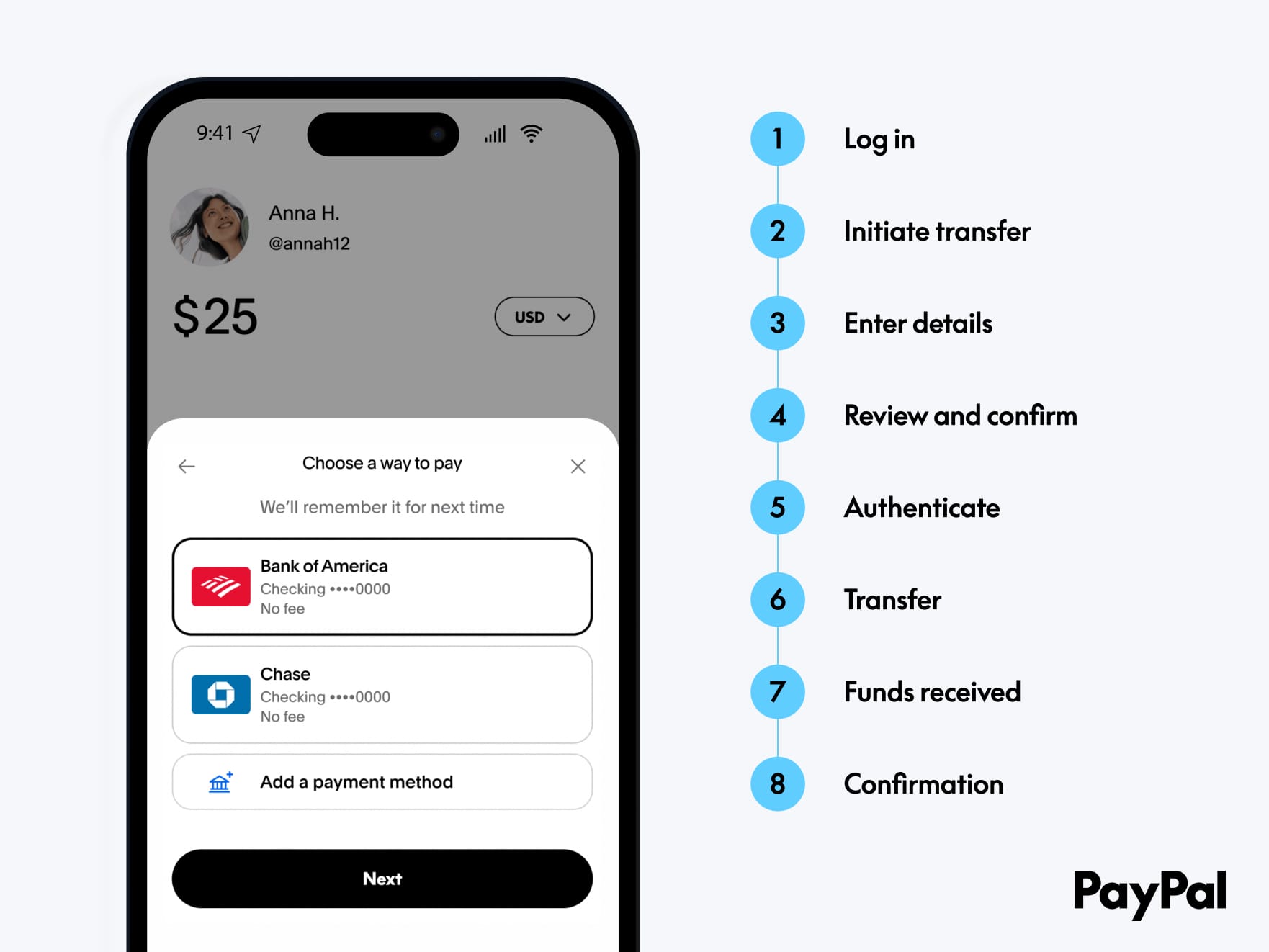
PayPal: One of the oldest digital payment platforms, PayPal offers various instant transfer options. Sending money to another PayPal user’s account is usually instant. For moving funds from a PayPal balance to a linked bank account or debit card instantly, a fee (typically 1.75% for bank, 1.75% for debit card) applies, similar to Venmo and Cash App. PayPal also facilitates international transfers, but these often involve currency conversion fees and varying speeds.
Real-Time Payment Networks (RTP)
Beyond P2P apps, the financial industry has developed dedicated real-time payment networks. In the U.S., The Clearing House’s RTP network is a prime example, facilitating immediate, irrevocable, 24/7/365 payments between participating financial institutions.
-
Explanation: RTP allows banks to send and receive payments instantly, with immediate confirmation of receipt. This system significantly accelerates interbank transfers, eliminating the traditional batch processing delays. While often invisible to the end-user, these networks power many of the “instant” features offered by banks for direct account-to-account transfers.
-
Benefits: For consumers, RTP means faster access to direct deposits, instant bill payments, and immediate settlement of person-to-person transfers when supported by their bank. For businesses, it enables real-time payroll, immediate invoice payments, and improved cash management. Its 24/7 availability is a game-changer for businesses operating outside traditional banking hours.
Wire Transfers (Expedited Options)
Traditional wire transfers, while robust and secure, have historically been known for their high fees and processing times, often taking hours or even a full business day for domestic transfers, and several days for international ones. However, some financial institutions now offer expedited wire transfer services for a premium. These aren’t “instant” in the sense of P2P apps but are significantly faster than standard wires. They remain a preferred method for very large sums due to their security protocols and global reach, despite the higher costs. The financial trade-off here is paying more for guaranteed, albeit not instantaneous, speed and reliability for high-value transactions.
Digital Wallets and Cryptocurrencies
Digital wallets, such as Apple Pay and Google Pay, facilitate instant payments at points of sale and can sometimes be used for direct transfers between users, leveraging underlying instant payment rails.
Cryptocurrencies, particularly stablecoins (e.g., USDT, USDC) pegged to fiat currencies, offer another avenue for near-instant transfers, especially across international borders, often with lower transaction fees than traditional methods. However, they come with their own set of considerations, including market volatility (for non-stablecoins), regulatory uncertainties, and the need for both sender and receiver to have cryptocurrency wallets. From a financial perspective, the perceived low transaction fees can be offset by conversion costs, network congestion fees, and the inherent risks of dealing with a nascent, less-regulated financial ecosystem.
Important Considerations Before an Instant Transfer
While the speed of instant transfers is appealing, several financial and practical considerations must be carefully evaluated before initiating a transaction.
Fees and Costs
Instant gratification often comes at a price. While some services like Zelle are free, many P2P apps and expedited banking options charge fees for instant transfers. These can be flat fees, percentage-based fees (e.g., 1.5% of the transaction), or a combination thereof. For international transfers, currency conversion fees and fluctuating exchange rates can significantly impact the final received amount. Always compare the total cost across different platforms, including hidden charges, to ensure the most cost-effective solution for your specific needs. Large transactions, in particular, can incur substantial percentage-based fees.

Transfer Limits and Restrictions
Most instant payment services impose daily, weekly, or monthly transfer limits. These limits vary significantly by platform, account verification status, and whether the transfer is domestic or international. For instance, a basic Cash App account might have a lower sending limit than a fully verified one. Banks often have higher limits for Zelle or RTP transfers compared to third-party apps. Be aware of these restrictions, especially when planning large personal expenses or business payments, as exceeding limits can cause delays or require alternative transfer methods.
Security and Fraud Prevention
The speed of instant transfers is a double-edged sword: once sent, funds are often difficult, if not impossible, to recover. This makes instant transfers highly attractive to fraudsters. Users must exercise extreme caution. Only send money to people you know and trust. Always double-check recipient details – phone number, email address, or bank account number – before authorizing a transfer. Many services offer robust security features like multi-factor authentication and encryption, but user vigilance remains the first line of defense against scams, phishing attempts, and unauthorized access to accounts. The financial risk of irreversible transfers means that a single error or fraudulent transaction can lead to permanent loss of funds.
Reversibility and Dispute Resolution
Unlike credit card transactions, which often come with buyer protection and chargeback options, most instant money transfers are non-reversible. Once funds are sent and received, reversing the transaction is usually not possible, even in cases of error or fraud, unless the recipient voluntarily returns the money. This lack of recourse highlights the importance of accuracy and due diligence before clicking “send.” Dispute resolution mechanisms vary by platform; some may offer limited assistance for unauthorized transactions but rarely for funds sent in error by the user.
Exchange Rates for International Transfers
For cross-border instant transfers, the exchange rate can significantly impact the amount received by the beneficiary. Banks and remittance services often apply a spread on the interbank exchange rate, effectively charging a hidden fee. Some services might offer seemingly low transaction fees but compensate by offering less favorable exchange rates. Always compare the total cost, including the exchange rate applied, to determine the most cost-effective method for international instant transfers. Online currency converters can help estimate the true value received.
Best Practices for Secure and Efficient Instant Transfers
To harness the power of instant money transfers while mitigating risks, adopting a few best practices is crucial.
Verify Recipient Details Meticulously
This is perhaps the single most important step. Before initiating any instant transfer, confirm the recipient’s phone number, email address, or account details directly with them through a separate, verified channel (e.g., a phone call, not just replying to an email). A single typo can send your money to the wrong person, and due to irreversibility, it may be lost forever.
Understand Fee Structures
Familiarize yourself with the fee schedule of your chosen platform or bank. Know whether you’re paying a flat fee, a percentage, or both. For international transfers, pay close attention to the exchange rate and any additional conversion fees. Consider if the speed benefit outweighs the cost for your specific transaction.
Utilize Strong Security Measures
Enable all available security features on your payment apps and bank accounts, including multi-factor authentication (MFA), strong unique passwords, and biometric logins. Regularly review your transaction history for any suspicious activity. Be wary of unsolicited requests for money or suspicious links, which could be phishing attempts.
Keep Records of Transactions
Maintain a clear record of all instant transfers, including the amount, date, recipient, and confirmation numbers. This documentation can be invaluable for personal budgeting, tax purposes, and in the rare event that you need to dispute a transaction with your bank or payment provider.
The Future Landscape of Instant Payments
The realm of instant payments is continuously evolving, promising even greater integration and accessibility.
Expanding RTP Adoption
The adoption of real-time payment networks like the RTP network in the U.S. and similar initiatives globally (e.g., FedNow Service, SEPA Instant Credit Transfer in Europe) is expected to grow. As more banks and financial institutions connect to these networks, the ubiquity of instant account-to-account transfers will increase, making them a standard rather than a premium service.
Regulatory Sandboxes and Innovation
Regulators worldwide are creating “sandbox” environments that allow financial technology (fintech) companies to test innovative instant payment solutions under controlled conditions. This fosters innovation, leading to new services that could further reduce costs, enhance security, and expand the reach of instant payments.

Cross-Border Instant Payments
While domestic instant transfers are becoming commonplace, true global instant payments remain a significant challenge due to disparate regulatory environments, currency exchange complexities, and varying technological infrastructures. However, concerted efforts by international bodies and innovative fintech solutions are gradually paving the way for more seamless, faster, and more affordable cross-border instant transfers, revolutionizing global commerce and remittances. This future will likely see a blend of traditional banking rails, advanced blockchain technologies, and sophisticated digital wallets working in concert to make sending money internationally as quick and easy as sending a text message.
aViewFromTheCave is a participant in the Amazon Services LLC Associates Program, an affiliate advertising program designed to provide a means for sites to earn advertising fees by advertising and linking to Amazon.com. Amazon, the Amazon logo, AmazonSupply, and the AmazonSupply logo are trademarks of Amazon.com, Inc. or its affiliates. As an Amazon Associate we earn affiliate commissions from qualifying purchases.