
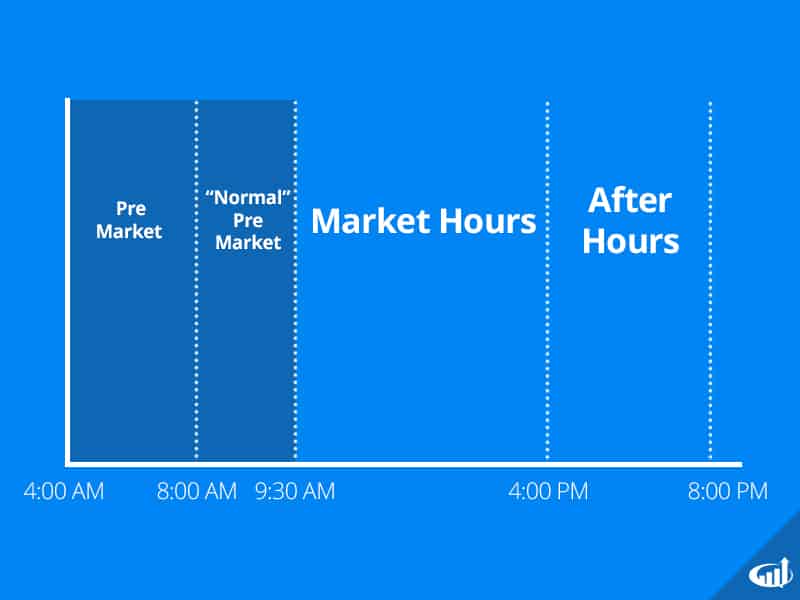
In the dynamic world of financial markets, opportunities often emerge outside of the standard trading hours. Premarket trading, an increasingly popular activity among sophisticated investors and day traders, allows participants to buy and sell securities before the official opening bell of the major exchanges. This early window, typically running from 4:00 AM to 9:30 AM EST, offers a unique landscape shaped by news events, earnings reports, and geopolitical developments that can significantly influence stock prices. Understanding the intricacies of this period, its advantages, risks, and the strategies required to navigate it, is crucial for anyone looking to capitalize on these early market movements. This comprehensive guide will delve into the mechanics, benefits, pitfalls, and best practices for successfully engaging in premarket trading.
Understanding Premarket Trading Dynamics
Premarket trading is not merely an extension of regular trading hours; it operates under a distinct set of rules and market characteristics. Grasping these foundational elements is the first step towards effective participation.
What is Premarket Trading?
Premarket trading refers to the period during which securities can be traded before the conventional market open at 9:30 AM Eastern Time. While the exact duration can vary slightly depending on the broker, it generally commences as early as 4:00 AM EST. During this window, orders are executed electronically through Electronic Communication Networks (ECNs) rather than through the traditional market makers or exchange specialists who primarily facilitate trading during regular hours. This early access allows traders to react swiftly to overnight news, economic data releases, or corporate announcements that occur outside of market hours, potentially gaining an edge before the broader market reacts. It’s a period characterized by a reduced pool of participants compared to the main trading session, which inherently leads to specific market behaviors.
The Mechanics and Participants
The operational mechanism of premarket trading relies heavily on ECNs. These automated systems match buy and sell orders directly between market participants, bypassing the traditional exchange floor. When you place a premarket trade, your order is routed to one of these networks. It’s important to note that not all brokers offer extensive premarket trading hours, and some may have limitations on order types or eligible securities. Typically, large-cap stocks and highly liquid ETFs are more actively traded during premarket hours, while smaller, less liquid stocks might see little to no activity. The participants in premarket trading are often institutional investors, hedge funds, and experienced retail traders who have the tools and expertise to monitor market-moving news and execute trades rapidly. Their sophisticated understanding of market dynamics allows them to interpret price action in a less liquid environment.
Advantages and Strategic Opportunities
Premarket trading, while challenging, offers several compelling advantages that draw savvy traders to its early hours. These opportunities are primarily driven by information asymmetry and reduced competition.
Reacting to News and Earnings Reports
One of the most significant advantages of premarket trading is the ability to react immediately to fresh news and corporate earnings reports. Companies frequently release their quarterly earnings, significant product announcements, or M&A news either after the market closes or before it opens. For traders, these announcements act as potent catalysts. By trading premarket, investors can position themselves before the general market has fully digested the information. For instance, if a company announces surprisingly strong earnings, its stock might gap up significantly at the open. Premarket traders have the chance to buy shares at a lower price before this gap-up, or conversely, to exit a position if negative news breaks, mitigating potential losses. This direct access to the immediate aftermath of news events is a powerful tool for those who can process information quickly and accurately.
Capitalizing on Enhanced Volatility
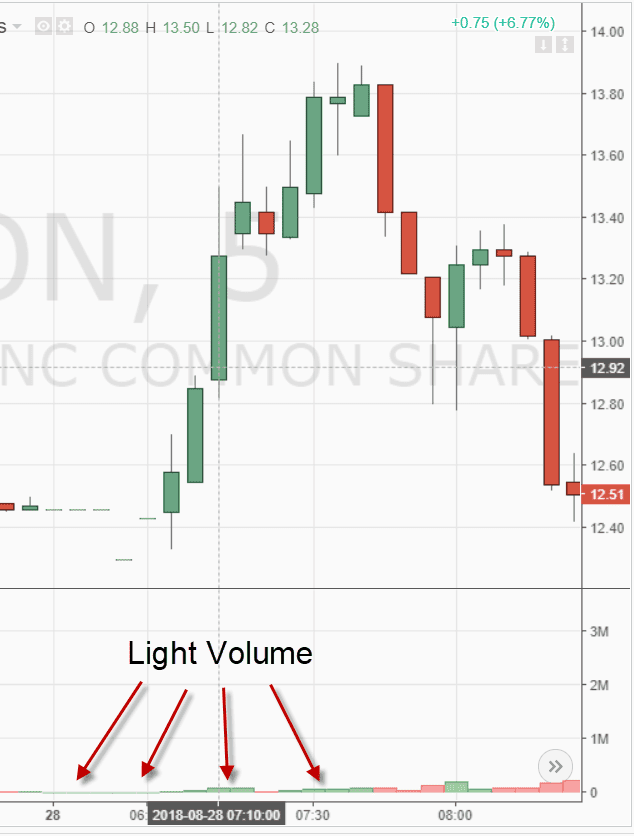
While lower liquidity can be a risk, it also contributes to increased volatility, which can be a double-edged sword for traders. For those with a robust strategy and experience, this heightened volatility can translate into significant profit opportunities. A relatively small volume of trades can sometimes cause substantial price swings in premarket hours, creating rapid intra-day trends that can be exploited by skilled traders. Short-term price movements can be amplified, allowing for quick gains on successful predictions. However, this also means that stop-loss orders might be hit more easily, and price movements can be less predictable than during regular hours. Traders must be prepared for swift reversals and unpredictable market behavior when aiming to capitalize on premarket volatility.
Price Discovery and Early Entry
Premarket trading also plays a vital role in price discovery. The trading activity during this period helps to establish a preliminary opening price for a stock, reflecting early sentiment and information flow. For investors, this provides an early indication of how a stock might perform once the main market opens. Furthermore, premarket offers the chance for early entry into promising trades or early exit from positions that are showing weakness. If a specific stock is showing strong momentum premarket due to positive news, an early entry might secure shares at a better average price than waiting for the open, when increased demand could drive prices higher. Conversely, if a stock is plummeting due to adverse news, exiting early can save significant capital before a larger market sell-off occurs.
Navigating the Inherent Risks
Despite the attractive opportunities, premarket trading is not without its significant challenges and risks. Acknowledging and understanding these potential pitfalls is paramount to safeguarding capital.
Lower Liquidity and Wider Spreads
The most prominent risk in premarket trading stems from significantly lower liquidity compared to regular market hours. With fewer participants actively trading, the volume of shares being exchanged is much smaller. This reduced liquidity directly leads to wider bid-ask spreads. The bid price (the highest price a buyer is willing to pay) and the ask price (the lowest price a seller is willing to accept) are often further apart than during regular hours. This means that slippage (the difference between the expected price of a trade and the price at which the trade is actually executed) can be more substantial, and it can be challenging to execute large orders without impacting the price. A wider spread essentially increases the cost of entry and exit, eating into potential profits, and can make it difficult to get in or out of a position at a desired price.
Increased Volatility and Price Swings
While volatility can be an opportunity, it is also a major risk factor. The lower liquidity and the often-speculative nature of premarket trading mean that a relatively small number of large orders can cause dramatic price swings. Stocks can move sharply up or down based on limited information or even thin trading volumes, leading to significant unrealized gains or losses in a very short period. These rapid and often unpredictable movements make risk management particularly challenging. Traders must be prepared for the possibility of a stock moving against their position rapidly, potentially triggering stop-loss orders prematurely or leading to larger-than-anticipated losses if stop-losses are not properly managed or are bypassed due to extreme volatility.
Limited Information and Research
During premarket hours, the depth of available market information and research can be considerably less than during regular trading hours. Analyst coverage may be minimal, and the flow of news might be more sporadic. This limitation means traders often have to make decisions based on fewer data points and without the benefit of extensive market analysis or consensus opinions. Interpreting news events correctly and understanding their potential impact on stock prices requires considerable experience and critical thinking. Relying on incomplete information or speculation can lead to poor trading decisions. Furthermore, some brokers may offer limited charting tools or indicators for premarket data, further complicating technical analysis.
Essential Strategies and Tools for Success
To succeed in the premarket environment, a disciplined approach, combined with specific strategies and the right tools, is indispensable.
Identifying Catalysts and News Events
The cornerstone of premarket trading strategy is the ability to identify and swiftly react to catalysts. These are the events, such as earnings reports, FDA approvals, economic data releases, analyst upgrades/downgrades, or major company announcements, that are likely to cause significant price movement. Traders should have a reliable news feed that provides real-time updates. Subscribing to financial news services, monitoring corporate press releases, and utilizing dedicated premarket news scanners are critical. The goal is to be among the first to understand the implications of a news event and formulate a trading plan before the market fully digests it. Understanding the specific sector and company you are trading is also crucial for accurately assessing the impact of a given catalyst.
Utilizing Advanced Order Types and Risk Management
Given the volatile and less liquid nature of premarket, traders must employ advanced order types to manage risk effectively. Limit orders are crucial, as they allow you to specify the maximum price you’re willing to pay or the minimum price you’re willing to accept, helping to prevent unfavorable execution prices due to wide spreads. While stop-loss orders are fundamental for risk management, traders must be aware that in highly volatile premarket conditions, stop-loss orders may be “gapped over” – meaning the price moves so rapidly that your stop is executed at a much worse price than intended. Using trailing stops or mental stops, combined with a clear understanding of your maximum acceptable loss per trade, is vital. Position sizing, ensuring that no single trade can disproportionately impact your capital, is also a critical risk management technique.
Platform Requirements and Broker Selection
Not all brokerage platforms are created equal when it comes to premarket trading. Traders need a broker that offers extensive premarket hours (ideally starting around 4:00 AM EST), provides access to ECNs, and offers competitive commission structures. The trading platform itself should be robust, offering real-time data feeds, advanced charting capabilities that include premarket data, and swift order execution. Access to Level 2 data, which shows the depth of buy and sell orders at various price levels, is also highly beneficial for understanding liquidity and potential price action. A reliable and fast internet connection is equally important, as even milliseconds can matter in high-speed premarket trading.
Best Practices for Premarket Success
Consistent success in premarket trading requires more than just understanding strategies; it demands discipline, continuous learning, and a robust framework for decision-making.
Developing a Robust Trading Plan
Every successful premarket trader operates with a meticulously crafted trading plan. This plan should clearly define:
- Entry Criteria: What specific conditions (e.g., news catalyst, technical patterns, volume spikes) trigger an entry?
- Exit Criteria: When will you take profits, and at what point will you cut losses?
- Position Sizing: How much capital will you allocate to each trade based on your overall risk tolerance?
- Watchlist: A curated list of stocks known for premarket volatility or those with upcoming catalysts.
- Preparation: A routine for monitoring news, setting up charts, and preparing for the trading session.
A well-defined plan reduces emotional decision-making and ensures consistency, which is paramount in a high-pressure environment.
Risk Management Imperatives
In premarket trading, risk management is not just a best practice; it is an imperative. Due to the amplified risks of lower liquidity and higher volatility, traders must prioritize capital preservation. This includes:
- Setting Strict Stop-Losses: Always define your maximum acceptable loss before entering a trade.
- Appropriate Position Sizing: Never risk more than a small percentage (e.g., 1-2%) of your total trading capital on any single trade.
- Understanding Liquidity: Avoid thinly traded stocks unless you are fully aware of the execution risks.
- Avoiding Overtrading: The temptation to chase every volatile move can lead to excessive risk-taking. Stick to high-conviction setups.
- Reviewing Trades: Regularly analyze your premarket trades to identify patterns, learn from mistakes, and refine your strategy.
Continuous Learning and Adaptation
The financial markets are constantly evolving, and premarket trading is no exception. Successful traders are lifelong learners who continuously adapt their strategies to changing market conditions. This involves:
- Staying Informed: Keeping up-to-date with market trends, economic indicators, and technological advancements in trading.
- Analyzing Performance: Regularly reviewing your trading journal and metrics to identify strengths and weaknesses.
- Learning from Experience: Both wins and losses offer valuable lessons. Understanding why a trade worked or failed is crucial for improvement.
- Networking: Engaging with other experienced traders can provide new perspectives and insights.
- Practice: Utilizing simulated trading environments (paper trading) to test new strategies without financial risk before deploying them with real capital.

Conclusion
Premarket trading offers a fascinating and potentially lucrative avenue for those willing to master its unique characteristics. It presents opportunities to react swiftly to market-moving news, capitalize on early volatility, and engage in price discovery before the broader market opens. However, these advantages are balanced by significant risks, including lower liquidity, wider spreads, increased volatility, and limited information. By understanding these dynamics, employing disciplined strategies, utilizing the right tools, and adhering to rigorous risk management principles, traders can position themselves to navigate the premarket successfully. As with any form of active trading, success in the premarket demands meticulous preparation, continuous learning, and unwavering discipline. For the astute investor, the early hours can indeed offer an early advantage.
aViewFromTheCave is a participant in the Amazon Services LLC Associates Program, an affiliate advertising program designed to provide a means for sites to earn advertising fees by advertising and linking to Amazon.com. Amazon, the Amazon logo, AmazonSupply, and the AmazonSupply logo are trademarks of Amazon.com, Inc. or its affiliates. As an Amazon Associate we earn affiliate commissions from qualifying purchases.