
The equity market, often referred to as the stock market, represents one of the most potent vehicles for long-term wealth creation. However, for the uninitiated, it can appear as a chaotic blend of flashing numbers, complex jargon, and volatile price swings. Trading in equities is both an art and a science, requiring a blend of analytical rigor, emotional discipline, and a deep understanding of market mechanics. To succeed, a trader must move beyond the “buy low, sell high” cliché and develop a structured approach to navigating the financial landscape.
Foundations of the Equity Market
Before executing a single trade, it is imperative to understand what the equity market actually is. At its core, the equity market is a platform where shares of public companies are issued and traded. When you buy a share, you are purchasing a fractional ownership interest in a corporation. This entitles you to a portion of the company’s assets and earnings, often distributed as dividends.

Understanding Market Participants
The market is not a monolith; it is composed of various entities that provide liquidity and direction. Retail investors are individuals trading their own money, while institutional investors—such as mutual funds, hedge funds, and pension funds—manage massive pools of capital. Additionally, market makers and high-frequency traders provide the necessary liquidity to ensure that buy and sell orders can be matched efficiently. Understanding who you are trading against is the first step in recognizing market trends.
Primary vs. Secondary Markets
Trading typically happens in the secondary market, where investors buy and sell existing securities among themselves. This is distinct from the primary market, where companies first issue shares to the public through an Initial Public Offering (IPO). For most traders, the secondary market is the daily arena where price discovery occurs based on supply and demand dynamics.
Trading Styles and Time Horizons
The “how” of trading depends largely on your time horizon.
-
Intraday Trading: This involves buying and selling stocks within the same trading day. The goal is to capitalize on small price movements, and positions are never held overnight to avoid “gap risk.”
-
Swing Trading: These traders hold positions for several days or weeks, looking to capture a “swing” in the price momentum.
-
Position Trading/Investing: This is a long-term approach where stocks are held for months or years, focusing on the fundamental growth of the company rather than short-term volatility.
The Practical Roadmap: Getting Started
Transitioning from a passive observer to an active trader requires a specific logistical setup. In the modern era, the barriers to entry have never been lower, but the requirement for a disciplined setup remains paramount.
Selecting the Right Brokerage and Account Types
To trade, you need a Demat account (to hold your shares in digital form) and a Trading account (to execute the buy and sell orders). Choosing a broker is a critical financial decision. You must weigh the pros and cons of discount brokers, which offer low commissions but minimal advice, versus full-service brokers, who provide research reports and personalized advisory services. For a beginner, a platform with a robust user interface and low transaction costs is often the best starting point.
Understanding Order Types
Executing a trade is not as simple as clicking a button. You must decide how you want your order to be handled by the exchange:
-
Market Orders: Executes the trade immediately at the current best available price. This guarantees execution but not the price.
-
Limit Orders: Allows you to set a specific price at which you are willing to buy or sell. This guarantees the price but not the execution.
-
Stop-Loss Orders: A crucial risk management tool that automatically triggers a sell order if the stock price drops to a certain level, protecting the trader from catastrophic losses.
Capital Allocation and Liquidity
New traders often make the mistake of over-leveraging or committing all their capital to a single trade. Professional equity trading requires a clear understanding of liquidity—the ease with which a stock can be bought or sold without affecting its price. It is generally advisable to trade in “large-cap” stocks when starting, as they offer higher liquidity and lower volatility compared to “penny stocks” or “small-caps.”
Analytical Frameworks: Technical and Fundamental Analysis
Deciding which stock to buy requires a framework for evaluation. Most successful traders use a combination of fundamental and technical analysis to form a comprehensive market view.
Fundamental Analysis: Evaluating the Business
Fundamental analysis involves looking at the intrinsic value of a company. It asks the question: “Is this a good business at a fair price?”
-
Earnings and Revenue: Consistent growth in the “top line” (revenue) and “bottom line” (net profit) is a primary indicator of a healthy company.
-
Valuation Ratios: Tools like the Price-to-Earnings (P/E) ratio, Debt-to-Equity ratio, and Return on Equity (ROE) help traders determine if a stock is overvalued or undervalued relative to its peers.
-
Macro Factors: Interest rates, inflation, and sector-specific news (such as government policy changes) can significantly impact a company’s ability to generate profit.
Technical Analysis: Evaluating the Price Action
While fundamental analysis tells you what to buy, technical analysis helps you decide when to buy. Technical analysts study historical price charts and volume to predict future movements.
-
Support and Resistance: These are price levels where a stock has historically struggled to fall below (support) or rise above (resistance).
-
Moving Averages: These indicators smooth out price data to identify the direction of a trend. The 50-day and 200-day moving averages are widely watched by market professionals.
-
Indicators and Oscillators: Tools like the Relative Strength Index (RSI) help identify if a stock is “overbought” (likely to pull back) or “oversold” (likely to bounce).
The Synergy of Both Approaches
The most effective equity traders often use fundamental analysis to filter for high-quality companies and then use technical analysis to find the optimal entry and exit points. This “top-down” approach reduces the likelihood of buying a great company at a terrible price.
Risk Management and Trading Psychology
The difference between a successful trader and a failed one rarely comes down to who has the better “tip.” Instead, it comes down to who manages risk more effectively and who controls their emotions.
The Golden Rule of Risk-to-Reward
Every trade should be approached with a calculated risk-to-reward ratio. For instance, if you are willing to risk $100 on a trade to make $300, you have a 1:3 ratio. This means even if you are right only 40% of the time, you will remain profitable over the long run. Risk management is the only “holy grail” in equity trading.
Position Sizing
Never put your entire portfolio into a single trade. A common rule of thumb is the “2% Rule,” where a trader never risks more than 2% of their total trading capital on any single trade. This ensures that a string of losses—which is inevitable in the market—does not wipe out your account.
Overcoming Fear and Greed
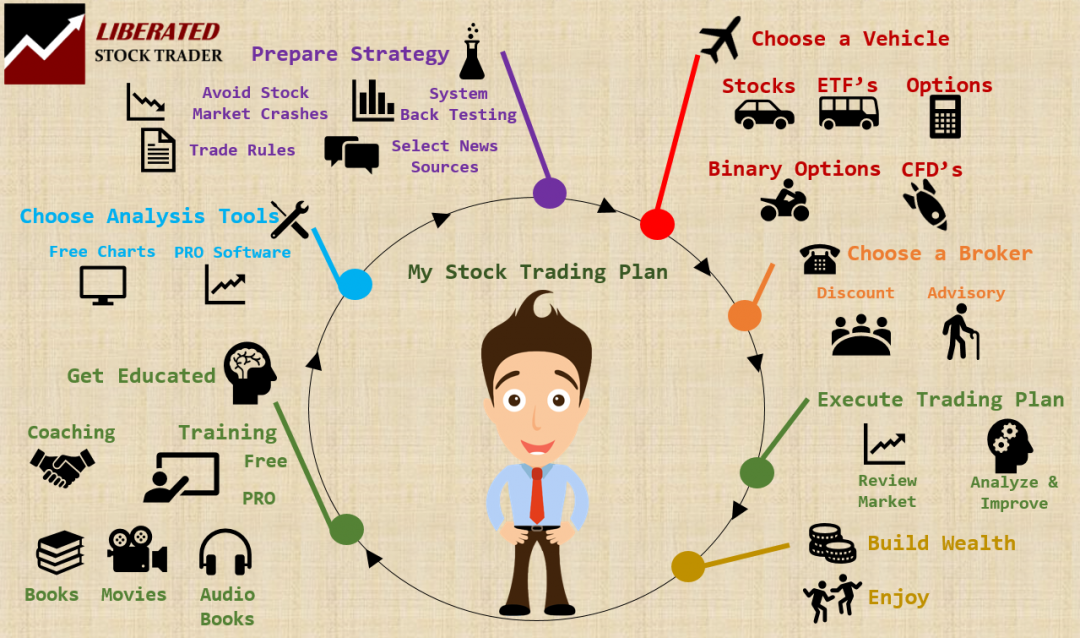
The equity market is a psychological battlefield. Greed leads to “chasing” stocks that have already run up too high, while fear causes traders to panic-sell during minor corrections. Developing a “Trading Plan”—a written set of rules for entry, exit, and risk—removes the emotional element from the decision-making process. If a trade doesn’t fit your plan, you don’t take it.
Advanced Strategies and Continuous Learning
As you gain experience in the equity market, your focus will shift from simply “not losing money” to optimizing your returns through more advanced strategies.
Diversification and Correlation
A well-constructed portfolio should be diversified across different sectors (e.g., Technology, Healthcare, Energy) to ensure that a slump in one industry doesn’t devastate your entire capital. However, traders must be wary of “over-diversification,” which can dilute returns to the point where they mirror a low-yield index fund.
Utilizing Financial Tools and Technology
In the modern market, data is king. Professional traders use stock screeners to filter thousands of stocks based on specific criteria, such as “stocks hitting new 52-week highs with increasing volume.” Utilizing real-time news feeds and advanced charting software allows for quicker reaction times in a fast-moving market.
The Importance of a Trading Journal
Continuous improvement is only possible through self-reflection. Keeping a trading journal where you record every trade, the reason you took it, the outcome, and your emotional state at the time is invaluable. Over months and years, this journal will reveal patterns in your behavior and strategy that need adjustment.

Final Thoughts on Market Discipline
Trading in the equity market is not a “get rich quick” scheme; it is a profession that rewards patience, education, and resilience. The market is a continuous teacher, often providing its most expensive lessons through losses. By treating equity trading as a business—focusing on capital preservation, rigorous analysis, and disciplined execution—investors can harness the power of the markets to achieve their long-term financial goals. Success is not about predicting the future with 100% accuracy; it is about being prepared for whatever the market decides to do next.
aViewFromTheCave is a participant in the Amazon Services LLC Associates Program, an affiliate advertising program designed to provide a means for sites to earn advertising fees by advertising and linking to Amazon.com. Amazon, the Amazon logo, AmazonSupply, and the AmazonSupply logo are trademarks of Amazon.com, Inc. or its affiliates. As an Amazon Associate we earn affiliate commissions from qualifying purchases.